

Cycle Camping through a Century: A 125-Year CCC Journey on an E-Bike from Oxford to Walton-on-Thames
- Analytics: The long arc of cycle camping
- Contrast: Then and now — gear, culture, landscapes
- Causes and effects: infrastructure, technology, and practice
- Expert reconstruction: lessons for modern riders
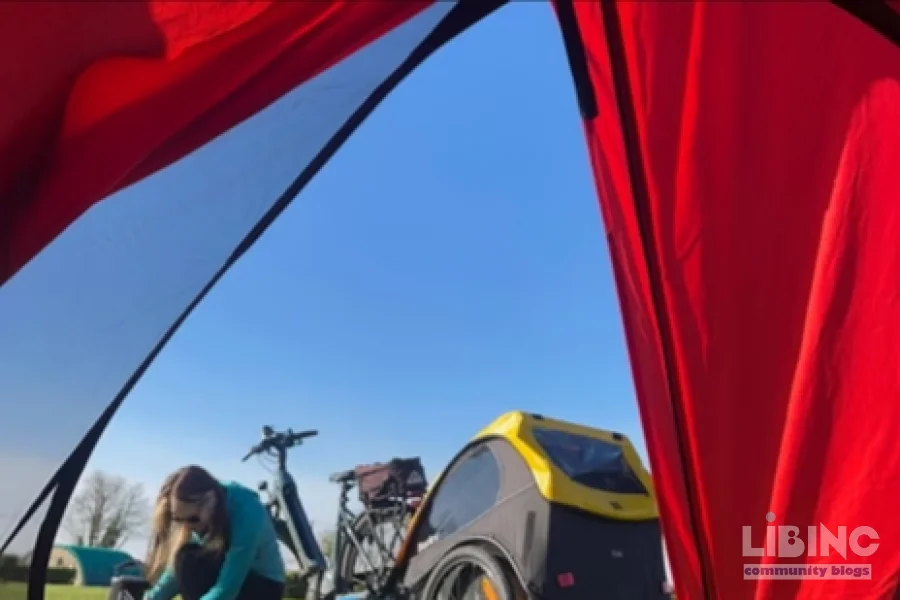
The road unfurls beneath an electric assist and a head full of history. The air carries skylarks and the sting of early spring as I pedal between pink and white hawthorn along National Cycle Route 57 near Oxford. This year marks the Camping and Caravanning Club’s 125th anniversary, and I celebrate with a 60-mile cycling and camping itinerary that links the city of the club’s birth to one of its oldest campsites at Walton-on-Thames. The question I want to answer is simple, and surprisingly stubborn: how does the past still guide a practice that now travels on silent bleached roads powered by lithium and curiosity? The answer, I suspect, lies not in nostalgia but in the durable demand for a portable, outdoors-centered form of wellness. This article follows that thread, using a modern e-bike journey to illuminate a century of cycle camping—the ideas, the gear, the sites, and the people who haven’t forgotten that the best journeys are pedal-powered and porous to discovery.
Analytics: The long arc of cycle camping
The CCC began as the Association of Cycle Campers in 1901, a product of a shared itch for mobility and shelter that could be taken on two wheels rather than tethered to a wagon or a fixed motor. The evolution from safety cycles to purpose-built camping equipment mirrors a broader shift in outdoor recreation: a move from novelty to sustainable practice, from a hobby to a hobby with social infrastructure. This arc matters because it explains why a 125-year anniversary feels less like a milestone and more like a calibration of a cultural technology—the ability to travel light, camp well, and return refreshed to a busy world.
The organization’s growth—from an initial handful of enthusiasts to a modern membership measured in hundreds of thousands—reflects a persistent social demand for mobility with the capacity to pause. The CCC’s own archivist notes that founder Thomas Hiram Holding understood the health and wellbeing benefits of camping long before it became fashionable to talk about wellness in lay terms. He crafted a practical toolkit—lightweight tents, folding poles, touring bags—alongside a philosophy that a bicycle-camper is a citizen of the road who can improvise, adapt, and live lightly. In a world where motorhomes and glamping dominate the landscape, the CCC’s stance that tents remain welcome on sites signals a deliberate counterweight to the modern trend toward comfort as default.
The journey I undertake underscores a critical metric: the endurance of cycle camping as a form of travel that still prizes portability, simplicity, and self-reliance. The modern e-bike does not erase this history; it extends it. The club’s membership growth from a modest 150 households at inception to well over 300,000 households today mirrors how mobility technologies—and the health and wellbeing narrative attached to them—have widened the tented horizon of what a holiday can be. This is not merely a replication of past methods; it is the adaptive reuse of a heritage model for contemporary needs.
A practical artefact from the CCC’s living history sits in my hands as I ride: a memory of a bicycle that used to be a safety cycle, a predecessor to today’s light, responsive machines. The historical record shows Holding’s own fascination with simplification—canoeing in Ireland, attaching camping kit to a tandem frame, and recording in Cycle and Camp (1897) the surprising social power of a well-paced holiday. Modern observers may flicker between reverence for the past and the imperative to test it against present constraints—hills, weather, and the pressure of urban life—but the mathematics of cycle camping remains unchanged: travel light, travel far, return wiser.
As I ride, I map a simple causal chain: the fewer the barriers to movement, the more people will choose to move—and to camp—by bicycle. The National Cycle Route network, the availability of e-bike hires, and the CCC’s still-viable tent-centric model together close the loop between motorized travel and a slower, more reflective pace. In a world that often incentives speed over stewardship, cycle camping offers a counter-logic: progress through mobility, quality through simplification, and wellbeing through immersion in the landscape rather than spectacle.
Contrast: Then and now — gear, culture, landscapes
The earliest camping stories in the CCC archive describe a landscape where riders wore practical but restrictive attire, and the equipment read like a compact manifesto for lightweight independence. A female camper in Holding’s era would have faced social expectations that limited mobility—an anachronistic constraint that, over time, the club and its members challenged and redefined. Today, the same journeys unfold with leggings, technical fabrics, and no small amount of comfort technology: a modern day that still values simplicity but does not accept poverty in the name of authenticity.
- Gear evolution: From silk tents and bamboo poles to nylon tunnels with inflatable poles; from penny-farthings to safety cycles to e-bikes—each leap expands who can travel light and far.
- Social norms: The old era restricted certain kinds of participation and dress; contemporary CCC culture embraces diverse riders, with gender and age no longer gatekeepers to the road.
- Site philosophy: The earliest campsites were intimate, rudimentary, and island-bound in the Thames era; today’s CCC sites balance historic charm with modern facilities and a willingness to accommodate both tents and caravans, although Walton-on-Thames still maintains spaces without full amenities for those who bring their own provisions.
The contrast extends to landscape and infrastructure. The Phoenix Trail, once a disused railway, remains straight and forgiving, a geometry echoing the era’s optimism about industrial progress. The river routes and ferry crossings that shaped early itineraries still shape today’s routes, but with a modern map of bike lanes, cross-town paths, and ferry connections. The Thames has been rerouted in places, and the topography no longer demands the same hill-climbing fortitude that earlier riders needed; the e-bike changes the calculus, transforming a demanding ascent into a zippy climb that preserves energy for the night’s rest and the next day’s miles.
The social life of campsites is another point of contrast. In Holding’s day, equipment and attire defined propriety and social performance, a sort of theatre of camping. The modern CCC site remains a theatre, but one saturated with practicalities—powered showers, compost toilets, and a culture of sharing advice about best campsites, route planning, and eco-friendly waste disposal. Yet the theme of hospitality endures: a simple sandwich at the Old Fisherman, a pub dinner, a night’s quiet, and a chance to wake to the sound of birds and the creak of a tent fly that’s just loosened from the dew.
The contrast reveals a broader truth about cycle camping: progress is not a substitute for practice but a condition that enables more people to practice with fewer compromises. A modern rider can sample the discipline of holding a steady line on a route with a compact, reliable system, while still cherishing the memory of a time when travel was slower, rarer, and more intimate with the land.
Causes and effects: infrastructure, technology, and practice
This journey illuminates a chain of causes and effects that have shaped how cycle camping is practiced today. A few factors stand out for their leverage and longevity:
- Infrastructure: The NR57 network, Phoenix Trail, and dedicated cycle paths reduce the friction of longer trips. A well-connected infrastructure lowers the perceived cost of a weekend expedition, encouraging more people to experiment with cycle camping as a viable form of leisure.
- Technology: The e-bike’s ascent dissolves the uphill barrier and makes longer, more varied itineraries accessible to a broader audience. Battery performance, weight, and reliability now meet the expectations of outdoor travel, widening the demographic profile of cycle campers.
- Culture: The CCC’s membership growth and its explicit welcome to tents, even amid an era of glamping, sustains a culture of portable living that prioritizes flexibility over spectacle. This cultural persistence ensures that the practice remains accessible to first-timers and veterans alike.
- Seasonality and health: The health and wellbeing narrative around camping—fresh air, movement, community—remains a strong incentive. Holding’s early insight that camping supports health endures, now reinforced by modern research on outdoor activity and mental health.
A chain of decisions, from route planning to campsite selection, demonstrates cause and effect in real time. I choose to break the journey at Bella Vista Radnage—part of the Chiltern Cycleway—because it offers a calm prelude to the day’s longer ride and a family-run ethos that aligns with the CCC’s history of hospitable, simple camping. The decision itself is a microcosm of the broader dynamic at work: infrastructure and culture converge to create safer, more comfortable, yet still distinctly pedal-powered travel.
The narrative of Walton-on-Thames further demonstrates this cause-and-effect logic. The campsite, opened in 1913, sits at a crossroads of heritage and modern demand. Its historical identity—described in a Golden Jubilee booklet as a place of homemade tents and wood fires—meets contemporary realities where some riders arrive with caravans or motorhomes, and others bring nothing but a dry-powder toilet and a thirst for a field night under a copper sky. The result is not a victory of one mode over another but an emergent system in which multiple forms of mobility share a common space, guided by the CCC’s flexible ethos.
The equipment story—From Holding’s era to today—explains another causal chain. The transition from silk wigwams and A-frames to nylon tents and inflatable poles did not erase the practice; it multiplied the possible configurations a rider can carry. This multiplicity is not trivial: it reduces the marginal cost of attempting cycle camping, inviting newcomers who previously assumed the practice was beyond their reach. The 125-year arc is thus a story of how small changes in gear, route design, and social norms can compound into a durable, scalable way of traveling and living outdoors.
Expert reconstruction: lessons for modern riders
The reconstruction here is twofold: first, to translate the CCC’s long memory into practical guidance for today’s cyclists; second, to imagine how a similar journey might unfold for someone new to cycle camping. The aim is not to recreate the past but to reframe it in terms of contemporary constraints and opportunities.
What follows is a compact playbook drawn from the journey and the club’s historical logic:
- Plan with purpose: Identify a route that balances scenery, traffic, and connectivity. Route 57 offers a gentle spine; use it as a backbone, then fill in side streets and cycle paths to texture the day’s miles.
- Choose the right gear: A reliable e-bike streamlines hills, but pack the essentials for a tent-based stay: compact shelter, a light cooking setup, and a dry-powder toilet if you don’t want to compromise on hygiene.
- Balance comfort with simplicity: While glamping options exist, preserving space for a tent remains essential to keep the camping experience authentic and affordable.
- Honor the heritage while testing the edges: Read a little about Holding’s era and the CCC’s early ethos, then test the practice in your own context—what remains valuable, and what can be reimagined?
For a practical itinerary, consider: start in Oxford, ride east along quiet lanes to Bella Vista Radnage, cross the Chilterns via river corridors, take a lunch break at a friendly café, then follow the Phoenix Trail toward Maidenhead, Windsor, and finally Walton-on-Thames. The micro-decisions—where to camp, where to refuel, when to rest—shape the journey as much as the miles themselves. A single weekend can reveal a century of cycling culture: a habit of moving, a discipline of camping, and a mindset that remains remarkably modern in its insistence on portable, recoverable travel.
The CCC’s 125-year history is not merely a backdrop; it is a living case study in how a small hobby becomes a social institution. The club’s ability to evolve—welcoming e-bikes, accommodating tent campers, and maintaining a network that links city-born riders to rural campsites—offers a model for other outdoors movements: keep the core idea intact, but adapt the means to the times. The result is a practice that travels well across generations, even as new technologies threaten to redraw the map of what “camping” means.
This journey does not claim to settle the question of whether cycle camping is more authentic today than in 1901. It suggests, instead, that the practice persists because it solves a stubborn human problem: how to move through space with purpose, rest with intention, and learn from the road with a clear-eyed curiosity about the past and a practical eye on the future. The secret passageways of towns and cities still offer routes that reward exploration, and the pedals remain a quiet, stubbornly effective engine for discovery.
The journey teaches a final lesson: the oldest cycling adventures were built on a social contract—that travel could be shared, equipment could be reliable, and the land could be traversed with modest means and large curiosity. The 125-year arc of the CCC confirms that the most resilient models are those that adapt to new technologies without abandoning their core purpose: to enable people to move, to camp, and to learn from the practice itself.
In the end, the e-bike I borrowed from Bainton Bikes in Oxford carried me not just across distance but across time. The Bella Vista Radnage pitch and the Walton campsite’s quiet fields framed the continuity between past and present: a camp life that remains possible precisely because the ideas behind it—the value of mobility, the virtue of self-reliance, and the healthful benefits of time outdoors—have not been cancelled by modernization but rather expanded by it. The best journeys, it turns out, are those powered by pedals and curiosity, guided by a hundred years of practice and one modern machine that makes the road a little longer and a little more inviting.
End of journey, but not of cycle camping’s ongoing experiment in mobility, health, and heritage.
Getting started with cycle camping on an e-bike
For newcomers, translating a heritage practice into a repeatable, beginner-friendly routine is the key to lasting adoption. The most reliable start is a short, well-scoped weekend along a familiar route, using a lightweight tent and a dependable e-bike with verified range. This approach keeps the activity accessible, reinforces safety habits, and builds confidence for longer tours in the future.
Structure the first trip around three constraints: mileage, terrain, and rest opportunities. Example: Oxford to Walton-on-Thames via NR57, completed in 1–2 days, with a mid-route campsite and a café refuel point. Pack compact shelter, stove, minimal cookware, a warm layer, and a basic repair kit. For e-bike touring, mark charging points ahead of time and bring a small power bank as a backstop so climbs do not derail the day.
| Gear category | Lightweight option | Bulkier option |
|---|---|---|
| Tent | 2-person nylon shelter, ultralight poles | 4-person cabin tent |
| Sleeping system | Compact sleeping bag + pad | Full-length mattress + heavy bag |
| Cooking gear | Mini stove, ultralight pot | Full cookware + kettle |
| Clothing | Light layers, packable rain shell | Heavier outerwear, extra clothing |
| Repair kit | Spare tube, patch kit | Full tool roll, multi-knife |
Keep the aim simple: cycle camping for beginners is about reliable gear, predictable routes, and time outdoors that refreshes the body and mind. The table illustrates how a lighter setup reduces fatigue and expands daily options, while the heavier option may suit longer trips with planned lodgings.
FAQ
With practical insight, these quick answers address common questions from readers starting cycle camping with an e-bike. The aim is to deliver concise guidance plus context for deeper planning.
How can a beginner safely start cycle camping with an e-bike?
To begin safely, plan a simple weekend on a familiar route using a compact tent, a light cooking kit, and an e-bike with confirmed range; keep daily mileage to about 25–35 miles, favor traffic-free lanes, and select a campsite with straightforward access. This direct approach builds confidence and safety, then you can gradually extend miles or add gear. Practice puncture repair and basic maintenance before you go.
Starting with a clear, repeatable routine reduces risk and lets you learn road etiquette, shelter setup, and gear management in real-world conditions. A gentle learning curve also makes it easier to balance rest and riding, which sustains motivation for longer trips.
What essential gear should a first-timer bring for cycle camping?
Essential gear balances weight and function: a compact tent, a warm layer, a lightweight stove, and a minimal toolkit; a small power bank; spare inner tube; waterproof bag; microfiber towel; and waterproof rain gear. Include a bike pump, multitool, and a simple first-aid kit. Tailor the kit to the season and the route length, tightening or lightening based on experience.
Staying lean with gear reduces fatigue and increases flexibility for weather changes or detours. Over time you’ll learn what you truly use versus what you carry out of caution.
How should route planning balance scenery and safety for new riders?
Choose routes with low-traffic lanes, designated cycle paths, and predictable gradients. Use trusted planners or local cycling clubs to map out segments and rest points. Test a short section before an overnight and maintain a flexible plan for weather or cafe closures. Prioritize daylight hours and safe on-road behavior, then gradually add longer or more scenic legs as confidence grows.
Well-planned routes also help with pacing, nutrition stops, and shelter availability, which are critical for a positive first experience.
What etiquette should cyclists follow when sharing campsites?
Respect quiet hours, keep campsites clean, and use dedicated waste zones. Share tips about local routes and facilities, avoid dominating spaces, and minimize environmental impact by staying on established paths and packing out what you bring in. A courteous approach turns a simple stop into a welcoming pause in a longer journey.
Good etiquette supports community, safety, and repeat visits by others who are trying cycle camping for the first time.
How can historical cycling culture inform modern e-bike touring?
The Camping and Caravanning Club’s history emphasizes mobility, portability, and wellness through travel. Modern e-bike touring can honor that ethos by preserving a lightweight core while embracing reliable tech. The balance is clear: keep gear lean, plan with flexibility, and treat campsites as places for shared learning—not just rest. This mix enables broad participation while maintaining the spirit of pedal-powered discovery that defined cycle camping a century ago.





Add a comment
To comment, you need to register and authorize
Comments