

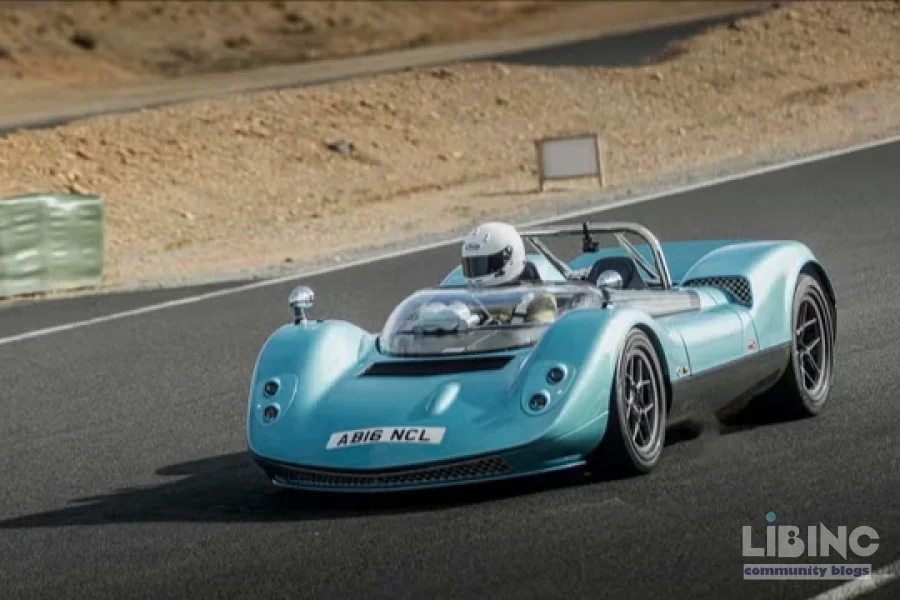
Nichols N1A: Street-legal Can-Am-inspired performance that blends analog driving purity with modern engineering
Table of contents
- Analytics in Practice: Engineering the Nichols N1A
- A Tale of Two Traditions: Contrast with Modern Hypercars
- From Design Choices to Driving Realities: Cause and Effect
- Expert Reconstruction: What the Nichols N1A Could Become
On a showroom floor, the Nichols N1A asserts itself as something you’d expect to see on a racing circuit—an homage to a bygone era with modern hardware underneath. In the United Kingdom, it wears a street-legal badge, while in the United States it squares off as a track-only contender during the homologation process. It’s an old-school, analog machine in a digital era obsessed with telemetry, yet its performance claims and tactile experience invite a different kind of scrutiny. The Icon 88 edition stacks up a curb weight under 2000 pounds against a 7.0-liter V-8 capable of around 730 horsepower. That combination translates to a power-to-weight ratio that would challenge today’s hypercars in a straight line, but the N1A’s appeal lies as much in how it delivers power as in how much it can deliver. The Senna-inspired shift lever—an homage in form as much as function—hints at a deeper story about driving fidelity and historical lineage.
Analytics in Practice: Engineering the Nichols N1A
The Nichols N1A is built around a deliberate philosophy: keep the driver at the center, and let physics do the heavy lifting. Weight is the first-order variable; the target of under 2000 pounds creates an immediate leverage against the engine’s 730 horsepower. This isn’t a triumph of raw numbers alone; it’s a careful balancing act between mass, stiffness, and driveability. Can-Am heritage
What follows from that lean architecture is a chassis that prioritizes direct response over electronic correction. The N1A uses a bespoke aluminum-bonded skeleton with carbon-fiber reinforcements, eschewing the traditional tube frame for a more integrated, torsionally stiff structure. The result is a platform that can tolerate large increments in track force without losing steering coherence. The aero strategy focuses on neutralization of lift rather than the pursuit of heavy downforce, a decision that preserves nimbleness at road speeds while enabling controlled behavior at the track. The aero work is complemented by a front-axle lift system, which makes street-legal navigation feasible without compromising high-speed stability. Can-Am heritage
Power delivery rests on a Langford Performance Engineering-tuned LS-based engine paired with a Graziano six-speed manual transmission. The manual remains central to the driving experience, aligning with the vehicle’s lineage as a driver-centric machine. The Icon 88 specification pack—the most highly equipped variant available—includes carbon-ceramic brakes and carbon-fiber wheels, further reducing unsprung mass and allowing the tires to do their job with less interference from chassis inertia. The result is a machine that rewards early throttle modulation and precise weight transfer, rather than relying on a sophisticated electronic safety net to keep it honest. Can-Am heritage
The cockpit, with its tight lines and minimal clutter, reinforces the sense that the N1A is built for performance rather than showroom aesthetics. The shift lever sits in the sill, a nod to mid-20th-century racing ergonomics, while the small-diameter wheel and exposed instrumentation emphasize the driver’s relationship with the machine. The car’s voice—engine howl through an Inconel exhaust and intake plenum’s thunder—announces its intent long before any performance metric is visible on a data screen. In Normal mode, the engine’s output is tamed for street use, but switch to a more aggressive mapping and the car exhales with a roar that is unmistakably Can-Am in character. Can-Am heritage
From a data perspective, the N1A’s claimed 730 horsepower is a headline figure, but the real story involves the way power is fed to the pavement and how the chassis handles it under load. The high-revving small-block V-8, though prepped, remains tuned to deliver tractable torque and a distinctive, linear power curve rather than a blunt, savage surge. This fosters precision in cornering transitions and a sense of continuous acceleration that can be exacting over long straights yet composed when navigating tight bends. Can-Am heritage
A Tale of Two Traditions: Contrast with Modern Hypercars
Where contemporary hypercars often blend digital overlays with all-wheel-drive traction control, the Nichols N1A emphasizes a raw, driver-instrument interface. Its steering is unassisted by default, offering a direct line to the road that can be equally exhilarating and demanding. In slower corners, the load builds with a hum of felt resistance; in faster sections, the chassis communicates through the seat and wheel with a transparency that isn’t always present in high-traction, high-traction-control machines. The result is a vehicle that asks for driver commitment, and it rewards that devotion with a level of immediacy that is increasingly rare in production automobiles. Can-Am heritage
Compared with a typical modern supercar’s data-rich cockpit, the Nichols N1A trades screen real estate for tactile feedback. Telemetry exists, but it serves as a supplement rather than a social-media-style narrative; the car speaks to the driver through steering feel, brake balance, and engine cadence. The absence of heavy downforce means that aero grip is modest and predictably progressive, encouraging a balanced approach to corner entry rather than a matter of brute late-braking prowess. The result is a different kind of performance discipline—one that values the human sensorium as much as the engine’s output. Can-Am heritage
Styling echoes of Bruce McLaren’s M1A era—where form followed a function that prioritized speed over spectacle—inform the N1A’s silhouette and proportions, but the car wears modern materials and a contemporary stiffness target. The front-end aerodynamics are tuned to suppress lift without dumping downforce into a radical rear wing regime, a philosophy that keeps the car’s behavior predictable at road-legal speeds while preserving the ability to exploit peak performance on a track. This contrast between old-school philosophy and modern engineering is where the N1A’s real story lies. Can-Am heritage
Despite the street-legal credentials, the N1A remains a machine that looks best on a race circuit or a dedicated test day. Its noise, mass, and ergonomics demand a particular type of respect; the driving experience is not about instant gratification but about a fierce, almost ceremonial, engagement with a machine that was built for competition first and road use second. In this sense, the Nicholls N1A’s value proposition isn’t merely about raw speed; it’s about the culture of driving as a hands-on discipline where the instrument, the road, and the driver form a triad. Can-Am heritage
From Design Choices to Driving Realities: Cause and Effect
The decision to anchor the N1A in a light, rigid aluminum chassis with carbon reinforcements has direct consequences for how the car behaves at the limit. A stiff structure reduces chassis flex, helping the driver maintain steering direction even as the tires approach their grip threshold. The bespoke chassis also keeps unsprung weight low, which in turn sharpens suspension response and enhances feedback through the steering wheel. The effect is a vehicle that can be piloted with a level of precision that would be difficult to achieve if the chassis were heavier or more compliant. Can-Am heritage
The engine choice—an LS-based unit tuned by Langford Performance Engineering—delivers a balance of power, reliability, and drama. The V-8’s torque curve, combined with a tall final drive and a manual transmission, means the N1A rewards thoughtful, rhythmic gear changes and a willingness to keep the engine in its peak torque band. The use of a manual shifter is not a nostalgic flourish; it’s a deliberate choice to preserve the sensation of being in control, to ensure immediate feedback from the engine to the driver’s right hand, and to avoid the dissonance that sometimes accompanies automated gear-selection in a high-performance context. Can-Am heritage
Braking and tire choices complete the package. With Michelin Pilot Sport Cup 2 tires in the Icon 88 configuration, the car can translate its power into forward motion without overwhelming the driver. Carbon-ceramic brakes provide fade resistance and predictable modulation, a crucial factor when moving between a throttled, high-load stimulus and a progressive, controlled deceleration. The net effect is a vehicle that can be driven quickly without feeling artificial or over-damped, a feature that is increasingly rare as performance cars chase ever-more aggressive electronic intervention. Can-Am heritage
Another causal thread links the vehicle’s road-legal status in the UK to its track capabilities in the U.S. Homologation processes often require concessions that temper raw performance for public safety and emissions, yet the N1A’s design minimizes these frictions by emphasizing a pure, mechanical interface. The result is a car that can be driven on public roads without sacrificing the immediacy of its track-day persona. Can-Am heritage
The suspension geometry, steering rack, and dampers are tuned to preserve a natural chassis response under high lateral load. The interplay between front-end lift control, tire grip, and mid-corner balance determines how early the driver can commit to a turn and how quickly the car can be rotated through a corner exit. The N1A’s approach is not about generating instantaneous cornering speed; it is about sustaining confidence through a carefully choreographed balance of grip, weight transfer, and throttle modulation. Can-Am heritage
Expert Reconstruction: What the Nichols N1A Could Become
From an engineering perspective, the Nichols N1A is a platform with clear development paths. The pre-production Icon 16th example demonstrates the direction toward increased power, further weight reductions, and a broader suite of customization options. A logical trajectory would see Langford Performance Engineering further refine the engine’s mapping to extract more peak horsepower without compromising drivability, while the chassis would gain incremental stiffness through tuning of the aluminum-and-carbon composite structure. The potential for a broader catalog of body shells and interior configurations would transform the N1A from a boutique track toy into a more versatile proposition for dedicated enthusiasts who demand personalization. Can-Am heritage
On the question of market cadence, Nichols as a company seems intent on delivering a high degree of customization while maintaining a disciplined production rate. Aiming for a handful of cars per year with bespoke options aligns with both brand storytelling and the realities of limited-edition manufacturing. If demand grows, a modular approach to the drivetrain and aero could preserve the car’s identity while allowing incremental improvements, analogous to how classic race cars evolved within a fixed silhouette. Can-Am heritage
The experiential core of the N1A remains its ability to make the driver feel at one with the machine. This is not merely about data points; it’s a visceral connection that requires practicing the same core skills that legend-laden cars demanded in the past. The car’s lack of heavy downforce, coupled with the directness of its transmission and the raw noise that fills the cockpit, creates a driving experience that’s less about chasing watts per kilogram and more about managing balance, rhythm, and nerve. Can-Am heritage
Ultimately, the Nichols N1A could become a benchmark for a new class of road-legal track machines: cars that honor their racing ancestry while embracing precise modern engineering. The key will be maintaining a narrow focus on what makes the driving experience meaningful—the feel of the road, the immediacy of the controls, and the driver’s ability to negotiate the line between exhilaration and restraint. Can-Am heritage
As Langford and Nichols continue refining the product, the N1A’s path will reveal whether this formula can scale to a broader community of enthusiasts without diluting the bespoke, hand-crafted character that defines it today. If it can sustain that balance, the Nichols N1A will stand as a rare example of a modern performance car that respects the past while actively shaping its future. Can-Am heritage
In summary, the Nichols N1A embodies a philosophy where analog driving, selective modern tech, and a storied lineage converge. It is a product that does not chase every latest metric but rather cultivates a credible, repeatable, and soulful driving experience. The road-legal character in the UK and the track-ready potential in the U.S. together sketch a compelling narrative about what a historically informed performance car can be in the 21st century. Can-Am heritage
Ultimately, the Nichols N1A challenges conventional definitions of what a street-legal car can deliver on a track. It asks drivers to rethink the relationship between power, weight, and control, offering a driving experience that is as much about presence and poise as raw acceleration. The result is a car that distills the essence of racing into a road-ready silhouette, inviting a new generation of enthusiasts to experience a distinctly analog thrill in a highly digital age. Can-Am heritage
Conclusion
The Nichols N1A does more than fuse nostalgia with high-end engineering; it reasserts the value of an intensely driver-centric approach in a world of automated systems. Its Can-Am-inspired lineage isn’t a marketing hook; it’s a real design discipline that shapes the car’s structure, control interfaces, and the very cadence of its power delivery. In a market crowded with hybrid powertrains and active electronics, the N1A stands out by asking the driver to participate as an essential control element. The result is not just a car that goes fast; it’s a machine that makes the act of driving feel purposeful again, anchored in a Can-Am heritage that continues to inspire new generations of enthusiasts.
Practical Driving Realities: Making the N1A Deliver on the Road
In real conditions, the N1A’s light weight and a hands-on transmission reward disciplined throttle modulation and deliberate weight transfer. Below is a concise guide that translates the design intent into battlefield-ready behavior for road and track alike.
Practical takeaway: Early throttle modulation and smooth weight transfer unlock the N1A’s balance, especially through mid-corner transitions where the chassis communicates grip level and available grip reserve with precision.
Use-specific scenarios illustrate the point: on a winding road, feed in throttle gradually to maintain tire contact; on a track straight, modulate shifts to keep the engine in its sweet spot, then unwind smoothly into corners for stable exits. This is the essence of the N1A’s character—a driver-focused machine where feel matters as much as raw speed.
Modest, purposeful evolution
- Refined engine mapping for broader torque access without compromising driveability
- Incremental chassis stiffness optimizations through targeted composite updates
- Expanded body-shell options and interior configurations for personalization
The N1A invites a disciplined, hands-on approach where the thrill comes from a clean line and a driver’s cadence rather than from electronic crutches.
What makes the Nichols N1A unique among street-legal performance cars?
The Nichols N1A stands out because it fuses a Can-Am racing ethos with a street-oriented chassis, combining a featherweight aluminum-carbon structure, a 730-hp LS-based V-8 tuned by Langford Performance, and a six-speed manual that invites true driver involvement, creating a tactile relationship between grip, throttle, and steering that is rare in modern road cars. This design choice emphasizes driver skill over electronic intervention, delivering linear power, a raw exhaust note, and predictable chassis behavior that rewards rhythm, throttle modulation, and careful weight transfer, rather than relying on traction control to salvage performance in corners.
Analytically, its track-focused orientation contrasts with the common reliance on assistive electronics in hypercars, delivering a more intimate yet demanding driving experience that appeals to enthusiasts who value feedback and control.
How does Can-Am heritage influence the N1A’s design and driving experience?
The Can-Am lineage informs everything from the car’s lightweight chassis to the driver-centric cockpit. The absence of heavy downforce and the emphasis on direct steering, tactile brakes, and a visceral engine note reflect a philosophy of pure competition-derived behavior. This heritage manifests as a coherent driving character where the road, the car, and the driver form a triad, rather than a collection of driver aids driving the car for you.
In practice, this means fewer electronic interventions and more driver responsibility, with the payoff of honest feedback and a stronger sense of connection to the machine.
What driving style and gear selection suit the N1A best on track?
The recommended approach involves early and smooth throttle inputs, deliberate weight transfer, and precise mid-corner braking/exit modulation. With a six-speed manual, keeping the engine in its usable torque band while planning gear changes for stable rotation yields the sharpest turns and clean exits. The car rewards rhythm, not brute aggression, and its aero balance supports predictable behavior at high speed when the driver commits to a balanced line.
Analytically, this emphasizes cadence, line accuracy, and seat-of-pants feedback over data-dense modes, aligning with its analog-driving ethos.
How does the N1A compare to modern hypercars in terms of driving feel?
Compared with data-rich hypercars that rely on traction control and active aero, the N1A prioritizes driver input and feedback. Steering feel is direct, aero is neutral rather than aggressively downforce-loaded, and the power curve is linear, making the driver’s sense of pace more closely tied to throttle modulation and line choice. The result is a more demanding but more authentic sense of speed and control, particularly on a road course where subtle adjustments matter more than raw telemetry.
From a strategic viewpoint, the N1A offers a different kind of performance: engagement and character over mode-driven dominance.
What are the planned paths for the N1A’s future development?
The roadmap points to more refined engine mapping, incremental stiffness gains in the chassis, and a broader customization catalog, including aero and interior options. This approach aims to preserve the car’s core, hands-on feel while expanding its appeal to a wider community of enthusiasts who still crave a highly personal, race-inspired experience without surrendering street legality.
Analytically, these steps balance heritage with scalable refinement, ensuring the N1A remains authentic while offering incremental value.
How is the N1A prepared for street use while preserving track authenticity?
The UK road-legal stance is achieved through architecture that minimizes friction with homologation while the track-ready setup in the U.S. ensures a high-performance persona for events and testing. The emphasis on a manual gearbox, mechanical interfaces, and a disciplined aero strategy keeps road driving legitimate without diluting the car’s track-focused DNA. This fusion fosters a unique ownership experience that blends daily usability with track-day readiness.
In practice, potential owners should expect a car that asks for commitment but pays off with immediate, unfiltered feedback when the throttle is modulated with intent.





Add a comment
To comment, you need to register and authorize
Comments
The current architecture favors a narrow silhouette with a small cockpit, minimal driver aids, and a direct mechanical interface. The challenge for future iterations would be preserving that intimate relationship while expanding customization options and improving repeatability across a small production run. Introducing modular body shells could preserve the silhouette that signals Can Am heritage while allowing owners to tailor aero, weight distribution, and cabin ergonomics. A modular drivetrain could enable future engines or even alternative fuels, provided the core mantra remains unchanged: a low center of gravity, high torsional stiffness, precise steering, and a throttle that invites a controlled escalation of pace rather than a blunt push. The risk would be drifting toward performance parity with machines that rely on torque vectoring and drive by wire electronics, eroding the original advantage of the N one A.
Another dimension is how to communicate value in a world where digital telemetry can democratize data while some drivers seek a more mysterious, less quantifiable connection with the machine. The N one A teams its analog core with selective modern tech, yet the real differentiator is how the raw line of the engine merges with the disciplined chassis and a truly engaged driver. If future variants expand the program to more customers, can the company sustain a level of service and handcraft that matches the uniqueness of the product itself? Will owners be willing to commit time to learning the car and to practice that yields incremental gains in cornering balance and lap times, or will the lure of a turnkey performance experience overshadow the appeal of a raw, hands on challenge?
The question of measuring success changes with scale. In a market that venerates hypercars with digital overlays and sophisticated driver aids, a road legal track car that prizes the feel of something older could become a counterculture icon, or it could risk becoming a boutique museum piece without breadth. The path forward would likely hinge on preserving the brand voice while offering measured development that keeps the N one A relevant to discerning enthusiasts. There is potential to align with a community of drivers who crave ritual in the act of driving, a space where practice, listening, and learned instinct become the ultimate performance metrics. A successful evolution would maintain a careful line between respect for Can Am history and acceptance of modern engineering realities. That balance is what defines the possible future for the Nichols N one A as a design lantern that guides a small but passionate segment toward a more tangible, road accessible expression of track day artistry. The story of the N one A is still being written, and the next pages will reveal whether this philosophy can mature into a durable, scalable, and enduring marker of what a modern, analog performance car can be in a world increasingly tuned to electronic convenience and data driven optimization.
Yet this approach invites examination. If the aim is to preserve driving fidelity in a form that is less electronically managed, what are the tradeoffs in safety margins and tire wear under repeated high load? How far can a track ready machine push the envelope before certification rules or insurance constraints become the limiting factor for potential buyers? The story of this design is not just about raw numbers but about how the vehicle interprets driver input through geometry, weight distribution, and mechanical constraints. The Can Am heritage thread is clear in the desire to honor a lineage while deploying modern materials and a purposeful, driver friendly torque delivery. Given a future where suppliers offer ever lighter composites and stiffer laminates, how much additional performance can be wrung from the same silhouette without diluting the character that defines the N one A? The article hints at a catalog expansion and even broader body shell choices; such diversification could broaden the appeal while testing whether a singular emotional core can scale across variants. The tension between exclusivity and growth forms a fascinating crucible for the brand and introduces a fundamental question for enthusiasts: is the N one A a unique experience that must be preserved as a rare artifact or can it evolve into a platform that enables a wider circle of drivers to feel that same Can Am style without losing its essential voice?