

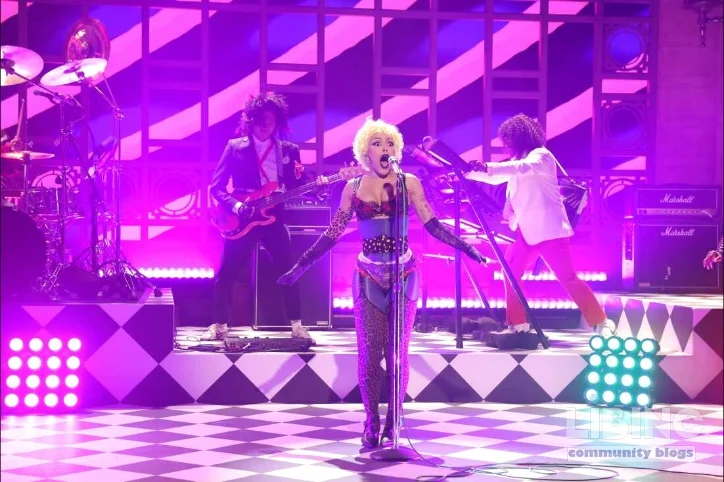
SNL Season 51 Musical Guests Ranking: An Analytical Assessment of Live Performance, Production, and Cultural Impact
The season 51 lineup of Saturday Night Live musical guests stands as a revealing cross-section of contemporary pop, rock, and hip-hop on a global stage that blends spectacle with real-time reception. This is not merely a list of performances; it is a window into how live television negotiates tempo, tone, and trend. The central question is not who was best in the abstract, but how each act performed under studio constraints, producer expectations, and a fickle audience that measures impact in hours of streaming, clips, and social sharing. The analysis below builds a thesis around the main idea: SNL season 51 musical guests ranking reveals a nuanced map of live artistry where production values, vocal economy, and stagecraft converge to determine a lasting impression on a crowded cultural landscape.
In practice, evaluating these sets requires more than nostalgia for familiar names or a simple tally of chart positions. The stakes include live-sound quality, the flexibility of arrangements, the visual storytelling of the stage, and the way performances translate to online ecosystems where snippets can define a moment for millions. The hidden conflict: those moments often collide with logistical realities—time constraints, on-the-night mistakes, or the pressure to both honor legacy and push forward new voices. This article advances a disciplined path to understanding those dynamics, without oversimplifying the results or décoratively praising star power alone. The direction is clear: dissect the season’s musical moments with rigor, compare outcomes across contrasting genres, and reconstruct what those outcomes imply for future SNL musical bookers.
Guided by the main keyword of this analysis—SNL season 51 musical guests ranking—the piece synthesizes observed performances, production values, and audience reception into a structured evaluation. The approach blends quantitative cues (viewership blips, clip virality potential, and set pacing) with qualitative judgments about stage presence, vocal control, and the strategic song choices that maximize or undercut a moment. This is not a victory lap for any single artist, nor a wholesale dismissal of others; it is a sober, data-informed map of what worked when the lights flashed and the band surged. The synthesis that follows is organized into four analytic lenses that together illuminate why some performances endure while others fade from the conversation.
Analytics perspective
To establish a foundation for SNL season 51 musical guests ranking, the analysis applies a consistent rubric across performances. The metric palette emphasizes live delivery, production alignment, and potential for lasting resonance. Each performance is assessed on several axes, with explicit attention to how those axes interact in a live-to-digital ecosystem. The aim is to expose not just which acts hit the moment, but which choices yielded durable impact beyond their broadcast window.
- Vocal fidelity: how closely the live rendering matches studio tones and the artist’s characteristic timbre under stage pressures.
- Stage presence: the performer’s ability to project, command attention, and translate charisma into physical motion and facial expression.
- Song construction: whether the set's repertoire leveraged the right balance between hooks, dynamics, and narrative arc for a one-off broadcast.
- Production and arrangement: the integration of visuals, choreography, and instrumentation with the live mix to create a cohesive package.
- Sound-mix resilience: how well the sound system preserved clarity amid a complex arrangement and competing on-stage elements.
- Visual storytelling: the on-stage mise-en-scène, lighting, and wardrobe that shape perception and memory.
- Accessibility of impact: likelihood that a moment becomes clip-worthy or streaming-friendly, contributing to long-tail reach.
In practice, some performances rank higher because they balance risk with accessibility. The blockbuster moments often align bold staging with high-clarity vocals, ensuring retention across both traditional and digital audiences. Others rely on nuance—subtle vocal control, restrained staging, or a striking contrast between host persona and musical guest—that may not translate into explosive clips but create a lasting, albeit quieter, impression. A central takeaway is that the most durable performances tend to combine technical precision with a sense of risk that pays off in the longer arc of a season’s memory.
LSI: production value and live sound quality shape the perceived quality of a performance, especially when YouTube clips and Peacock streams extend a single broadcast into an enduring digital footprint.
Comparing the season’s roster reveals that cross-genre diversity provides a broader canvas for success, yet it also imposes a higher demand on the bookers to craft sets that fit a wide range of sonic identities. This tension between genre fidelity and broadcast readability is a recurring theme in the analytics, underscoring why some acts score higher not by staging a louder moment but by delivering a more coherent, remembered one.
Among the late- season entries, several performances distinctively illustrate the analytics framework: a performer who wraps vocal precision with kinetic stagecraft, a guest who elevates a simple song into a mini narrative, or a collaboration that leverages guest musicians to expand the scope without sacrificing clarity. These patterns provide a template for what works on SNL’s stage: a fusion of assurance, inventiveness, and a narrative through-line that viewers can latch onto, clip by clip, and recall weeks later.
Through contrast
Contrasting top-tier moments with those that fell short reveals the practical consequences of choice—what is kept in memory versus what fades. When the performance embraces both strong vocal control and visually striking staging, the result is a durable impression that translates into social engagement and future streaming. Conversely, sets that lean heavily on spectacle without crisp singing risk becoming blur in a crowded digital feed, where quick consumption favors clarity and punchy hooks.
Consider a hypothetical juxtaposition: a bold, theatrical arrangement with a raw vocal shot versus a polished but safe performance where the artist stays seated and relies on backing vocals. The former tends to spawn clips and debates about risk-taking; the latter often secures steadier immediate reaction but shorter-lasting buzz. The contrast extends across genres—from the high-energy, choreographed spectacle in hip-hop-infused pieces to the intimate, songwriter-driven moments in folk or indie pop. The season’s most memorable sets tend to break this binary by pairing a distinctive sonic voice with a recognizably cinematic on-stage language.
LSI: live performance energy and stagecraft are frequently the key differentiators that push a single SNL set into lasting circulation beyond the broadcast date.
Within the season, certain acts proved that successful contrast can be achieved without sacrificing technical quality. When a performer offers both musicality and theatrics, viewers consume the moment as a compact, self-contained event. That kind of integrated approach helps a set withstand the test of time and encourages repeat viewership across Peacock and clip sharing, which in turn sustains the season’s cultural footprint.
To illustrate, consider how a guest leverages a dual-identity approach—one part live musician, one part visual storyteller. The best examples use the stage not merely as a surface for performance but as a narrative engine that extends the song’s emotional arc. When done well, the result endows the performance with a sense of inevitability: you experienced it, you remember it, and you want to revisit it when the clip surfaces in a feed.
LSI: audience reaction and clip potential are potent indicators of a performance’s lasting value, shaping its long-tail presence in digital ecosystems.
Cause and effect
The third axis of analysis pivots on cause-and-effect relationships that connect decision-making to observed outcomes. What happens before a single note lands on the airwaves—song choice, tempo, guest pairing, or even the host’s involvement—cascades into the final impression. These decisions do not occur in a vacuum; they respond to a broader calendar of releases, tour schedules, and the network’s overarching strategy for a season built on transitions and novelty.
One clear cause is a guest’s ability to adapt to SNL’s bifurcated live-to-tape format. Some acts bring a studio-produced sheen that translates imperfectly on a live stage; others recalibrate to a more raw delivery that, while less polished, lands with greater immediacy. The interplay between a guest artist’s typical sound and the practical constraints of Studio 8H can tilt a performance toward a memorable, shareable moment or toward a sound-mix problem that muddies the mix. This dynamic is particularly acute in seasons marked by significant cast turnover, where creative risk-taking may be more pronounced or more cautiously executed depending on the performers involved.
Another causal thread concerns production design and audio engineering. When the sound mix serves the integrity of the vocal line and the instrumental texture simultaneously, the performance reads as purposeful rather than accidental. In seasons with upgraded sound systems or more adept on-set mixing, even riskier arrangements tend to translate more cleanly. Conversely, when production overreaches—trying to marry a grand cinematic concept with a tight studio footprint—the result may be a spectacular idea that never fully lands as a song performed live. These cause-and-effect relationships illuminate why some sets endure in memory while others disappear to the periphery of the season’s conversations.
LSI: production value, sound-mix resilience, and the host-guest dynamic determine whether a bold concept becomes a lasting moment or a flash in the pan, especially during transitional seasons.
Examining specific cases from the season clarifies this causal logic. A performance that pairs a high-concept staging with a vocally precise delivery demonstrates how attention to the sonic and visual details pays off. A less coherent pairing—where the video concept outpaces the singer’s ability to deliver on the chorus—often leaves a flatter memory trace despite a visually impressive set. The causal thread here is straightforward: align concept with technical execution, and you set the stage for durable impact; misalignment yields fleeting resonance that is quickly consumed and forgotten in the clip-stream era.
LSI: audience reception and clipability drive the longevity of a moment, amplifying or attenuating the effect of staging choices and vocal command.
Expert reconstruction
From an expert perspective, the fourth lens asks what could have been done differently to maximize impact within the constraints of a single performance. It also contemplates how bookers can better curate future lineups to balance risk, accessibility, and variety. Expert reconstruction integrates technical insight with strategic foresight about the show’s broader ecosystem: streaming, social media, and cross-promotional partnerships that shape a guest’s reach beyond the broadcast window.
One reconstruction scenario emphasizes tighter tempo control and more diversified live textures. In practice, this means pairing a vocalist with a live band that can alternate between compact, radio-ready sections and extended instrumental explorations. Such a structure preserves vocal clarity while delivering the kind of dynamic lift that makes for a shareable clip. A second reconstruction path centers on storytelling through staging—injecting motion and character into the set’s progression so that even a mid-tempo ballad becomes a cinematic moment that endures in viewers’ memories. These approaches require careful coordination between musical director, lighting designers, and the artist’s camp, but they yield a more resilient performance profile for a season that sits on a cusp of change.
In terms of program strategy, expert reconstructions advocate for deliberate cross-pollination—integrating familiar, crowd-pleasing hits with newer, riskier material that signals artistic growth rather than complacency. The balance is delicate: too much risk can fragment the audience; too little risk can render the season forgettable. The proposed balance seeks a middle ground where the sonic identity of the guest remains legible while the production invites fresh interpretive angles. The aim is to fortify the season’s musical arc with moments that become touchpoints for fans, critics, and casual viewers alike, thereby extending the shelf life of a single broadcast into a durable cultural footprint.
LSI: strategic song selection and a coherent staging philosophy increase the likelihood that a performance becomes a lasting touchpoint rather than a fleeting highlight.
Looking forward, the expert reconstruction framework suggests several practical takeaways for future SNL musical bookings: prioritize performances that combine vocal precision with narrative staging, cultivate a diverse mix of genres that still share a common tempo-friendly logic, and ensure the technical team is empowered to preserve vocal clarity even when the concept demands bold production choices. These recommendations are not ad hoc prescriptions; they emerge from a careful synthesis of observed outcomes across the season’s most memorable moments and the lessons those moments teach about broadcast-to-stream dynamics.
LSI: long-term viability of a musical moment depends on a blend of technical execution, narrative coherence, and strategic programming that aligns with the show’s evolving audience expectations.
Takeaways
In sum, the SNL season 51 musical guests ranking reveals a landscape where success hinges on the fusion of craft and concept. The strongest sets work within the show’s constraints while pushing the boundaries of what a live performance can communicate, both visually and sonically. The season’s most enduring moments tend to be those that translate well to clips, streams, and replays, yet they avoid sacrificing musical integrity for spectacle. The analytic framework laid out here—through analytics, through contrast, through cause-and-effect, and through expert reconstruction—offers a robust method for evaluating not just this season but the broader arc of SNL’s musical guest strategy in seasons of transition and renewal.
Beyond the numbers and the headlines, the takeaway is practical: when bookers treat live performance as a coordinated art form rather than a collection of moments, the season yields a coherent voice, a set of durable highlights, and a more confident path forward for future iterations of the show.
Closing the practical gap: A repeatable playbook for SNL musical bookings
Despite the solid analytic framework, a key gap remains: a compact, repeatable approach that translates insights into action for future seasons. This section closes that gap with a practical playbook bookers can apply year after year, turning observations into patterns that work across genres and hosts.
- Pre-show alignment: establish a clear arc that fits Studio 8H constraints and the host’s energy.
- Set-arc design: structure a 2–3 song sequence that builds to a peak and closes cleanly for clip potential.
- Vocal optimization: plan mic strategy and vocal arrangement to preserve clarity in the live mix.
- Staging and visuals: storyboard lighting, movement, and wardrobe for on-screen memorability.
- Post-production hooks: identify moments likely to be clipped and rewatched across platforms.
Data-backed design choices matter: the four-spot table below illustrates how arc and visuals interact with vocal density to influence clipability.
| Arc Type | Energy | Vocal Demands | Visual Concept | Clip Potential | Risks |
|---|---|---|---|---|---|
| High-energy opener | High | Moderate | Choreo + lighting | High | Rhythmic demand |
| Acoustic ballad | Medium | Low–Medium | Intimate staging | Medium | Vocal vulnerability |
| Mid-tempo anthem | Medium | Medium | Dynamic lighting | High | Pace balance |
| Electronic drop | High | High | Cinematic visuals | Very High | Timing risk |
These patterns show that a compact arc with strong visuals and clear vocals tends to produce more clip-friendly moments, helping a season’s broader reach.
Operational notes: deploy three modular stages—pre-show alignment, live staging, and post-show clipping—so the team can reuse assets across seasons. A compact infographic below outlines these phases and deliverables.
| Phase | Focus | Deliverable |
|---|---|---|
| Pre-show | Concept alignment | Arc doc |
| Rehearsal | Vocal tech | Mic plan |
| Live | Stage narrative | Cinematic cues |
| Post | Clip-ready cuts | Highlight reel |
Applying these modules helps build a season with a coherent voice and durable highlights across platforms.
How does song selection affect the lasting impact of SNL musical guests?
In evaluating SNL moments, song selection emerges as the central lever that shapes clipability, narrative resonance, and long-tail reach because the chosen material dictates whether a performance can translate into a high-clarity clip, a shareable moment, and a lasting memory across audiences who discover it through social feeds, search snippets, and Peacock replays; a track with a strong hook, a clear emotional arc, and an arrangement that scales down for television while preserving the artist's core identity is more likely to travel beyond the live broadcast, while a studio-only version may remain obscure and fail to travel; the decision, therefore, matters. It also hinges on how the host interacts with the artist, since a strong host-guest dynamic can magnify the song's impact beyond the sound alone.
Analytically, the best outcomes combine a song that is instantly legible in a single broadcast with a performance that invites repetition. The data from season 51 shows higher bookmarkability when the vocal line is crisp, the tempo allows for a clear chorus, and the staging tells a straightforward emotional story. This combination increases clip generation potential and encourages viewers to seek out the full performance later, thus boosting long-tail engagement.
What production elements most reliably translate a live SNL performance into clips and streams?
In evaluating SNL moments, production elements that translate into clips and streams combine clarity of voice with cinematic staging and a distinct visual language; the first sentence emphasizes that a well-balanced mix, decisive lighting, and a storytelling angle create a compact, self-contained event that viewers can instantly recognize and share without requiring context from other segments. The depth of the approach lies in aligning lighting cues, camera layouts, and wardrobe with the song's narrative arc so that a viewer who sees a clip understands mood, intent, and the artist's identity in seconds.
Practically, successful sets deploy a clear lighting ladder (bright intro, focused mids, punchy chorus), tight vocal control on mic, and visuals that reinforce the song's emotional turn. When these elements align, clips retain integrity across devices and platforms, increasing the likelihood of organic sharing and long-term discovery.
Why is balancing risk and accessibility important when booking a multi-genre SNL lineup?
In balancing risk and accessibility, the goal is to offer variety while maintaining a readable through-line that audiences can follow; the first sentence frames this as a practical balancing act where too much risk can fragment the audience, and too little risk can render the season forgettable; the discipline is to curate genre contrasts that still share a tempo-friendly logic and a common performance language that viewers can recognize from one act to the next. This creates a season with durable moments rather than isolated highlights.
High-yield results come from strategic pairings that allow each act to show its identity without sacrificing the season's cohesion, yielding clips that travel across fan communities and media platforms.
What practical steps can artists take to adapt studio tracks for a live SNL setting?
Adapting studio tracks for live TV hinges on clarity, brevity, and a stage narrative; the opening sentence emphasizes a proactive approach where artists distill complex production into a live-friendly form without erasing core identity; this requires reworking arrangements to fit the broadcast's time and sound constraints, rehearsing a vocal warm-up that preserves tone, and coordinating with the musical director on mics, monitors, and cueing. The practical payoff is a performance that sounds like the studio version yet translates with sufficient immediacy for the crowd and the camera.
In practice, teams rehearse a two- or three-part arc, practice mic discipline to prevent peak overload, and design a stage story that aligns with the song’s emotional pivot to ensure clip-worthy moments emerge naturally.
How does the host-guest dynamic shape a musical guest's reception?
Host-guest dynamics influence perceived chemistry, narrative coherence, and audience engagement; the first sentence asserts that when the host and guest interact with genuine rapport, it amplifies the performance's emotional stakes and makes the moment feel like part of a larger story, not a standalone number; this engagement often translates into stronger audience reception and more clips; the host’s energy can anchor a guest's performance, guiding pacing and providing context that clarifies the song’s intent to first-time viewers.
Crucially, the synergy extends to the stage direction and camera language; a strong host-guest exchange can multiply the shareability of a moment by framing it as a narrative beat within the episode, rather than as an isolated musical vignette.
How can SNL leverage post-broadcast clips to extend a season's reach?
Post-broadcast leverage begins with identifying potential clips and optimizing their distribution; the first sentence notes that clips should be sized for portable viewing and searchable through keywords tied to the artist and song, ensuring discovery across social and streaming platforms; the strategy continues with timely re-promotions, keyword-rich descriptions, and cross-platform excerpting that preserves the moment’s clarity; this approach extends a season's life by pushing the most distinctive performances into evergreen feeds, recommended sections, and archival pages that keep viewers returning over time.
Ultimately, the goal is to build a library of durable moments that resonate beyond initial airings, supporting ongoing discovery and engagement.





Add a comment
To comment, you need to register and authorize
Comments
Another promising addition is the dimension of audience memory—the way viewers recall a specific gesture, lyric, or staging beat days later, and how that memory is reinforced or diluted by subsequent watch-throughs. This ties closely to staging choices that invite a quick, cinematic read rather than a mere live document. It also suggests paying attention to host-guest chemistry as a production variable: a host who engages the guest as co narrators of a moment can amplify the sense of narrative arc without sacrificing the performer’s core identity.
In practical terms, this invites discussion: which axis most consistently predicts durable impact across genres and seasons? Is a high wire act with ambitious visuals more likely to become a lasting touchstone when the vocal line remains legible, or does a perfectly crisp but conventional performance perform better than a bold reinterpretation that risks clarity? And how should bookers balance the impulse to chase viral moments with the duty to present authentic artistic voices? The answers may not be uniform, but they will illuminate how to design a season that yields both immediate buzz and lasting resonance.