

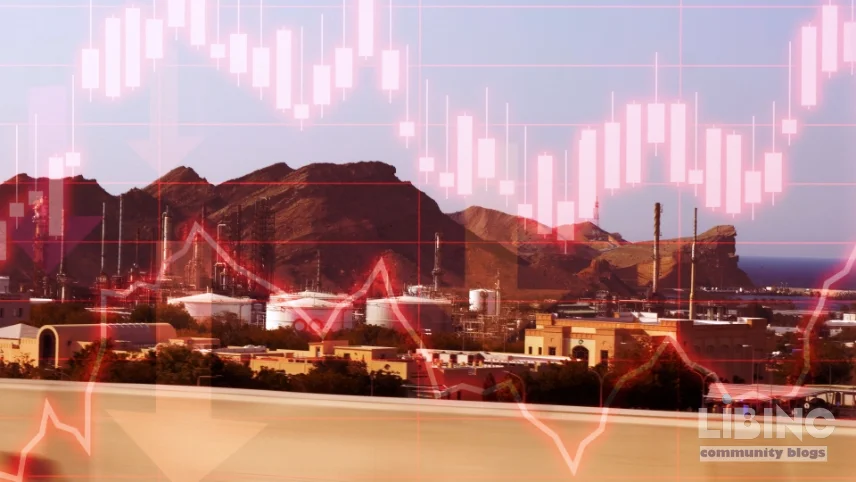
Geopolitical risk in energy markets: Hormuz tensions reshaping oil, equities, and policy
The crosswinds from Asia and the Strait of Hormuz have resurfaced as a decisive market driver. Investors, traders, and speculators faced fresh headwinds on Wednesday as President Donald Trump signaled that the United States is likely to launch additional attacks on Iran in retaliation for Islamic Revolutionary Guard strikes on three commercial tankers passing through the Hormuz chokepoint. The move risks a rapid escalation in regional tensions, while the price of oil reacts to the threat of supply disruption and renewed sanctions. In this environment, the stakes extend beyond a short-term price spike: a sustained geopolitical risk in energy markets would alter risk premia across asset classes, recalibrate policy expectations, and force portfolio managers to reprice risk in both energy and technology equities. The hidden conflict lies in the possibility of miscalculation—where a limited strike spirals into broader conflict, and where cooler heads attempt to broker a weak but sufficient deal that reduces volatility without fully stabilizing supply routes. This article dissects how geopolitical risk in energy markets translates into price discovery, policy signaling, and portfolio behavior across four analytical lenses.
Table of Contents
Geopolitical risk in energy markets: Analytical thesis
Geopolitical risk in energy markets is not a single- story move but a continuous reevaluation of supply security, price discovery, and policy responsiveness. The immediate reaction to the Hormuz-related headlines was a repricing of risk, with front-month oil futures climbing and volatility expanding as market participants try to quantify the probability and consequences of a supply disruption. The underlying mechanism is straightforward: when a chokepoint that handles a substantial share of global oil flows becomes potentially compromised, the risk premium embedded in energy prices rises, and the rest of the financial system begins to discount the probability of higher marginal costs in an energy-intensive economy. The central question is how persistent this risk will prove and how quickly market participants can incorporate any signs of de-escalation into fair value for both energy and equity assets.
Oil futures, liquidity conditions, and the shape of the yield curve all respond to geopolitical signals. In this frame, the Hormuz tension functions as a real-time, data-driven stress test of the supply side of the global energy market. A credible threat of blockade or sanctions creates a two-way price dynamic: an immediate upward re-pricing of crude, followed by a potential downward drift if negotiations advance toward a credible, enforceable, albeit limited, agreement. The practical implication for investors is simple: a government’s foreign-policy posture toward Iran can masquerade as a macro shock with duration in weeks rather than quarters, reshaping risk budgets for commodity exposures and energy equities alike.
Two structural questions anchor the analysis: first, how long the risk premium stays in the market if diplomacy progresses; second, whether the concrete policy tools used to mitigate risk—sanctions, naval patrols, or limited sanctions relief—alter the incentives for Iran to manage the Strait of Hormuz and for global buyers to source alternatives. The answer depends on the credibility and durability of negotiations, the readiness of regional actors to modify behavior, and the speed with which markets re-anchor to fundamental supply-demand dynamics. In other words, geopolitical risk in energy markets is a moving target that requires constant recalibration of risk budgets and scenario planning for both energy and financial portfolios.
Contrasting asset-class responses
Asset classes did not move in lockstep as the headlines flowed. Nvidia, a leader in the AI revolution, continued to trend higher after an initial gap-down, underscoring the stubborn bid in technology leadership even as the rest of the market digested macro and geopolitical noise. The Nasdaq Composite rallied off its intraday low, finishing with a modest gain, while the S&P 500 dipped and the Dow fell, illustrating the delicate balance between growth narratives and the risk-off impulse that often accompanies geopolitical headlines. Within this mosaic, energy exposure—both upstream and integrated leaders—stood out for distinct reasons tied to the evolving risk premium and potential supply constraints.
Integral oil and gas players captured attention by virtue of their blended exposure to macro risk and operational leverage. Integrated majors like Chevron benefited modestly on the day as equity markets digested the potential for constrained supply tempered by expectations of political risk containment. In contrast, Occidental Petroleum benefited from renewed Middle East tensions, reflecting the hallmarks of a risk-on-risk-off dynamic where certain stocks are sensitive to upside in oil prices or to hedges against macro uncertainty. Berkshire Hathaway’s portfolio moves offered a lens into big-institution positioning: a large sale of Chevron stock by a top executive was offset by holdings in Occidental, reinforcing the point that portfolio construction can diverge within a single conglomerate’s energy tilt.
On the technical side of markets, the Korea Composite Stock Price Index (KOSPI) moved into bear-market territory against a backdrop of China and global tech-ecosystem adjustments, with Samsung Electronics and SK Hynix leading the downside. This is not just a Korean story; it signals how Asia’s semiconductor cycle can amplify or dampen global risk sentiment when geopolitical headlines roil supply chains. The U.S.-listed semiconductor equity dynamic was reinforced by a notable development: SK Hynix will begin trading in the United States under the ticker SKHY, underscoring how exogenous shocks and cross-border listings intersect in real-time with global risk appetite.
Meanwhile, the market found some relief in the consistency of a broader tech demand narrative. Apple’s confirmation of a long-running silicon collaboration with Broadcom—extending through 2031 with a committed investment of at least $30 billion—added texture to the risk/reward backdrop for AI-enabled hardware and wireless connectivity. This kind of corporate commitment signals that even amid geopolitical turbulence, the technology ecosystem remains a critical growth engine, capable of attracting capital and smoothing some of the volatility in other parts of the market.
From geopolitics to policy: cause and effect
The policy channel is the other half of the equation. The content and cadence of central-bank communications, especially around inflation and the trajectory of interest rates, interact with geopolitical risk in energy markets to shape the risk appetite of investors. The minutes from the Federal Reserve’s June meeting—remarkably concise by historical standards—signal a data-driven decision process that remains sensitive to incoming inflation signals and growth data rather than a fixed timetable. The tight-band policy stance in the near term remains a possibility, but the minutes also hint at a readiness to adjust language and posture if the data deteriorate or improve meaningfully. This dynamic creates a feedback loop: policy signals influence risk premia, which in turn influence commodity prices and financial stability considerations.
The geopolitical risk narrative feeds the policy narrative in a more complex way than a single-country shock would. If cooler heads prevail and Iran and the U.S. re-enter talks, the price of oil could retreat from its recent highs, with the market expecting a gradual normalization in energy flows and less pressure on global inflation. If tensions escalate and the Strait of Hormuz becomes a flashpoint again, the market would likely price in a higher probability of sustained disruption, lifting not just crude but broader risk premiums across energy equities and credit markets. In this sense, the policy response becomes a second-order effect: central banks would calibrate liquidity and rate expectations in response to how the geopolitical risk unfolds in real time.
The chain of causality also extends to market structure and portfolio behavior. Traders increasingly use hedges that reflect both upside oil risk and downside equity risk, with risk parity and cross-asset hedging frameworks becoming more prominent in volatile periods. The interdependence among energy prices, corporate earnings expectations, and policy signaling creates a feedback loop that can persist beyond an initial shock, especially if the political landscape remains unsettled or if sanctions regimes evolve in ways that alter supply routes and demand patterns.
Expert reconstruction: what comes next
To translate current dynamics into actionable insight, market experts frame a few credible scenarios and the likely market responses. Bob Yawger of Mizuho Securities tracks the probability of a negotiated outcome in the near term and expects the process to drag on for the next two months, potentially yielding a weak agreement that allows Iran to retain some enrichment and to manage the Hormuz chokepoint. In this scenario, oil prices may settle into a higher but rangebound corridor as the supply risk is mitigated but not eliminated, and energy equities could remain supported by a strong underlying energy mix while tech leadership stabilizes.
Other scenarios emphasize more durable tensions. A sustained confrontation or a broad maritime conflict could trigger a sharper energy-supply scare, intensifying the risk premium and driving a more pronounced rotation into “risk-off” assets, including higher-quality Treasuries and defensive equities. In such a case, the pricing discipline would shift toward longer-run energy security and volatility risk, with corporate earnings guidance across energy and tech sectors reflecting elevated uncertainty. Investors would then recalibrate by increasing allocations to hedges, diversifying across geographies, and focusing on companies with resilient cash flows and transparent supply chains.
- Scenario A (base case): negotiations yield a weak, verifiable framework; oil prices stabilize around mid-70s to low-80s per barrel; energy equities maintain a constructive bias.
- Scenario B (upside risk): renewed hostilities or a broader blockade raise oil prices decisively; risk premia rise across equities, particularly in energy and transport, with more pronounced volatility in tech-sensitive segments.
- Scenario C (downside risk): a credible de-escalation reduces price pressure; a cooling in geopolitical risk supports a broader risk rally across growth stocks and cyclicals.
From a portfolio perspective, the takeaways are clear. First, maintain flexibility to reweight toward energy exposure when supply concerns intensify, while monitoring OPEC+ and non-OPEC producers for spare-capacity signals. Second, preserve a balanced risk budget that accommodates both upside in crude and downside in highly valued tech equities. Third, emphasize transparency in earnings and a clear view of how supply-chain exposure translates into earnings resilience for semiconductor and AI hardware players. The key is to translate geopolitical risk in energy markets into a robust, data-driven risk framework rather than a one-way bet on a single outcome.
In sum, the current moment illustrates a broader regime where geopolitical risk, energy security, and monetary policy interact in a high-dimensional, rapidly evolving space. The market’s capacity to absorb shocks will hinge on the credibility of diplomatic channels, the resilience of energy infrastructure, and the precision with which central banks respond to a shifting inflation backdrop. As investors navigate this landscape, the most prudent stance is to treat Hormuz-related tensions as a systemic risk factor—one that requires diversified exposure, disciplined risk budgeting, and a vigilant eye on policy signals that will shape the pace and direction of global markets in the weeks and months ahead.
Expert reconstruction: closing perspectives
Geopolitical risk in energy markets is a live, evolving variable that will demand continuous reassessment. The interaction between strategic postures, energy-market dynamics, and central-bank communications will set the tone for risk assets through the next reporting cycle. As the market weighs possible outcomes, investors should anchor decisions on data-driven probabilities, diversify across energy and tech exposures, and maintain readiness to adjust hedges as new information emerges. The readiness to adapt—while avoiding overreaction to every headline—defines how portfolios endure and thrive in an environment where geopolitical risk in energy markets remains a persistent, high-signal driver.
Conclusion in practice
Geopolitical risk in energy markets will continue to shape price formation, equity dynamics, and policy expectations. The coming weeks will test how quickly risk premia normalize and how effectively diplomacy can de-risk supply chains. For now, a disciplined, diversified approach anchored in data and scenario planning offers the best chance to navigate Hormuz-driven volatility without surrendering long-run investment objectives.
Operationalizing geopolitical risk: a practical playbook
Geopolitical risk in energy markets has to be translated into repeatable decisions. The gap in the original piece is the absence of a concrete process that turns headlines into portfolio actions. This section closes that gap by offering a three‑pillar playbook that translates Hormuz tensions into signals, hedges, and governance for risk budgets.
| Asset Class | Price Reaction | Hedging Approach | Key Signals | Examples |
|---|---|---|---|---|
| Crude Oil (WTI/Brent) | Short‑term spikes; risk premium widens | Long‑dated futures; calendar spreads | Front‑month price moves, backwardation/contango, inventory data | WTI jump on headlines; contango widens |
| Energy equities (upstream) | Mixed; leverage to oil price | Diversified exposure; hedges with options | Oil beta, capex cycles | Explorers rally with oil; pure tech selloff |
| Integrated majors | Resilient cash flow, steady when oil supports prices | Dividend bias; hedges for drawdown | Cash‑flow visibility; project returns | Chevron/XOM steady in volatile periods |
| Long‑duration Treasuries | Defensive ballast during spikes | Positioning as risk ballast | Inflation path, policy tone | Treasuries gain during risk‑off shifts |
| Crude futures spreads | Volatile; hedging costs rise | Calendar spreads to manage timing | Market structure; contango/backwardation | Spread moves reflect timing risk |
| Shipping/insurance plays | Costs rise with chokepoint stress | Insurance‑linked securities; shipping ETFs | Insurance rates; freight patterns | Higher premiums; diversified hedges |
In practice, deploy a three‑pillar routine: Signals, Hedging, Governance. Signals convert headlines into measurements (price moves, volatility, inventory, sanctions cadence). Hedging translates these signals into protective positions (futures, options, diversified exposures). Governance enforces discipline (pre‑defined risk budget, trigger levels, quarterly reviews). This framework embeds oil price volatility and energy‑market dynamics into a repeatable process rather than ad hoc reactions.
- Signals: monitor front‑month price moves, inventory reports, and sanctions cadence.
- Hedges: keep a flexible energy sleeve (about 20–30% of risk budget) and a ballast in fixed income during spikes.
- Governance: set fixed rebalancing thresholds and a quarterly stress test with baseline, upside, and downside scenarios.
- Front‑month oil price reaction: +3–7% intraday
- Oil‑price volatility proxy up ~20–25% over the week
- OPEC+ spare capacity available: ~2 mbpd
- Scenario A (base case)
- Negotiations yield a verifiable framework; oil stabilizes in a higher range
- Energy equities maintain a constructive bias; tech leadership stabilizes
- Scenario B (upside risk)
- Renewed hostilities or wider sanctions raise oil prices and risk premia
- Rotation toward defensives and hedged positions intensifies
- Scenario C (downside risk)
- A credible de‑escalation lowers price pressure; risk-on resumes across growth names
From geopolitics to policy: cause and effect (practical extension)
The policy channel is the other half of the equation. The content and cadence of central‑bank communications, especially around inflation and the trajectory of interest rates, interact with geopolitical risk in energy markets to shape risk appetite. The minutes from a typical central bank meeting signal a data‑driven approach that remains sensitive to inflation signals and growth data rather than a fixed timetable. The tight‑band stance remains a possibility, but the narrative also suggests readiness to adjust language if the data deteriorate or improve meaningfully. This creates a feedback loop: policy signals influence risk premia, which in turn shape commodity prices and financial stability considerations.
If cooler heads prevail and diplomacy advances, oil could retreat from its highs and market risk premia may normalize. If tensions escalate, the market prices in sustained disruption, lifting energy equities and credit risk premia. Traders increasingly use hedges that reflect both upside oil risk and downside equity risk, with risk‑parity and cross‑asset hedging frameworks becoming more prominent in volatile periods.
Expert reconstruction: what comes next
To translate current dynamics into actionable insight, analysts frame scenarios and responses. A base case may see a weak but verifiable framework over the next two months and a rangebound oil price with energy equities supported by fundamental strength. More durable tensions could trigger a sharper energy‑supply scare, pushing risk premia higher and shifting discipline toward hedges and resilient cash flows. A de‑escalation path would support a broader risk rally across growth stocks and cyclicals.
Conclusion in practice
Geopolitical risk in energy markets will continue to shape price formation, equity dynamics, and policy expectations. The coming weeks will test how quickly risk premia normalize and how diplomacy can derisk supply chains. A disciplined, diversified approach anchored in data and scenario planning offers the best chance to navigate Hormuz‑driven volatility without surrendering long‑run objectives.
Frequently asked questions
What drives Hormuz tensions to impact energy markets?
In plain terms, the Strait of Hormuz represents a chokepoint where a large portion of global crude flows transit. A credible disruption or the imposition of sanctions can raise the probability and marginal cost of supply loss, which in turn elevates the risk premium embedded in oil prices and spillovers into energy equities, currencies, and broader risk assets. The market responds not only to the current event but to perceived risk of escalation and the duration of any disturbance, which shapes volatility and the pace of repricing across asset classes. In practice, traders monitor shipping data, inventory signals, and sanctions cadence to calibrate probability estimates and position sizes.
Analytically, Hormuz is a real‑time stress test for supply security. The key takeaway is that headline risk translates into tangible price and volatility shifts when the supply route remains uncertain. Investors should translate this into disciplined risk budgets and hedging plans that adapt as diplomacy evolves.
How do geopolitical risks translate into price moves for oil and assets?
Geopolitical risk adds a premium to the baseline value of energy assets and can drive short‑term spikes in oil prices due to anticipated supply disruption. This risk premium propagates through energy equities, particularly those with high oil exposure, and can influence bond markets if the macro backdrop shifts. In addition, risk sentiment can cause rotations between growth and defensives, depending on the perceived duration and credibility of any settlement. Investors therefore track oil forward curves, inventory data, and central‑bank signals to understand the evolving risk/return trade‑offs.
What hedging strategies help manage Hormuz‑related risk?
Effective hedging blends price protection with portfolio resilience. A practical approach combines long positions in energy equities with selective use of crude futures and options to cap downside while preserving upside exposure. Dynamic hedging—adjusting allocations as oil prices move—helps manage volatility. Diversifying across energy segments (upstream, integrated, services) and maintaining a ballast in fixed income during spikes can reduce correlations that amplify losses. In essence, hedging should reflect a defined risk budget and be reviewed on a regular cadence as market signals change.
What indicators signal escalation or de‑escalation?
Key indicators include front‑month oil price moves, backwardation vs contango in the futures curve, inventory data (reports and trends), shipping and sanction cadence, and watchdog metrics such as implied volatility in energy sectors. A systematic rise in risk premia paired with declining liquidity suggests escalation, while stabilization in price, narrowing spreads, and constructive diplomatic signals point toward de‑escalation. Traders often combine these signals into a dashboard that triggers predefined rebalancing rules.
How should a portfolio be adjusted during Hormuz‑driven volatility?
During heightened volatility, investors should prioritize risk budgeting and diversification. Increase exposure to high‑quality, cash‑generative energy equities and maintain hedges against oil price shocks. Reduce exposure to high‑beta or non‑core tech plays if correlation to energy risk rises. Use a combination of hedges (futures, options) and fixed‑income ballast to smooth volatility. The objective is to preserve long‑term goals while avoiding overreaction to every headline, maintaining flexibility to reallocate as supply expectations shift.
What role do sanctions and supply disruptions play in the medium term?
Sanctions and disruptions can alter the price trajectory of oil and the risk premium embedded in energy assets for weeks to months. In the medium term, sanctions policies influence shipping routes, insurance costs, and capital access for affected producers, which can constrain supply even if physical flows are temporarily intact. Investors should incorporate potential policy trajectories into scenario planning, stress test portfolios across multiple paths, and keep liquidity to exploit dislocations if negotiations progress or stall.







Add a comment
To comment, you need to register and authorize
Comments
From an asset allocation standpoint, the market’s reaction to Hormuz tensions underscores the need to separate idiosyncratic stock level exposures from more structural risk premia embedded in energy prices. The apparent bear market in certain Asian tech names like Samsung Electronics and SK Hynix, alongside the cross listing of SK Hynix in the United States, points to an elevated sensitivity of semiconductor equities to the broader risk mood and to supply chain narratives that interact with geopolitical dynamics. It also illustrates how structural shifts in markets, such as cross border listings and the emergence of new hedging instruments, can alter the risk environment in real time. Yet the consistent theme across the march of headlines is that energy markets and technology equities are not decoupled in a vacuum; instead, they respond to a shared underlying set of drivers: energy price trajectories, inflation expectations, liquidity conditions and the pace of policy normalization. In this sense, a mixed signal from equities should be interpreted as the market partitioning risk into a mosaic, where different segments react to different components of the same overarching shock.
For investors, this implies that hedging strategies should be tailored not only to macro volatility but also to sector specific sensitivities. Airlines, transport, and logistics exposure may carry amplified risk premia when energy prices rise, while tech hardware suppliers can benefit from a stable or improving demand environment if energy price movements are contained. The role of cross asset hedging techniques, risk parity constructs, and scenario based capital allocation becomes more prominent during periods of potential regime change. How would you assess the relative resilience of your portfolio to energy related shocks under competing scenarios, and which indicators would you prioritize to distinguish between a temporary risk repricing and a lasting shift in the pricing of risk across equities, credit, and commodities? Moreover, what does the divergence between growth equities and energy shares imply for active versus passive strategies in a market where news flow rapidly translates into repricing?
From a policy perspective, the broader channel is equally important. Geopolitical risk feeds into the calculus of inflation and monetary policy, shaping expectations about when and how aggressively central banks will respond to energy price shocks. A credible de escalation or a narrowly tailored deal can compress risk premia and ease financial conditions, while a relapse into conflict tends to widen risk premia across energy, equities, and credit. The transmission mechanism is not linear; it is dynamic and contingent on the credibility of diplomatic channels, the readiness of regional allies to modify behavior, and the speed with which markets re anchor to fundamental supply and demand dynamics. Market participants therefore face a moving target: they must continuously reassess the probability and consequences of various paths, and adjust their risk budgets accordingly.
To translate this into practice, investors increasingly rely on scenario planning and cross asset hedging frameworks. A credible approach involves constructing a probabilistic narrative with a small set of plausible paths, each with assigned likelihoods that can be updated as new information arrives. Traders should monitor indicators of de escalation or escalation not solely in price terms but in the timing and content of official communications, diplomatic developments, naval posturing, and sanctions posture. An effective risk framework also requires attention to the supply chain and infrastructure resilience: how quickly can buyers reroute logistics, how robust are strategic reserves, and what are the spillovers to refining capacity and refinery downtime. These factors feed into earnings guidance for energy majors and industrials, shaping how equity markets re price risk in sectors most exposed to energy costs and to the speed of policy normalization.
The broader takeaway is that Hormuz related tensions are a systemic risk factor that interacts with technology cycles, inflation dynamics, and global growth narratives. They influence not just the price of oil but the entire environment in which portfolios are constructed. The challenge for practitioners is to design a framework that can incorporate a living geopolitical signal while avoiding overreaction to every headline. How would you structure a risk budget to reflect the possibility of a protracted, data driven negotiation versus a rapid escalation, and what specific price and flow signals would you rely on to distinguish between temporary volatility and a durable regime shift? Additionally, what role should non oil energy sources, geopolitical diversification, and supply chain resilience play in portfolios during periods of Hormuz related uncertainty, and how would you communicate these strategies to clients who seek both protection and participation in potential energy upside?