

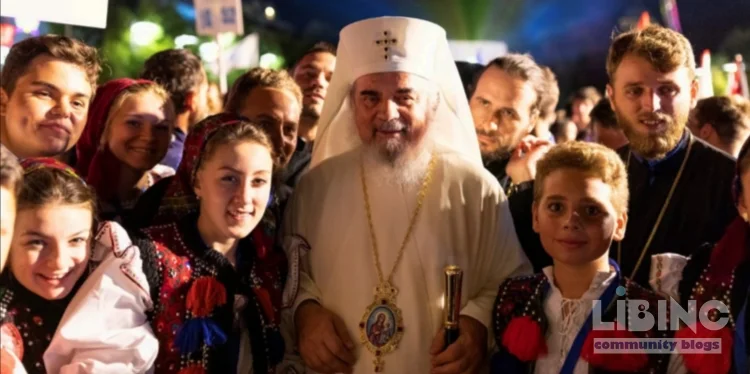
Romanian diaspora as a living bond: Patriarch Daniel, ARC Summer Camps, and the preservation of language, faith, and culture
The Romanian diaspora stands at a crossroads where language, faith, and ancestral memory converge into a living identity. Patriarch Daniel's message to diaspora youth, delivered during the 17th ARC Summer Camps, reframes this identity as an active, ambassadorial duty rather than a passive sentiment. The question is not merely how many Romanians live abroad, but how they sustain a meaningful bond with Romania that translates into everyday conduct, community building, and cross-border cooperation. This analysis treats the ARC program as a strategic instrument for identity formation, where spiritual roots support cultural continuity and language transmission across generations. The stakes are high: neglecting this bond risks erosion of the religious and cultural foundations that shaped generations.
Understanding this dynamic requires analyzing the ARC Summer Camps as a structured platform for diaspora engagement that pairs experiential learning with spiritual formation. The main challenge is to translate sentiment into durable networks, language preservation, and a shared identity that travels with youth into universities, workplaces, and new communities. The Patriarch's message makes clear: the diaspora cannot merely preserve customs; it must act as ambassadors who carry Romanian language, Orthodox faith, and cultural heritage into everyday life. This lead sets up the following sections, which unpack the mechanisms, comparisons, causality, and expert recommendations that follow from the opening address.
Table of contents
- Analytical Perspective on the Romanian diaspora identity
- Contrast and comparison
- Causes and Effects
- Expert reconstruction and recommendations
Analytical Perspective on the Romanian diaspora identity
The Romanian diaspora's identity rests on three pillars: language, faith, and heritage. Patriarch Daniel frames these pillars not as abstractions but as actionable commitments written into family routines, school context, and community practice. By naming the ARC Summer Camps as a domain for reinforcing these pillars, the message positions diaspora youth as agents who stitch transnational ties into concrete social capital. This framing helps explain why a short camp experience can have outsized effects when it aligns with long-standing family traditions and church activity. The central term guiding this analysis remains the Romanian diaspora, understood as a living, active bond rather than a passive status.
Diaspora engagement emerges as a structured mechanism. Through language immersion, prayer life, and communal service, young Romanians abroad translate memory into practice, activating a pipeline of future leadership in Romanian communities abroad and within the Romanian state’s transnational framework. The ARC format amplifies language preservation as a practical outcome, not merely an emotional pledge, by pairing activities with intergenerational transmission of vocabulary, chants, and liturgical repertoires that carry over to daily life. This is where the tie between homeland and diaspora becomes a measurable variable in social capital formation.
The role of the Christian family is central to this architecture. The Patriarch emphasizes that the family remains the primary school of faith, morality, and language, with grandparents and parents modeling love, sacrifice, and communal responsibility. The family does not simply transmit memory; it institutionalizes norms that sustain church life and cultural practice across borders. In this model, the diaspora family becomes a hub that feeds both religious loyalty and linguistic competence, ensuring that prayer, rituals, and songs endure when children move between continents. This underlines the causality between intimate family spaces and transnational identity, a relationship the ARC program seeks to strengthen.
The domain of Romanian communities abroad thus becomes a field of innovation for pastoral care and cultural policy. The message invites communities to cultivate lasting friendships, active engagement with homeland institutions, and reciprocal exchanges that strengthen the Orthodox faith and Romanian language. The emphasis on dialogue and communion reframes diaspora life as continuous participation rather than episodic visits. When this is done, language transmission—home speech, liturgical chant, and cultural references—stays vibrant across generations, and the sense of belonging endures.
Contrast and comparison
Where some diaspora strategies tilt toward cultural consumption rather than cultural production, the Patriarch’s message insists on active participation. It reframes the diaspora not as a market for Romanian culture but as a breeding ground for living transmission: a continuous ritual of speech, worship, and shared projects that keep the faith and language from fading. This contrast highlights how religiously grounded communities prioritize long-term cohesion over short-term retention of symbols. The emphasis on Christian family and communal life contrasts with more secular models of assimilation that risk eroding language and faith in the long run.
The contrast with secular diaspora programs reveals a common gap: without a spiritual frame and a strong cultural narrative, language preservation can become superficial, and transnational ties can wither. Diaspora engagement without pastoral guidance risks fragmenting into isolated clusters lacking shared rituals. In this sense, the ARC experience offers more than language classes; it creates social networks anchored in Orthodox faith, family, and national memory that persist beyond the camp duration.
Other national diasporas present similar models, but outcomes vary with the institutional weight of the parent church and state alignment. Where the Romanian Orthodox Church actively stylizes the diaspora as a living bridge, some communities in other contexts rely on cultural associations that struggle to sustain continuity when leadership shifts or funding declines. The Romanian model foregrounds spiritual leadership, liturgical life, and epic histories as anchors that keep identity cohesive despite geographic dispersion. In the long run, this approach builds cohesive webs of volunteers, donors, and mentors who anchor the diaspora in shared values.
By placing the diaspora in dialogue with homeland institutions, the ARC Camps help create a transnational network that links language preservation, Orthodox faith, and cultural heritage with concrete acts of service, study, and collaboration. The result is a more resilient identity for Romanian communities abroad, one capable of weathering cultural shocks while maintaining continuity with the motherland's spiritual traditions.
Causes and Effects
The ARC Summer Camps act as a catalyst, forging cross-border friendships and practical ties with Romanian communities abroad. These ties translate into sustained language use at home and in church life, where prayers and songs anchor daily routines, even for those who have lived away from Romania for years. The effect is a measurable shift from occasional visits to ongoing engagement that structures youth identity around shared faith and language. The causal chain begins with immersive experiences, then social bonds, then durable cultural-memory practices.
This mechanism strengthens social capital, producing networks that extend beyond camp weeks into school, work, and community service. Diaspora engagement becomes a platform for mentorship from elder priests and lay leaders, who model respectful conduct, religious education, and national memory preservation. The language is not merely spoken at family gatherings; it becomes the lingua franca of transnational collaboration, enabling joint projects that advance both Romanian culture and Orthodox spiritual life.
The continuity of language and faith within families creates a feedback loop. As children grow into adults, they become ambassadors who recruit peers, organize diaspora events, and leverage connections with churches and parishes abroad. This cycle—family transmission → public service and leadership → stronger home-country bonds—repeats across generations, making the diaspora a stable vector for Christian identity and national heritage. The ARC experience demonstrates how small, regular commitments accumulate into durable cultural capital.
The result is a multi-layered effect: strengthened spiritual formation, improved language proficiency, deeper cultural heritage appreciation, and more robust cross-border collaboration. These outcomes depend on sustained institutional support, clear pathways for youth involvement, and ongoing dialogue with homeland authorities and church leadership. The causal chain thus becomes a blueprint for transnational identity management, where family, church, and nation synchronize to deliver long-term resilience.
Expert reconstruction and recommendations
To maximize impact, policy makers and church leaders should institutionalize diaspora programming with clear governance, funding streams, and evaluation metrics. The ARC Camps model should be scaled through regional hubs, ensuring consistent language training, liturgical participation, and cross-border partnerships with Romanian schools and parishes. A formal network of mentors—priests, teachers, and successful diaspora alumni—can guide younger participants and document best practices in diaspora engagement and faith-based education.
The design should combine in-person and digital modalities to extend reach while preserving the depth of Orthodox faith formation. Language preservation requires structured curricula, liturgical glossaries, and community-language media that feed back into home and parish life in the host country. The emphasis on cultural heritage should translate into joint Romanian cultural projects, history clubs, and intergenerational mentorship that ties youth to the soil of their parent country and their ancestral roots.
The 2026 Solemn Year of the Pastoral Care of the Christian Family and the Commemorative Year of the Holy Women offer a formal frame to synchronize program goals with commemorative narratives. Aligning ARC with these themes emphasizes the family and women as shapers of identity, thereby enriching the program's reach and reinforcing continuity across generations within diaspora contexts.
Aligning ARC with the Solemn Year emphasizes family formation, moral education, and the transmission of liturgical values through mothers, daughters, and wives, strengthening the diaspora's resilience and coherence across generations. A practical agenda includes establishing regional diaspora chapters, creating youth councils for cross-border projects, and developing evaluation rubrics that measure language use, family participation, and spiritual formation outcomes across cohorts. This is how a transnational identity becomes durable social capital rather than a transient sentiment.
In sum, the Romanian diaspora's future hinges on proactive, faith-rooted, language-preserving engagement that links families, parishes, and homeland institutions. ARC Summer Camps embody a micro-level instrument of a broader transnational strategy, turning sentiment into social capital and culture into durable practice. Through disciplined programming, sustained mentorship, and alignment with commemorative narratives, Romanian communities abroad can remain both rooted and adaptive—carrying the Romanian diaspora forward as a living bond across borders.
Closing the key operational gap: accountability, metrics, and scalable delivery
To ensure durable impact, the missing piece is a formal, scalable delivery model with clear governance and evaluation that translates commitments into lived practice across countries. A concrete framework aligns diaspora engagement with language preservation, Orthodox faith formation, and family transmission, turning intentions into everyday routines.
Below is a practical blueprint that integrates governance, curriculum, mentorship, and measurement into a cohesive cycle. This new approach treats ARC as a continuous program rather than a series of isolated camps.
| Role | Responsibility | Data Source | Frequency | KPI Example | Owner |
|---|---|---|---|---|---|
| National Church Liaison | Cross-region coordination | Parish reports; liturgical calendars | Quarterly | Active participants in ARC events | Patriarchate Office |
| Regional Diaspora Hub | Regional strategy and funding | Hub dashboards | Quarterly | Projects completed per region | Diocesan assemblies |
| Parish Priest | Local faith formation | Church attendance; catechesis records | Monthly | Youth involved in liturgy | Local parish |
| Partner School/Institute | Language and culture curriculum | Classroom outcomes | Semester | Romaniann language proficiency gains | Education partners |
| Alumni Mentor / Youth Council | Peer guidance and projects | Mentor logs | Monthly | Mentored projects initiated | Volunteer coordinators |
| Volunteer Coordinator | Engagement and events | Event rosters | Monthly | Volunteer hours | Church administration |
Implementation steps follow to ensure the model works in diverse host countries, with a focus on practical actions and measurable outcomes.
Implementation Timeline
- 0-3 months: establish governance, recruit mentors, and draft curricula; set up regional hubs and the core digital platform.
- 3-6 months: pilot language units, liturgical glossaries, and cross-border service projects; launch mentor network.
- 6-12 months: scale to additional regions; implement evaluation rubrics and feedback loops; publish annual impact report.
- 12+ months: refine programs based on data; deepen homeland-parish collaborations; expand volunteer base.
With a disciplined framework, ARC can transform sentiment into steady social capital, aligning family routines with parish life and homeland engagement.
How does ARC Camps influence diaspora language retention?
ARC Camps create a structured, experiential pathway that links daily family language use with formal church education, transforming fleeting moments of language exposure into durable habits, intergenerational transfer, and practical competence that travels from weekend prayers to classroom conversations and professional settings, thereby reinforcing a living bilingual practice across continents, which matters most when youth move between host countries, schools, and parishes, because it provides consistent vocabulary, liturgical phrases, and cultural references that become part of their everyday lexicon and influence online and offline interactions. Deepening the analysis, the model couples home immersion with formal learning and community practice, creating feedback loops that replenish memory and encourage youth to use Romanian in diverse settings, including digital collaboration and host-country vocabularies.
In practice, families receive weekly prompts, tutors integrate language into parish activities, and youth participate in bilingual service projects that bridge school, church, and community life.
What makes ARC Camps effective for cross-border collaboration?
ARC Camps foster long-term relationships by pairing mentors with youth across regions, enabling jointly designed projects such as online heritage exhibitions, bilingual science fairs, and intercultural study teams that meet in person or virtually, ensuring sustained engagement beyond a single camp session. This collaborative structure strengthens networks that survive leadership changes and funding cycles, while maintaining a shared language and faith framework.
What benchmarks signal successful language and faith transmission?
Benchmarks include home-language use growth, active parish participation, and the emergence of diaspora-led cultural initiatives. The first indicators are observable in everyday conversations, then in formal settings like school assignments and church groups, culminating in community-endorsed projects that demonstrate durable linguistic and spiritual continuity across generations.
How can families maximize ARC benefits at home?
Families maximize benefit by designating a weekly language ritual (shared prayers or reading), supporting youth in parish activities, and collaborating with teachers to align home practice with curriculum, while parents model active participation and intergenerational exchange that keeps language alive in daily life and online communities.
How does ARC align with commemorate years and national heritage initiatives?
ARC links its programs to official commemorations by framing family education, female leadership, and community service around the themes of the Solemn Year of Pastoral Care and the Year of Holy Women, creating a narrative that strengthens continuity and makes diaspora engagement a respected part of national memory and religious life.






Add a comment
To comment, you need to register and authorize
Comments