

Table of Contents
- Analytics of Haiti World Cup 2026 lineup
- Contrast: opportunities and limits across France, the U.S., and Haiti
- Cause-and-effect: migration, policy, and performance on the world stage
- Expert reconstruction: futures shaped by diaspora and national ambitions
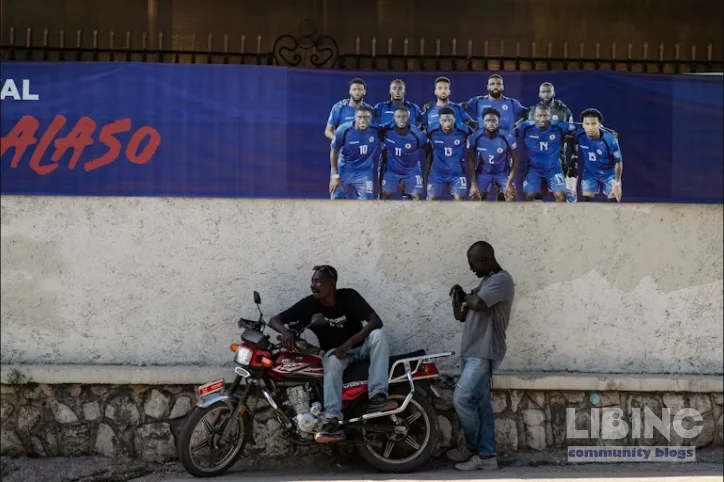
Against the backdrop of 222 years since Dessalines’ battle for independence, Haiti’s men’s national team will line up at a World Cup for the first time since 1974. The 26-man squad is a data-rich mirror of national history and global mobility: only ten players were born in Haiti, one plays for a Haitian club, twelve were born in France to Haitian parents, one in Canada, one in Switzerland, and two in the United States. This blend forms more than a team; it is a living map of migration, opportunity, and contested belonging. As soccer broadcaster Nico Cantor put it after Haiti clinched qualification on November 18, 2025—exactly 222 years after Dessalines’ pivotal moment—the World Cup is a stage where a nation’s story can crystallize in a single ball and a single run to goal.
Analytics of Haiti World Cup 2026 lineup
The Haiti World Cup 2026 lineup embodies a distribution of the global talent pipeline that most national teams would envy in a generation of players. The core dynamic is not simply who wears the jersey but where their development occurred, and how that development redefines national allegiance and reverence.
From a data perspective, the squad demonstrates a deliberate, almost surgical, leveraging of diasporic ecosystems. Ten players were born in Haiti, while the remaining 16 have deep roots abroad. The most striking demographic is the heavy representation of Franco-Haitian players—those who grew up in France or came through French football systems—contrasted with a comparatively modest U.S.-born contingent. This is not merely a numerical fact; it signals a strategic alignment with the ecosystems where elite training, scouting networks, and professional pathways converge most reliably for Haitian youth.
Duckens Nazon stands out as the talisman and top scorer, born in a Parisian suburb and developed through a sequence of French clubs before a more itinerant professional career that later took him to England, Iran, and beyond. His path illustrates a broader pattern: the most visible Haitian leaders on the field often emerge from European academies that blend technical precision with a culture of professional discipline. The 2026 squad also includes Frantzdy Pierrot, who moved to the United States as a child and rose through American college soccer before forging a professional career across multiple continents. This cross-pollination is not a sidelight; it shapes the team’s tactical flexibility, mental resilience, and risk tolerance on the field.
The single-club reality in the roster is telling: Woodensky Pierre represents a rare instance of a player from a Haitian club reaching the World Cup squad. The rest peak through systems abroad, which means the team’s cohesion increasingly depends on bridging language, coaching philosophy, and playing styles across leagues. In practical terms, Haiti’s World Cup 2026 performance will hinge on how well these players negotiate the transition from club duties to a unified national identity—how a player used to the pace of Belgian or French football translates that experience to a compact, collective game in a World Cup arena. This is where the data meets the narrative: the mix of birthplaces aligns with a strategic emphasis on technical skill, tempo, and adaptability—attributes valued on any modern global stage, but trained in diverse contexts that may diverge from a single, homogenous youth development pipeline.
Further analytical depth comes from comparing Haiti’s 2026 roster with the country’s World Cup legacy. The 1950 team’s famous run had a different set of constraints: a team composed largely of Haitian-born players who sparked a national breakthrough within a very different football ecosystem. The 1974 squad, by contrast, relied on players who felt connected to Haiti as a homeland but trained in a world where national teams did not operate as extensively in the diaspora’s orbit. Today’s team sits at the intersection of those eras: a new generation who define national pride through a transnational talent network, but who still face the challenge of translating diaspora-driven potential into homegrown, durable success. The question becomes not only who scores, but which environments most reliably cultivate consistent, high-level performance under the pressures of a World Cup stage. This is why the Haiti World Cup 2026 narrative is as much about systemic opportunity as it is about soccer talent.
Contrast: opportunities and limits across France, the U.S., and Haiti
Two themes emerge when we contrast the developmental environments feeding Haiti’s World Cup 2026 squad: the breadth and depth of French football’s training apparatus, and the more variable pathways available in the United States, Canada, and Haiti itself. France has become the most consequential cradle for Franco-Haitian players. Its state-subsidized, club-driven ecosystem produces a pipeline where youth players in housing projects and suburbs of Paris, Lyon, and Marseille gain access to world-class coaching networks, academies, and competition. The result is a generation of players who blend technical polish with young-professional resilience. For Haiti’s national story, these players carry with them an embedded understanding of professional standards that Haiti’s own domestic league has not consistently provided in recent decades. This is a double-edged sword: it raises the ceiling for performance while compounding the challenge of achieving true team cohesion when players have very different training philosophies and match rhythms.
In the United States, the diaspora has grown into a robust but uneven development landscape. The U.S. system offers pathways through elite colleges and professional pipelines that can be transformative for Haitian players who leverage dual nationality or family migration to access opportunities. Derrick Etienne Jr. and Duke Lacroix are emblematic of this route: they navigated a U.S. development ecosystem that buffers talent with structured competition, but often forces players to negotiate the divide between club demands and national-team immediacy. The broader implication is that Haiti’s World Cup 2026 team gains from a diversified portfolio of development experiences, but must actively bridge the gaps between these experiences to generate consistent, collective performance when facing top-tier opponents. The contrast with Haiti’s own domestic constraints is stark: a strong diaspora-based pipeline can uplift a national program, but it cannot substitute for a coherent, domestically anchored system that sustains talent from adolescence to the global stage.
The diaspora’s influence over Haiti’s identity also poses cultural questions. A team whose roots spread across Paris, Montreal, and New Jersey carries a multiplicity of professional cultures, languages, and expectations. The challenge for the coaching staff is not simply tactical alignment; it is cultivating a shared ethos that honors the country’s history while embracing the modern, globalized game. This dynamic also echoes the broader arc of Haitian football: the sport serves as a touchstone for pride, a signal of dignity, and a catalyst for cross-border solidarity, even as travel constraints and visa policies complicate the fan experience. In this sense, the Haiti World Cup 2026 narrative is as much about mobilizing symbolic capital as it is about winning matches. The emotional resonance—captured already in Cantor’s observation about independence’s anniversary—becomes a strategic resource for unifying a widely dispersed community around a singular sporting event.
Cause-and-effect: migration, policy, and performance on the world stage
The political economy of Haitian soccer has long intertwined migration, policy, and competitive aspirations. FIFA’s eligibility rules, initially allowing players who had represented one country to switch before age 21 (and later, in 2020, loosening in certain contexts), create a structural incentive for players with dual ties to pursue opportunities that maximize their development while preserving eligibility for the national team. These rules influence not only which players appear in a given World Cup squad but also how national teams think about talent pipelines and risk management. In practice, Haiti’s 2026 roster reflects a deliberate strategy to assemble a team with diverse developmental backgrounds that can collectively align under a shared tactical framework when the whistle blows in tournament group stages and knockout rounds.
The French system’s outsized influence is a causal factor in Haiti’s modern football story. A robust, state-supported sports infrastructure in France accelerates the maturation of many players who eventually represent other nations, including Haiti. This dynamic can be viewed as a form of soft globalization where national identity evolves through transnational training networks. The effect is a double layer of opportunity and fragility: players bring high technical standards but can struggle to translate individual excellence into cohesive team performance without a unified domestic program. The 2026 squad’s composition—combining players with intensive French academies, U.S. college experiences, and Haitian roots—produces a hybrid talent pool. The cause is the migration history itself; the effect is a team with unmatched potential but with a complex path to tournament chemistry and consistency.
Policies and funding decisions in Haiti shape the ultimate ceiling of the national program. When the broader system lacks reliable domestic competition and long-term investment, diaspora-driven talent becomes the principal engine of international competitiveness. The 2026 World Cup serves as a crucible: it tests whether Haiti can convert diaspora-derived momentum into a durable national project that can sustain excellence beyond a single tournament. If the federation successfully leverages the diaspora’s skills, networks, and resources toward a more coherent domestic development plan, the country could see a virtuous cycle where new generations rise through improved infrastructure, enabling even greater representation in major leagues and tournaments. Conversely, failure to harness this potential risks perpetuating a mismatch between talent and opportunity, leaving the team to gamble on singular performances rather than a reliable pipeline.
Expert reconstruction: futures shaped by diaspora and national ambitions
Adapting the diaspora’s strengths into a sustainable national program requires deliberate strategy and disciplined execution. The expert view emphasizes four interlocking priorities that could define Haiti’s trajectory in the coming years:
- Integrated scouting and development networks: Create formal ties between Haitian clubs, European academies, and U.S. collegiate programs to ensure talent flows with consistent coaching philosophies and playing styles.
- Domestic infrastructure and competitive pathways: Invest in youth leagues, coaching education, and facilities inside Haiti to anchor a national identity and give homegrown players a platform to push for senior-team inclusion.
- Diaspora engagement and identity diplomacy: Build cultural and sporting exchanges that unite fans, clubs, and national teams across borders, ensuring the diaspora remains a constructive, financially sustainable partner rather than a contingent fallback.
- Strategic leadership and data-driven planning: Implement performance analytics, injury prevention, and match preparation protocols to maximize the effectiveness of players returning from abroad.
In this frame, Haiti World Cup 2026 becomes less a one-tournament miracle and more a proof of concept for a globally networked, domestically anchored football program. Cantor’s reflections about dignity, self-determination, and national meaning translate into practical ambitions: a future where the national team can reliably translate diaspora-derived talent into sustained performance, a deeper sense of national pride, and a more resilient football ecosystem that can weather the volatility of international competition. The 1974 hero Emmanuel Sanon’s legacy—part of a broader national memory—needs to be complemented by a contemporary infrastructure that makes the thrill of a world stage accessible to a generation that spans Paris, Montreal, New Jersey, and Port-au-Prince. The next phase will test whether the country can convert historical symbolism into durable sporting capital, yielding both memorable moments and a lasting, positive impact on Haitian football culture.
Looking ahead, the most compelling narratives will not be the single goals scored in Qatar-like glory or the last-minute wins in group stages. They will be the connective tissue: the coaches who align a multinational squad; the federations that convert fan enthusiasm into capital and programs; the media ecosystems that translate diaspora pride into global spectator interest. If the Haiti World Cup 2026 story accelerates these processes, the nation may not only celebrate a historic qualification but also herald a new era in which Haitian football becomes a symbol of actual, material opportunity for a people long defined by displacement and resilience. And if a player like Sanon’s legacy can be reimagined as a modern blueprint for development, the world might witness Haiti producing more than heroic moments; it could witness a durable football culture that endures far beyond a single tournament.
In the end, the game will reveal as much about the world’s industries of talent as it does about the courage of a small nation to dream big. The Haiti World Cup 2026, therefore, stands as a litmus test for how migration, policy, and sport can converge to shape a nation’s sense of itself in a global arena. If the dream translates into a practical blueprint, the world will witness not just a breakthrough for Haiti, but a model for how diaspora-rich nations can leverage global networks to build lasting, homegrown sports excellence.
To convert this strategic mix into durable on-field performance, Haiti must formalize a domestic-diaspora talent pipeline with clear milestones and accountability.
Integrated scouting and development tracks
| Track | Purpose | Lead KPI |
|---|---|---|
| Diaspora academy links | Standardized coaching and cross-border scouting | 100 players in continental academies by 2027 |
| Domestic league reform | Facility upgrades, youth leagues, coaching education | 8 centers with licensed coaches |
| Coaching education | Certification aligned with FIFA norms | 200 licensed coaches by 2030 |
| Identity & fan engagement | National brand and diaspora participation | 10k new registered fans in host markets |
Milestones dashboard
By 2028: 4 new youth centers; By 2030: 100 players in pro academies; By 2032: diaspora clubs integrated in national scouting network.
Operational steps
- Establish MoUs between federation, European clubs, and U.S. colleges
- Invest in domestic facilities and coaching licenses
- Launch quarterly analytics reviews to align club and national styles
These steps turn global exposure into a durable, homegrown football ecosystem that can sustain Haiti's ambition beyond a single tournament.
How can diaspora talent become a durable asset for Haiti?
Diaspora talent becomes a durable asset when their global training is connected to a clear domestic plan that aligns coaching standards, scouting networks, and competitive play across borders, so players returning to Haiti or appearing in the national team enter a shared development culture rather than shifting between incompatible systems. This requires formal pathways, not ad hoc moves, and a governance structure that tracks progress, assigns responsible partners, and measures outcomes in youth development, professional placement, and national-team readiness. By codifying these connections, talent remains linked to Haiti’s long-term aims rather than rotating opportunities without a home anchor.
Analytical note: This linkage reduces variability in player development and accelerates national-team readiness.
What concrete steps can Haiti take to bridge diaspora and domestic development?
Concrete steps include formalizing partnership MoUs with European clubs and U.S. colleges, establishing a unified coaching curriculum, launching a nationwide scouting network, investing in youth leagues and training facilities, and setting quarterly progress reviews with specific KPIs. This creates a seamless talent pipeline from youth academies to the senior level, ensuring players grow within a coherent system rather than shifting between disparate programs. Accountability comes from shared dashboards, annual reporting, and aligned incentives for clubs and federations.
Analytical note: A robust bridge reduces attrition and speeds up maturation from academy to national team.
Which metrics will show progress in Haiti's football program?
Key metrics include number of licensed coaches, youth centers or academies active in the pipeline, players placed into pro academies, and diaspora-driven fan engagement. Tracking changes in competitive results, player development timelines, and cross-border collaborations provides a clear map of momentum. A balanced scorecard should also include injury rates, match-readiness indicators, and the rate of domestic league participation by diaspora-trained players. Regular benchmarking against regional peers keeps expectations grounded while driving continuous improvement.
Analytical note: Metrics translate ambition into measurable growth across coaching, facilities, and player pathways.
Why is domestic league investment essential alongside diaspora involvement?
Domestic league investment anchors talent by giving young players a stage to translate training into real competition. Diaspora involvement can raise the ceiling, but without homegrown leagues, coaching continuity, and professional pathways, progress stalls when players return home or come under national-team pressure. A strong domestic framework—facilities, governance, youth competitions, and coaching education—offers a reliable platform for translating foreign development into homegrown excellence. This synergy creates a durable cycle of improvement rather than a one-off boost.
Analytical note: A healthy domestic base ensures diaspora advantages become lasting national capability.
How does the 2026 roster illustrate global talent networks and diaspora unity?
The 2026 roster embodies a global talent network by blending players trained in France, the United States, Canada, and Haiti, unified by a common national identity and shared tactical standards. This unity is built through targeted scouting, aligned coaching philosophies, and a bilateral understanding between clubs abroad and the Haitian federation. Diaspora unity strengthens adaptation in diverse leagues while keeping the national program focused on a cohesive style and collective objectives. The risk is fragmentation; the remedy is a persistent governance framework and cross-border communication rhythm.
Analytical note: Diaspora-driven diversity can be a strategic strength when aligned with domestic aims.
What are the main risks of relying on diaspora players and how can they be mitigated?
Relying on diaspora players risks misalignment of playing styles, availability, and integration into a unified system. Mitigation requires a formal talent pipeline, consistent coaching, and regular integration camps that synchronize club rhythms with national-team demands. Transparent selection criteria, ongoing medical and performance analytics, and a shared calendar improve trust and predictability. By embedding diaspora players within a domestically anchored plan, the federation can balance opportunity with continuity and prevent talent fragmentation.
Analytical note: Structured integration reduces volatility and strengthens the national program’s resilience.




Add a comment
To comment, you need to register and authorize
Comments
Another axis for analysis is the development pipeline: how to measure whether diaspora experience actually strengthens homegrown performance. It is not enough to count appearances in prestigious leagues; the focus should be on how the coaching staff translates techniques, game reading, and recovery practices into Haitian team habits. Metrics could include the rate at which players adopt a common pressing trigger, or the frequency with which substitutes preserve or restore a chosen tactical shape. Importantly, data should guide decision making about player selection and match preparation under the constraints of a condensed tournament schedule. The broader implication is that Haiti’s strength lies not only in talent but in the ability to harmonize diverse development stories into a single, playable system. If clubs and federations pursue transparent data sharing, open coaching dialogues, and joint scouting outputs, the team’s cohesion could mature faster than would seem possible from any single league’s blueprint.
Beyond the aesthetics of belonging, the piece hints at a deeper policy and development agenda. Diaspora pride can be a durable asset only if it translates into domestic opportunity: integrated scouting that ties European academy networks to Haitian clubs, domestic youth competition that nurtures a common standard, and a coaching ladder that elevates local coaches to work with players who arrive from abroad. The risk is that talent arrives with high ceilings but without a coherent pipeline back home, leaving the national program dependent on transient moments rather than durable training cultures. If readers were asked to propose four concrete steps, what would they be? How should Haiti balance celebrating diaspora pathways with investing in homegrown pathways that produce continuity across generations? And in what ways can media, clubs, and schools collaborate to turn the symbolic energy around Haiti’s World Cup into real, lasting progress for young players and their communities?