

Train des Merveilles: Alpine Rail Odyssey from Nice to Tende — An Analytical Travel Narrative
The Train des Merveilles slices the Côte d’Azur coastline like a glinting thread that pulls you inland to the Mercantour. On a clear morning, mid-journey between Nice and the mountains, the rail line reveals itself as a feat of sustained concentration: a 100-kilometre ascent that gains about 1,000 metres in altitude, crossing more than a hundred bridges, countless tunnels, and a network of helical loops that tuck the track into the rock itself. A programme of major works, completed last December, reopened a line long celebrated for its spectacular geometry and its ability to turn a railway journey into a panoramic ascent into Europe’s high country. This article approaches the Train des Merveilles through four lenses: the engineering and experiential analytics that govern the ride; the contrasts between coast and alps that the route makes vivid; the historical causality that ties the Salt Road, medieval towns, and Neolithic sites together; and an expert reconstruction of how such a living heritage can stay viable in a modern rail network.
Analytics of the Train des Merveilles Journey
The central analytic claim is simple: the Train des Merveilles is not merely a scenic ride; it is a compact laboratory of alpine railway engineering that translates geological scale into passenger experience. The line’s architecture rests on a few stubborn facts: a 1,000-metre climb within 100 kilometres, more than 100 bridges and viaducts, and almost as many tunnels and retaining walls. The most striking structural feature appears in the helical loop tunnels, where the locomotive itself negotiates elevation by threading the track through inside the mountain, effectively turning a long grade into a sequence of short, manageable rises. This is not a cosmetic flourish; it is a solution to the alpine constraint: steepness would otherwise demand impractically long rights-of-way or expensive, continuous switchbacks that decelerate timetables and erode reliability.
- Gradient management: The ascent uses gradients optimized for traction and braking, reducing wheel-slip and accelerating wear concerns while keeping the ride smooth for passengers and freight alike.
- Structural density: Every hundred metres of track may hide a bridge or a tunnel. The maintenance demand is relentless, especially after winters when rockfalls and freeze-thaw cycles threaten alignment and drainage.
- Onboard interpretation: A seasonal onboard guide frames the journey as a moving classroom—geology, hydrology, and local ethnography are woven into the narrative to anchor the spectacle in measurable phenomena rather than mere scenery.
From a practical perspective, the line’s rehabilitation after a year of closure demonstrates the essential trade-off in heritage railways: maintain the technical integrity of the route while preserving the passenger experience. The couple of hours spent climbing to the Mercantour foothills are a paradoxical combination of speed and deliberate slowness—a deliberate pacing designed to reveal the scale of the terrain while keeping the schedule dependable for locals and tourists alike. The rail system’s resilience depends on disciplined asset management: track bed stabilization, drainage improvements, tunnel lighting upgrades, and the modernization of communication and safety systems—all conducted without interrupting the visual integrity that draws riders to this route in the first place.
Why does this matter as an analytic matter? Because the Train des Merveilles turns geography into governance: the very decisions about where to place a tunnel, how to shape a viaduct, and where to site a station reframe regional development. In the Mercantour corridor, where settlement patterns are sparse and terrain is unforgiving, every metre of line reflects a calculation about risk, return, and the public value of mobility. The experience of the ride, then, encodes the logic of alpine infrastructure: optimize for reliability, expose the landscape, and cultivate a sense of place that keeps people returning to both the train and the mountains.
Contrasts Along the Riviera and the Mercantour
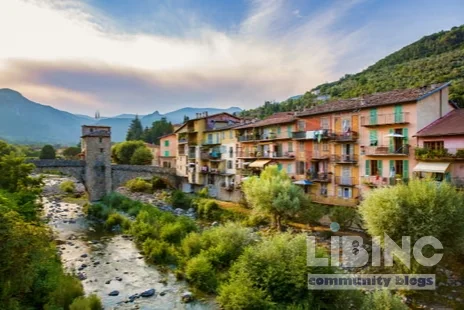
The journey highlights a spectrum of contrasts that illuminate regional identity. On one side, Nice’s urban sprawl and the glamour of its coastline—yachts, glassy seawater, and a sun-drenched promenade—sit in deliberate tension with alpine villages where slate roofs sit on the edge of cliffs and the air tastes of pine and resin. The train’s trajectory makes the shift tangible, turning a few hours of coastal urbanity into a descent into a more austere, almost ceremonial landscape. This duality matters because it frames how visitors interpret the whole region: as a place where modernity and history share a compact corridor rather than a single, static destination.
- Coastal vitality vs. mountain reserve: The coast offers cafes and marinas; the Mercantour offers quiet trails and austere views that demand attention rather than casual consumption.
- Medieval texture vs. Neolithic depth: Towns like Sospel and La Brigue present medieval streets and chapels; nearby landscape houses some of Europe’s oldest rock engravings, inviting a longer lens on human presence in the Alps.
- Seasonality: Summer brings hikers and markets; winter light clarifies the stark geometry of towers and ramparts. The railway’s timetable must accommodate both demand sets without privileging one over the other.
Within these contrasts, gastronomy acts as a hinge. In Antibes and Beaulieu-sur-Mer, seafood and Provençal produce anchor the coastal experience, while in the mountains, cheeses, cured meats, and hearty dishes reflect pastoral economies that have endured through centuries of isolation. The culinary dial moves with the landscape, and the journey, in turn, teaches us how cuisine codes regional identity. The combined effect is a pedagogical one: the route teaches not just about trains, but about the reciprocal relationship between space, scale, and culture.
The Mercantour introduces another decisive contrast: wilderness and accessibility. The park’s high peaks frame a plateau dynamic in which grazing and seasonal trade have shaped settlements for generations. The Chapel of Our Lady of Fountains, 13th-century frescoes by Giovanni Canavesio, and the Chapel’s architectural austerity sit in quiet counterpoint to the sophisticated engineering of the Train des Merveilles. This is not merely a scenic juxtaposition; it is a study in how sacred site preservation and transport infrastructure must cohabit in a landscape that is both fragile and heavily trafficked. The experience of the route thus becomes a composite lesson in how to balance reverence and mobility in fragile alpine ecologies.
Cause and Effect: Rail, Salt Road, and Towns
History here operates like a vector. The line did not appear in a vacuum; it grew from a matrix of older commercial routes and geographic imperatives. The Salt Road, a mule train route linking the Piedmontese Alps with the Ligurian coast, defined a historical corridor that shaped settlement and commerce well before electrification and standard gauge. La Brigue’s emergence as a town of note, perched high above river valleys and crossroads, reflects its role as a staging point on the way to or from navigable routes. The architecture, the urban fabric, and even the local markets bear marks of transport-oriented development that predates the railway by centuries. The Train des Merveilles, then, reinterprets an old logic of movement in a modern material form: a corridor that compresses space and makes alpine access practical without erasing historical memory.
- Salt Road to rail transition: The shift from mule trains to iron rails reconfigured trade flows, enabling seasonal movements to become daily routines for residents and visitors alike.
- Medieval townscapes and logistics: Sospel’s market day, the Pont-Vieux, and the old town fabric reveal a continuity of commerce that the railway both honors and reinterprets with new throughput and connectivity.
- Tourism and regional economies: The line functions as a catalyst for heritage tourism, which sustains local businesses while presenting challenges of congestion and preservation pressures on fragile sites like the Chapel and other medieval artifacts.
Engineering choices also ripple outward in unexpected ways. The decision to employ multiple tunnels and bridges shapes maintenance economies, insurance risk, and emergency response protocols. It also constrains local development: towns along the corridor must align with the railway’s reliability, or risk becoming marginal nodes in a broader regional system. In this sense, infrastructure becomes a narrative of causality—the train’s existence sustains the valley’s social and economic rhythms while demanding continual investment in a constantly evolving network and landscape.
The Train des Merveilles thus embodies a causal loop: historical roads forge settlements, which in turn become anchors for rail corridors; the railway then redirects the flows of people, goods, and culture back into those same towns—creating a feedback mechanism that reinforces heritage, tourism, and regional identity. The line’s future, therefore, hinges on managing this interplay without erasing the very characteristics that attracted travelers in the first place: the sense of stepping into a region that feels both remote and accessible at once.
Expert Reconstruction: Preservation and Future Viability
From an expert vantage, the Train des Merveilles is a living system that must reconcile several imperatives: technical safety, cultural preservation, environmental stewardship, and economic sustainability. The recent major works illustrate a disciplined approach to resilience: restore critical alignments, stabilize rock faces, refresh drainage, and upgrade signaling without turning the journey into a sterile transport experience. Such a program demonstrates that heritage railways can remain functional and relevant if they embed a continuous improvement ethos into their operating model. The challenge is not only to maintain the romantic quality of a mountain railway but also to articulate a clear value proposition for contemporary travelers who expect interpretive depth, reliable timetables, and a sense of discovery that remains accessible.
- Preservation through interpretation: Onboard guides, signage at stops like Sospel and La Brigue, and curated visitor experiences help translate a technical route into a story about landscape, history, and culture.
- Asset management as strategy: The railway’s components—bridges, tunnels, retaining walls—must be treated as integrated assets with lifecycle planning, thus reducing disruption and extending service life.
- Sustainable tourism integration: Coordinated timetables with regional trains (for instance, Ter Zou!) and seasonally focused marketing can distribute demand more evenly, supporting local economies without overburdening the environment.
Looking ahead, the question is how to keep the Train des Merveilles legible as a living heritage while ensuring operational reliability. This means embracing incremental upgrades that preserve the line’s visual and historical texture—avoiding attempts to modernize away the very features that define the journey. It also requires a robust collaboration among regional authorities, railway operators, and local communities to ensure safe access to sites like the Chapel of Our Lady of Fountains and the ancient Salt Road heritage nodes, without eroding their authenticity. The route’s future lies in balancing curiosity with discipline: letting passengers feel the axes of time, geology, and culture while maintaining the practicalities that keep a working railway funded and safe for decades to come.
In sum, the Train des Merveilles offers more than scenic pleasure. It streamlines the complex math of alpine transport into a narrative with real-world consequences for regional planning, heritage preservation, and sustainable tourism. The analytical takeaway is straightforward: a high-value route is not merely about spectacle; it is about sustaining a living landscape by embracing rigorous engineering, careful interpretation, and deliberate stewardship. The journey remains a powerful invitation to see how a single railway line can both reflect and shape a region’s past, present, and possible futures.
All of this is realized in practice through careful curation and technical stewardship. The Train des Merveilles, with its 9:30 departure and onboard guide during peak season, remains a vivid case study of how a regional rail adventure can be both academically rigorous and deeply rewarding on a human scale. The line continues to define what it means to move through a landscape with respect for history, terrain, and the communities that rely on it.
Note: The trip featured accommodations with Mama Shelter Nice and the Nice Côte d’Azur tourist board, an endorsement that aligns with a broader strategy of promoting sustainable regional travel and authentic experiences that connect visitors with the Alpine core and its coastal gateway.
Driving home the analytical claim, the Train des Merveilles is not simply a route; it is a living laboratory where engineering precision, cultural memory, and environmental sensitivity converge in each turn, bridge, and timbered street. It is a route that rewards those who approach it with curiosity, restraint, and a readiness to see how a railway can interpret the mountains without losing its soul.
Concluding thought: the Train des Merveilles embodies a model for heritage rail in sensitive terrain—honor the past, maintain the present, and nurture the future with disciplined care and thoughtful interpretation. The ride is a manifesto of how mobility, culture, and landscape can coexist in a way that feels both intensely local and somehow universal.
Practical governance for sustainable heritage rail
In practice, the value of Train des Merveilles extends from spectacle to a reliable, repeatable system. To translate this into action, a concise governance framework is essential, organizing asset stewardship, demand management, and interpretive capacity into an executable plan that can be funded and monitored.
| Indicator | Current | Target | Notes |
|---|---|---|---|
| Gradient management | Avg 2.3% | ≤ 2.5% | Smooth traction, reduces wear |
| Structure density | 120+ structures | 120 | Supports inspection cycles |
| Drainage signaling uptime | 85% | > 98% | Winter reliability essential |
| Onboard interpretation | Seasonal guides | Year-round program | Adds context without slowing trains |
This data underscores the need for a structured approach to maintain reliability while expanding access.
Operational steps
- Governance
- Asset maintenance scheduling
- Data-driven risk assessment
- Demand management
- Integrated timetables with Ter Zou!
- Seasonal marketing campaigns
- Visitor experience
- Onboard guides and signage
- Site access coordination with local towns
Integrating these elements creates a resilient, human-centered heritage rail that remains viable while honoring the landscape and communities.
What makes Train des Merveilles a model for heritage rail viability?
At its core, the Train des Merveilles demonstrates how a heritage rail line can stay vital by integrating disciplined asset maintenance, reliable scheduling, and a visitor-centered narrative that clarifies landscape and history without sacrificing authenticity; the approach treats every bridge, tunnel, and retaining wall as a lifecycle asset, coordinates safety upgrades with practical timetables, and aligns drainage, signaling, and inspection cycles to deliver predictable journeys that benefit both locals and travelers alike.
Such a model supports measurable improvements in resilience, visitor satisfaction, and local economies by embedding governance into daily operations and inviting community participation in interpretation and stewardship.
How do gradient and tunnels influence reliability and rider experience?
Long first sentence for depth: The gradient and dense tunnel network constrain speed choices and braking expectations, making precise timetable alignment and proactive maintenance essential; when gradients are consistently controlled and tunnel drainage is effective, passengers experience fewer delays and smoother climbs, while operators benefit from clearer maintenance windows and more reliable energy use.
In practice, this translates to regular peak-window checks, targeted rock stabilization, and early-warning signaling tests that keep the ride both dramatic and dependable.
What governance steps improve sustainable tourism along the Mercantour corridor?
First sentence long: A practical governance approach links asset stewardship with demand management and community-led interpretation, establishing shared metrics, cost-sharing models, and joint marketing aligned with seasonal patterns to spread visitors over the year while protecting fragile sites.
Subsequent sentences emphasize coordinated funding, performance dashboards, and local partnerships that sustain economies without compromising landscape integrity.
How can onboard interpretation balance learning with preservation?
Long first sentence: Onboard interpretation should illuminate geology, history, and culture in a way that complements the visual drama, using concise audio guides and stop-specific panels that invite curiosity without adding friction to the timetable.
Follow-up notes highlight modular programs that adapt to seasons and rider interest, enabling deeper experiences in a controlled, respectful manner.
What practical steps ensure the future viability of heritage lines like Train des Merveilles?
First sentence long: The future hinges on a durable cycle of assessment, incremental upgrades, and community engagement, where safety, environment, and cultural values are treated as inseparable from the economics of running trains and attracting visitors.
Second sentence summarizes actions: establish a regional governance table, deploy low-impact upgrades, and integrate education programs that extend beyond the railway to nearby towns and parks.




Add a comment
To comment, you need to register and authorize
Comments