

Table of Contents
- Through analytics: measuring the rural disaster recovery landscape
- Through contrast: rural-urban disparities in response and funding
- Through cause-and-effect: why declaration mechanics shape outcomes
- Through expert reconstruction: policy pathways to strengthen rural disaster recovery
Across the United States, rural nonmetro counties bear a disproportionate burden when disasters strike. They host 14 percent of the population but account for 58 percent of counties in FEMA disaster declarations. Between 2016 and 2025, rural counties make up nearly two-thirds of major disaster declarations, a pattern that shapes access to federal aid. This reality frames the core question of rural disaster recovery: how can communities translate federal resources into durable local resilience?
The spectrum of FEMA tools—from Public Assistance to Building Resilient Infrastructure and Communities (BRIC) funding—often becomes the hinge on which rural recovery turns. The policy landscape is further complicated by changes in agency staffing and program design under the current administration. In rural places, where administrative capacity is already stretched, the way these tools are deployed determines whether recovery yields durable improvements or merely a patchwork rebound. In short, rural disaster recovery hinges on three intertwined dynamics: program design, local capacity, and the reliability of disaster declarations.
Through analytics: measuring the rural disaster recovery landscape
Analytical frames reveal a mismatch between where damage occurs and where resources flow. Rural counties experience high disaster incidence relative to population size, yet their asset base can be thinner and less formalized than urban areas. This matters because FEMA’s damage assessments and asset valuations drive eligibility for major funding streams like the Public Assistance program and BRIC. When the pre-disaster asset base undervalues rural infrastructure, the formal recognition of damages may understate needs and slow down recovery timelines.
Another analytic constant is the dependency of recovery outcomes on declaration levels. Major Disaster Declarations unlock the broadest set of programs; Emergency Declarations activate narrower suites. The pace at which a local incident escalates into a DR or EM designation shapes the financial and logistical path forward. Rural communities face longer serendipitous waits and more limited program access when damage data arrive late or when state-to-federal coordination falters. These dynamics illuminate why timing and cataloging of losses matter for rural disaster recovery.
Asset valuation and eligibility are inseparable from governance capacity. Rural areas often face administrative constraints that complicate accurate reporting, documentation, and data sharing. The result is a feedback loop: limited capacity hampers timely requests, which delays declarations and, in turn, delays funding. Lived experience shows that even when federal funds exist, bureaucratic friction translates into slower reconstruction, protracting the period of disruption for households and local businesses. This is not merely a budgeting problem; it is a governance problem with lasting consequences for rural resilience.
To diagnose the rural recovery trajectory, it helps to map program uptake across counties, noting both PA and mitigation funding flows. The Public Assistance program typically provides the lion’s share of reimbursements for infrastructure repair, while HMGP and BRIC facilitate protective upgrades and long-term resilience. In rural contexts, program uptake hinges on accurate damage assessments, timely declarations, and streamlined administrative processes. Where these pieces align, recovery accelerates and resilience expands; where they drift apart, rural towns linger in precarious rebound conditions.
Through contrast: rural-urban disparities in response and funding
Urban regions generally benefit from denser tax bases, more robust governing capacities, and fuller access to pre-disaster planning. These advantages translate into quicker damage identification, faster submission of coverage requests, and greater leverage in state-federal conversations about funding priorities. The result is a clearer path to DR declarations and broader program participation for urban areas, which in turn amplifies recovery speed and resilience. In contrast, rural counties experience slower data flows and smaller in-house teams, which can dilute the impact of the same federal tools.
Rural communities also depend heavily on local organizations to fill gaps left by stretched public systems. Volunteer networks, community development funds, and regional partnerships become critical for sustaining recovery activities when PA reimbursements lag. This reliance, while essential, interacts with federal programs such as CDBG-DR and SBA disaster loans in ways that can both help and complicate local recovery. The result is a fragile ecosystem where community capacity matters as much as cash, shaping how quickly a town can rebound.
Administrative capacity in rural areas often occupies the bottom of local government budgets. When disaster response draws on police, fire, and emergency management leaders simultaneously, dedicated recovery planning loses ground. Staffing constraints also affect data collection, cost documentation, and program compliance. The consequence is slower reimbursements, tighter cash flow, and delayed repairs to essential services, with ripple effects on public health and economic activity.
Access to federal funding remains sensitive to how declarations are issued and sustained. The transition from EM to DR status, for instance, can reset access rules and funding eligibility windows. Rural counties may see months slip by between incident onset and formal DR designation, eroding recovery momentum. In urban settings, similar delays occur but are less likely to stall broader recovery programs due to higher baseline capacity and ongoing urban renewal initiatives already in motion.
Through cause-and-effect: why declaration mechanics shape outcomes
The core mechanism is simple on paper and complex in practice: the declaration level determines which federal programs unlock and when. A Major Disaster Declaration unlocks the widest array of disaster recovery resources, including both immediate needs and long-term mitigation. When a rural incident fails to meet DR thresholds promptly, affected communities lose access to the most expansive recovery toolkit for longer periods. This causal chain places rural towns at a disadvantage in the crucial months following a disaster.
Damage assessment methodology matters as a causal lever. Pre-disaster asset valuations decide what counts as losses and what does not. Rural infrastructure often includes dispersed, small-scale assets like bridge approaches, rural waterlines, or dispersed feeder lines that are expensive to verify and repair. If these assets carry lower assessed values, the total verified damages may fall short of DR thresholds, delaying or shrinking federal response. The implication is that measurement choices shape the boundary between patchwork recovery and durable rebuilding.
The sequencing of declarations creates downstream effects on funding windows and project scoping. In some cases, an EM declaration can enable urgent needs programs, but it might not authorize full mitigation investments. If the event escalates to DR status later, communities must reprocess requests, reallocate staff time, and revalidate costs. For rural leaders already juggling multiple responsibilities, this switch can squander months and inflate the cost of rebuilding essential services.
Documentation demands, data gaps, and varying state readiness compound the causal chain. Local governments with limited administrative capacity face higher per-dollar compliance costs, reducing the effective value of every grant or loan. The higher the administrative burden in rural places, the slower the overall recovery, and the more vulnerable schools, clinics, and local markets become to disruption. This is not an abstract friction; it translates into missed opportunities for hazard mitigation and resilient infrastructure upgrades.
Through expert reconstruction: policy pathways to strengthen rural disaster recovery
The reconstruction of policy should target four near-term levers to improve rural disaster recovery outcomes. First, allocate dedicated disaster recovery coordinators within rural governments. A focused role reduces miscommunication, accelerates damage documentation, and shortens the time to declaration requests. Second, refine damage assessment practices to recognize rural vulnerability and asset fragility. This includes adjusting pre-disaster asset valuations to better reflect rural realities and incorporating local knowledge into the data collection process.
Third, streamline and harmonize PA, BRIC, HMGP, and mitigation processes with simpler reporting requirements and scalable project designs. Rural communities often cannot sustain high administrative costs, so reducing the burden without sacrificing accountability improves delivery and impact. Fourth, broaden financing tools to better align federal programs with rural needs. Expanding CDBG-Mitigation and providing faster SBA loan access tied to local recovery plans can accelerate both reconstruction and resilience upgrades.
A strategic emphasis on preparation and resilience yields durable benefits. Investments in housing, critical infrastructure, and local health and educational facilities stabilize community function and prevent an erosion of the tax base. When repopulation happens sooner, schools reopen, clinics operate, and businesses return, creating a virtuous cycle that strengthens the local economy and governance capacity. This is the heart of rural disaster recovery: recovery that builds back better rather than simply replacing damaged assets.
Policy alignment matters as much as funds. Federal and state authorities should coordinate around pre-disaster planning, data sharing, and flexible funding mechanisms that respond to rural realities. An emphasis on modular, scalable infrastructure can hasten reopening of essential services in remote areas. Finally, continuous evaluation and public-facing performance reporting will help rural communities see how funds translate into tangible resilience gains. These steps, taken together, convert federal aid from a lifeline into a platform for durable rural vitality.
In the end, rural disaster recovery is not a single grant outcome but a sustained state of readiness and recovery capability. The question is not merely how much money flows but how quickly and how well that money translates into safer housing, reliable utilities, and accessible healthcare and education. The stakes are existential for rural towns that depend on stable services to keep families and businesses from relocating. With deliberate policy design and disciplined implementation, rural disaster recovery can become a source of lasting resilience rather than a recurring vulnerability.
As Congress weighs changes to FEMA's role and procedures, the core insight remains clear: effective rural disaster recovery requires both robust federal support and strengthened local capacity. The most impactful reforms will be those that directly address the governance bottlenecks that slow relief, recovery, and mitigation. If implemented, these reforms can shorten recovery timelines, reduce the risk of a post-disaster downward spiral, and preserve the social and economic fabric that sustains rural America.
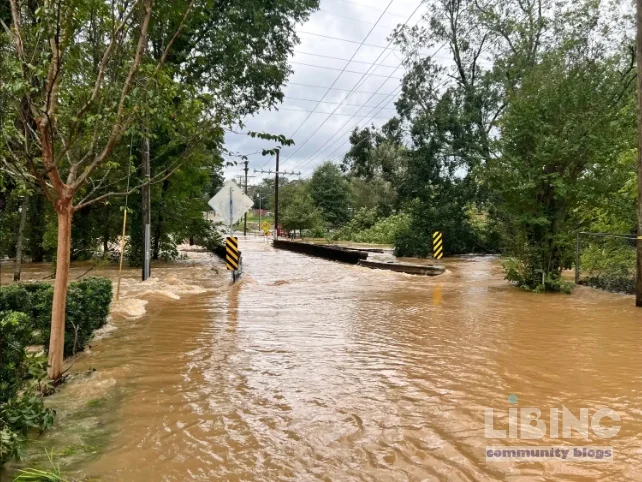
The path forward blends accountability with flexibility, protection with preparedness, and public funds with local ingenuity. Rural disaster recovery becomes a shared project, reliant on clear criteria, transparent processes, and sustained investment. In that sense, the resilience of rural towns after disasters like Helene hinges on deliberate choices now, not on luck after the next storm hits.
In sum, the rural disaster recovery challenge is not just fiscal; it is organizational. It is about turning the different rhythms of federal and local government into a cohesive recovery rhythm. With targeted reforms to declaration processes, damage assessment practices, and program administration, rural communities can convert federal aid into durable resilience that survives the test of future disasters.
Ultimately, the question is whether policymakers will see rural disaster recovery as a national imperative or as a repeating inconvenience. The better answer champions proactivity, not reaction; precision, not delay; and resilience, not mere reconstruction. The evidence and the history suggest that the right blend of reforms can move rural disaster recovery from a fragile hope to a reliably resilient outcome.
In the next wave of policy adjustments, the focus should be on enabling rural counties to declare disasters quickly, access the full spectrum of aid, and implement repairs with resilience as a core objective. That shift requires disciplined governance, smarter data, and a willingness to fund long-term mitigation alongside short-term needs. If these conditions hold, rural disaster recovery will cease to be a cumulative deficit and will become a model of sustainable renewal in the face of growing disaster risk.
Closing the capability gap: practical rural recovery playbook
Rural recovery often falters not for lack of funds but because damage reporting, program alignment, and local leadership lag the pace of events. A lean, scalable playbook can turn federal tools into durable resilience by clarifying roles, simplifying data, and sequencing action around declaration thresholds. The playbook translates policy into repeatable steps that small counties can apply within a single budget cycle, while building lasting capacity for future events.
| Program | Activation Level | Typical Lead Time | Rural Considerations |
|---|---|---|---|
| Public Assistance (PA) | Major/Emergency declarations | 2–6 weeks | Infrastructure repair, roads, utilities |
| BRIC | Mitigation planning and projects | 4–12 weeks | Pre-disaster resilience upgrades |
| HMGP | Post-disaster mitigation grants | 6–14 weeks | Protective upgrades in rural routes |
| SBA Disaster Loans | Private financing for individuals and small businesses | 6–8 weeks | Complementary financing for rebuild |
These snapshots help rural leaders plan a sequence: document damages with a shared template, trigger state-initiated declarations early, and align PA with mitigation investments as soon as possible.
Average time from incident to Major Disaster designation (rural context): 6–12 weeks
PA reimbursement processing window: 6–9 months
BRIC share of mitigation funding: 60–75% by project type
Understanding these timelines helps rural counties pair recovery with resilience. Consider a county with a damaged bridge and several culverts: PA funds the repair in the short term, BRIC supports a mitigation upgrade that reduces future flood risk, and HMGP/SBA options can bridge financing gaps for households and small businesses during reconstruction.
Recovery flow (illustrative)
| Step | Action | Rural considerations |
|---|---|---|
| Incident occurs | Initial local response | Dispersed assets require rapid triage |
| Damage documentation | Collect costs, assets, and scene data | Use mobile templates, local partners |
| Declaration request | Submit state DR/EM for designation | Coordinate with EMA and county admin |
| Funding activation | PA, BRIC, HMGP eligible projects | Prioritize critical infrastructure |
| Reconstruction & mitigation | Repair and resilience upgrades | Modular designs expedite reopenings |
In practice, success rests on three enablers: a dedicated recovery lead, a compact data template, and modular funding designs that combine PA, BRIC, HMGP, and mitigation tools with local plans. These moves compress time, reduce friction, and elevate resilience as an outcome, not just a reconstruction target.
What is the difference between an Emergency Declaration and a Major Disaster Declaration, and why does it matter for rural communities?
An Emergency Declaration authorizes federal funds for urgent life-safety response and immediate protective measures; a Major Disaster Declaration unlocks the full range of programs, including Public Assistance, hazard mitigation, and long‑term rebuilding resources; for rural communities this boundary matters because it determines eligibility windows, funding levels, and the speed at which contractors can be mobilized given dispersed assets and limited staff, making early damage documentation, coordinated state requests, and accurate cost accounting essential to achieving the higher level of support; without a major declaration, revenue sources shrink and recovery hinges on smaller programs with slower timelines, increasing the risk of prolonged disruption to critical services.
Rural areas often face late data submission and capacity gaps, which means getting to a Major Disaster sooner reduces downtime for essential services and supports economic stability.
How can rural counties accelerate damage documentation and request declarations?
In practice, establishing a single point of contact, standardized damage inventory templates, and pre-disaster data baselines can dramatically shorten cycles; early engagement with state emergency management and FEMA regional staff helps align projects with declaration thresholds, while modular documentation—photos, asset lists, and cost estimates in a shared, cloud-based ledger—reduces back-and-forth delays.
Proactive planning and cross-agency collaboration cut processing times and improve accuracy, increasing the odds of timely Major Disaster designation.
Which FEMA programs matter most for rural recovery, and how should communities sequence them?
PA provides critical infrastructure funding, BRIC supports prevention and resilience, HMGP funds post-disaster mitigation, and SBA disaster loans offer private financing; sequencing typically starts with rapid damage assessments, then PA for repairs, BRIC for resilience upgrades, and HMGP or SBA to ensure ongoing capacity; aligning with state plans and local resilience goals avoids redundant work and speeds up recovery.
Rural leaders should plan each step around local priorities—water, roads, housing—while looking for opportunities to combine funding into multi-year mitigation projects.
What governance changes help rural areas manage recovery more effectively?
Key reforms include appointing a dedicated disaster recovery coordinator, simplifying reporting requirements, and building a lean, shared data platform with partner organizations; investment in training and templates for damage cost documentation helps small staffs maintain compliance and transparency; strong local leadership translates into faster declarations and better utilization of PA, BRIC, HMGP, and CDBG mitigation.
Public-facing performance reporting builds trust and shows tangible resilience gains.
What strategies exist to fund long-term resilience in rural infrastructure beyond immediate repairs?
Beyond repairs, communities can leverage BRIC-driven hazard mitigation, CDBG-Mitigation funds, and SBA loan programs connected to a local recovery plan; cooperative financing with neighboring counties increases scale, while pre-approved mitigation designs and modular infrastructure reduce costs and restart times after future events.
Aligning with state and federal planning cycles ensures sustainment of improvements and improves risk reduction outcomes over multiple disasters.





Add a comment
To comment, you need to register and authorize
Comments