

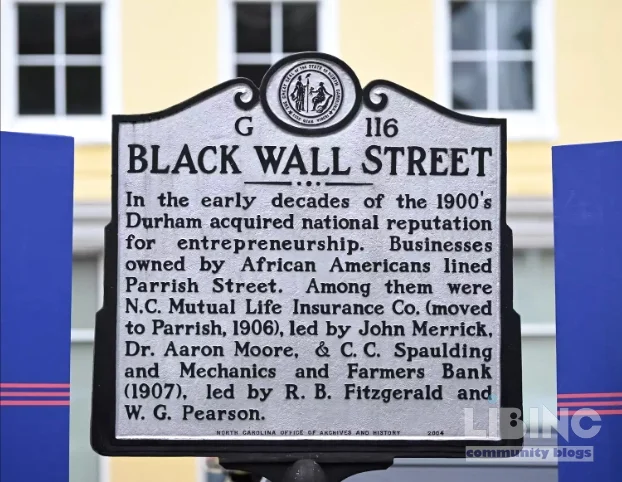
Problem, stakes, hidden conflict, and direction drive this examination of Black Wall Street in Tulsa. Greenwood did not appear by accident; it emerged from deliberate land ownership, strategic partnerships, and an insistence on Black autonomy within a hostile political economy. The stakes were high: if Greenwood failed, a generation of Black wealth, education, and civic life would vanish into poverty and disenfranchisement. The hidden conflict was not merely external racism but the fragility of self-sustaining Black institutions under state power and white capital. This analysis traces how Ottawa W. Gurley and JB Stratford forged a self-contained economic ecosystem, how oil-driven demand and skilled labor propelled growth, and why the Greenwood experiment endured for a time even as it faced relentless pressure from segregationist policy and white developers. The arc reveals both ingenuity and risk within a nascent Black urban economy.
- Analytics perspective on Black Wall Street
- Contrasts that shaped Greenwood
- Cause-and-effect: wealth formation and persistence
- Expert reconstruction: interpretations and implications
Analytics perspective: Black Wall Street as a socioeconomic phenomenon
Greenwood’s rise to prominence among early 20th-century Black urban spaces represents more than a collection of prosperous businesses. It embodies a deliberate strategy to localize wealth, education, and governance within a Black-majority district. O.W. Gurley’s audacious purchase of a 40-acre tract in 1906 signaled a pivot from dependency on White employers to a capital-intensive, land-based model that could generate durable equity. This move reframed land as a productivity asset rather than a mere living space, enabling Black residents to accumulate housing, credit, and collateral that fed further investment.
Within this framework, Gurley partnered with JB Stratford, an alliance grounded in mutual respect yet punctuated by occasional strategic disagreement. Their joint project—subdividing land into housing zones, retail lots, alleys, and streets restricted to Black residents—created a defined jurisdiction where Black entrepreneurs could operate with minimal direct interference. The Greenwood land-use pattern also structured a self-contained supply chain: lodging, groceries, hardware, and professional services circulated wealth within the community, reinforcing a multiplier effect that expanded opportunity beyond a single storefront.
- Land ownership: a foundation for equity, access to credit, and future expansion.
- Vertical integration: a network of Black-owned businesses that reduced leakage to outside firms.
- Education and professionalization: access to colleges and professional schools fed a pipeline of doctors, lawyers, and teachers who anchored the district’s institutions.
Economically, the oil boom catalyzed demand for domestic labor, elevating the earning potential of Greenwood residents beyond conventional Black work in secondary sectors. The result was a localized economy that could circulate wages quickly and invest in schools, churches, and civic life. Booker T. Washington’s praise—naming Greenwood “Black Wall Street”—is not just a label but a recognition of a coordinated socio-economic design. The district moved sophisticated capital into a Black front door on a White-controlled economy, a dynamic not easily replicated elsewhere without similar leverage over land, labor, and liquidity.
Contrasts that shaped Greenwood
Greenwood did not exist in a vacuum. The Tulsa environment featured a multiracial labor market and a White-dominated political order that increasingly sought to regulate Black mobility and access to high-wage occupations. The north-south geography of the city, with Black residents clustering north of the rail tracks and White residents along the more affluent south, created divergent economic ecosystems that were both complementary and competitive. As segregation hardened, White developers began to emulate Gurley and Stratford, purchasing tracts north of the tracks and reselling them to Black buyers. The replication of Greenwood’s model outside its initial boundary indicates a broader demand signal: Black-led real estate and business development could generate wealth even under formal barriers to racial equality.
The personal dynamics between Gurley and Stratford also illuminate tensions within early Black leadership. Gurley’s evolving intimacy with the White establishment—evident in his appointment as a Tulsa sheriff’s deputy—generated friction within Greenwood’s community. For some, political access and policing duties symbolized risk: the possibility that collaboration with the power structure could compromise Black autonomy. The Black Star newspaper’s A. J. Smitherman called him “The King of Little Africa,” encapsulating the ambivalence surrounding a leader who navigated two different political sensibilities. This tension helps explain why Greenwood was both a beacon and a site of internal and external contestation.
Within this atmosphere, the migration of oil capital to Tulsa intensified the demand for Black service workers—maids, chauffeurs, gardeners, porters, and other skilled laborers. These roles became pathways to higher-income brackets and, crucially, to access to educational opportunities at institutions such as Columbia Law School, Spelman College, and Atlanta University. The result was a virtuous circle: wealth funded education, education produced more capital, and capital enabled broader community infrastructure—schools, churches, and public services—within a Black-dominated enclave.
Cause-and-effect: wealth formation and persistence
The Greenwood story unfolds as a sequence of cause-and-effect relationships, each linking land, labor, and leadership to sustained Black wealth. The 1906 Gurley purchase created a durable platform for Black enterprise. The 1907 statehood and subsequent disenfranchisement laws sharpened a white supremacist impulse to control Black economic life through legal and extralegal means. In this environment, the Greenwood district offered both a shield and a springboard: a shield against outright exclusion from mainstream white institutions and a springboard for wealth accumulation through self-sufficiency and education.
Key causal chains include:
- Land as collateral: Property ownership enabled access to credit, enabling expansion of stores, boardinghouses, and the Gurley Hotel.
- Oil-driven labor demand: The oil boom created seasonal and long-term demand for Black domestic and skilled labor, raising wages and expanding Black consumer power within Greenwood.
- Educational channels: The movement of residents toward higher education created a cadre of professionals who could operate within and beyond Greenwood, ensuring a continuity of services and roles that kept wealth circulating locally.
- Institution-building: The emergence of independent schools, a Black Masonic lodge, employment agencies, and public services anchored Greenwood’s social capital and civic life, reducing reliance on White institutions for funding and legitimacy.
These causal threads interacted with political change. Oklahoma’s late-19th and early-20th-century laws sought to criminalize interracial alliances and restrict Black advancement in high-wage jobs. Greenwood’s strategy countered these pressures by localizing power: wealth, land, and institutions operated inside a Black-controlled square of Tulsa. When Whites attempted to imitate the Greenwood model, they validated the cross-racial appeal of Black economic autonomy while also intensifying the competition for resources and space within the city’s geography.
Expert reconstruction: interpretations and implications
Historians have long debated the sustainability of Greenwood’s independence. On one side, Booker T. Washington’s era-anchored model suggested accommodation with the broader economy, using education and enterprise to build durable Black wealth. On the other, W. E. B. Du Bois warned that genuine social emancipation required political power and civil rights, not only economic autonomy. Greenwood embodied a synthesis: a self-contained economic system anchored by land, education, and Black-owned enterprises, while nevertheless existing under a political regime that resisted Black autonomy. The Gurley–Stratford partnership illustrates how strategic elision of risk—sharing leadership, limiting public confrontation, and leveraging multi-racial opportunities—could produce visible success in a hostile environment.
The narrative also sheds light on the internal dynamics that sustained Greenwood. Gurley’s early commitment to education and his willingness to reinvest profits into housing and public services built social cohesion. Stratford’s readiness to defend Black dignity in public spaces—whether on trains or in public accommodations—established a code of Black pride that complemented economic power. Yet internal tensions over governance and policing reveal a delicate balance between self-rule and intermediation with White authorities. These tensions, not merely external threats, help explain Greenwood’s vulnerability to displacement and the eventual fragility of its most ambitious projects.
From a modern perspective, the Greenwood model offers a blueprint for community-driven wealth creation: secure land tenure, a diversified portfolio of Black-owned businesses, and an intentional emphasis on education and institutions. It also teaches caution about overreliance on a single sector or external political alignments. The lesson is not only about achieving prosperity but about sustaining it against changing political economies, regulatory regimes, and demographic shifts.
As the early 20th century closed, Greenwood stood as a symbol of possibility—Booker T. Washington’s celebrated emblem of Black enterprise. Yet the broader arc of Tulsa’s history reminds us that prosperity without durable political power remains precarious. The Greenwood experiment, with its rich commercial networks and its cultural investments, remains a compelling case study for economists, urban planners, and African American historians who seek to understand how Black communities build wealth, govern themselves, and strive for lasting resilience in the face of structural hostility.
In sum, Black Wall Street was not merely a cluster of successful businesses; it was a consciously designed ecosystem that integrated land, labor, education, and leadership. Its story, told through Gurley and Stratford, demonstrates that Black wealth can emerge from strategic organization, even amid the deepest forms of racial oppression. The Greenwood legacy continues to inform contemporary debates about economic empowerment, community-owned capital, and the politics of space in American cities.
Greenwood’s memory remains a vital touchstone for understanding the possibilities—and the limits—of Black-led urban economic development. The tale underscores the importance of land ownership, civic institutions, and deliberate intergenerational investment as the core levers of enduring Black wealth. It also warns that without ongoing political power and protections, prosperity can become a target for erasure. The lesson is clear: sustained Black wealth requires a holistic approach that binds land, labor, education, and governance into a resilient, self-determined framework.
Ultimately, the story of Black Wall Street in Tulsa offers a disciplined model for how communities can imagine, build, and defend a powerful economic frontier. It is a reminder that wealth creation is not solely about revenue; it is about the capacity to shape the terms of opportunity, guard it against predation, and translate it into a lasting social legacy for future generations.
Practical blueprint for enduring Black-led urban wealth
To translate Greenwood's lessons into present practice, a compact framework targets secure land tenure, diversified capital, and robust governance. A neighborhood anchor could start with a small cluster of parcels held by a Black-owned land trust, offering long leases to diverse enterprises, from groceries to clinics. A pooled credit fund, seeded by local lenders and philanthropy, would bridge gap financing for startups and education programs. Governance is codified by a charter protecting autonomy while enabling partnerships with cities on fair terms.
| Aspect | Mechanism | Examples | Impact |
|---|---|---|---|
| Land tenure | Community land trust | 40+ acre cluster, Black-owned parcels | Stabilizes credit access and expansion |
| Capital access | Pooled fund | Loans for retailers, housing, education | Keeps wealth circulating locally |
| Education | Independent institutions | Colleges, professional schools | Supplies skilled labor for enterprise |
| Governance | Charter and council | Autonomy with strategic partnerships | Resilient decision-making |
These elements create a self-sustaining loop where land, people, and institutions reinforce one another in a hostile environment.
In practice, cities can adapt by forming partnerships with Black-led cooperatives, ensuring transparent governance, and maintaining guardrails against capture by outside interests.
Replication sequence
- Step 1 Establish a land trust to secure parcels and prevent rapid speculation; use long leases to attract diverse tenants.
- Step 2 Build a local credit pool with seed money from lenders and donors; offer patient, simple terms to small businesses and property improvements.
- Step 3 Create education and training pipelines; partner with nearby colleges and trade schools to supply graduates who can run enterprises and civic institutions.
- Step 4 Draft a governance charter that protects autonomy while enabling collaboration with city services on equal terms.
- Step 5 Monitor and adapt; implement quarterly reviews to adjust policies and prevent leakage of wealth to outside firms.
These actions, carefully sequenced, provide a template for communities seeking to nurture durable, inclusive prosperity.
Frequently asked questions
What defines Greenwood as a model of Black wealth?
Greenwood's distinctive model grew from secure land tenure, a self-contained local economy, and sustained investment in education and civic institutions; this combination kept wealth circulating within the Black community rather than leaking to external interests, creating resilience against exclusion and offering a repeatable blueprint for organizing land, capital, and human potential. The approach demonstrates how deliberate asset control and local governance can translate opportunity into durable prosperity even under hostile conditions. This clarity of purpose helps communities frame investment strategies, governance rules, and partnerships with outsiders in a way that protects autonomy while expanding opportunity.
Analytically, the framework highlights the synergy between property, services, and education as engines of value. It also reveals the importance of trust, governance, and transparent decision making in sustaining long-run growth within a community-led model.
How did Gurley and Stratford structure Greenwood's economy?
They forged a land-centered, vertically integrated ecosystem that restricted Black residents to defined zones, enabling efficient circulation of services and capital within Greenwood. A cooperative approach to land, housing, and retail created a local supply chain that reduced leakage and reinforced mutual reliance. The partnership balanced autonomy with practical engagement with white institutions, leveraging shared interests while preserving decision-making power within the Black community. The result was a prototype for community-led enterprise that could survive initial opportunities and withstand external pressure when markets shifted. The balanced partnership shows that strategic collaboration, when governed by clear lines of autonomy, can expand access to capital and markets without surrendering core aims.
What role did land ownership play in wealth formation?
Land ownership transformed real estate into productive capital rather than mere shelter. It allowed residents to use property as collateral, secure credit, and finance expansion—boardinghouses, hotels, and service businesses—that undergirded a broader local economy. With land under Black control, wealth circulation remained within the community, making it easier to fund education, professional development, and public services. The spatial organization also reinforced social cohesion and governance capacity, enabling more durable collective action against external threats. In short, land was the key to liquidity, mobility, and resilience for Greenwood's economy.
How can modern communities replicate Greenwood's approach?
Start with a land trust to stabilize parcels, then assemble a community fund to finance small businesses and housing improvements. Build education partnerships to supply a pipeline of graduates who can run enterprises and civic institutions. Codify governance in a charter that preserves autonomy while enabling practical city collaborations. Finally, implement transparent measurement to ensure wealth remains within the community and to identify leakage early. A phased rollout with quarterly reviews helps maintain focus and adapt to changing policies or market conditions. Real-world replication requires local leadership, inclusive governance, and disciplined capital management.
What were the main risks that threatened Greenwood's sustainability?
The primary risks included political suppression, external economic shocks, and the potential dilution of autonomy as outside capital sought entry. Internal governance tensions could erode cohesion, while overreliance on a single sector or external access to high-wage jobs could leave the community vulnerable if those channels closed. The Greenwood case shows that sustainability depends on diversified revenue streams, robust institutions, and ongoing political power—strengths that reduce exposure to any single vulnerability. Proactive governance and diversified capital buffers help communities weather volatility and preserve autonomy.
What policy lessons emerge from Greenwood's story?
Policy should support secure land tenure, community-led financing, and access to education without sacrificing autonomy. Public-private partnerships must be structured with clear guardrails to prevent external capture and ensure local decision-making remains primary. Investments in schools, professional training, and civic organizations strengthen long-run resilience. The broader takeaway is that economic empowerment flourishes when land, labor, and leadership develop in tandem within a framework of accountable governance and strategic collaboration with city services.





Add a comment
To comment, you need to register and authorize
Comments