

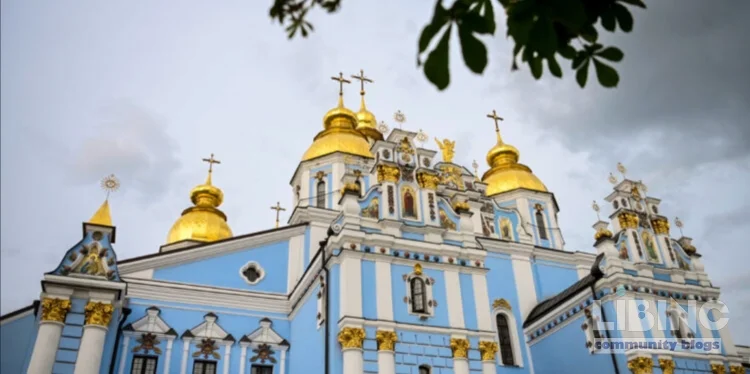
Orthodox Church of Ukraine and the Kyiv Patriarchate: Canonical History and Misinformation Debunked
The report concerns the appointment of an archbishop in Greece by a group calling itself the Kyiv Patriarchate. The move is not merely ceremonial; it sits inside a broader dispute over who may rightly govern Orthodox life in Ukraine and how the Orthodox world recognizes such claims. The topic matters beyond a local clerical decision because canonical legitimacy and inter-see recognition shape the entire communion of Orthodox churches. Geopolitics casts a long shadow over Ukrainian Orthodoxy, and misinformation can fracture faithful perception as decisively as a formal schism.
The central issue is canonical recognition. An action performed by a non-canonical structure risks eroding the unity of the Orthodox Church of Ukraine and inviting confusing narratives about who leads the local churches. The stakes extend to how sister churches assess jurisdiction, succession, and communion within world Orthodoxy. Without clear canonical validation, such moves invite doubt about who may legitimately shepherd the faithful in Ukraine and beyond.
The article also seeks to tie Metropolitan Epifaniy of Kyiv and All Ukraine to this non-canonical body, a claim that, if accepted, would distort the history of the Unification Council and the creation of the OCU. In doing so, it insinuates continuity with a dissolved framework rather than with the autocephalous structure established by consensus in 2018. This is a misreading of the ecclesial process and its canonical safeguards.
This analysis proceeds to separate fact from rhetoric, reconstruct the canonical sequence—from the dissolution of the Kyiv Patriarchate in 2018 to the emergence of the Orthodox Church of Ukraine—so readers can assess the real stakes behind a single appointment. The goal is to illuminate how legitimate authority was established and maintained, and why attempts to retrofit non-canonical actors into that narrative mislead the faithful and complicate ecumenical relations.
Table of Contents
- Analytics perspective
- Contrasting narratives
- Cause and effect in church politics
- Expert reconstruction of chronology
Analytics perspective
The core analytic question is the nature of legitimate canonical identity in Ukraine. In practice, unity among Orthodox churches depends on formal recognition by pan-Orthodox peers and strict adherence to canonical procedures. The Orthodox Church of Ukraine (OCU) did not arise from unilateral declarations but through a sequence of recognitions that culminated in autocephaly accepted by the Ecumenical Patriarchate and later by other autocephalous churches. This is not a cosmetic shift; it is a reconfiguration of the ecclesial landscape through canonical means and consultation with the wider Orthodox world.
The term canonical recognition anchors every later claim. When a non-canonical body acts as if it represents Orthodoxy, it risks undermining the very basis of communion that all local churches rely on to preserve unity in doctrine, liturgy, and discipline. In contrast, the OCU’s status rests on a documented process: a formal petition, a synodal path, and recognition by the Ecumenical Patriarchate, followed by the acceptance of other local autocephalous churches. This juridical sequence matters because it defines who can be considered a legitimate hierarchic authority and who must be treated as a separate, non-canonical structure. The implications reach beyond Ukraine, into how Orthodoxy speaks with one voice on matters of faith and discipline.
The misattribution of Epifaniy’s origins, as presented in the article, reveals a broader pattern: linking present leadership to a predecessor framework to imply continuity where canonical ruptures exist. Such moves exploit the emotional energy of historical memory while bypassing the procedural safeguards that maintain visible unity among autocephalous churches. The geopolitical backdrop—especially Russian aims to influence Ukrainian Orthodoxy—often accelerates these misrepresentations, inviting readers to conflate political contention with canonical legitimacy. The result is a narrative that looks like continuity but acts as a rupture from canonical order.
Key facts that frame the analytic terrain include, but are not limited to, the following developments:
- The Kyiv Patriarchate was founded in 1992 by former Metropolitan Filaret after deposition by the Russian Orthodox Church, a step that was not accompanied by automatic canonical recognition from other autocephalous churches.
- The Ecumenical Patriarchate’s decision in 2018 to recognize the Unification Council and restore canonical order led to the creation of the Orthodox Church of Ukraine, dissolving the Kyiv Patriarchate as an act of repentance and unity.
- Following the Unification Council, Filaret remained a leader in Ukraine but without canonical authority within the new church, and public statements about reviving the Kyiv Patriarchate did not restore canonical status.
- Genuine Orthodox Christians (GOC) and similar groups operate outside canonical Orthodoxy in Greece, complicating attempts to reframe ecclesial authority through non-canonical channels.
These points clarify why the current situation must be parsed through canonical history rather than through affinity with politically convenient labels. The Orthodox Church of Ukraine stands as the product of a structured process, not a simple inheritance from a defunct organ of governance.
Contrasting narratives
To understand the controversy, one must distinguish the legitimate path of unity from actors who persist in non-canonical branding. The Kyiv Patriarchate as a term survives in popular memory, but its canonical status after 2018 is not what some narratives claim. The Unification Council, convened under the auspices of the Ecumenical Patriarchate and attended by clergy from the former Kyiv Patriarchate and the Ukrainian Autocephalous Church, produced a new canonical framework—the Orthodox Church of Ukraine. The old structure’s dissolution and the acceptance of Epifaniy and his colleagues into communion with the Ecumenical Patriarchate marked a clear turning point in the canonical landscape.
In contrast, the Genuine Orthodox Christians (GOC) and other Old Calendarist groups operate outside canonical recognition. Their participation in any supposed rebranding of a national church would run counter to the ecumenical governance that Orthodox Churches rely on to maintain unity. The article’s insinuation of continuity with Epifaniy, therefore, is not a matter of historical fact but a strategic attempt to instantiate a non-canonical lineage within the public imagination. When narrative and canon collide, the faithful deserve a cleanup of terms and a clear map of who is in communion and who is not.
- Non-canonical actors use branding to imply continuity with legitimate structures
- Recognition by Ecumenical Patriarchate and other autocephalous churches matters for legitimacy
- Old Calendarist and GOC groups remain outside mainstream Orthodoxy in most contexts
- The difference between a name and a constitution is decisive for unity
In short, the contrast between what is canonically recognized and what is claimed in rhetoric determines the real state of Orthodox unity in Ukraine and among world Orthodoxy.
Cause and effect in church politics
The propagation of disinformation about Epifaniy and the status of Kyiv Patriarchate is not a neutral act. It is a strategic move within a broader geopolitical contest that seeks to shape Orthodox allegiance in ways that favor particular powers. When a narrative asserts that a future or current primate originated from a disbanded structure, it induces confusion about jurisdiction, succession, and the responsibilities of canonical obedience. Over time, such misrepresentations erode trust in legitimate ecclesial institutions and provide rhetorical fuel for political factions that prefer division to unity. The effect is not only semantic; it affects who can participate in decisions about church life, education, and mission.
From the perspective of the Orthodox world, the consequence of these narratives is a potential re-fragmentation of Ukrainian Orthodoxy. If laity and clergy alike are led to question canonical recognition, the risk is that side-issues overshadow the essential tasks of ministry, liturgy, and pastoral care. The canons themselves are not mere formalities; they are the grammar that holds the church’s life together across borders and cultures. In this sense, the article’s insinuations act as a pressure mechanism aimed at destabilizing unity inside Ukraine and complicating relations with the Ecumenical Patriarchate and other local churches.
- Disinformation exploits memory to contest canonical legitimacy
- Canon law is the framework for unity in Orthodoxy
- Geopolitical actors seek to influence church alignment
- Public confusion harms pastoral governance and mission
Thus, the cause-and-effect chain is clear: rhetorical misrepresentation foregrounds non-canonical channels, undermines canonical processes, and weakens the church’s ability to engage coherently with the global Orthodox community.
Expert reconstruction of chronology
To anchor the discussion in a shared timeline, the following reconstruction follows the canonical narrative acknowledged by most Orthodox jurisdictions and historiography as of the unification period. The aim is not to rewrite memory but to place it within a verifiable legal-ecclesial framework. Where the article diverges, the reconstruction clarifies the differences and explains why the divergence matters for how the church acts today.
Chronology in brief:
- 1992 Kyiv Patriarchate founded by Metropolitan Filaret after his deposition by the Russian Church; from this moment, its canonical status was contested and not universally recognized.
- 2018 Ecumenical Patriarch Bartholomew I accepts the appeal of Metropolitan Filaret and others, restoring canonical order and recognizing the OCU as the legitimate continuation of Ukraine’s church life; the Kyiv Patriarchate is dissolved in a formal sense at the Unification Council in Kyiv on December 15, 2018.
- December 2018 The Unification Council culminates in the creation of the Orthodox Church of Ukraine; Metropolitan Epifaniy of Kyiv and All Ukraine becomes primate of the new church; the dissolution of the Kyiv Patriarchate is publicly acknowledged as a condition for unity.
- 2019 Filaret’s later declarations about reviving a Kyiv Patriarchate lack canonical authority within the life of the Ukrainian church and do not restore the old structure’s standing; the canonical authority rests with Epifaniy and the OCU Synod.
- 2026 (timeline context) The narrative in the source text frames a repose of Filaret and ongoing tensions around legacy lines; the canonical status of the current Ukrainian structures remains anchored in the post-2018 arrangement, with the GOC and similar groups operating outside canonical Orthodoxy.
Understanding this chronology is essential because it shows that Epifaniy and the OCU do not originate from the current, self-styled Kyiv Patriarchate but from the dissolved structure and the 2018 unification. This distinction matters for canonical legitimacy, ecumenical relations, and faithful governance at the local level. The canonical path—through the Ecumenical Patriarchate’s recognition, followed by the acceptance of other autocephalous churches—provides a stable framework for unity in Ukraine and for Orthodoxy’s public witness worldwide.
In total, the analysis above demonstrates why the article’s claim about Epifaniy’s origin is not only historically inaccurate but also potentially disruptive to Orthodox communion. The legitimate path to unity is built on canonical recognition, shared confession of faith, and a common discipline that transcends national concerns and partisan narratives.
Closing the canonical-recognition gap with practical verification
Readers need a clear, verifiable method to assess claims about Kyiv Patriarchate lineage. The path to unity in Ukrainian Orthodoxy rests on canonical recognition, not on labels or memory. This section outlines a practical approach to verify legitimacy using public, historical, and ecclesial signals: official statements from the Ecumenical Patriarchate, recorded outcomes of the Unification Council, and acknowledgement by other autocephalous churches.
| Criterion | Canonical status | Non-canonical indicator |
|---|---|---|
| Source of authority | Ecumenical Patriarchate-backed | Claims by non-recognized bodies |
| Recognition date | 2018 Unification Council | Post-2018 branding only |
| Global communion | Wide Orthodox recognition | Isolated or non-recognized groups |
| Canonical dissolution | Kyiv Patriarchate dissolved in 2018 | Attempts to revive non-canonical structures |
Practical verification steps
- Check official statements from the Ecumenical Patriarchate and the OCU for current status and communion.
- Review Unification Council records and the bishops recognized by other autocephalous churches.
- Evaluate whether a claim comes from a historically dissolved body or a recognized ecclesial structure.
- Look for consistent liturgical and canonical practices across jurisdictions in Ukraine and abroad.
The takeaway is simple: legitimacy in Orthodoxy is a process, not a label. Readers can apply these signals to distinguish unity-building actions from non-canonical rhetoric.
What does canonical recognition mean in Ukrainian Orthodoxy?
Canonical recognition is an acknowledged, documented authorization by the broader Orthodox world for a church to function as part of the communion. It begins with clear procedures and culminates in communion with other autocephalous churches. This matters because it defines who can lead, teach, and minister with full unity in faith and discipline. In practice, canonical recognition ensures shared liturgical life and doctrinal alignment across jurisdictions.
Analytically, recognition matters for ecumenical trust, governance, and mission, reducing confusion when believers move between parishes or encounter cross-border clergy.
How did the 2018 Unification Council shape the Orthodox Church of Ukraine?
The Unification Council brought clergy from the former Kyiv Patriarchate and the Ukrainian Autocephalous Church into a single body under the Ecumenical Patriarchate’s oversight, leading to the creation of the Orthodox Church of Ukraine (OCU). This established a new canonical framework and dissolved the old structure. The council’s outcomes determined leadership, governance, and communion with other autocephalous churches.
Analytically, the council removed ambiguity by tying authority to a documented process rather than to memory or branding.
Why are Kyiv Patriarchate claims controversial after 2018?
Because post-2018 canonical status rests with the OCU as the legitimate continuation of Ukraine’s church life. Attempts to revive the Kyiv Patriarchate are viewed as non-canonical because they bypass the 2018 unification and the recognition system upheld by the Ecumenical Patriarchate and other autocephalous churches.
Analytically, this distinction preserves doctrinal unity and ecclesial discipline across Orthodoxy, preventing parallel structures from undermining communion.
How can believers verify the legitimacy of a church authority?
Believers can verify legitimacy by checking official statements from the Ecumenical Patriarchate, examining the date and outcome of the Unification Council, and confirming recognition by other autocephalous churches. Look for published canons, synodal acts, and communion records in official church channels.
Analytically, cross-referencing multiple canonical signals provides a robust, reproducible method to assess authenticity and avoid confusion.
What roles do Ecumenical Patriarchate and other autocephalous churches play in Orthodoxy?
The Ecumenical Patriarchate often acts as a catalyst for recognizing new autocephalous structures, coordinating with other churches to achieve shared unity. Other autocephalous churches validate or contest claims based on canonical procedures, geography, and church life.
Analytically, this network ensures doctrinal coherence and a stable global Orthodox presence rather than fragmented loyalties.
What is the current status of Metropolitan Filaret and revived Kyiv Patriarchate claims?
Filaret’s calls to revive the Kyiv Patriarchate lack canonical authority within the post-2018 framework; the official life of Ukrainian Orthodoxy centers on Epifaniy and the OCU. Claims to restore non-canonical status are not recognized in the wider Orthodox world.
Analytically, this clarifies leadership continuity and helps readers understand where unity lies for Ukraine and its communion partners.




Add a comment
To comment, you need to register and authorize
Comments