

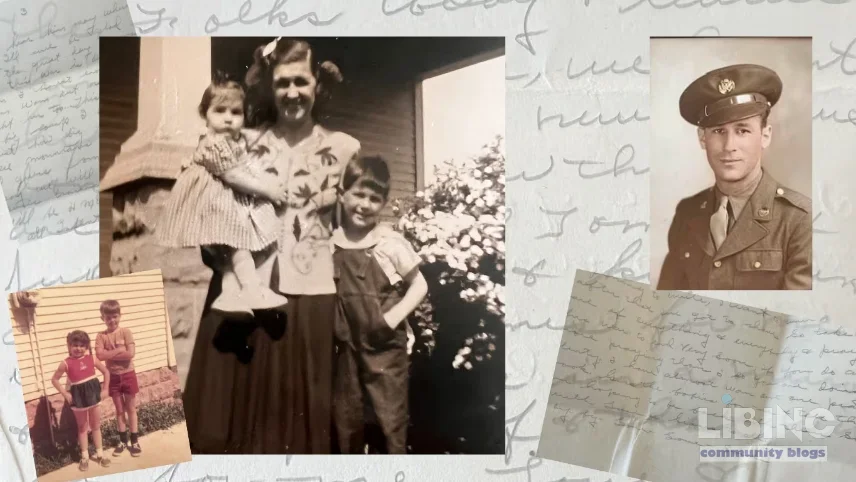
Memory as Bridge: Reframing World War II Sacrifice Through a Grandfather's Letters and a Family Pilgrimage
Memory is not a passive record of events but a living conduit that lets a family walk through grief toward understanding. This piece follows a personal journey from a house that sheltered four generations to the Lorraine American Cemetery in France, where a grandson reconnects with a grandfather he never knew. The letters written on the battlefield become more than relics; they become instructions for bearing loss, a script for imagining a life cut short, and a catalyst for a larger reckoning with national memory. In a world eager for quick summaries and headlines, memory demands patient labor: to sift detail from despair, to translate the past into present action, and to test how a single family’s sacrifice illuminates a broader history of freedom. This article asks what it takes for memory to move from sentiment to analysis, and from private sorrow to collective obligation.
Problem: memory surrounding World War II often rests on fragments—photos, medals, or epistolary fragments—that must be assembled by a reader with imperfect access to the lived experience behind them. Stakes are high when a family discovers that the legacies they carry are incomplete or misunderstood. Hidden conflict emerges in the tension between longing and accountability: the author feels both intimate kinship with a grandfather and a sense of imposture when accepting gratitude offered to him by strangers who remember the sacrifice more vividly than the family does. The direction of analysis is clear: how does a personal archive transform into a public memory that can guide future generations in understanding the costs of freedom, the fragility of peace, and the responsibilities of remembrance?
Direction: this investigation proceeds through four analytic lenses, each designed to reveal how memory operates across time and space. We begin with data-driven examination of the archival trail, then contrast private recollection with public acts of remembrance, map cause-and-effect relationships between memory, ritual, and reconciliation, and finish with an expert reconstruction that situates the family journey within established memory theory and historical practice. The aim is not to flatter memory as a simple comfort but to test its capacity as a force that shapes identity, ethics, and civic responsibility.
Lead orientation: memory is a bridge across generations, a form of social knowledge that requires careful calibration between sentiment and evidence. When a grandchild walks the streets of a French village where his grandfather fought, memory becomes a ritual of interpretation: it asks who we honor, what we owe, and how to translate the moral weight of a distant war into present-day action that sustains liberty without sentimentalism. The pilgrimage—literal and figurative—renders memory tangible, transforming private grief into public comprehension. The result is a more precise account of what it means for a family to know a war through letters, and for a community to acknowledge that sacrifice in a way that resonates beyond the battlefield.
Table of contents
- Through analytics
- Through contrast
- Through cause-and-effect relationships
- Through expert reconstruction
Through analytics
The analytical approach treats memory as a structured process a family can trace in documentary form through letters, reports, and personal narrative. What repeats across the material is the central idea of memory as active reconstruction rather than passive recollection. The grandfather’s letters reveal a personality shaped by faith, homesickness, and duty, but they also reveal a discipline of language—an attempt to preserve the texture of a life while separated by war. In analysis, memory becomes a set of dynamic variables: sentiment, factual detail, and interpretive frame. When we analyze the sequence of letters, the timing of each message, and the evolving tone across years, memory reveals its own rhythm and logic, not merely a diary of events.
- Epistolary memory as evidence: letters function as primary sources, anchoring emotional states to concrete events and dates, enabling a reconstruction of the battlefield’s geography and the home front’s vulnerability.
- Homesickness as memory architecture: the repeated references to family and infant son Tommy create a cognitive map of longing that structures the emotional content of suffering and resilience.
- Religious framing and moral orientation: prayer, piety, and a sense of providence anchor the soldier’s voice and lend weight to memory as a moral ledger rather than a simple chronicle.
LSI: collective memory, archival reconstruction, epistolary evidence, moral memory, sensory memory, remembrance rituals. These terms provide a framework for understanding how a private archive becomes a public archive, translating personal memory into a form that a community can recognize and validate. The analysis shows that memory requires both fidelity to the original voice and a disciplined translation to present relevance, lest the past become either ornament or abstract tragedy rather than a usable guide to action.
The archive’s integrity matters because memory that is fragmentary or mishandled risks misrepresenting sacrifice. The letters demonstrate a careful balance: the grandfather writes with intimacy and tenderness toward his wife and child, even as he endures battlefield stress and separation. This balance invites a broader question: how do intimate artifacts sustain collective memory without reducing serious history to sentimentality? The answer lies in treating the letters as instruments—tools for ethical reflection, not mere nostalgia. When memory is codified into practice—through commemorations, village conversations, and the act of visiting burial sites—it gains social legitimacy and a constructive purpose beyond personal consolation.
Through contrast
Memory becomes more legible when placed in contrast with alternative truths. In this section, we examine competing frames: the idealized memory of war as noble adventure versus the grounded memory of war as a landscape of fear, pain, and expensive losses. The grandfather’s letters present both affection and realism: the longing for home sits beside the fear of death and the ache of knowing a child may grow up without a father. The public response—villagers offering gratitude decades after the fact—adds a counterweight to the family narrative, highlighting how memory travels beyond its origin and becomes a site of shared moral meaning.
- Idealized memory vs. lived experience: the portrait in letters often compresses the complexity of war, but the presence of wounds, distance, and homesickness preserves a more nuanced truth that resists heroic simplification.
- Private grief vs. public gratitude: the family’s private sorrow coexists with the public ceremony of remembrance in French villages, creating a dialogue across cultures that expands the meaning of sacrifice.
- Faith as a bridge and a burden: religious language can sustain hope but may also obscure the moral injury caused by war; memory must hold both in tension to remain honest.
LSI: memory pluralism, collective remembrance, moral injury, sacrificial rhetoric, transnational memory. The contrast reveals that memory is not a single narrative but a contested space where private loss and public honor meet, each shaping how future generations interpret the past. This tension is essential for a robust memory culture that can resist oversimplification and still sustain social cohesion through shared values rather than shared myth.
In the contrastive frame, the journey to France elevates memory from a parlor-room sentiment to a civic act. The writer’s detour through archives and pilgrimages shows that memory gains credibility when it engages with an audience beyond kin: local officials, church communities, and strangers touched by the same history. The field of memory studies emphasizes that public remembrance evolves through such ethical experiments, where private pain becomes a model for communal responsibility. Hence, the contrast is not a negation but a calibration: memory must be both personal and public to remain meaningful across generations.
Through cause-and-effect relationships
Cause-and-effect reasoning makes explicit how memory shapes action. The letters and the pilgrimage are not merely artifacts of sentiment; they are causal agents that influence how a family negotiates memory, trembles at the edge of grief, and ultimately engages in memorial practice that benefits a wider community. The 80th Division's operational history and the 317th Infantry unit provide a factual scaffold that grounds the emotional core of the narrative, transforming memory from an affect into a discipline capable of guiding present and future conduct. The pilgrimage becomes a practical exercise in reverence that translates memory into civic behavior—support for veterans, participation in remembrance rituals, and a renewed commitment to historical accuracy in public discourse.
- Documentary causation: after-action reports, unit histories, and oral histories offer a chain of events that anchors memory to concrete sequences, enabling a more precise reconstruction of the last days and the proximate theaters of battle.
- Ethical causation: the act of accepting gratitude from villagers creates a reciprocal obligation to acknowledge the past honestly, ensuring memory does not devolve into hollow symbolism.
- Ritual causation: the pilgrimage is not a one-off event; it seeds ongoing practices of remembrance that include education, storytelling, and community dialogue about freedom and duty.
LSI: causal memory, memorial practice, ethical memory, ritualized remembrance, public history. The cause-and-effect logic demonstrates that memory can drive action. It explains why a family chooses to document and share the letters, why a pilgrimage to the sites of conflict yields deeper comprehension, and why villagers’ gratitude translates into a global sense of mutual responsibility across generations and borders.
The analysis also reveals limits to causation. Memory’s power to mobilize is contingent on institutions that support interpretation and on voices that challenge simplistic narratives. Without robust archival work, memory risks becoming a series of comforting anecdotes; without inclusive dialogue, it may alienate the very communities that keep the memory alive. The grandfather’s letters, then, act as a hinge: they connect a private story to a public realm where memory can be tested, refined, and deployed for education and reconciliation across cultures and continents.
Through expert reconstruction
The final lens brings memory into conversation with memory theory and historical practice. The expert perspective treats epistolary artifacts as core components of a larger memory ecosystem that includes archives, museums, schools, and commemorative events. Maurice Halbwachs’s theory of collective memory helps explain why a family’s personal documents gain social salience when they are contextualized within communal rituals and shared narratives. The reconstruction is not a repudiation of sentiment but a disciplined synthesis that respects both affect and evidence. By triangulating family letters with unit histories, village testimonies, and the spiritual language embedded in prayers, memory becomes a multidimensional construct rather than a single, linear story.
- Epistolary memory as a methodological anchor: letters anchor the narrative in time and space, allowing historians and readers to trace movements, sentiments, and moral judgments across years.
- Reconstruction through ritual and site visits: pilgrimages, burial site vigils, and village dialogues convert memory into participatory knowledge, expanding its reach beyond the immediate family.
- Ethical historiography: memory as practice requires accountability to those who lived the events and those who were impacted by them, including generations who inherit the consequences of war and victory.
LSI: Halbwachs, collective memory theory, memorial pedagogy, ethical historiography, epistolary scholarship. Expert reconstruction provides a framework for understanding why the family’s experience resonates within broader memory cultures. It shows that memory is not simply a reflection of the past but a living discipline that interprets, transmits, and applies historical insight to present-day citizenship, education, and cross-cultural understanding. The unique blend of personal letters, battlefield histories, and ritual visitation demonstrates how memory can be both intimate and universal, serving as a guide for responsible remembrance that honors sacrifice while nurturing a more just and informed society.
Conclusion: The journey from the private letters to public remembrance is not a straight line but a braided path connecting the intimate human experience of loss with the collective enterprise of memory. The grandfather’s words, the grandson’s readings, the villagers’ gratitude, and the trenches of history all converge to show that memory, properly stewarded, becomes a tool for empathy, accountability, and informed action. By treating memory as a structured, evolving practice rather than a static sentiment, families and communities can honor sacrifice without absolving responsibility. The act of remembrance thus becomes a vocation—one that is necessarily ongoing, ethically grounded, and globally resonant.
Turning private memory into public practice
Memory becomes a durable asset when it moves from diary pages to classroom timelines and community dialogue. This practical path links collective memory, memorial pedagogy, and public history with everyday actions.
| Event | Date | Location | Significance |
|---|---|---|---|
| Letters from the battlefield | WWII era | Home front | Anchors emotion to fact |
| Pilgrimage to sites | Postwar–present | France villages | Public recognition |
| School memory module | Current | Local classroom | Educates future citizens |
| Museum display | Ongoing | Community center | Shared memory |
Practical steps include four repeatable actions: archive with clear labels; interpret through dialogue with veterans, scholars, and students; share via exhibits, timelines, and digital stories; and act by supporting remembrance programs that connect past and present.
Memory is a discipline, not decoration: its value lies in how it informs present choices.
- Archive: collect letters, reports, and photographs with metadata.
- Interpret: host facilitated discussions with elders, veterans, and historians.
- Share: build digital timelines, classroom modules, and village exhibits.
- Act: fund scholarships and veterans services, sponsor cross-cultural remembrance.
This approach reinforces collective memory and ethical historiography by turning private material into public learning.
How do personal letters shape public memory?
Personal letters tie private grief to shared events, shaping public memory. This linkage grounds narratives in dates and places, enabling schools and museums to contextualize war experiences and inviting critical scrutiny to avoid sentimentality. In classrooms and archives, this dynamic supports a more nuanced public history.
What role do pilgrimages play in memory work?
Pilgrimages turn memory into embodied learning by connecting places with stories, helping communities feel the past rather than just recall it. They validate local memory through participation and intergenerational dialogue.
How can families turn letters into community education?
Families can translate letters into public exhibits, classroom modules, and oral histories. These formats invite diverse voices, ensure accessibility, and create ongoing dialogue about the costs and meanings of sacrifice.
What is epistolary memory and why does it matter?
Epistolary memory uses letters as primary sources that anchor memories to real people and events. It matters because it preserves voice, dates, and places, enabling precise historical interpretation and ethical remembrance.
How can schools use these stories responsibly?
Schools should couple personal documents with diverse perspectives, provide historical context, and invite veterans, scholars, and residents to contribute. The goal is to foster critical thinking, empathy, and civic duty without simplification.
What challenges arise in cross-cultural remembrance?
Remembrance across cultures can clash with differing narratives of victory and loss. Effective practice requires humility, verification against records, and inclusive dialogue that honors multiple experiences while safeguarding memory's integrity.



Add a comment
To comment, you need to register and authorize
Comments
The idea that homesickness operates as memory architecture is particularly fertile. The repeated motifs of family, a young son, and prayers form a cognitive map that shapes readers’ emotional compass and moral judgments. If these epistolary pieces are recast into a narrative of steadfast duty, surely something intimate—perhaps the very tremor behind a soldier’s resolve—must remain legible to those who read later, lest the memory become hollowed into slogan. This tension raises further questions about curatorial responsibility: how to protect a private voice from becoming a public ornament, and how to make a heritage that is at once compassionate and critical? And in turn, what should legitimate public memory look like when it borrows from private grief—a moral ledger, a pedagogical tool, or a call to collective service?
A constructive direction for discussion might explore design problems and ethical stakes: what mechanisms ensure that private letters continue to speak authentically when they are displayed, summarized, or taught in classrooms, museums, and village rituals? How can archives invite external interpretation without diluting the original voice, and how do communities balance commemorative ritual with the difficult work of historical accountability, including acknowledging silences and gaps in a family story? Finally, in a world often chasing headlines, how can memory become a durable invitation to action that is specific, testable, and generative rather than merely comforting or nostalgic?