

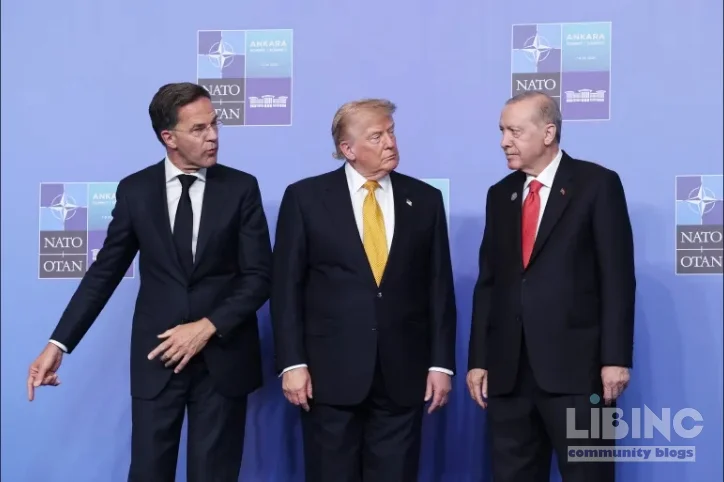
Trump at NATO Turkiye Summit and the Iran axis of resistance: a multilayered recalibration of U.S. strategy
Table of Contents
- Analytics through the Iran axis of resistance lens
- Contrast with the older approach: unilateral pressure vs coalition-enabled pressure
- Cause and effect: how multi-front pressure reshapes Iran's decision-making
- Expert reconstruction: reading the near-term trajectory
Trump s presence at the NATO summit in Türkiye is not merely a ceremonial participation in a European security gathering. It functions as a public hinge on which Washington pivots from a traditional, single-front coercive model toward a multilayered pressure architecture aimed at the Islamic Republic and the axis of resistance. The core problem is simple to state: direct military, political and economic pressure has repeatedly failed to secure a decisive Iranian strategic shift. The stakes, however, are opaque and high. If the new approach succeeds, Tehran confronts simultaneous frictions across its domestic apparatus, its regional perimeter, and its external alignments; if it fails, the United States risks escalating costs without achieving durable outcomes. The hidden conflict is the risk of misreading intent: NATO, Türkiye, and European partners may outwardly support pressure while privately hedging against a broad, sustained confrontation. This article traces how the summit signals a coordinated pivot, why the pivot is structured as a network rather than a single strike, and what the likely consequences will be for Iran and for the wider West Asia balance.
Analytics through the Iran axis of resistance lens
At the analytic core, the Trump appearance is a public manifestation of a deeper recalibration. Washington is attempting to convert a multilateral coalition into a functional engine for pressure on Tehran without relying on a single, decisive blow. The logic is tactical: multiply the points of friction, so Iran spends more cognitive and operational capital managing overlapping crises than pursuing expansion or revision of its own strategic goals. This approach presupposes that coercive success derives not from a one-off shock but from sustained attrition across domestic, border, and regional vectors. Why does this matter? Because it reframes the problem from ‘Iran must yield to a policy’ to ‘Iran must withstand a corridor of pressures that tax its decision-making capacity.
- Domestic stress vector: targeted disruption of public services, energy, and logistics creates a governance crisis that diverts attention from strategic ambitions to crisis management.
- Peripheral environment reengineering: fragmenting Iran s border security and cross-border insurgent networks forces Tehran to defend multiple frontlines simultaneously.
- Regional coalition-building: leveraging Ukraine, energy security, and trade routes reframes Iran as a regional, rather than purely national, concern for European and Atlantic partners.
- Legitimacy through coalition optics: the more Western states align publicly, the harder it becomes for Iran to argue that external pressure is purely unilateral.
In this framing, the Iranian axis of resistance—comprising Iran s regional affiliates and allied movements—becomes the primary constraint on US strategy and on Western policymaking. The term axis of resistance implies a networked, cross-border configuration that survives beyond any single crisis or leader. The strategic question is whether the United States can degrade that network without provoking a protracted, open-ended conflict that would erode Western political legitimacy and economic resilience. The answer hinges on timing, cohesion, and the ability to manage allied risk appetites across diverse theaters, from the Levant to the Gulf and into the perimeters of Europe’s energy markets.
Contrast with the older approach: unilateral pressure vs coalition-enabled pressure
The previous paradigm insisted on a decisive, near-term disruption—what critics called the all-at-once “blow” to Iran’s program. The new approach refuses to equate pressure with a single operational vulnerability. It treats Iran as a system whose behavior emerges from pressures aligned along several axes: governance, border security, regional diplomacy, and energy cycles. This shift is not cosmetic. It reframes sanctions as one instrument among several that, taken together, raise the resistance cost inside Tehran and its peripheral networks. The move toward coalition-enabled pressure is designed to increase political costs for Iran’s leadership, while also distributing risk among Western allies who have different thresholds for escalation. Why does this shift matter? Because it acknowledges that Iranian decision-making is resilient precisely where it benefits from external tension, and it seeks to mobilize a broader consensus to constrain that resilience without triggering a sudden, destabilizing rupture in European energy supply or in allied political homes.
- From one-to-one coercion to multi-chain coordination: the approach links Ukraine, energy markets, and regional security to Iran policy, seeking to synchronize movements across domains.
- Legal and political legitimacy: coalition-building aims to mask future steps as collective, defensible measures rather than unilateral actions that attract legal or diplomatic backlash.
- Risk distribution: by sharing costs across allies, Washington mitigates the political blowback at home while maintaining pressure on Tehran.
- Limits of European buy-in: European states show fatigue and policy friction, indicating that coalition gains may be partial and require concessions to Ankara, Riyadh, and Berlin alike.
The coalition dynamic, however, is not an ironclad guarantee. European states are negotiating a delicate balance between pragmatic economic interests and political ideals. Some capitals fear that escalating pressure on Iran could backfire by strengthening hardline narratives at home or disrupt critical energy and commodity flows. The result is a gradient of commitment, where a formal alliance exists on paper but strategic convergence remains uneven in practice. This is why the Trump appearance, while symbolically important, will be judged by concrete policy calibrations in the months ahead, not by rhetoric or optics in a single summit.
Cause and effect: how multi-front pressure reshapes Iran's decision-making
The multi-front pressure model presumes a cascade effect: domestic strain prompts a governance readjustment, peripheral fragility encourages Tehran to revisit its regional posture, and coalition pressure narrows its menu of acceptable strategic options. If Tehran sees its peripheral networks under sustained stress, it must decide whether to double down on resilience or to retreat from strategies that require energy and political capital it cannot spare. In this frame, the Iranian leadership weighs trade-offs between crisis management at home and the potential costs of expanding regional conflict. The cascade is not guaranteed to move Iran toward compliance; it can also provoke adaptive, even aggressive, countermeasures that test Western fatigue and legitimacy. What triggers a tipping point? A visible intensification of cross-border attacks or insurgent activity that strains Iran s own security apparatus could trigger a defensive escalation, while Iranian concessions on a single flashpoint might appear as a signal of vulnerability, inviting further pressure elsewhere. The balance hinges on credible, verifiable signals that the West can sustain a disciplined and predictable policy rhythm across theaters.
- Domestic sustainability: if social and economic stress deepens, Tehran may prioritize internal stabilization over adventurism abroad.
- Regional signaling: provocative actions by Iran s proxies could prompt stronger allied deterrence, potentially isolating Tehran in the short term or forcing recalibration of its networks.
- Energy and finance channels: disruption of Straits or energy routes could harden European resolve to maintain pressure, even at the cost of short-term economic pain.
- Diplomatic normalization offers: Tehran might seek partial policy concessions in exchange for limited de-escalation steps, thereby creating a bargain-structure with Western partners.
The practical test for this cascade is whether the United States and its partners can sustain a credible multi-front pressure without breaking the political compact that undergirds the alliance. If the coalition falters, if one theater slips into crisis without compensating gains elsewhere, the entire design loses legitimacy and resilience. In West Asia, the intertwined fates of Gaza, Syria, Lebanon, Iraq, and Yemen add layers of complexity. The strategy cannot be reduced to a single theater; it requires a holistic, almost ecological, approach to regional stability and its disruption vectors. The risk is that a misread, a sudden catastrophe, or an overreach could collapse the architecture before any durable gains materialize.
Expert reconstruction: reading the near-term trajectory
The most plausible near-term trajectory integrates diplomacy, coercion, and signaling. Washington seeks to convert the NATO platform into a stage for narrating a common threat while quietly weaving a set of operational measures that are difficult to counter with a single political maneuver. The Trump appearance plays into a broader storyline that portrays Iran as a destabilizing focal point for regional and European security, justifying continued, if not intensified, cooperation between Washington, its allies, and Türkiye. The critical question is whether Ankara can translate concession rhetoric into real, on-the-ground pressure that affects Tehran without igniting a broader crisis along the Turkish border or beyond. This dynamic matters because Turkish leverage, especially in the border zones and in control over migration and energy transit routes, can significantly shape the scope and pace of any Iranian policy adjustment. Why Turkey? Because Ankara sits at a pivotal junction—geographically, politically, and operationally—where Western aims to constrain Iran intersect with Turkish security prerogatives and domestic political calculations. Any meaningful leverage gained from Türkiye would signal a more functional structural alignment with Western strategy, stretching across Syria, Lebanon, and Iraq to the Persian Gulf.
- Strategic patience as a virtue: the near-term payoff may hinge on patience, discipline, and the ability to hold the line across diversified theaters while avoiding spectacular missteps.
- Signals vs shocks: the objective is to produce credible signals that Tehran perceives as durable costs rather than episodic incidents that can be dismissed as isolated events.
- Lebanon, Syria, and Yemen as pressure points: Syria s capacity to influence Lebanon and Yemen s frontlines becomes a practical tool for pressing Tehran from multiple sides.
- Palestinian front dynamics: the Gaza-West Bank corridor remains a strategic vulnerability that could be leveraged to constrain Iranian or allied activities, while avoiding a total collapse of regional stability.
In this expert reconstruction, the success of the strategy rests on the ability to maintain cohesion across Atlantic Europe, Türkiye, and key Gulf partners while keeping Iran within a frame of measurable, reversible steps rather than irreversible escalation. The danger lies in the mismatch between rhetoric and readiness: if Western partners overpromise capabilities or underdeliver in the actual deployment of measures, Tehran could reposition its strategy, harden its line, and seek new patrons or tactics that bypass the existing coalition. The narrative around the Iran axis of resistance will depend on whether the coalition can translate this multi-front pressure into tangible, verifiable constraints that Tehran s leadership cannot easily absorb without conceding ground in strategic theaters that matter to Western security and economic stability.
Ultimately, the trajectory hinges on a global reordering: the United States, the Zionist camp, and their Western partners seek to redefine West Asia s balance of power through a layered, persistent strategy rather than a decisive, single blow. The social and political bedrock of resistance—the collective memory of sacrifice, the stubborn unity of communities, and the resilience of enduring networks—remains a formidable counterweight to external engineering. The 21st century order in West Asia may not be born of a single act of will from Washington, but from the gradual ascendancy of a regional and popular consensus that rejects domination. The question is whether the official representation of unity at NATO can translate into the durable, on-the-ground alignment that real security requires.
In sum, Trump s presence at the NATO summit in Türkiye signals a deliberate shift from a unidimensional to a multilayered pressure architecture targeting the Iran axis of resistance. Whether this recalibration succeeds will depend on the quality of coalition-work, the credibility of sustained tools across theaters, and Tehran s own capacity to absorb, adapt, and respond without triggering a wider regional conflagration. The coming months will reveal if this architecture can produce disciplined strategic-effects or whether it dissolves under the weight of competing interests, political fatigue, and the stubborn dynamics of regional resilience.
Closing the signaling deficit: turning pressure into measurable progress
To anchor credibility, the coalition must translate cross-theater moves into verifiable milestones. A practical framework exists: a staged signaling calendar, public and auditable indicators, and a transparent roll-forward mechanism. For example, in week-by-week terms, the alliance could implement: 1) targeted finance constraints that disrupt illicit Iranian access to remittance channels; 2) coordinated energy-security steps that diversify European supply and demonstrate cost tradeoffs; 3) border-security cooperation that yields measurable reductions in illicit flows; 4) public statements coupled with on-the-record briefings that bind allies to a rhythm of action. Such steps create a trackable path instead of open-ended coercion.
| Theater | Signal Type | Milestone |
|---|---|---|
| Domestic governance | Public service stress | Quarterly stability indicator |
| Border security | Cross-border disruption | 30% reduction in illicit flows |
| Regional diplomacy | Coalition statements | Joint communique bimonthly |
| Energy/finance | Diversification progress | New contracts, price stability |
These measures foster a measurable tempo for Iran policy within the broader framework of multilateral pressure, reinforcing NATO Türkiye and the axis of resistance concept in practical, accountable terms.
Public dashboards, quarterly reviews, and a clear escalation ladder can convert signals into progress. If Tehran offers limited de-escalation in exchange for partial relief, the coalition adjusts milestones publicly to maintain credibility and avoid misinterpretation.
Sanctions cadence • Border-control results • Energy diversification • Alliance cohesion
In practice, a public dashboard could track a handful of indicators across theaters, with data sources and review timetables published for accountability. If Tehran responds with partial concessions, milestones advance; if not, the cadence adjusts rather than collapsing the strategy.
| Theater | Risk | Mitigation |
|---|---|---|
| Europe energy | Price shocks | Diversified contracts |
| Public opinion | Coalition fatigue | Transparent cadence |
| Iran proxies | Escalation risk | Diplomatic channels + deterrence |
The approach remains disciplined, reversible, and anchored in verifiable data that all partners can endorse.
What is the multilayer pressure model described for NATO Türkiye and Iran?
The multilayer pressure model weaves sanctions, diplomacy, energy security, and border controls into a single, coherent cadence that creates enduring costs for Tehran across governance, border frontlines, energy channels, and regional diplomacy, so that no one policy move can reverse the overall trend without triggering measurable consequences elsewhere, and so that Western partners maintain a calculable, publicly defensible path that remains reversible even as Tehran weighs domestic stability, proxy networks, and international legitimacy. In practice, this means a scheduled rhythm of actions across capitals, with transparent data and agreed review points to keep the alliance aligned.
How does the Iran axis of resistance influence Western strategy?
The concept frames Tehran and its regional networks as a shared constraint that is difficult to isolate. The strategy requires sustained pressure across multiple vectors—governance, borders, diplomacy, and energy—so Tehran cannot compensate with a single shift; this also requires coalition coordination to keep costs predictable and reversible, preserving alliance legitimacy even in the face of pushback from regional partners.
What practical indicators should track progress?
Key indicators include sanctions cadence, border-control effectiveness, energy-diversification progress, and alliance cohesion metrics. Each indicator should be tied to a data source, a review date, and a published plan for calibration if a theater shows resilience or escalation becomes evident, ensuring the line stays measurable and credible.
What are the risks if coalition support falters?
Rising fatigue or divergent national interests can erode the cadence, reducing credibility and allowing Tehran to recenter its behavior. The mitigation relies on transparent communication, predefined review points, and a willingness to recalibrate rather than abandon the framework, maintaining a reversible path that preserves political legitimacy.
How might Iran respond under multi-front pressure?
Tehran could double down on proxy activities, seek limited de-escalation in selective theaters, or attempt to exploit gaps among allies. The structured timetable and data-driven reviews help detect such moves early and trigger calibrated responses across theaters, minimizing the risk of rapid, irreversible escalation.
What is the near-term trajectory if the plan succeeds?
If progress follows the defined cadence, Tehran faces a higher operational cost of maintaining its regional posture while Western partners demonstrate a credible, reversible path to de-escalation in exchange for measured concessions. The result is a strengthened regional stability framework that reduces the leverage of single-crisis tactics and broadens the window for diplomacy.




Add a comment
To comment, you need to register and authorize
Comments