

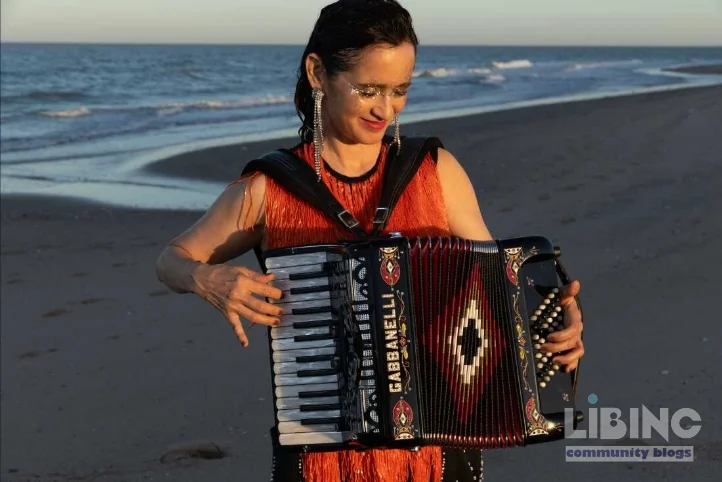
Norteña as Memory Project: Julieta Venegas's Border-Identity Reframing Through Memoir and Music
Julieta Venegas’s Norteña emerges as a deliberate reframing of both genre and self. It began, she explains, out of missing her family and Mexico, a personal ache that she turns into shared memory through song. The project gracefully threads the border-city sensibility she grew up with—an everyday life where two nations coexist and collide—into a contemporary Música Mexicana that is both reverent and restless. The album does not simply mine nostalgia; it uses memory as a catalyst for reimagining sound, identity, and community. In this analysis, Norteña is read as a memory project that translates intimate longing into a sonic archive with broad cultural resonance.
Analytical Frame: Norteña as Memory Project
The core premise of Norteña rests on a paradox: a borderland culture can be simultaneously intimate and expansive, local and global. Venegas situates herself within this paradox by foregrounding her earliest landscapes—the Baja California upbringing, the two-country daily life, and the sense of Mexico as a myth that was never fully out of reach. The project becomes a method for interrogating how memory structures artistic production. Rather than presenting a linear autobiography, Venegas crafts a memory map that folds together place, people, and sound, inviting listeners to hear the geography of her life as a living repertoire.
From the outset, the album’s design signals a shift from pure nostalgia to critical memory work. The tuba, percussion, and accordion lines do more than evoke regional nostalgia; they reframe Norteña as a living vocabulary that can converse with modern pop, urban Latin, and international collaborations. This is not a throwback project; it is a reconstruction of identity through material and melody. The memory project format clarifies why the album can feel both intimately personal and historically expansive, linking individual experience to collective histories of migration, labor, and family separation.
Venegas’s decision to anchor Norteña in collaboration—Natalia Lafourcade, Yahritza y Su Esencia, El David Aguilar—is not a marketing ploy but an analytic move. It tests how memory travels across generations and geographies within música mexicana. The approach foregrounds intergenerational dialogue as a method for expanding the emotional and sonic range of Norteña without diluting its core idiom. In this sense, the album serves as a palimpsest: each collaborating voice layers memory from different vantage points, producing a richer map of the borderlands than any single voice could achieve alone.
Finally, Norteña’s narrative arc—moving from a personal longing to a broader social meditation—embeds a theoretical question about musical memory: can a song constitute a memory, or must memory be a lived experience outside the studio? Venegas answers by showing how sound can crystallize memory into sustenance for listeners who carry similar longings. The result is not only a collection of tunes but a disciplined inquiry into how identity inherits its texture from place, time, and relation. This is memory as a method, and Norteña as its instrument.
Contrasts and Cross-Generational Voices
The Norteña project sits at a productive crossroad: it embraces traditional norteño sensibilities while inviting a new generation to inhabit them. Venegas’s emphasis on the border as a social space—where everyday life, migration, and memory intersect—creates a discursive field in which older and newer sounds can converse. The album’s sonics are built on a deliberately mixed palette: tuba-driven pulse, banda brass ambience, and contemporary pop production. This blending is not eclectic flourish but a deliberate statement about genre fluidity in 21st-century Mexican music.
Consider the collaboration with Yahritza y Su Esencia, a Washington-based grupo that speaks to mixed-status family experiences and cross-border realities. Their recorded contribution to “La Linea” introduces a poignant, contemporary testimony to deportation’s human consequences. The artists’ shared experience of separation becomes a bridge between Venegas’s border sensibility and a generation for whom migration narratives are part of daily life in a global diaspora. In this sense, Norteña reframes nostalgia as a forward-looking engagement with a living, changing migratory landscape rather than a static museum piece.
By inviting Natalia Lafourcade and El David Aguilar, Venegas broadens the interpretive horizon of norteño. Lafourcade’s delicate melodic sensibility and Aguilar’s intimate storytelling temper the album with contemporary precision, ensuring that the weight of memory never valences into saccharine sentiment. Instead, the album negotiates memory through voices that understand how a song can function as both personal solace and communal beacon. The result is a contrapuntal texture: the old and the new speaking to each other, each learning to listen as the other speaks.
Beyond guests, Norteña’s instrumentation offers a generational dialogue with the past. The tuba’s party-anthem punch anchors the arrangements in a festive, communal mood, while the accordion maintains intimate immediacy. This duality mirrors Venegas’s own border-city identity: a life lived between two worlds, neither fully contained by one nor excluded from the other. The music thus becomes a social practice—a way to rehearse coexistence across differences and to model how hybrid identities can still ground themselves in tradition.
However, Norteña’s contrasts are not merely about sound; they reveal divergent narratives about belonging. The album treats migration not as a single story but as a spectrum of experiences—some hopeful, some traumatic, all deserving of care and voice. In this way, the project is a corrective to reductive genre labeling that recent Latin music trends sometimes encourage. Venegas refuses to let regional Mexican music be trapped in a single stereotype, offering instead a frame where regional pride and global reach coexist without contradiction.
Ultimately, Norteña’s contrastive strategy creates a fertile space for critical listening. Listeners encounter both the comfort of familiar sonorities and the challenge of new voices that complicate a singular “norteño” identity. The album thus becomes a living document of how contemporary Latin artists negotiate a global market without surrendering historical memory. The cross-generational dialogues do more than expand audience reach; they model how cultural memory can evolve in real time, keeping the essence of a place while letting new stories take root.
Migration, Family, and Soundscapes: Cause and Effect
Venegas frames Norteña as a response to the ongoing human realities of migration. The border is not only a physical line but a social process that structures everyday life: crossing, waiting, re-staging identities, and sometimes, separation. The track “La Linea” crystallizes this dynamic as a narrative about deportation’s human toll. It is not a polemic against policy; it is a humane lament about daily life interrupted by forces beyond personal control. The emotional tone—somber yet hopeful—embodies how memory can hold both sorrow and resilience, a pattern Venegas identifies as the emotional core of border life.
The album’s approach treats migration as an everyday fight rather than a singular historical event. The interview reveals a conscious attempt to move beyond numbers and headlines toward the lived experiences behind them. This shift matters because cultural production has the power to humanize policy discussions. Norteña uses its platform to remind audiences that migration is not abstract yet also that creative labor can humanize even the most polarized topics, inviting audiences to listen for nuance rather than scapegoat easy conclusions.
Birds-eye migration trends inform this analysis, but Venegas’s work anchors them in tactile soundscapes. The use of brass and tuba creates a sense of communal procession, as if a street parade could become a soundtrack for memory itself. The emotional stakes are high: the music asks listeners to sit with the pain of separation while also embracing the possibility of reunion. This dual impulse—acknowledging hardship while sustaining hope—aligns with the album’s overarching claim that art can sustain human dignity even in the face of systemic hardship.
From a causality perspective, Norteña demonstrates how personal history can drive a broader cultural project. Venegas’s relocation to Argentina, a decade living abroad, catalyzed a recalibration of her artistic identity. The experience sharpened her awareness of the North-South divide and heightened her sensitivity to the relational aspects of music-making—the friendships formed in exile, the reinterpretation of regional sounds through global lenses, and the responsibility of carrying memory across borders. The album thus links intimate biography with collective memory, showing how cause and effect in art can model social resilience.
The memoiric thread intensifies this causal analysis. Venegas writes, and then sings, as if memory itself were a form of action. The process of memory-to-music translation becomes a method for making sense of displacement: what was lost becomes something reconstituted, something that can be shared and reinterpreted by listeners who carry their own stories of separation. In this sense, Norteña demonstrates a causal loop: life experiences shape art, and art, in turn, mediates how communities comprehend those experiences and respond to them collectively.
Crucially, the album does not reduce migration to tragedy. While the themes of deportation and separation are poignant, the music’s buoyant pulse and communal feel signal that migration also yields solidarity, new kinships, and a broader cultural conversation about belonging. The cause-and-effect logic here is not linear; it is probabilistic and iterative: personal memory informs public culture, which then feeds new personal memory. Norteña thus operates as both a catalyst and a mirror—causing audiences to reflect on their own borders while reflecting Venegas’s borderland truth back to them with kinetic, legible sound.
Expert Reconstruction: Production, Collaboration, and Trajectory
Venegas’s description of Norteña as a memory project frames a distinctive production philosophy. Rather than outsourcing the entire project to a traditional producer, she elected to direct the process herself and assemble a team that could translate her vision with integrity. This choice matters for two reasons: it foregrounds artistic control and it foregrounds memory-driven narrative as a central organizing principle. The slow-cooked process—writing the text, selecting the musical palette, and integrating Baja California reading into the creative workflow—produces an album that feels like a carefully curated archive rather than a spontaneous collection of tracks.
In practical terms, the production approach centers on collaboration yet retains a strong authorial voice. Venegas’s insistence on a coherent conceptual spine—an album that navigates memory, migration, and musical lineage—drives the arranging process. The team she assembled included arrangers and artists who could translate her memory into durable, live-appealing instrumentation. This balance between control and collaboration yields a record that sounds cohesive while still offering varied tonal textures across tracks. It demonstrates how leadership in a memory-driven project can translate personal history into a shared musical vocabulary.
The creative logistics reflect a broader trend in contemporary Latin music: senior artists inviting newer voices to contribute while preserving a recognizable aesthetic through distinctive instrumentation. The tuba’s bass-forward presence anchors Norteña in a celebratory, communal register, while expressive guitar lines and vocal harmonies preserve the intimate clarity that Venegas has long been celebrated for. The result is a hybrid sound that remains proudly Norteño while expanding toward global audiences. This approach helps explain Norteña’s resonance across generations and geographies, providing a template for how veteran artists can navigate shifting markets without sacrificing authenticity.
From this expert reconstruction emerges a forward-looking argument about the future of regional Mexican music. Norteña shows that genre consolidation can coexist with cross-cultural collaboration, thereby broadening the genre’s reach without diluting its roots. It also demonstrates that artists can leverage memoir as a structuring device for album design, enabling a more deliberate connection between narrative and sound. The production choices emphasize a sustainable artistic practice: slow creation, mindful collaboration, and a memory-driven roadmap that anticipates future projects built around place, family, and belonging.
In closing, Norteña represents a mature synthesis of memory and music; it is a project that acknowledges the weight of the past while insisting that memory remain a living, productive force. Venegas’s leadership, the strategic collaborations, and the tactile sound design work in concert to produce an album that feels both intimate and expansive. The result is a case study in how a veteran artist can redefine a genre by rooting it more deeply in personal memory and social truth, rather than in formula or trend. Norteña thus stands as a compelling model for future musical memoirs that aim to map border identities with both precision and tenderness.
As audiences listen, they encounter more than songs; they encounter methods for thinking about memory, migration, and sound. Norteña invites a durable engagement with what it means to belong—an invitation that Venegas extends with clear intention: to keep singing until the moment of reunion, to honor memory by making it audible, and to use music as a bridge across borders and generations.
Note: The interview excerpts inform the analysis, including Venegas’s description of Norteña as a memory project and her collaborative approach to production. The themes discussed reflect the artist’s stated intentions to fuse nostalgia with contemporary Mexican soundscapes and to foreground human stories of migration and friendship.
Conclusion: Norteña functions as a disciplined memory practice that translates intimate longing into a communal soundscape, proving that border-centered identity can shore up both cultural continuity and experimental expansion.
Practical Framework to Apply Memory-Driven Production
The memory-first approach in Norteña can be translated into a compact, actionable toolkit for artists pursuing memory-driven music production. This section closes the gap by offering a concrete workflow that pairs narrative mapping with collaborative design, enabling a producer to plan tracks that honor place, people, and time while staying palpably modern.
First, memory mapping creates a spine for the project. List key places, moments, and people; link them to musical ideas (tempo, timbre, lyrics). For each node, assign a responsible collaborator who can bring lived memory to the concept—this anchors the process in lived experience and keeps the workflow grounded in authenticity.
Memory-Driven Production Palette
| Element | Purpose | Example |
|---|---|---|
| Instrumentation | Anchor memory in sound | Tuba bass for parade-like momentum |
| Collaborators | Cross-generational voices | Yahritza y Su Esencia in a border-story track |
| Narrative Spine | Link memory to theme | La Linea as memory-anchored motif |
| Production Pace | Sustain coherence | Slow layering across tracks |
| Audience Story | Translate memory to listener | Live storytelling moments in performance |
Second, apply a lightweight narrative spine during pre-production. Create a one-page map that pairs places with personal stories and then assign each mapped node to a collaborator who can translate memory into melody. This keeps the project cohesive and prevents memory from dissipating into isolated ideas.
Midpoint Reflection and Visual Highlight
The following visual capsule captures a core insight: memory-driven projects gain depth when cross-generational voices are treated as living archives rather than decorative features.
This illustrates how memory-driven music production relies on intergenerational dialogue to broaden authenticity without losing a strong regional identity.
Finally, wrap the project with a summary that translates memory into a tracklist-aligned outline. A second table of key takeaways shows how each generation contributes differently yet synergistically, guiding future projects in regional Mexican music toward sustainable fusion rather than crowding the sound with trends.
| Generation | Narrative Focus | Takeaway |
|---|---|---|
| Past | Memory as a tether to place | Preserve heritage while inviting new voices |
| Present | Sound as a living conversation | Balance tradition with contemporary production |
| Future | Memory informs new collaborations | Build a scalable framework for upcoming releases |
In this way, memory-driven music production becomes a practical, repeatable workflow that honors place and people while staying adaptable to new sounds and audiences.
What defines Norteña's memory-driven approach in simple terms?
At its core, Norteña's memory-driven approach treats personal longing for family and homeland as a portable sonic archive that travels across borders, generations, and genres, linking Baja California memories with modern production, and weaving tuba, accordion, and cross-border collaborations into a living narrative. This method makes memory a working principle rather than a passive sentiment, so each track acts as a map for belonging and resilience. This framing invites listeners to participate in a shared sense of identity as an ongoing practice, not a fixed label.
The approach rests on three pillars: place as sonic anchor, intergenerational collaboration, and memory-as-workable material. Together, they create a durable framework for contemporary regional Mexican music that remains rooted yet expansive.
How do cross-generational voices shape the album?
Cross-generational voices bring different lived experiences to the table, enriching storytelling and expanding the album's emotional palette. In Norteña, collaborations with artists like Yahritza y Su Esencia and Natalia Lafourde anchor memory in a wider diaspora, bridging nostalgia with current realities of migration and family separation. This layering deepens listener empathy and broadens the musical language without sacrificing Norteño identity. The result is a richer, more inclusive sense of border life that resonates across audiences and geographies.
Analytically, the generations converse as co-authors of memory, producing a soundscape that feels both intimate and expansive.
What production choices ground memory in sound?
The memory framework relies on deliberate instrumentation, pacing, and collaboration. The tuba provides a communal, celebratory pulse; the accordion preserves intimate clarity; strategic guest appearances introduce new textures while maintaining a recognizable core. This combination creates cohesion across tracks, ensuring that memory remains legible as both narrative and sonic experience. The production cadence—slower, mindful layering—helps maintain emotional resonance and authenticity, essential for memory-driven projects.
In practical terms, producers should map memory nodes first, then translate each node into instrument choices, tempo, and lyric focus that align with the collaborators’ strengths.
How can other artists apply memory-driven concepts?
Other artists can begin with memory mapping: chart places, people, and moments that define the project; attach collaborators who can translate those memories into musical ideas; and create a spine that ties all tracks together. Use intergenerational voices to broaden the emotional and sonic range while preserving core idioms. Finally, treat memory as a working material—an archive to be curated, iterated, and reinterpreted as the project evolves. This approach translates personal stories into a durable, audience-ready soundscape.
What emotional impact can listeners expect?
The memory-driven framework aims to evoke a sense of continuity—belonging across borders and generations. Listeners encounter a sonic journey that balances nostalgia with forward-looking collaboration, producing empathy for migration experiences and a broader social understanding of border life. The result is music that feels like a bridge rather than a boundary, inviting reflection and shared memory among diverse audiences.
Why is collaboration central to memory-based projects?
Collaboration acts as a mechanism to layer memory from multiple vantage points, making the archive more robust and inclusive. It prevents memory from becoming a single, fixed narration and instead creates a living conversation where each voice contributes to a more complex, resonant identity. This collective approach also supports sustainable practice, providing opportunities for emerging artists to participate in memory-driven work while maintaining artistic integrity.





Add a comment
To comment, you need to register and authorize
Comments