

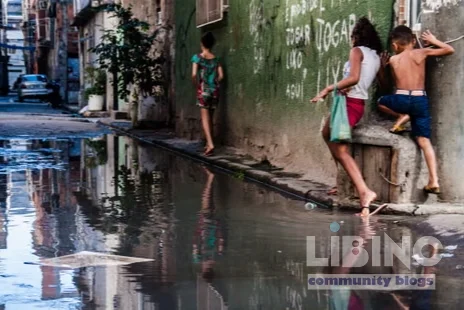
Across Rio de Janeiro's northern outskirts, the Acari River once framed a life in the favela margins. It washed the community in clean water, fed memories of grandparents who bathed in its currents, and kept a livelihood through fishing. Today, many residents no longer call it a river but a valão—a polluted canal carrying sewage and refuse that floods homes and memories alike.
Extreme weather is intensifying the threat, turning episodic floods into recurring disasters. The stakes are not only property; they are identity, belonging, and the right to basic services in informal settlements. The hidden conflict is that memory can be weaponized—official narratives may erase history to present a sanitized city, while residents push back by documenting climate memory through the Favela Climate Memory exhibit.
Analytics through memory and data
Historically, Acari and Maré grew alongside the city as it built new highways and housing for workers. The terrain was swampy, and housing remained precarious, with informal settlements expanding on hilltops and along river margins. Flooding has long haunted the area, but climate change has raised the stakes, turning floods into rapid, repetitive hazards that overwhelm fragile drainage and sanitation systems. The flood of January last year, which displaced tens of thousands, underscores the scale of risk when memory meets data in a city configured to exclude the poor.
From a data perspective, the Favela Climate Memory project compiles testimonies alongside historical records to reveal patterns that official profiles often miss. The approach treats memory as data, collecting soil histories, riverbank changes, and the evolution of waste management alongside intimate recollections of loss and adaptation. This synthesis makes visible a risk profile that combines environmental exposure with social vulnerability, a pattern repeated across informal settlements in the global south and in Rio itself as climate resilience is negotiated in the margins of the city.
The statistical story is clear: floods align with poor housing quality, inadequate sanitation, and precarious land tenure. The analysis also points to a longer arc of policy neglect that allowed deforestation, mangrove loss, and riverbank instability to accumulate, creating a combustible mix when heavy rains return. In this reading, climate resilience is inseparable from urban resilience and equitable infrastructure investment.
Contrast through lived experience and policy framing
Residents describe water where it should not be, and they narrate a lineage of displacement that predates the current crisis. The language of official statistics often labels favelas as subnormal agglomerations, a category that obscures lived realities and delays inclusive upgrading. The Favela Climate Memory exhibition reframes this framing, elevating community voices and exposing how authorities have used disasters to push people away from central areas rather than enabling them to stay with dignity.
The exhibition makes visible a counter-history: a city built on the labor of migrants, the poor, and informal workers, while neglecting the basic infrastructure that would house them safely. The memory circles bring together more than 400 voices from 10 favelas, highlighting how each memory ties to a specific corner of the city, from the Acari margins to the palafitas on Guanabara Bay. In this reframing, climate justice is not a distant policy goal but a present negotiation about rights, infrastructure, and recognition.
The contrast is stark in the case of relocation practices. Some residents recount being moved far from their original communities as a way to present a cleaner city to visitors, a process crowded with social cleansing implications. The narrative of progress therefore becomes a narrative of erasure unless accompanied by inclusive planning, sustained investment, and participatory governance that honors memory as a basis for shared futures.
Cause and effect in vulnerability and memory
The causal chain begins with land-use decisions and deforestation that remove buffers along river margins. As mangroves disappear and soil erodes, floods move faster and spread wider, expanding the reach of damage into homes, schools, and informal workspaces. On paper, Rio's development often gleams with growth, but the practical effect is a widening protection gap for communities living in high-risk zones with limited access to clean water and sanitation.
The relocation of families from shacks on stilts to more distant plots illustrates a second link in the chain. Some families lost access to social networks, long commutes, and livelihoods tied to nearby markets and informal fishing. These cascading effects compound memories of loss, making each flood season a reminder of who bears the cost of neglect and who benefits from policy visibility.
The memory circles interpret this chain as more than tragedy: they are a living archive of resilience, showing how residents adapt by elevating homes, choosing durable materials, and reconfiguring interior spaces to survive the next inundation. Yet adaptation without formal infrastructure also signals how climate policy can slip into selective memory, privileging city images over the lived realities of working poor communities.
Expert reconstruction and pathway to climate justice
Experts stress that memory is not nostalgia but a resource for planning. The city must treat favela memory as an analytical input for climate risk assessment, urban planning, and social policy. The Sustainable Favela Network, launched to connect residents from hundreds of communities, demonstrates how local knowledge pairs with formal planning to produce actionable insights and accountable governance.
Practical recommendations emerge from this fusion of memory and data. The following strategies aim to upgrade without displacement and to embed climate justice into everyday governance:
- Upgrade housing and drainage with community co-design to minimize disruption while increasing flood resistance and future flexibility.
- Invest in water, sanitation, and waste management to reduce pollution that worsens flood impacts and health risks.
- Restore natural buffers such as mangroves and riparian vegetation to reduce runoff and stabilise riverbanks.
- Create participatory planning processes that elevate favela memory as a core input for investment priorities and zoning decisions.
- Institutionalize memory as data by linking testimonials to measurable indicators in climate risk assessments and urban resilience metrics.
- Strengthen rights-based upgrading with time-bound guarantees that prevent forced relocation and preserve community networks.
The memory circles and the Catalytic Communities model offer a blueprint for connecting local agency with citywide climate strategies. In this vision, memory becomes resistance that fuels proactive adaptation rather than a record of past neglect. Addressing climate injustice means acknowledging the long lead times and the cumulative harms that de facto define life in Rio de Janeiro's favelas.
In closing, Favela Climate Memory demonstrates that climate action cannot bypass the most vulnerable urban residents. The exhibition models how data integration with lived experience can push toward infrastructure guarantees, equitable investment, and a more honest city narrative. Memory and policy must coevolve if Rio is to become a city that protects its most at-risk neighborhoods while preserving their culture and dignity.
Conclusion: Climate justice in Rio's informal settlements hinges on turning memory into a planning partner, not a remnant of the past. The Acari River story shows that resilience is built through upholding rights, upgrading infrastructure, and honoring the knowledge of residents who stay when the city moves on.
Final note: memory as a tool for climate action is not optional. It is a policy instrument that can guide investments, protect communities, and help Rio translate its rich favelas into a city with stronger, more inclusive resilience to a warming world.
| Factor | Description | Area | Evidence |
|---|---|---|---|
| Inadequate drainage | Outdated stormwater systems fail during heavy rains | Acari-Maré corridor | Municipal records 2021 |
| Poor housing quality | Informal housing on slopes with limited elevation | Hilltop favelas | Satellite imagery 2022 |
| Sanitation deficits | Sewer overflows during floods | Maré & Acari | Municipal audits 2020 |
| Mangrove loss | Reduced natural buffers along riverbanks | Acari riverbanks | NGO survey 2019 |
This snapshot links exposure drivers to social vulnerability, illustrating how memory can guide targeted upgrades rather than broad, generic solutions.
Closing the memory-action gap through participatory planning
Memory becomes operational when planners treat testimonies as data, translating voices into concrete, trackable ambitions. The Favela Climate Memory approach shows how co-design workshops, memory-to-indicator dashboards, and budget-aligned upgrades can turn lived experience into measurable resilience. For example, a 1.2 km drainage upgrade co-financed with local associations while preserving social networks demonstrates how action and belonging coexist.
Two core steps matter: formalize memory as data by linking recollections to indicators like flood depth, days of inundation, and service restoration times; and guarantee upgrading with time-bound commitments to prevent displacement, ensuring that memory guides long-term investment rather than symbolic gestures.
Practical scenarios include a participatory flood-response plan with real-time alerts, mangrove restoration paired with community employment, and a memory-driven zoning map that protects social networks while directing upgrades where they are most needed.
| Year | Action | Status |
|---|---|---|
| 2019 | Community mapping | Completed |
| 2021 | Co-design workshops | Active |
| 2023 | Drainage upgrades | Planned |
| 2025 | Memory data platform | Proposed |
The integration of memory with policy is not optional; it is a path to inclusive, durable climate resilience that honors community ties while delivering tangible services.
How does Favela Climate Memory translate lived experience into planning data?
The direct answer is that communities provide testimonies, maps, and local observations, which planners then convert into indicators such as flood depth, duration, and service restoration time, creating a live dashboard that informs budgeting and zoning decisions. This process blends qualitative memory with quantitative metrics to reveal vulnerabilities that official profiles often miss, enabling targeted upgrades where they matter most.
Analytically, this approach reduces the gap between experience and action by institutionalizing community knowledge as a standard planning input. It supports more accurate risk profiles, equitable investment, and governance that remains accountable to residents who stay through frequent disruptions.
What practical steps turn memory into actionable climate justice?
The direct answer is to implement memory-driven co-design workshops, link stories to measurable targets, and embed memory data into capital plans with time-bound commitments. A concrete example is mapping memory circles to hazard zones and tying upgrades to the city budget cycle so funding follows documented needs rather than schedules alone.
Analytically, this aligns with participatory governance, strengthens resilience, and ensures upgrades protect livelihoods and social networks, not just physical assets.
Why is relocation a sensitive issue in this framework?
The direct answer is that relocations should be voluntary, transparent, and designed to maintain social networks, access to livelihoods, and cultural ties. Memory-informed planning seeks to avoid social cleansing by offering alternatives that preserve community coherence while improving safety.
Analytically, the approach reframes relocation from a narrative of “progress” to a policy instrument grounded in rights, equity, and long-term urban resilience.
How can mangrove restoration complement flood resilience?
The direct answer is that mangrove restoration acts as a natural buffer, reducing runoff and stabilizing shorelines while providing ecological and social co-benefits. When memory circles document where mangroves once stood and where locals relied on them, restoration becomes targeted and accountable.
Analytically, this demonstrates how nature-based solutions integrate with memory-informed upgrades for holistic resilience.
What does a memory-based dashboard look like in practice?
The direct answer is a live platform that links testimonies, soil histories, and hazard maps to concrete indicators like drainage upgrades, service restoration times, and housing improvements. Access is granted to residents and city staff to ensure transparency and accountability.
Analytically, such dashboards enable continuous learning and adaptive governance, aligning daily needs with long-term climate goals.




Add a comment
To comment, you need to register and authorize
Comments