

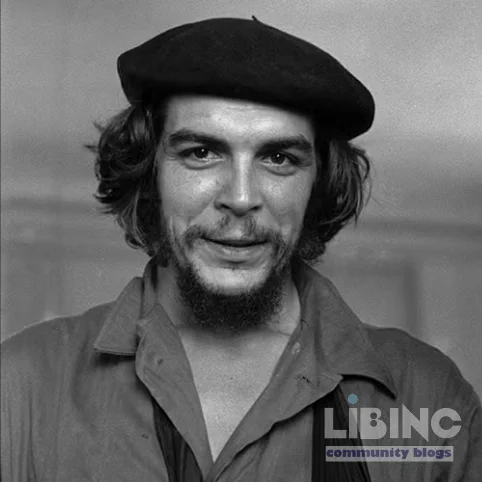
Che Guevara and the Making of a Global Revolutionary Myth: An Analytical Examination
Che Guevara remains a focal point of political mythology and historical debate. His life as a physician-turned-revolutionary tracks a dramatic arc from quiet Argentine childhood to world-spanning insurgencies. The problem is not simply to record dates and battles, but to understand how a single figure could symbolize both principled social justice and coercive violence within the same story. The stakes are high: the way we interpret Guevara informs our view of revolutionary ethics, Cold War geopolitics, and the feasibility of exporting insurgent tactics across continents. The hidden conflict lies in competing narratives that praise courage while condemning executions and authoritarian methods. This article asks why Guevara endures as a symbol, and how four analytical lenses—data-driven framing, juxtaposition of ideas and deeds, cause and effect, and expert reconstruction—reveal a more precise portrait than any single myth allows.
- Analytical frame: Che Guevara's life mapped by patterns and data
- Contrasts: Ideals versus actions and ethical questions
- Causes and effects: How decisions shaped movements and outcomes
- Expert reconstruction: Historiography and contested legacies
Analytical frame: Che Guevara's life mapped by patterns and data
The analytic frame begins with a data-grounded reading of a life that defies simple categorization. Che Guevara, born Ernesto in Rosario, Argentina, moves from a middle-class upbringing into a vocation that marries science with political conviction. His early exposure to asthma and athletic discipline foreshadow a persona built on endurance and practical competence. The transition from medical student to revolutionary is not accidental but the product of a sustained pattern: the search for a method to translate moral critique into tangible outcomes. In this frame, the biography is read not only as sequence of events but as a pattern of decision points where ideologies, organizational skills, and opportunistic alignments converge to produce a transnational activist profile. The core pattern is not merely sequence but the deliberate recalibration of aims in light of escalating political opportunity and strategic constraints. Che Guevara is not a static symbol; he is a historical actor whose choices illuminate the logic of revolutionary strategy and its limits.
Witnessing the poverty and injustice of South America catalyzes a shift from patient care to radical reform, a transition that situates Guevara at the crossroads of medicine, politics, and conflict. This pivot matters because it explains why the Cuban Revolution becomes a focal point for his later strategy of exporting insurgent tactics. The Cuban Revolution is not just a backdrop; it is a proving ground where his analytical method—combining field-based improvisation with a disciplined reading of political opportunity—shows its first major efficacy. The insurgency in Cuba demonstrates that a small, dedicated core can disrupt a larger regime when it minimizes risky exposure and prioritizes mobility, coordination, and shadow warfare. The data pattern here is not merely success; it is the demonstration that a physician’s care for the collective can translate into a disciplined, mobile, and ideologically coherent guerrilla machine.
Beyond Cuba, Guevara’s writings and actions reveal a craving for theoretical synthesis—an explicit effort to translate Marxist analysis into revolutionary practice. He studies guerrilla warfare with the seriousness of a clinician studying a disease: assess the terrain, understand the symptomatology of the regime, and apply a targeted intervention. This method yields a practical manual on guerrilla warfare that becomes a globally cited reference, shaping countless movements that seek to replicate his model under varied local conditions. The analytic frame thus treats Guevara not as a mere hero or villain but as a case study in the operationalization of political theory. The Cuban Revolution becomes the testing ground where doctrine meets the realities of speed, terrain, and political risk, and where the balance between moral idealism and strategic necessity is continually renegotiated.
Operational clarity in his career emerges from the intersection of medical precision and political audacity. The early exile from the medical academy to the field of revolution demonstrates a willingness to reframe expertise under the pressures of coercive politics. This reframing is crucial because it shows how ideological conviction can convert a professional identity into a leadership capability capable of coordinating mass mobilization, logistics, and international diplomacy. The data pattern thus extends to Guevara’s later roles as a bank president and industrial minister, positions that translate ideology into state capacity. The analytic frame insists that the core of his influence lies in the capacity to fuse tactical acumen with a clear ideological horizon—the belief that revolutionary justice can be enacted through disciplined organization and strategic violence when necessary. This belief is not a flourish of rhetoric but a carefully calibrated approach to political leverage in unstable environments.
Analytical frame: Che Guevara's life mapped by patterns and data (cont.)
Seeing Guevara through this data-driven lens clarifies why his influence extended beyond Cuba. He becomes a symbol precisely because his life contains the paradoxes that haunt many revolutionary narratives: the insistence on justice paired with the execution of prisoners under extrajudicial orders; the commitment to universal humanism tempered by the realities of centralized power. The La Cabaña episode, for instance, crystallizes the ethical tension embedded in his strategy. Historians debate whether these measures were necessary to solidify the Cuban state or a safeguard that trampled due process. The answer is not binary but contingent on how one weighs moral calculus against political consolidation. The data frame does not sanitize the violence; it places it within the logic of a revolutionary project designed to survive in a volatile regional order, where external threats and internal fragility demand rapid, uncompromising decisions.
In this light, Guevara’s epistemic project—his attempt to merge radical egalitarianism with a working model of political economy—appears less as a contradiction and more as a coherent if morally contested system. The measures taken in the early years of the regime are not simply aberrations; they are manifestations of a theory that equates revolutionary legitimacy with the capacity to enforce outcomes that align with an envisioned social order. The data frame interprets his world as one in which the line between moral clarity and political necessity is redefined in real time. The Cuban experience thus emerges as a template for analyzing how movements translate abstract ideals into concrete programs, often under the pressure of existential risk. Che Guevara exemplifies a form of leadership that is as much about mobilizing resources and maintaining discipline as it is about articulating a universal ethical program for humanity.
Contrasts: Ideals versus actions in Guevara's career
Guevara’s public persona rests on a powerful contrast between the image of a compassionate physician and the reality of a revolutionary who endorsed harsh measures against perceived enemies. This tension defines his most persistent paradox: the appeal to universal justice coexists with decisions that appear to erode due process and civil liberties. The inspirational rhetoric about building a just society collides with the practical necessity of suppressing dissent to preserve the revolutionary project. The perceived sincerity of his humanitarian impulse clashes with the brutality attributed to La Cabaña and other operational theaters. The result is a figure who generations of readers and viewers either admire for moral clarity or condemn for coercive methods, often within the same paragraph of critique. The stakes here are not merely historical but ethical: how should a revolutionary embody justice when the means used to secure it appear to violate moral norms?
The ethical dilemma intensifies when one weighs the pragmatic necessity of control against the costs imposed on individuals. Elites and ordinary people alike bear the consequences of swift, decisive actions in the name of national reform. Critics point to the extrajudicial killings and the suppression of political opponents as defining features of Guevara’s revolutionary toolbox. Supporters counter that the regime faced immediate existential dangers from a hostile international environment and internal destabilization, arguing that radical measures were necessary to guarantee the survival of the revolution and the broader project of socialist transformation. The truth lies in a contested middle ground where the strategic rationale for decisive action is acknowledged while the moral costs are not, and perhaps cannot be, fully excused or erased. This is not a simple indictment or defense; it is a probe into the ethical architecture of revolutionary statecraft and its enduring legacies in Cuba and abroad.
Guevara’s image as a romantic revolutionary clashes with the more sobering record of his governance. The early triumphs of the insurgency create an aura of inevitability, yet the longer arc of his political career features decisions that constrained political pluralism and opened space for centralized authority. The Cuban economic reforms he helped implement accelerated the nation’s shift toward socialist planning, but they also tied future state capacity to politically costly directives. The contrast between the ideal of universal human solidarity and the reality of state violence invites a difficult question: can revolutionary ideals be disentangled from the coercive instruments that sustain them? By foregrounding these tensions, the analysis avoids celebratory simplifications and situates Guevara’s legacy within a broader debate about the costs of radical change and the compromises of revolutionary governance.
Contrasts: Ideals versus actions in Guevara's career (cont.)
The tension between image and action also shapes public memory and cultural representation. Che Guevara became a global icon whose face appeared on posters, clothing, and films, often detached from the complexities of his political choices. The Motorcycle Diaries narrative, as well as later cinematic portrayals, contribute to a simplified heroic script that emphasizes moral clarity and personal courage. Yet the biography itself includes episodes that invite rigorous scrutiny, such as his role as ambassador and his influence on foreign policy during the Bay of Pigs era and the Missile Crisis. These moments reveal a diplomat as much as a fighter, a man who sought to marshal international opinion and align disparate actors around a common strategic objective. The public memory problem, therefore, is not merely about misrepresentation; it is about how narratives crystallize during periods of ideological confrontation and how they survive the test of historical revisionism.
In this sense, the contradictions become instructive rather than simply condemnable. They illuminate the limits of a one-sided epic and reveal how a revolutionary figure negotiates multiple, often incompatible identities. The ethical and political tensions embedded in Guevara’s career can thus be reinterpreted as evidence of a broader pattern in revolutionary leadership: the struggle to transform a political imagination into durable institutions while resisting the centrifugal forces of fear, factionalism, and external pressure. The result is a portrait that respects the complexity of his life without surrendering to a single moral verdict. The purpose of this contrast is to push beyond myths toward a more exacting historical assessment that respects both the power of his ideas and the costs of their implementation.
Causes and effects: How decisions shaped movements and outcomes
The Cuban Revolution is the hinge on which Guevara’s public identity turns from a local insurgent story into a global testament. The victory in 1959 allows him to assume roles that translate ideology into state-building, including leadership of economic and financial institutions. The alliance between revolutionary zeal and practical governance accelerates a shift toward a centralized economy modeled on socialist planning. The cause-and-effect logic is clear: a successful insurgency creates an opportunity to implement a comprehensive program, but it also concentrates power in a manner that leaves less room for plural political participation. The cause is not only the energy of a charismatic leader but the structural choice to leverage revolutionary legitimacy into the capacity to direct national resources and policy, a move that shapes Cuba’s trajectory for decades. The effect is a country with stronger state capacity but with limited political pluralism, a trade-off central to evaluating Guevara’s overall impact on Cuban state-building and regional dynamics.
The international ripple effects of Guevara’s campaigns reveal a broader pattern: the export of revolution as strategy. His travels to Africa and Latin America, first to the Congo and then to Bolivia, signal a belief that insurgent tactics could be scaled to other theaters with similar structural vulnerabilities. The Congo mission, though brief, demonstrates both the allure and limits of foreign guerrilla intervention. The Bolivian expedition ends in capture and death, underscoring the risks of external adventures that fail to secure local popular support or sustainable organizational depth. The cause-and-effect chain here is not simply about successful campaigns turning into long-term regimes; it is about how a cross-border ideology interacts with local politics, terrain, and social conditions to produce divergent outcomes. The persistent question is whether Guevara’s method could be adapted to fit different political ecosystems or whether it remained intrinsically tied to the Cuban experience and its particular historical moment.
Beyond battlefield campaigns, Guevara’s influence on revolutionary strategy also shapes how insurgencies are theorized. His manual on guerrilla warfare becomes a touchstone for practitioners and students of socialist revolutions, informing tactics such as small-unit operations, political education, and the consolidation of control in liberated zones. The effect of this theoretical contribution extends to a wider audience of movements that seek to emulate his approach, often with significant local adaptations. In this sense, the cause-and-effect analysis expands from the battlefield into the realm of political imagination, showing how a specific lineage of guerrilla theory can spiral outward to influence strategies across continents. It also invites critical reflection on the limits of importing a foreign revolutionary model into a different socio-political landscape, reminding readers that context matters profoundly for both success and failure.
Causes and effects: How decisions shaped movements and outcomes (cont.)
The UN speech Guevara delivered in 1964 signals a shift from guerrilla warfare to a broader, transnational rhetoric about colonialism, apartheid, and global inequality. The speech reflects a strategic pivot toward shaping international opinion and aligning with like-minded movements, not merely waging battles in distant terrains. It reveals a leader who understands the value of symbolic capital and diplomatic language, even as he remains committed to the discipline of armed struggle. The consequence is a more diffuse form of influence: Guevara’s ideas become part of the global lexicon of anti-imperialist struggle, inspiring student movements, labor unions, and regional leftist governments. The cause is the articulation of a coherent narrative linking national liberation with a universal project of social justice; the effect is the normalization of revolutionary rhetoric in international forums and in cultural productions. The ripple effects include enduring debates about the legitimacy of revolutionary violence in pursuit of transformative ends, a debate that continues to shape left-wing politics in Latin America and beyond.
The Bolivia campaign serves as a cautionary counterpoint to the Cuban success story. Local conditions, limited popular mobilization, and the absence of a robust supportive network hindered the mission. The strategic calculus that justified exporting a similar guerrilla strategy to Bolivia did not account for the decisive role of local context, including the strength of state capacity, the distribution of rural support, and the capacity to sustain cross-border logistic chains. The result is a clear causal lesson: revolutionary strategy cannot be transplanted wholesale across radically different environments. The effect, then, is a more nuanced understanding of embeddedness—how revolutionary actors must cultivate local legitimacy, adapt tactics to terrain, and build durable organizational structures before attempting cross-border replication. This insight remains critical for contemporary assessments of transnational insurgencies and the risks of ideological export without sufficient local adaptation.
Causes and effects: How decisions shaped movements and outcomes (cont.)
Finally, the strategic and ethical decisions Guevara makes in relation to his political responsibilities offer a window into the long-term consequences for Cuba and its neighbors. The transition from an insurgent to a state-builder requires balancing ideological commitments with the pragmatic demands of governance, external diplomacy, and economic resilience. This balancing act, visible in policy choices around agriculture, industry, and international relations, shapes the trajectory of the Cuban economy and its political climate for years to come. The cause-and-effect logic thus reveals a broader pattern: revolutionary conviction can yield durable state capacity, but it often comes at the expense of pluralism and civil liberties. The consequence is a political legacy that remains contested among scholars, policymakers, and activists who weigh the costs and benefits of upheaval against the promise of systemic transformation. The result is a layered understanding of Guevara’s impact, one that recognizes both the strategic innovations he introduced and the political trade-offs that accompanied them.
Expert reconstruction: Historiography and contested legacies of Che Guevara
Historians approach Che Guevara from multiple methodological angles, ranging from archival research to oral histories and cultural analysis. The historiography reflects a broad spectrum of judgments, from heroic-technocratic appreciations of his organizational discipline to critical assessments that emphasize human rights concerns and the moral costs of coercive practices. The dual nature of his legacy emerges in debates about whether his methods can be reconciled with universal principles of justice or whether they must be rejected as incompatible with civil liberties. This tension is not a mere footnote; it shapes how subsequent generations interpret the potential and peril of revolutionary leadership in a world marked by enduring inequality and geopolitical rivalries. The historiographical debate thus becomes a touchstone for evaluating how to weigh courage against brutality, vision against execution, and idealism against realpolitik.
Modern scholarship increasingly frames Guevara within the wider Cold War geopolitics that shaped the postwar world. Revisionist and traditionalist accounts alike interrogate the extent to which external powers influenced Cuba’s choices and how much agency Guevara retained as a central actor in the revolutionary project. The result is a more nuanced portrait in which his strategic insights, organizational capabilities, and internationalist ambitions are not simply celebrated or condemned, but analyzed for their complex interactions with global power structures. This analytic orientation also engages with cultural memory: The Motorcycle Diaries and the Che biopics contribute to a durable mythos while also inviting critical examination of representation and myth-making in postcolonial studies. The historiography thus becomes a crucial instrument for disentangling myth from method and for assessing the real-world implications of his ideas in a world still contending with colonial legacies and regional inequalities.
Historical reconstruction indicates that Guevara’s influence endures not because he simply repeated a successful formula but because he adapted a revolutionary repertoire to shifting political landscapes. The capacity to translate ideological commitments into practical programs—whether in Cuba, the Congo, or Bolivia—reflects a form of leadership that remains controversial yet influential. The expert view recognizes the value of his strategic intuitions—rapid action, disciplined organization, and a willingness to experiment with different political modalities—while also insisting on critical scrutiny of the human costs and limits of his approach. The synthesis emerging from this reconstruction is not a unified verdict but a clarified understanding of how a single figure can catalyze both admiration and alarm, inspiring movements while provoking persistent questions about the moral boundaries of revolutionary action. The enduring significance of Che Guevara, then, lies in his capacity to provoke ongoing debate about how best to pursue justice in conditions of violent political competition and structural inequality.
Expert reconstruction: Historiography and contested legacies of Che Guevara (cont.)
In light of these debates, contemporary readers are urged to weigh Guevara’s strategic contributions against the ethical costs of his methods. The expert consensus acknowledges his role in shaping a coherent, globally influential anti-imperialist narrative, while also recognizing the critiques that highlight human rights concerns and the suppression of dissent within his domain of governance. This balanced assessment helps explain why Guevara remains a potent reference point for both radical idealists and critical realists. The evidence suggests that his influence rests not on a single attribute but on the synchronization of theoretical rigor, organizational discipline, and international ambition. The enduring question is whether revolutionary aims can be reconciled with the protections of due process and universal rights, and whether any future movement can replicate his combination of moral fervor and political competence without repeating the ethical transgressions associated with his more controversial decisions.
In the final synthesis, the life of Che Guevara is best understood as a case study in the complexities and contradictions of revolutionary leadership. His legacy invites ongoing scrutiny of how to balance transformative goals with the constitutional protections that guard human dignity. The historical record shows that his ideas will continue to inform debates about comprehensive political change, the ethics of arms and governance, and the resilience of anti-imperialist solidarity in a constantly shifting international order. The real value of this analysis lies in its insistence on nuance: to grasp why Guevara remains a magnet for both admiration and critique, one must examine the full texture of his life, the context of his decisions, and the long-run consequences for the people he aimed to serve and the movements he inspired.
Ultimately, Che Guevara’s story is less a single verdict than a spectral map of revolutionary possibility and its limits. The analytical frame, the contrasts, the causal accounts, and the expert reconstructions together offer a disciplined way to navigate a biography that has shaped political imagination for generations. For scholars, policymakers, and readers seeking a sober, contested understanding of a figure who embodies both solidarity and severity, Guevara remains a test case for how to think about justice, tactics, and the price of change in a world of persistent inequality.
What this means for contemporary readers is practical and demanding: any evaluation of revolutionary figures must honor the complexity of their context, insist on evidence-based judgments, and remain wary of reducing a life into a slogan. Che Guevara’s legend persists because it speaks to enduring anxieties about power, justice, and the feasibility of radical transformation under constraint. The challenge for modern analysis is not to choose sides but to illuminate the mechanisms by which a relatively small group could alter the course of history while leaving unresolved questions about ethics and governance that future generations will continue to debate. In this light, Guevara’s legacy remains a living invitation to rigorous inquiry, precise sourcing, and a disciplined willingness to question even the most ingrained assumptions about revolutionary virtue and human rights.
Closing the analytical gap: translating analysis into practical judgment
Readers benefit from a concrete rubric that turns the four lenses into actionable assessment. The four dimensions — aims, methods, legitimacy, consequences — offer a simple scoring approach to compare cases, weigh moral costs, and gauge governance capacity in volatile environments. For each dimension, ask: what goal was pursued? were civil liberties safeguarded? what evidence supports success or failure? what were the long-run governance consequences? This framework moves discussion from slogans to transparent accountability while honoring local context and the limits of imported models in guerrilla warfare and anti imperialism debates.
| Dimension | Probe Question | Illustrative Note |
|---|---|---|
| Aims | What objective was pursued? | Explicit political goals, with attention to rights trade-offs |
| Methods | What tactics were used? | Scale and scope of violence vs political mobilization and education |
| Legitimacy | Was local support credible? | Popular mandate vs coercive enforcement |
| Consequences | Long-term governance effects? | Centralized control, pluralism, civic rights |
| Context sensitivity | How did terrain and culture shape choices? | Adaptation vs transplant risk |
| Exportability | Can methods fit other settings? | Caution about wholesale replication |
In urban insurgencies today, leaders may accept a narrow window of coercive measures to preserve mobilization, followed by broad reforms; in foreign interventions with fragile local legitimacy, the risks rise quickly. The Cuban case shows the tension between popular legitimacy and centralized control, underscoring the need to adapt rather than imitate. A transparent scoring approach promotes evidence based discussion, encouraging policymakers and scholars to document choices, outcomes, and rights impacts with accountability, while keeping context front and center.
Practical scenarios
- Urban insurgency with a brief window of coercive action
- Purpose: protect civilians and create space for negotiation
- Risk: legitimacy erosion if not followed by inclusive reforms
- International support paired with strong local leadership
- Focus on building durable institutions
- Avoid overreliance on external actors
- Post conflict governance and economic reform
- Transparent budgeting and anti corruption measures
- Protection of civil liberties during transition
A composite score grounded in four principles: clarity of aims, proportional methods, credible legitimacy, and sustainable consequences. It signals how closely a movement aligns with humane governance while pursuing transformative change.
Ultimately, the aim is to equip readers with a method to analyze revolutionary action that respects humane values while recognizing strategic realities. The discussion remains contested, but a disciplined framework helps illuminate choices and consequences across different contexts.
What factors shape assessments of Che Guevara as a revolutionary figure?
Che Guevara is judged by the balance between moral rhetoric and practical methods, the legitimacy of governance he promoted, and the long term social and political outcomes. A nuanced view weighs humanitarian ideals against coercive acts, and considers how context, not heroism or villainy alone, explains outcomes. This approach helps separate admiration for ideas from critique of their implementation.
How did Guevara's medical background influence his leadership style?
Guevara's medical training cultivated an emphasis on systemic diagnosis, disciplined planning, and a physician's concern for collective welfare. In practice, this translated into organized logistics, field improvisation, and a focus on practical interventions aimed at achieving measurable social benefits, even as he faced hard political trade offs that affected civil liberties.
Why is La Cabaña viewed as a pivotal yet controversial episode?
The La Cabaña episode encapsulates the central tension of his ethics: the justification of swift, harsh measures to consolidate a revolutionary regime versus the costs to due process and human rights. The episode is a test case for evaluating proportionality, necessity, and long term legitimacy of state power acquired through insurgency.
What lessons emerge from Guevara's attempts to export revolution to other regions?
Exportability hinges on local legitimacy, terrain, and socio economic conditions. The Congo and Bolivia episodes show that foreign backed efforts often falter without deep local roots, sustainable organization, and a compatible political settlement. Contemporary movements should emphasize local leadership and adaptable institutions rather than replicating a single model.
How should readers contextualize Guevara in today’s political debates?
Context matters greatly. A rigorous analysis acknowledges both strategic innovations and human costs, recognizing that universal ideals must be reconciled with the realities of governance, civil rights, and enduring inequality. The goal is informed judgment rather than a binary verdict.




Add a comment
To comment, you need to register and authorize
Comments