

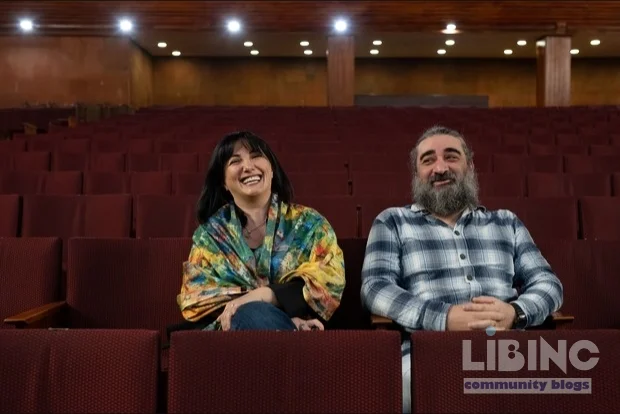
Outliving Shakespeare: An analytical deep dive into the making of a retirement-home documentary
Table of contents
- Analytics: mapping the thesis of Outliving Shakespeare
- Contrast: on-stage dreams and backstage realities
- Cause and effect: external shocks shaping the film’s arc
- Expert reconstruction: what the makers learned and changed
The documentary Outliving Shakespeare follows a delicate trajectory: an intimate microcosm within a retirement home, intersected by a wider political and historical frame. The co-directors, Inna Sahakyan and Ruben Ghazaryan, steer a long-form project that began with a spark of optimism about theatre as a conduit for renewal, but gradually inhabited a more complex emotional terrain. The film moves through on-set dynamics and backstage negotiations, then threads a broader world into the interior life of its residents. The central question is not merely how to tell these stories, but how to balance two intertwined realities in the edit: the dream of performance and the poignancy of time passing.
This analysis treats Outliving Shakespeare as a case study in modern non-fiction filmmaking. It argues that the film’s strength lies in a deliberate, almost dialectical balance between analytical structuring and intuitive, transitional shaping. It also shows how external events—most notably the Artsakh conflict—entered the narrative not as intrusion but as a necessary extension of the characters’ lived experience. The result is a work that engages with aging as a form of memory-making and with cinema as a tool for ethical representation.
Analytics: Mapping the thesis of Outliving Shakespeare
At its core, Outliving Shakespeare is less about theatre than about the experience of aging in a social space that doubles as a stage. The filmmakers describe a fundamental tension: Inna Sahakyan adopts a more analytical lens, while Ruben Ghazaryan trusts the pull of intuition. The clash is not a quarrel but a productive duality that informs the film’s narrative architecture. The decision to treat the retirement home as a living theatre hall—yet inhabited by real emotional lives—requires a precise, often surgical approach to material. The 400 hours of footage, amassed over more than three years of production and post-production, becomes a testing ground for the craft of long-form documentary editing. The central problem is this: how do you compress a sprawling human story into a form capable of sustaining audience attention without eroding its complexity?
In this sense, the editing room becomes the primary instrument of meaning. The editors, and especially Artur Sahakyan, contribute passages that infuse lyrical rhythm into the documentary. The early edits were not mere cut choices; they were attempts to fuse two modes of time: the immediacy of rehearsals and the retrospective, almost archival pace of memory. The result is a narrative that feels both intimate and architected. A key insight is that the film’s strongest moments occur in transitions—moments when the audience shifts from the on-stage fantasy to backstage vulnerability, or when a character’s face shifts from hope to something more observationally melancholy. Those transitions are not accidents; they are the product of a deliberate listening to material and a willingness to let scenes emerge rather than be forced into a predetermined sequence.
One of the film’s most important choices concerns structure. The duo emphasize that the project began with a microcosm and slowly invited an outside world in, not the other way around. This is where the film justifies its 3+ year timeline: a study in how long-form nonfiction requires patience, repeated viewing, and a willingness to let time do the heavy lifting. The editor’s role, in particular, becomes a form of dramaturgy. As Rubin Ghazaryan notes, the editing process became the place where two realities—dream and reality—backdrop and personal history, stagecraft and life’s randomness—could coexist. The result is a narrative that does not pretend the theatre is a sanctuary; instead, it uses theatre to reveal something more fragile and universal: the urge to stay present in love, memory, and desire as one ages.
Why does this matter for the documentary craft? Because Outliving Shakespeare demonstrates a method for negotiating scope without surrendering interior life. The film does not sanitize aging or render it as mere sentiment. It makes the case that memory and longing persist even in the face of decline, and that drama, properly curated, can illuminate a broader human truth. The film’s most effective sequences reveal not only character arcs but the way memory itself travels through film form: a collage of intimate moments, re-edited into a pattern that resembles a life course rather than a linear chronology. In this sense, the project advances a concrete proposition about documentary storytelling: when personal cinema meets social history, the audience gains a more ethically aware lens on aging, companionship, and the passage of time.
Contrast: on-stage dreams and backstage realities
The documentary’s early promise centers on theatre as a liberating force for elderly residents. The initial instinct, articulated by Inna, was that theatre could rejuvenate life, offering a route to vitality and communal purpose. This optimistic premise sets up a necessary contrast with the more stark, sometimes painful realities that life in the retirement home presents. The film does not shy away from discomfort; it leans into it, which is where contrast becomes a storytelling engine. On set, rehearsals radiate energy, but behind the scenes, the same participants face fatigue, memory lapses, and the tremors of time. The two spaces—the stage and the backstage—are not separate; they continually intersect, revealing how performance functions as both escape and self-preservation. In this sense, Outliving Shakespeare uses the inversion of expectation as a device: the theatre becomes a cover for vulnerability, while vulnerability reveals the theatre’s limitations and strengths alike.
Consider Anahit, a character who appears initially as a source of humor and vitality. She becomes the emotional centre of the film precisely because she embodies the other side of the story: the persistence of time and the possibility that some residents will not transcend their circumstances through performance. Anahit’s trajectory is a deliberate contrast to those who chase transformation through theatre. The viewer learns to read the stage as a metaphor for hope and the backstage as a reminder of mortality. The result is a layered portrayal where the audience is invited to weigh the value of striving against acceptance. This negotiation between aspiration and reality is not a footnote; it guides the entire documentary’s emotional logic and informs the pacing of the editing, where moments of joy can be followed by quiet, almost philosophical reflection on aging.
Gayane’s arc adds a further layer of contrast by connecting the internal microcosm to the external political world. Before the blockade and ethnic cleansing in Artsakh, she engaged with the theatre group as a participant in a microcosm of communal life. After she returns to Stepanakert as a forcibly displaced person, the film keeps her eyes as a visual barometer of time and change. This becomes a crucial transitional device. The on-screen contrast between personal longing and geopolitical upheaval is not a simple juxtaposition; it is a structural choice that reframes the entire narrative, altering how the audience experiences the sequence of events and the film’s tonal shifts. The editors’ decision to let the outside world into the film via television scenes is a deliberate act of cinematic diplomacy, maintaining intimacy while acknowledging larger forces at work.
In this light, the film answers a deeper question about documentary ethics: to what extent can a microcosm speak for a wider social reality without collapsing into sensationalism? Outliving Shakespeare offers a disciplined answer. It filters the global through the local, showing how community life can illuminate political tragedy and personal resilience without reducing either to a single category. The result is a documentary that remains intimate while never losing sight of the world beyond the retirement home walls. The balance between on-set energy and off-site consequence becomes the film’s distinctive voice, a voice that invites the viewer to interrogate their own relationship to aging, memory, and the theatre of life itself.
Cause and effect: external shocks shaping the film’s arc
Events outside the retirement home inevitably shape a documentary’s trajectory, but Outliving Shakespeare treats external shocks as integral threads rather than intrusions. The Artsakh tragedy appears as a necessary background, the ‘brain’ of the film, not a mere backdrop. When the blockade intensified, the filmmakers stood at a crossroads: should they preserve the microcosm in isolation, or should they weave the outside world into the narrative to preserve truth-telling about time, displacement, and memory?
My sense is that the project would have remained a contained portrait if the external crisis had not arrived. The filmmakers’ original idea leaned toward staying entirely inside the retirement home, letting the microcosm speak on its own terms. Yet the political events happening during production offered a test: could the film sustain its intimacy while acknowledging the global dimensions of aging, displacement, and longing? The decision to include Gayane’s dislocation and to connect her experience to the opening and closing sequences through television footage demonstrates how cause-and-effect reasoning functions in documentary storytelling. It is not a sensational insertion; it is a reasoned extension of the story’s logic—linking memory, home, and homeland as a continuous thread rather than as discrete compartments.
The effect is a more morally textured narrative. The audience experiences a shift in scale—from the personal to the collective—without losing the emotional accuracy that begins the film. This is not cinematic compromise; it is a deliberate methodological choice that sustains a double audience: one seeking human resonance in aging and another looking for responsible engagement with political events. The film’s structure—start inside, allow the outside world to intrude, and then return to the microcosm—models a form of documentary elasticity: you treat external shocks as catalysts that expand but never erase the core subject’s interior life. In practice, this means the camera is not a bystander to politics; it uses politics to illuminate memory, love, and the passage of time as lived realities.
The Artsakh context also influences how the editing orchestrates cadence. The film alternates between compact, lyric passages and longer, observational sequences. The result is a rhythm that mirrors how memory works under stress: rapid, fleeting recollections punctuated by long, quiet, expository stretches where a participant reflects on the consequences of history. The editors’ craft—structured cuts, carefully chosen transition moments, and a preference for scenes that reveal inner life—becomes the mechanism by which cause becomes effect: displacement triggers new relationships, which in turn reframes the characters’ aims and their sense of future possibility.
Expert reconstruction: what the makers learned and changed
The project’s development process reveals a powerful lesson about collaborative documentary making. The co-directors arrived with different temperaments and different aims, and their dialogue became a hinge on which the film turned. Inna Sahakyan describes her approach as analytical, seeking order and a clear through-line. Ruben Ghazaryan, initially wary of the subject—aging itself—found that immersion shifted his perspective. The tension between analytical and intuitive methods did not fracture the project; it sharpened it. The editing room emerged as the locus where these two epistemologies met and negotiated the film’s final form. "The editing process became the place where we decided how these two realities should coexist," Ghazaryan notes. This is a candid admission of how documentary authorship evolves in collaboration, especially when working across borders and in a context where personal and political histories intersect.
A significant element in the reconstruction is the acknowledgement of Anahit as the film’s emotional heart. Anahit’s appearance evolves from comic energy to a more somber, reflective presence. She embodies the other side of the story: the acceptance of circumstance rather than the transformation of self through performance. This shift is not incidental. It is a structural pivot that reframes the audience’s empathy and recalibrates the film’s balance between optimism and truth. Sahakyan and Ghazaryan emphasize that Anahit’s trajectory helps the viewer sense time’s inexorable march while maintaining the thread of human warmth that a retirement home can still offer. The film benefits from this recalibration, because it avoids sentimental simplification while still honoring the residents’ humanity.
Another domain of reconstruction concerns the role of the editor Artur Sahakyan. Early edits preserved much of the poetic atmosphere the directors sought. “Some of his first edits remained almost unchanged in the final version because they captured the poetic atmosphere we were looking for,” the team notes. This underscores a broader editorial principle: lyrical passages can serve as transitions that carry emotional aroma across scenes, enabling the audience to traverse the film’s tempo without losing the thread of memory. The result is a documentary that feels alive: not a static portrait but a living conversation, where time, memory, and desire interact in a way that invites repeated viewing and deeper interpretation.
From a practical standpoint, the experience clarifies several best practices for long-form nonfiction projects. First, identify a core emotional axis early, but remain open to the axis shifting under new material. Second, cultivate a robust editing toolkit that treats transitions as scarce resources, not as afterthoughts. Third, embrace the ethical complexity of presenting aging populations in a way that respects agency while acknowledging vulnerability. In Outliving Shakespeare, these principles converge in a documentary that challenges conventional narratives about aging and art, offering a mode of storytelling that is intimate, ethically grounded, and cognitively persuasive.
In the end, the film is less a recital of events than a disciplined meditation on time, memory, and the capacity for joy in later life. It is a testament to the filmmakers’ willingness to let the material speak, even when the material is unwilling to fit a neat script. The audience leaves with a richer sense of what cinema can do when it refuses to cleave life into neat compartments: the theatre, the home, the past, and the political present all resonate in a single, living room of memory. That resonance is the film’s rare achievement and its lasting contribution to Armenian cinema and documentary practice more broadly.
In summary, Outliving Shakespeare demonstrates that the most persuasive documentary strategies arise from a patient synthesis of analytic rigor and intuitive discovery. The project’s endurance—from production through post-production to festival circuits—reflects a disciplined faith in long-form storytelling. It shows that aging is not a problem to be solved but a field to be navigated with care, honesty, and artistic restraint. It also proves that a small, intimate setting can illuminate large questions about love, loss, and the human impulse to create meaning in the face of time’s unyielding advance.
As the film continues to travel to festivals and reach audiences on home soil, it invites viewers to rethink not only what a documentary about aging can be but how cinema, when guided by a precise, collaborative craft, can narrate one of life’s most universal propositions: that we keep living Shakespeare as long as we keep telling stories with warmth, rigor, and truth.
Key takeaways for future practitioners include the primacy of a clear emotional axis, the power of lyrical editing as a narrative bridge, and the necessity of acknowledging external forces that shape intimate lives. The result is a robust template for future projects that seek to blend micro-life drama with macro-historical context, without sacrificing ethical integrity or cinematic beauty.
Practical implementation framework
In practice, the film’s method offers a template to translate theory into studio-level tactics, audience care, and ethical clarity for long-form projects. The following compact elements convert insights into actionable steps for editors and directors alike.
Figure: Editing milestones in long-form documentary
| Phase | Duration (weeks) | Focus | Technique |
|---|---|---|---|
| Pre-production | 4 | Alignment of aims | Interviews, mood boards |
| Production review | 6 | Material triage | Selective logging |
| Cut 1 | 8 | Narrative spine | Rough pacing |
| Cut refinements | 4 | Transitions | Lyric juxtaposition |
Next, a quick guide to decisions that shape memory and time on screen: deliberate pacing, strategic use of outside events, and ethical framing of residents’ agency within the storytelling arc.
Finally, a compact editorial decision tree to keep two realities aligned:
Editorial decision tree
- Establish core emotional axis: aging, memory, community
- Layer external context (Artsakh) through proportionate use of TV/news footage
- Place most intimate moments in the moments of transition on screen
- Use rhythm to balance optimism with realism
These elements, used together, help maintain ethical grounding while delivering a rigorous narrative about aging, memory, and art, with a clear path from micro-life drama to macro-context analysis.
Enduring lessons for practitioners
Apply a clear emotional axis, curate transitions as essential texture, and invite external events as meaningful catalysts rather than intrusions. The approach supports long-form documentary editing that honors memory, context, and the humanity at center.
Frequently asked questions
What is Outliving Shakespeare about?
Outliving Shakespeare follows a small community inside a retirement home, where residents rehearse and perform, while the filmmakers map how aging, memory, and the creative impulse intersect with larger historical forces; the film binds intimate life with external events, showing how theatre can renew connection, sustain dignity, and illuminate time’s reshaping of identity, relationships, and everyday hope. By weaving rehearsal rooms with quiet corridors, interviews with family, and occasional dispatches from the outside world, the film suggests that art is a vital means to keep meaning alive as bodies slow and communities renegotiate belonging.
Analytically, the work treats aging as a shared subject with memory as a living process, not a static condition. Viewers are invited to assess how small acts of making and watching become a form of resilience that persists under pressure.
How does the film balance on-stage and backstage realities?
The on-stage energy signals communal renewal, while backstage moments reveal fatigue, memory slips, and the fragility of time. The editors cultivate a rhythm that moves between rehearsal and reflection, using transitions to carry emotional nuance rather than shock value. This balance preserves dignity and agency, showing that performance can be both a shelter and a site of truth-telling about aging.
Practice-wise, the film demonstrates how to mine tension from dual spaces without collapsing them into sentimentality.
How are external shocks used ethically in the narrative?
External shocks—such as the Artsakh context—are woven as integral threads rather than intrusions. The narrative treats displacement and memory as interconnected experiences, expanding the micro-story to illuminate social history. Ethically, the film highlights residents’ voices, avoids sensationalism, and uses external events to deepen, not override, personal stories.
This approach respects agency while acknowledging vulnerability, a principle worth applying to any documentary about aging and community life.
What editing techniques help convey memory and time?
Lyric pacing, cross-cutting between rehearsal and memory, and careful transitions bridge present action with retrospective moments. The editors emphasize cadence over chronology, allowing memory to travel through film form as a collage rather than a linear sequence. This method preserves nuance and invites repeated viewing to uncover layered meanings.
In practice, treat memory as a structural resource, not just a narrative garnish.
What practical tips arise for new long-form documentaries about aging?
Start with a clear emotional axis (aging, memory, belonging) and stay open to axis shifts as material evolves. Build a robust editing toolkit focused on transitions and tonal balance. Prioritize ethical portrayal: obtain consent, honor autonomy, and avoid exploiting vulnerability. Integrate outside contexts thoughtfully to illuminate universal themes without overshadowing individuals’ experiences.
How does the Artsakh context influence the narrative?
The Artsakh context serves as a global lens that reframes personal stories of time, home, and memory. It introduces political stakes that deepen emotional resonance while testing the filmmakers’ commitment to ethical storytelling. Used judiciously, such context can sharpen empathy and broaden the documentary’s relevance beyond the immediate microcosm.




Add a comment
To comment, you need to register and authorize
Comments