

Bypassed Towns Revisited: An Analytical Tour Through Lancashire’s Regenerating Hinterlands
- Lead
- Block 1: Analytics
- Block 2: Contrast
- Block 3: Cause and Effect
- Block 4: Expert Reconstruction
- Final reflections
Lead
Can a holiday feel like an expedition when you never leave your county? Lancashire’s double act—Preston and St Helens—offers a testing ground for Britain’s bypassed towns, challenging the idea that travel is only far afield. This piece treats the county as a living laboratory where regeneration is not a single act but a negotiation between heritage, investment and local memory. What looks like neglect on a map often hides a pulse of renewal, a pattern of reinvention that travels in the eye of the observer as much as on the ground.
Across Preston and St Helens, the argument is not nostalgia but a test case in urban regeneration. Spires and markets sit beside modernist blocks and new leisure districts, becoming data points in a broader policy shift toward heritage-led place-making. If you look closely, the vitality is not in pristine perfection but in the tension between past and present, and in the ways investment orchestrates that tension into visible change.
Block 1: Analytics
The central question is why bypassed towns persist in the national imagination as meaningful units of analysis. The answer lies in the anatomy of mobility, investment cycles, and the politics of place. When a town sits off the main commuting routes or loses a department-store anchor, it does not simply disappear; it reorients. In Lancashire, that reorientation is not uniform. It happens through a series of calibrated bets on architectural amenity, cultural infrastructure, and the public realm as primary attractors for residents and visitors alike.
Urban regeneration, in this reading, is not a catchphrase but a measurable pattern: the alignment of public investment with heritage assets, the repurposing of underused civic spaces, and the creation of leisure-led clusters that generate footfall. The Harris Museum and Gallery, refurbished for approximately £19 million, is not merely a gallery; it anchors a network of social activity, libraries, and local commerce. The 21-mile Guild Wheel offers a practical circulatory system for cyclists and pedestrians, linking parks with town centres and expanding the geography of everyday mobility. These are not cosmetic fixes; they are the structural chords of a county attempting to translate historical assets into ongoing economic and social value.
- Investment density: the concentration of funds around key anchors (museums, libraries, transport hubs) and how that concentration affects nearby small businesses and markets.
- Heritage-led strategies: leveraging architectural legibility (Victorian markets, red-brick halls) to cultivate new uses without erasing memory.
- Public realm as magnet: the city square, the market, and the cinema become parameters for measuring change rather than decorations.
In short, the analytics show a pattern: regeneration is most effective when it treats history as a living asset rather than a museum exhibit. The result is a recalibrated hierarchy of value that rewards local engagement and visible improvement in daily life. This is not a one-off facelift; it is a sustained program of upgrade that makes the concept of a bypassed town obsolete as a pejorative category.
The paradox lies in scale. Preston, once simply a railway town, now hosts a constellation of cultural and civic facilities that rival larger urban centers in terms of image and function. St Helens, with its glass industry legacy and heavy industrial past, is undergoing a parallel recalibration that blends restoration with contemporary use. The common thread is a policy logic that treats regeneration as an ecosystem rather than a single project, and that logic depends on cross-portfolio collaboration—transport, culture, housing, and education working in concert.
Block 2: Contrast
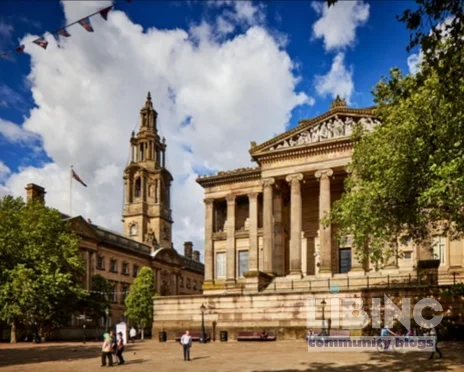
The two towns are not interchangeable case studies; they illuminate different facets of regeneration. Preston operates as a mid-size city with a legacy of civic ambition and a willingness to embed modern amenities within a historical frame. Its skyline conversation, anchored by the hypodermic spire of St Walburge’s Church, signals a desire to reach upward without erasing the past. The re-opened Harris Museum and Gallery offers an emblematic example of how a single cultural anchor can ripple outward into retail, dining and library use, transforming a grey commuting fringe into a district with daily life at its core.
St Helens, by contrast, presents a more dramatic reassembly of the urban contract. The town’s eastward expansion has been a canvas for large-scale demolition and reconstruction, with major projects such as a new bus station, a revived town hall, and a planned green plaza network. Yet the contrast is not merely architectural; it is perceptual. The area around No 7 Cannington Shaw Bottle Shop captures a micro-history of glassmaking, confinement, and revival—an emblem of how a single heritage site, repurposed for markets and events, can anchor a broader sense of place in a changing economy.
These contrasts reveal a truth about bypassed towns: the success of regeneration depends on the alignment of scale and specificity. Preston’s approach looks outward, networking with regional institutions and leveraging high-visibility cultural assets. St Helens adopts a more granular strategy—protecting and repurposing smaller kinetic pieces of the urban fabric that can accumulate into a larger, regenerative momentum over time.
In both cases, the old fabric is not merely saved; it is reinterpreted to serve contemporary needs. The result is a layered urban texture where modern leisure districts sit alongside Victorian markets, where modern libraries sit beside industrial relics, and where the town centre becomes a platform for diverse forms of social life. This is not nostalgia; it is adaptive reuse on a scale that changes how residents experience daily life and how outsiders perceive the county.
Block 3: Cause and Effect
The causal chain in Lancashire’s bypassed towns starts with deliberate governance choices. Local authorities and regional partnerships steer investment toward heritage-led redevelopment, while private and community sectors fill in with niche uses—markets, craft spaces, and pop-up cultural events. The effect is a recalibrated multiplier: more pedestrians, more spending, more social cohesion around revived streets and public spaces. The presence of a robust library or a concert venue can transform a formerly quiet street into a continuous flow of activity, which in turn attracts micro-entrepreneurs and creative enterprises.
Two mechanisms dominate this chain. First, the physical act of refurbishing and reactivating space changes behavior. A modern bus station, for instance, increases the number of daily encounters between residents and visitors, which sustains a more varied retail ecology. Second, the heritage narrative becomes a marketable asset—tourists and locals alike are drawn to stories of glass-making, textile mills, and the political history of protest and reform. The 1842 martyrs’ monument and the gritty Beecham’s clock tower, for example, help frame a sense of collective memory that legitimates investment and risk-taking in adjacent properties and services.
Economic signals follow the built environment. In Preston, a revived market and new eateries complement improved transport and cultural spaces, creating a feedback loop that supports small business growth and responsive planning. In St Helens, the careful mix of arts venues, markets, and education spaces fosters a mixed-use ecosystem that can absorb fluctuations in retail demand and employment. The causal logic is clear: strategy shapes space, space shapes behavior, and behavior shapes the economic and social vitality of the town core.
As these processes unfold, the data begin to align with a broader narrative about regional development. The cases suggest that regeneration is more likely to endure when it foregrounds local ownership, places heritage at the center of daily life, and distributes risk across multiple public and private actors. It is a model that other bypassed towns could adapt, not by copying but by translating the Lancashire playbook to their own unique theatre of constraints and opportunities.
Block 4: Expert Reconstruction
From the ground, expert voices emphasize monetization as a necessary ingredient of place-making. John Tabern, director of a community-led project in St Helens, notes that no matter how charming a heritage site may be, its value only manifests when it can be monetised through gigs, markets and events. This practical insight reframes heritage as an economic instrument rather than a static symbol. The Bottle Shop, revived for monthly craft markets and a bar, epitomises the logic: heritage-driven spaces become flexible platforms for contemporary commerce and culture.
The Book Stop in St Helens serves as another instructive example. A community bookstore can anchor a cultural precinct, enabling a steady cadence of readings, workshops and social programming. Its very existence illustrates the deliberate layering of cultural capital onto a redeveloped urban fabric. When a town hall and a related library are relocated or expanded, the broader plan must account for the new rhythms of public life, not merely the preservation of old façades. The aim is to design a sequence of uses that sustains footfall and supports residents’ daily routines while inviting visitors to engage with a living culture of place.
In Preston, the Harris Museum’s £19 million refresh stands as a keystone of the regeneration narrative. The building is not just a showroom for historical textiles or fine art; it is a civic hub that channels public life through exhibitions, libraries, and social spaces. The rebuilding process becomes a teacher for policy-makers: it demonstrates how investment in cultural infrastructure can catalyze a broader economic revival by shaping perceptions of the town and by enhancing the value proposition for nearby residents and businesses.
Architecture, in this reconstruction frame, becomes an argument about legitimacy. The exposed Brutalist forms of the transport nodes in St Helens contrast with the refined classical lines of guild halls and market façades in Preston, creating a diverse but coherent visual language. The aim is not uniformity but a dramaturgy of place: a county where different architectural idioms can coexist, each contributing to a shared sense of regional identity and future potential. In practical terms, this means planning that anticipates next-cycle needs—housing density, green space, mobility networks, and a scaled public realm—rather than chasing a single silver bullet.
Ultimately, expert reconstruction reveals a blueprint for sustainable growth in bypassed towns: empower local communities, invest in durable cultural infrastructure, and cultivate a multi-use urban ecosystem that can adapt to changing economic tides while preserving the sensory memory of place. Lancashire’s two-hander offers a template, not a script, for other towns wondering how to transform marginal positions into enduring communities.
Final reflections
The Lancashire case demonstrates that bypassed towns are not museums of decline but laboratories for inventive place-making. The regeneration narrative is built from careful choices about where to invest, how to reuse history, and how to design spaces that invite ongoing social life. The key is not a single triumph but a sequence of small, durable wins: a renovated museum, a revived market, a new bus interchange, a community bookstore, and a network of walking and cycling routes that knit the urban fabric together.
For scholars and practitioners, the lesson is clear: effective regeneration depends on aligning governance with local knowledge and on treating heritage as a living asset that can generate economic and social returns. For residents, the payoff is everyday life reimagined—streets that feel safer, markets that feel active, and cultural spaces that feel responsive. Lancashire’s bypassed towns are not merely places to pass through; they are places to inhabit, explore, and re-define with each new season of investment and imagination.
Measuring Impact and Sustaining Regeneration
To translate investment into lasting value, towns like Preston and St Helens need a compact, living framework that connects heritage with everyday life. The missing piece in the present narrative is a practical method to track progress, learn from early results, and steer resources in real time. The following compact design offers four dimensions that local partners can adopt to keep regeneration honest, visible, and responsive.
Key metrics snapshot
12% (2020→2024)
A simple scorecard should monitor activity (footfall, dwell time) and economics (spend per visitor, occupancy), plus social engagement (participation in co-design) and governance (delivery cadence). This mix makes heritage-led aims tangible for traders and residents alike.
Regeneration indicators table
| Indicator | Lancashire example | Current | Target (12–24 mo) |
|---|---|---|---|
| Footfall | Harris Museum precinct | 320k/yr | 380k/yr |
| Dwell time | Markets & cinema clusters | 22 min | 28 min |
| New business density | City fringe cafés | +6% | +15% |
| New jobs | Arts, retail | +150 | +350 |
| Green space per capita | Radcliffe Park area | 2.6 m² | 3.8 m² |
Examples: Harris Museum refresh tracks visitor numbers and program attendance; Guild Wheel usage correlates with town-centre footfall; Bottle Shop markets translate heritage space into regular markets. Use quarterly reviews to adjust layouts and event calendars.
Implementation actions
- Co-design with residents and traders, appoint a cross-sector working group, and publish a shared delivery plan.
- Blend funding from public, private, and philanthropy sources to reduce risk and broaden legitimacy.
- Establish a quarterly dashboard with clear owners and milestones, updated publicly.
- Communicate results through live events and open data portals to sustain civic trust.
- Scale successful uses (markets, pop-ups, and cultural activities) across neighborhoods with adaptable space standards.
What is heritage-led regeneration and why is it important for bypassed towns?
Heritage-led regeneration is a practical approach that uses historic assets as anchors for contemporary growth, weaving preservation with new uses, community participation, and carefully choreographed delivery milestones so that a restored market, gallery, or square becomes a living hub rather than a static monument, enabling small businesses, cultural programs, and everyday life to co-evolve around a shared sense of place, while governance structures align funding, planning permissions, and local leadership to sustain momentum over multiple cycles of investment and feedback, rather than delivering one-off fixes that fade when funding dries up. It requires transparent reporting, inclusive decision-making with residents, businesses, schools, libraries, and cultural partners, and a willingness to test small-scale pilots that inform larger bets.
In Lancashire towns, this approach translates into quarterly dashboards, public events, and a sustained sequence of upgrades across assets such as markets, libraries, and transport nodes that together reinforce daily life and local pride.
How can towns measure regeneration success beyond aesthetics?
Measuring success needs a simple scorecard that captures activity, economics, social engagement, and governance. First, track footfall, dwell time, retail occupancy, and new business density. Second, monitor spend per visitor, job creation, and apprenticeships. Third, measure community participation, event attendance, and volunteering. Fourth, assess governance cadence, partnership depth, and funding diversity. A transparent dashboard with quarterly targets helps translate a visual facelift into real, durable opportunity for residents and traders.
What role do communities play in sustaining regeneration?
Communities drive relevance and resilience by co-designing spaces, programming, and services. They help set priorities, host events, steward public spaces, and advocate for locally appropriate uses. Regular town-hall meetings, citizen juries, and resident-led markets reinforce a sense of ownership that reduces risk and increases long-term support for investment. The strongest regenerations emerge where community voices shape both the plan and the day-to-day rhythm of places like Preston and St Helens.
Which funding models best support heritage-led place-making?
Effective models blend public funds, private investment, and philanthropy, tied to clear deliverables and community monitoring. Blended finance lowers risk and aligns incentives for all partners, while a lightweight governance framework keeps projects adaptable. Embedding social value metrics (jobs, skills, volunteering) in funding agreements ensures every pound helps build local capacity and long-term sustainability.
How can transport and cultural infrastructure work together to boost local economies?
Integrated planning aligns transport improvements with cultural anchors to sustain footfall and dwell time. A new bus interchange can feed activity into markets and galleries; cycling routes like a revitalized Guild Wheel extend access to parks and town centres. The key is aligning timetables, wayfinding, and programming so residents and visitors experience a seamless, multi-use town core that supports local businesses and cultural venues.





Add a comment
To comment, you need to register and authorize
Comments