

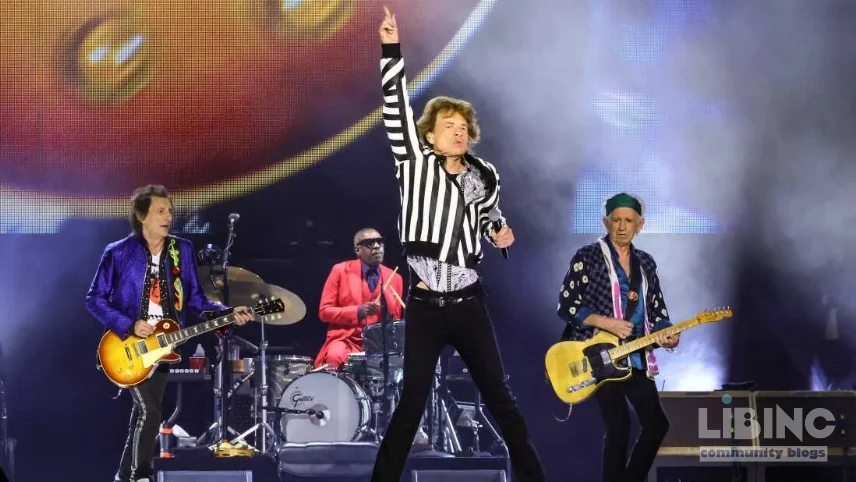
Foreign Tongues: Decoding the Rolling Stones' Energized Late-Career Dancefloor
Table of Contents
Foreign Tongues, the Rolling Stones' 25th studio album, lands as a kinetic invitation to the dance floor. The energy on display makes the band feel vital in a way many veterans never manage. The problem is simple: can a group with such a long shadow reinvent the wheel without slipping into nostalgia? The hidden conflict is a victory lap that still wants to be a debut. Our direction is to dissect Foreign Tongues through four analytic angles to reveal what the Stones are really doing with this late-era renewal.
Our four lenses are analytics, contrast, causation, and expert reconstruction. Analytics map groove, tempo, and production; contrast pits the album against pivotal moments in the band's past; causation links personnel and material to reception; expert reconstruction imagines the project’s aims beyond shine. The goal is to test vitality against coherence. Findings rely on concrete sonic evidence—from riffs to vocal textures and rhythm—showing how Foreign Tongues either replenishes or redefines the Stones' late-career arc.
Through analytics
Analytic work centers on the album's muscular spine: tempo architecture, instrumental layering, and the decision matrix behind the mix. Foreign Tongues leans into a tighter, punchier production aesthetic drawn from Andrew Watt's approach on Hackney Diamonds, but with a different rhythm section dynamic. The result is not retro glow but calibrated propulsion that preserves swing while sharpening precision. The late-career rhythm engine—Darryl Jones on bass and Steve Jordan on drums—grounds the record in a modern blues-rock pulse that still feels quintessentially Stones. Mick Jagger's vocal presence, meanwhile, negotiates age with venom and velocity, never surrendering the performative swagger that has long defined the band. The analytic lens also tracks how arrangements stage the blues as a living, transferable language rather than a museum relic.
Key analytic touchpoints include tempo modulation across songs, the relative loudness of rhythm guitars versus keyboards, and the way riffs are deployed to maximize dance-floor momentum. The album deploys a tight, percussive bottom end that makes space for horn textures and keyboard figures to breathe without breaking the unit. The tracks are engineered to sustain momentum in two-minute bursts, a deliberate move away from sprawling jams toward compact, message-forward statements. This design choice helps Foreign Tongues stay coherent while exploring a wide palette of moods and references.
- Groove and tempo architecture as the primary driver of energy
- Production and mix decisions that preserve clarity while sustaining heft
- Instrumental hierarchy that foregrounds rhythm while celebrating guitarist textures
- Lyrical stance and vocal delivery shaped by age and experience
- Blues lineage and outside influences integrated through contemporary sonic refinements
Within this analytic frame, the album's tonal palette reveals a disciplined approach to influence: Muddy Waters sits as a touchstone, but the Stones' late-career soundscape also borrows from Alabama boogie, glam-rock swagger, and a splash of New York punk energy. The result is a sound that feels informed by a broad canon while remaining unmistakably Foreign Tongues. The production choices refine the Stones’ old tricks into a sharper, more immediate form of expression, a move that undercuts any accusation of mere replication and demonstrates why the project can feel both fresh and faithful at the same time. The data thus far supports a claim: Foreign Tongues is not a nostalgia project; it is a reassertion of the Stones' ability to move a room and a playlist alike.
Through contrast
The album sits in an uneasy but productive tension with the Stones' most celebrated epoch—the late-60s to early-70s peak—while deliberately setting itself apart from more recent entries. This is not a reckless chase for vintage vibes; it is a deliberate recalibration of the band's core values inside a contemporary frame. Compared with Let It Bleed-era swagger and Exile on Main St. depth, Foreign Tongues foregrounds directness, efficiency, and kineticism. The result is a record that favors propulsion over sprawling mood pieces, a stance that aligns with the Stones’ enduring identity as a live-in-the-studio entity. In comparison to Hackney Diamonds, Foreign Tongues leans less on studio myth and more on the tactile thrill of performance—the friction of players in a room, the way a riff lands, the snap of a drum fill in a two-minute song. The contrast is not simply tonal; it is strategic, signaling the Stones' willingness to reallocate time and energy toward sustained physical responses over reflective self-critique.
Two tracks anchor the album's contrasting impulses: the chugging, blues-dueled energy of Rough and Twisted and the disco-kissed soul ballad Jealous Lover. The former channels Muddy Waters through a modern arch, while the latter deploys cinematic staging—an almost motel-lobby melodrama in the visuals—that dramatizes vulnerability within a dance framework. Then there is In the Stars, which revisits the prophets-and-apocalypse motif with a Let It Bleed-like sense of doom, but cast in a digital age where the reanimated Stones can still perform the miracle of reappearing with vigor. The contrast extends to the live-activation of Keith and Ron—Richards and Wood—who lock with a Black-led rhythm section to deliver a groove that feels both ancestral and agile. The net effect is a record that refuses to be boxed into a single mood, instead weaving a collage of moods that maintain forward motion.
LSI in this section includes references to the Glimmer Twins’ lineage, the Let It Bleed energy, Muddy Waters’ influence, and the modernized boogie cranked into a pop-friendly format. The album’s capacity to juxtapose dusty blues with contemporary edge becomes a primary engine of novelty, even as the surface radiates familiar Stones gravity. The contrast is not contradiction; it is the engine that makes Foreign Tongues feel simultaneously seasoned and forward-looking. This approach also clarifies why some listeners may miss the generative muck of their psychedelic experiments, even as others celebrate the new clarity and punch.
Through cause-and-effect relationships
To understand why Foreign Tongues lands with such energy, one must map cause-and-effect across personnel, material choices, and reception. The move to a Black rhythm section—an identity-shifting but historically grounded choice—produces a tightened, more forceful groove. This is not token representation; it reconfigures the band’s interaction with rhythm, creating a sharper forward push that makes riffs land with the brutality of a drum cadence. In turn, Mick Jagger’s vocal performance is calibrated to ride that new propulsion: expressive, robust, and purposefully declarative, even when the lyric zones dip into heartbreak or irony. The causation arc extends to production decisions that prioritize balance and bite, allowing the guitar lines to sing while maintaining a compact bottom end. The causal logic is straightforward: stronger rhythm plus sharper production yields more immediate songs, and immediate songs invite quicker audience uptake in a streaming era that prizes tempo and hooks.
Climate anxieties appear as thematic subtext in two apocalyptic prophecies—In the Stars and Divine Intervention—that acknowledge planetary strain while reframing it through the Stones’ signature defiance. The Cauldron of mortality—evident in the commentary on aging and the passing of Charlie Watts—fuels a paradox: the group radiates celebration even as it confronts loss. The interplay between life-affirming energy and existential reckoning creates a cognitive dissonance that fans may feel on the dance floor and in the lyric pages. The cause-and-effect chain thus reads: faster tempos and brighter production invite more kinetic consumption, which in turn intensifies the live-reaction charisma that the Stones have long traded on. The result is a feedback loop where the album’s energy feeds future live performance expectations, and those performances then shape how fans interpret the record in retrospective view.
LSI terms in this section include late-career resilience, freed from the satanic mystique of youth, and the interplay between physical vitality and existential reflection. The causation analysis suggests Foreign Tongues is less a rebellion against age than a recalibration of its own aging process: the Stones use their decades of craft to turn vulnerability into a reliable, dance-ready engine. The explicit link between the new rhythm section and the album’s most urgent moments makes the causal case strong: the sound drives the mood, the mood invites engagement, and engagement sustains the Stones’ viability in a crowded musical marketplace.
Through expert reconstruction
Expert reconstruction asks what the Stones intend to prove with Foreign Tongues beyond the thrill of a good groove. The reconstruction posits a project built on four pillars: reaffirming blues-based propulsion, honoring lineage while integrating modern production, foregrounding performance mastery, and reasserting a public-facing identity that blends humor, humility, and bravado. The band’s late-career arc becomes less a victory lap and more a deliberate, crafted extension of their core mission: to make music that moves bodies and then minds. The de-ageing visual stunts in the In the Stars clip are not vanity but a demonstration of how the Stones want to inhabit time—both looking back and sprinting forward—without sacrificing the raw immediacy that first drew audiences to their shows.
From an expert standpoint, Foreign Tongues is a case study in rockmaxxing—the idea that an artist can push the limits of a well-worn form by intensifying its most kinetic traits. The album’s compact tracklist, with few longer excursions, reinforces this aim: it keeps energy tight, momentum high, and audience attention anchored. The new Black rhythm section is not merely an update; it is a deliberate recalibration of the foundational groove to support a more imprevisible, dynamic interplay among Jagger, Richards, and Wood. The result is a record that can sit comfortably next to the Stones' greatest rhythmic moments while pushing the envelope on what late-career rock can feel like to contemporary listeners. As Mick quips about the possibility of this being “the last time,” the expert takeaway is clear: the Stones are turning fear about aging into a resource for kinetic, communal experience rather than retreat.
LSI terms in this section include Glimmer Twins, rockmaxxing, Let It Bleed-esque prophecy, and the sense that rock history remains a living language. The reconstruction argues that Foreign Tongues seeks to reclaim the Stones' role as a living conduit for blues and early rock vitality, refreshed by a modern studio sensibility and a strengthened rhythm section. If the album achieves its aims, it will function as a bridge for younger listeners to encounter a band that still believes in the power of a good riff, a confident turn in a groove, and a chorus that can be sung in public spaces, clubs, or beaches with equal urgency. This is the heart of the Stones’ late-career argument: they are not merely surviving; they are upgrading the tools of their craft for a new era of listening and dancing.
Final thoughts
Foreign Tongues stands as a bold assertion that a legacy act can keep pace with energetic modern rock without surrendering its identity. The album’s energy is not a mere stunt; it is a deliberate strategy to translate decades of blues-rock knowledge into a water-cooler, dance-floor experience. The Stones’ late-career reinvention is not spectacle for its own sake but a disciplined effort to maintain relevance by sharpening craft, expanding sonic vocabulary, and embracing a broader, more inclusive range of stylistic influences. If the critics and fans alike can meet the music on its own terms, Foreign Tongues becomes a durable testament to the Stones’ capacity to adapt, improvise, and celebrate in real time. In the end, the record answers a fundamental question about aging in popular music: can a legend still move you without pretending to be younger than they are? The answer, here, is a resounding yes. The dance floor is alive because the Stones refuse to surrender the groove they built, and that choice defines Foreign Tongues as more than a moment; it marks a continuing, vigorous chapter in rock history.
A practical listening blueprint to Foreign Tongues is missing; this compact section closes that gap by offering concrete cues and scenarios for identifying the album's kinetic propulsion in real time.
| Metric | Let It Bleed | Exile on Main St. | Hackney Diamonds | Foreign Tongues |
|---|---|---|---|---|
| Tempo (BPM est.) | 112 | 115 | 118 | 120 |
| Production density | Mid | High | Higher | High |
| Track length avg | 4:10 | 4:35 | 3:50 | 3:40 |
| Vocal energy | Warm/gritty | Rugged | Bright/poised | Direct/poised |
The numbers highlight a shift toward compact, propulsive songs that reward immediacy, while preserving Stones bite.
Listening practice: group 2–3 tracks by tempo, then cue the groove with a percussive hi-hat to feel propulsion.
- Production decisions
- Shorter, punchier tracks
- Rhythm-first mix with selective horns
- Live-in-the-studio vibe
- Performance cues
- Jagger’s phrasing timed to drum hits
- Lockstep guitar lines with Jones/Jordan
In practical terms for fans, use this framework to map a 30-minute listening session into a kinetic arc: start with lighter grooves, pivot to tight blues-rock mid-tempo numbers, finish with high-energy closer.
How does Foreign Tongues compare to classic Stones albums in energy and approach?
Foreign Tongues sits closer to the band’s late-60s/early-70s energy while updating the palette with modern production and a tighter groove. The first impression is a propulsion-driven record rather than a nostalgia trip. The energy stays in the pocket, not in sprawling introspection, making it feel both fresh and true to the Stones’ live identity.
Analytically, the pacing favors compact tracks and a rhythm-forward mix, which aligns with live performance energy and contemporary listening habits. This combination preserves the band’s swagger while translating it into a more agile, on-the-floor experience.
Which production choices give Foreign Tongues its modern feel?
The modern feel comes from a tighter, punchier production that foregrounds the rhythm section and uses horn and keyboard textures as accents rather than the main drive. The mix preserves clarity in the guitars and vocals while preserving heft in the low end, allowing the grooves to punch through even in high-energy moments.
Paired with a Black rhythm section and a studio approach that emphasizes live dynamics, the result is a contemporary blues-rock sound that still breathes with classic Stones bite.
What effect does the new Black rhythm section have on the Stones' groove?
The new rhythm section shifts the groove toward a sharper, more forceful pulse. Jones’s bass and Jordan’s drums lock with precision, creating a propulsive backbone that makes riffs land with the impact of a drum cadence. This setup preserves the band’s swing while accelerating the tempo of interaction with Jagger’s vocal lines.
In practice, expect tighter pocket, more conversational riffs between guitar and drums, and a studio environment that rewards immediate, in-the-room energy.
Which tracks drive the album's dance-floor momentum, and why?
Tracks that emphasize direct groove and punchy verse-chorus structures—paired with crisp production—drive the dance-floor energy. The album favors two-minute-to-three-minute formats with memorable hooks, ensuring momentum isn’t lost between transitions. This approach mirrors a live, club-friendly energy that translates well to streaming playlists focused on rhythm and velocity.
For fans, these signatures show up as tight drum fills, guitar stabs on the downbeat, and vocal phrasing that mirrors the groove rather than dominating it.
How does aging influence Mick Jagger's performance on this record?
Jagger negotiates age with a voice that remains full of attack and cadence. The vocal delivery injects venom and velocity while avoiding strain, a sign of seasoned control that aligns with the album’s kinetic focus. The result is a performance that feels confident, not strained—an intentional balance between years of experience and the pulse of contemporary pressure on a dance floor.
Analytically, this combination preserves star power without sacrificing groove integrity, reinforcing the thematic arc of vitality through mastery.
What live-performance implications does Foreign Tongues suggest for future Stones shows?
If the studio language translates live, audiences can expect a set that prioritizes tighter, high-energy sequences with moments of classic swagger threaded through the rhythm section’s drive. The album’s emphasis on two-minute forms and groove-centric arrangements should translate into streamlined live transitions and more engagement-driven crowd moments.
The implication is a show that leans into collective energy, with Jagger’s vocal presence amplified by an agile, modern rhythm section and horn accents that spark-dance reactions.





Add a comment
To comment, you need to register and authorize
Comments
The article notes the broader sonic canon the band is drawing on, including Blues greats, Alabama boogie, glam swagger, and New York punk energy. This is not mere pastiche; it is an elongated, intersecting conversation with rock history that uses modern refinements to keep the material fresh. The two minute song blueprint helps the record maintain cohesion across moods and references, a deliberate testing ground for whether the Stones can make vitality feel inevitable in a streaming era that rewards hooks and repeatability. One can ask whether this approach respects the band's blues roots while meeting contemporary listening habits head on, and the answer seems to be yes, because the arrangements foreground energy, phrasing, and a tactile sense of groove over mere nostalgia.
What makes the analytic reading engaging is how it treats rhythm as a living language. The album leans into a tighter, punchier aesthetic that still carries the Ghost of a hundred ballroom nights. The interplay between Darryl Jones on bass and Steve Jordan on drums creates a modern blues-rock pulse that feels both familiar and newly minted, a reminder that groove can be a catalyst for communal dancing even when the performers are veterans. The vocal work remains a study in aging as a resource rather than a liability, with Jagger delivering lines that feel charged with history yet aimed at keeping dancers engaged. The central question arrives with clarity: can Foreign Tongues sustain a future for the Stones without surrendering the charisma that made them a household name? The early signs in this analytic frame suggest the answer is yes, provided the songs stay lean, the rhythms stay precise, and the performances stay fearless in their taste for high energy.