

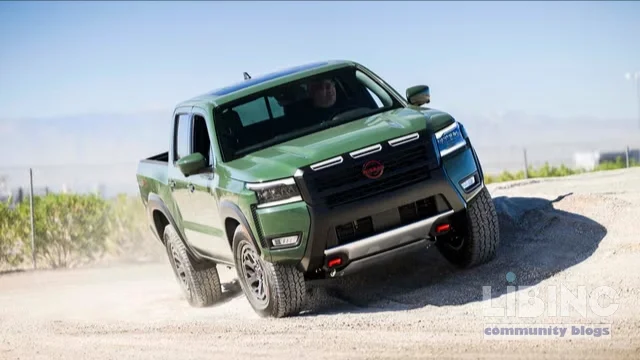
Nissan Frontier PRO-4X R by Roush: An OEM-Backed Lift Kit and the Evolution of Cross-Brand Performance Partnerships
Table of contents
- Analytics
- Contrast
- Cause and effect
- Expert reconstruction
Jack Roush built his namesake performance empire on Ford, yet the 2026 Nissan Frontier PRO-4X R by Roush signals a strategic shift: a high-profile collaboration that leverages established engineering credibility while tapping into Nissan's mainstream reliability. For buyers, the package promises a turnkey upgrade with a two-inch lift, Öhlins suspension components, and a distinctive Roush aesthetic—all backed by a factory-like warranty rather than aftermarket ambiguity. The hidden conflict is the tension between a perceived badge boost and real-world capability, especially given the limited driving environment available for early evaluation. The direction of this analysis is to unpack the business logic, engineering trade-offs, and market implications behind a collaboration that feels, at first glance, almost too curated to be true.
Analytics: The business logic behind the Nissan Frontier PRO-4X R by Roush
The alliance rests on a simple premise: cross-brand credibility accelerates adoption in a market segment that prizes both capability and warranty protection. Roush brings a depth of aftermarket engineering, supply chain discipline, and a reputation for integrating performance components with a warranty-backed promise. In the context of the Frontier, the package centers on a two-inch lift, calibrated damping, and a wheel/tire package that visually signals enhanced off-road intent without redefining the underlying platform. This matters not just for enthusiasts but for dealers who must manage risk and serviceability over the vehicle’s lifetime. The collaboration also signals a broader industry trend: OEMs increasingly leveraging external design sensibilities while maintaining control of critical performance attributes through formal partnerships rather than loose associations.
Observing the hardware, Öhlins remote reservoir dampers stand out as a critical differentiator. Their aluminum bodies, 18-mm piston rod, and Frontier-specific valve tuning translate sophisticated suspension theory into real-world wheel control across rough terrain. The dampers pair with Roush upper control arms finished in bright red, establishing a visual and functional identity that blends brand equity with engineering intent. Why pursue this path? Because the dampers and tuned geometry offer predictable control, enabling a lift that gains approach angles and articulation without inviting abrupt chassis chatter or unpredictability on washboard surfaces. In a market where many upgrades are either cosmetic or warranty-hostile, this marriage of high-performance components and a robust warranty framework changes the consumer calculus.
From a cost perspective, the package is framed as a value proposition. The base price of $47,960 positions the Frontier PRO-4X R as a premium within the crew-cab segment, but the incremental premium—roughly $4,395 for the lift, dampers, wheels, and tires—contains a bundle of value that most buyers would otherwise assemble piecemeal and lose warranty coverage on. The economics hinge on a clean integration rather than a hack-job of parts from multiple vendors. In other words, the program is designed to reduce the risk of misfit parts, inconsistent tuning, and uncertain serviceability—issues that often derail ambitious aftermarket projects. The strategic takeaway: a controlled, warranty-backed upgrade path can outperform a DIY or aftermarket-only route for buyers who prioritize reliability and support.
The engineering scope is intentionally scoped. Roush supplies a front skid plate and retains the core PRO-4X platform—the 310-horsepower 3.8-liter V-6, nine-speed automatic, and part-time four-wheel drive—without reengineering the powertrain. This preserves Nissan's warranty envelope while letting Roush push the envelope with suspension, chassis geometry, and aesthetics. The result is a vehicle that still behaves like a Frontier, but with enhanced ground clearance, a more confident stance, and a showroom-ready badge that signals capability without demanding a tank of customization time from the owner. The core strategic conclusion is that the value of this package sits in credible engineering within a known platform, not in speculative performance gains alone.
Contrast: A comparison of paths to enhanced Frontier capability
In the aftermarket world, many buyers solve two problems at once: more clearance and a distinct appearance. The standard Frontier PRO-4X can be visually reinforced with lifts and rugged tires, but the absence of integrated warranty coverage complicates ownership narratives when off-road mishaps occur. The Nissan-Roush collaboration expressly mitigates that risk, delivering a coordinated system of dampers, control arms, and suspension geometry designed to work together from day one. The result is a more coherent, factory-feel upgrade that avoids the fragmentation common with piecemeal modifications. The contrast isn't merely cosmetic; it reflects a philosophy about how to achieve reliable off-road competence with predictable maintenance costs over the vehicle’s life. For buyers who value a turnkey experience, the Roush kit becomes a credible alternative to aftermarket assembly.
Beyond warranty considerations, this collaboration introduces a distinct design language. The 17-inch aluminum wheels, Hankook Dynapro AT2 Extreme tires, and titanium-colored grille inserts create a cohesive aesthetic that aligns with the Frontier’s rugged personality while signaling a performance-first intent. The spec-built upper control arms, finished in bright red, combine with dampers to deliver a front-end geometry that visibly changes the vehicle’s silhouette as well as its on-road and off-road behavior. The key is not merely a two-inch lift; it is a curated combination of hardware and appearance that positions the Frontier PRO-4X R as a purpose-built tool rather than a curious bolt-on. This matters for buyers who equate good looks with measured capability and want a product that can justify itself to dealers and insurers.
If we compare the Roush approach with other OEM-backed performance programs, the distinct advantage is the containment of risk. By delivering components optimized for the Frontier’s chassis and providing a warranty-backed experience, Roush reduces the uncertainty that often accompanies collaborations with external vendors. The downside, of course, is the limited flexibility. Buyers who crave radical customization or rapid iteration may find the kit less adaptable than a full aftermarket build, where parts scarcity is less of a concern and third-party validation comes from user forums rather than formal testing. In this sense, the Nissan-Roush partnership walks a careful line between bespoke capability and practical ownership realities.
Cause-and-effect: Engineering, ownership, and market implications
The physical effect of the two-inch lift is straightforward: more ground clearance, slightly altered approach and departure angles, and a raised center of gravity. The real question is how that extra height interacts with the Frontier’s existing underbody protection and suspension architecture. The Roush system’s aluminum-bodied dampers and the specifically tuned valving are designed to preserve predictable damping behavior through a wider envelope of terrains, from rocky trails to desert whoops. The cause-and-effect chain begins with the suspension geometry, moves through tire contact patch behavior, and ends with on-road feel and NVH (noise, vibration, and harshness) characteristics. In practical terms, you get better obstacle clearance without sacrificing steering feel or steering-wheel responsiveness in low-speed maneuvering, provided the system remains within its designed load and articulation envelope.
There is also a weight and packaging consequence. The addition of dampers, wheels, and tires adds mass—especially up high in the wheel wells—affecting unsprung mass and overall handling. The engineering team’s choice to keep the powertrain unchanged (310-hp 3.8L V-6, nine-speed auto) underscores a deliberate decision to preserve drivability and maintain a favorable weight balance. The net effect is a more capable off-roader that does not try to chase horsepower inflation. This is a critical distinction: capability is a function of chassis tuning and suspension control, not merely power, and the Roush kit emphasizes that nuance.
The front-end reinforcement via a skid plate further influences vehicle behavior. It improves protection from direct impacts while allowing the suspension to perform within its intended stroke. The combined effect is a system that is more robust in off-road obstacles yet retains a level of civility for weekend adventures. The broader market implication is a growing willingness among OEMs to offer performance-oriented trim packages that emphasize integrated design, warranty assurance, and dealer support rather than fragmented, warranty-voiding upgrades. The causal narrative here is straightforward: controlled engineering and warranty-backed variants reduce risk for both buyers and dealerships when pushing into more challenging terrain.
Expert reconstruction: What this means for buyers, brands, and the market
From an engineering perspective, the Nissan Frontier PRO-4X R by Roush demonstrates that a focused, well-integrated upgrade can deliver tangible off-road gains without destabilizing the vehicle’s core dynamics. The use of Öhlins proprietary suspension technology—remote reservoir design, aluminum bodies, and precise Frontier-specific tuning—illustrates how advanced suspension concepts can be applied to a much-loved platform without reinventing the wheel. For buyers, the takeaway is that you can invest in an elevated, purpose-built Frontier without stepping into the realm of DIY risk or forfeiting warranty coverage. The risk profile is significantly diminished when the parts are coordinated under a single program with clear installation and service guidelines.
Market-wise, the collaboration tests several hypotheses. First, there is consumer appetite for a turnkey, badge-driven upgrade that also delivers credible off-road performance. Second, there is a question of aftermarket resilience: will enthusiasts push back against the limited customization offered by a branded kit, or will they embrace the simplicity of a single, warranty-backed solution? Finally, the collaboration may prompt Nissan to rethink future Frontier refreshes, potentially accelerating more factory-backed variants that lean into performance while preserving reliability. The expert forecast suggests a measured impact on the broader pickup-truck segment: a niche but growing demand for premium, partner-backed upgrades that minimize risk while maximizing perceived capability. This is not a wholesale shift, but a strategic refinement in how performance and warranty can coexist on a mainstream platform.
From the perspective of the Roush side, this program is a trial balloon for how far the collaboration model can extend beyond traditional Ford-blue circles. If the Frontier kit proves durable and marketable, we could see broader cross-brand programs that leverage established suspension brands, like Öhlins, and chassis partners to create differentiated offerings across a wider Nissan lineup or even other brands. The structural lesson is clear: a well-executed, warranty-backed collaboration can create a defensible niche where performance is credible, longevity is protected, and the dealer network remains a reliable touchpoint for owners seeking ongoing support. In the end, the Nissan Frontier PRO-4X R by Roush is less about a radical leap and more about a disciplined alignment of capability, warranty, and brand storytelling that resonates with a very particular segment of buyers.
The closing thought for readers who weigh this against a do-it-yourself lift kit is simple: the incremental value lies not just in the hardware but in the integration, warranty, and dealer support that comes with an OEM-backed package. If you value a coherent system, predictable serviceability, and a discreet yet meaningful performance upgrade, the PRO-4X R by Roush presents a compelling option. If your priorities lean toward extreme articulation, bespoke geometry, or maximum anomaly on the trail, a lighter touch by the aftermarket still holds appeal—but with added risk and a heavier burden of maintenance. The balance sheet for this package tilts toward pragmatic performance, especially for buyers who want a capable truck that remains easy to own and confidently supported by a dealer network.
Across ownership decisions the most critical gap is long-term clarity on warranty, serviceability, and lifetime costs for an OEM-backed lift kit like the Nissan Frontier PRO-4X R by Roush. Buyers gain a turnkey system that aligns hardware with Nissan's warranty and dealer support, but real-world viability requires attention to maintenance cadence and costs over years of ownership.
| Aspect | Roush PRO-4X R (OEM-backed) | Typical Aftermarket Lift |
|---|---|---|
| Suspension | Öhlins remote-reservoir dampers; tuned Frontier geometry | Generic shocks; varied tuning by vendor |
| Wheels/Tires | 17-in aluminum wheels; Hankook Dynapro AT2 Extreme | Vendor-specific setups; tire choice varies |
| Controls & Arms | Front upper control arms color-matched; calibrated alignment | Aftermarket arms with mixed geometries |
| Warranty | Warranty-backed via Roush/Nissan program | Typically voided by OEM if installed outside approved path |
| Cost | Base price ≈ premium with inclusive lift, dampers, wheels | Lower upfront could rise with parts & installation |
In daily use or on rugged trails, the Öhlins dampers and red upper arms translate to improved articulation without sacrificing civility on washboard streets. Weight increases are modest and focused high in the wheel wells, which can nudge steering feel and fuel economy slightly, but the payoff is a coherent system with serviceability and dealer support when you need it.
Ground clearance improves with the two-inch lift; approach angles become more confident; warranty coverage remains intact through the Roush program.
- Desert trail scenario
- Better wheel travel over rough sections
- Predictable damping on whoops and ruts
- Urban and mixed-terrain driving
- Trail recovery and towing considerations
Bottom line for buyers: this kit aims to balance credible off-road capability with predictable ownership. If radical customization is your goal, aftermarket paths may still appeal; if reliability and dealer support drive decisions, the Roush option stands out.
What makes the Nissan Frontier PRO-4X R by Roush different from the standard Frontier PRO-4X?
The direct answer: it is an OEM-backed upgrade with a two-inch lift, Öhlins dampers, and tuned geometry that preserves Nissan warranty and dealer support, unlike piecemeal aftermarket kits.
In practice, buyers gain a coordinated system that balances capability with serviceability, reducing the risk of misfit parts or warranty disputes common with standalone lifts.
Which components are included in the kit?
The direct answer: Öhlins remote-reservoir dampers, front upper control arms, a two-inch lift, 17-inch wheels, and Hankook Dynapro AT2 Extreme tires, plus a front skid plate and tuned geometry.
In practice, the integration is designed for seamless fitment and dealer-supported maintenance, rather than a mixed bag of parts from different brands.
Does installation affect Nissan warranty or dealership support?
The direct answer: no, when installed as part of the OEM-backed program, the upgrade sits within the warranty envelope and dealer network guidance.
In practice, owners can rely on documented installation guidelines and service paths, reducing the typical aftermarket risk of warranty denial.
How does the ride quality compare to stock and to aftermarket lifts?
The direct answer: ride quality remains civil on-road while gaining controlled articulation off-road thanks to calibrated Öhlins damping.
In practice, the system aims to deliver consistent behavior across terrains with less chassis drift, though added front-end mass can marginally affect steering feel and fuel economy compared with stock.
Is the kit compatible with other Frontier trims or only PRO-4X?
The direct answer: the kit is designed for the PRO-4X platform and specific drivetrain; compatibility with other trims is not guaranteed without Nissan-Roush testing and approval.
In practice, if you own a non-PRO-4X, you should consult the dealer network for confirmation or potential alternative factory-backed options.
Is it worth the cost versus an independent aftermarket path?
The direct answer: for buyers prioritizing warranty, dealer support, and a cohesive installation, the OEM-backed option often offers better long-term value.
In practice, enthusiasts chasing extreme customization or the latest parts cadence may still pursue aftermarket routes, accepting higher risk of warranty disputes and variable serviceability.





Add a comment
To comment, you need to register and authorize
Comments