

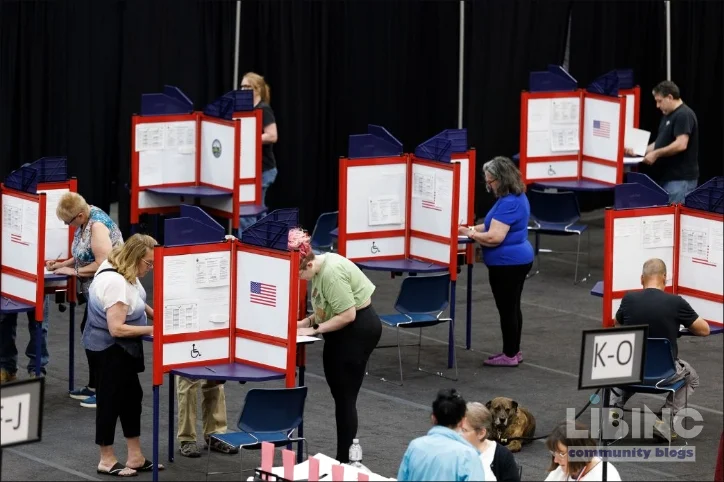
Election Interference in Plain Sight: The Trump Administration and the Shape of U.S. Election Administration
Table of Contents
- Overview: why election interference matters now
- Analytic frame: mapping the signals behind interference concerns
- Contrasts in the landscape: maps, courts, and partisan responses
- Causes and consequences: how policy choices translate into election realities
- Expert reconstruction: guardrails, expectations, and voter protection
The coming election sits at the intersection of rhetoric, institutional design, and procedural guardrails. The problem is not a single policy shift but a pattern that blends administrative moves with political pressure. The stakes are high: public trust hinges on whether elections are run by states under laws crafted through local expertise or by broader federal efforts that could tilt outcomes or erode confidence in counting. Hidden conflict emerges as federal ambitions push against a constitutional order that reserves election management to the states. This analysis outlines the signals, evaluates their logic, and considers what would follow if these trends strengthen in the four months before Election Day.
Analytic frame: reading the signals behind election interference concerns
The argument rests on a set of observable actions and institutional signals that, in combination, suggest a deliberate shift in how the coming election could be governed. Rather than a single policy, the pattern involves reorganizing authorities, testing new channels for influence, and elevating claims of fraud to justify extraordinary measures. The key is to examine not just what is done, but why the move matters for election interference and for the integrity of the vote.
Several signals recur across different domains, each reinforcing the others. Taken together, they indicate a broader project to recalibrate the balance of power over how ballots are administered, counted, and safeguarded. The first signal is the attempt to reallocate or reframe election security duties through nontraditional channels. The second is the placement of individuals in decision-making posts who hold views aligned with contesting electoral outcomes. The third signal is the use of administrative levers to influence mail-in voting and ballot access, framed as security concerns but with potential political consequences. The fourth signal is the amplification of fraud rhetoric to justify quick, sweeping steps that would have previously required broader consensus.
To translate these signals into a causal logic, we need four elements: authority, leverage, narrative, and constraint. Authority determines who can affect election administration. Leverage describes the tools used to push or constrain action. Narrative shapes public perception and the political feasibility of certain moves. Constraint refers to the courts, state governance, and the constitutional framework that ultimately limits what any administration can do. The emerging picture is not a blueprint for a single crisis but a playbook that relies on these interlocking parts to tilt the field gradually rather than through a single dramatic act. In this frame, election interference is less about a one-off plan and more about a pattern of centralizing influence while preserving enough plausible deniability to avoid immediate constitutional pushback.
- EAC firings and the erosion of independent, bipartisan support structures for elections
- The absence of a quorum at the Federal Election Commission limiting enforcement and oversight
- Appointments and policy directions that foreground election security in nontraditional layers of government
- Policy moves aimed at mail-in voting and voter registration data, framed as universal safeguards but with potential partisan consequences
- Persistent public messaging about election fraud to normalize extraordinary actions
These elements do not operate in a vacuum. They intersect with legal battles in the courts, shifting map-drawing dynamics in redistricting, and the everyday work of state and local election officials who run the actual counting on Election Day. The crucial question is whether these moves undermine or reinforce the capacity of states to administer elections in a manner that is transparent, accurate, and resistant to manipulation. The central concern for defenders of the process is that the accumulation of steps, even if individually marginal, could culminate in a credible perception that the federal government can override or override states in critical moments. That perception alone reshapes behavior and yields a chilling effect on voters and administrators alike, weakening rather than strengthening the integrity of election interference defenses.
Contrasts in the landscape: maps, courts, and partisan responses
The recent redistricting cycle intensified the competition over control of electoral maps, with Republicans achieving more favorable redraws in a number of states. This outcome is often framed as a routine legal-technical exercise, yet it carries a direct political effect on competitiveness and representation. The contrast with California and other blue-leaning states, which struck back with their own maps and protective measures, highlights how divergent approaches to election administration can shape the electoral terrain. When analysts talk about election interference in this context, they focus on whether map changes are motivated by partisan gain or by legitimate attempts to reflect demographics and community interests. The reality is that both dynamics can coexist, creating a layered environment in which the legitimacy of elections is tested from multiple angles.
On the judiciary front, courts have repeatedly checked federal overreach relative to state-run election processes. A notable line of cases has upheld postmark receipt rules and other protections that ensure ballots are counted even when timing differs from Election Day. These rulings matter because they constrain attempts to enforce sweeping federal controls unsupported by law. At the same time, the absence of a functioning quorum at federal oversight bodies complicates enforcement and creates opportunities for political actors to advance agendas through administrative channels without robust counterweight. The interplay between court rulings, state sovereignty, and federal ambitions creates a dynamic field that is difficult to navigate and easy to misread as a sign of weakness or strength in isolation. In this environment, the concept of election interference takes on a more nuanced meaning: it is not only about what is done, but about how the institutional ecosystem responds when traditional guardrails are tested.
The partisan contrast is reinforced by public messaging that elevates fraud narratives while invoking security concerns. For supporters, such framing can justify more aggressive policy experimentation and faster action. For opponents, the same frames trigger concerns about legitimacy, voter suppression, or deliberate confusion at the margins. In both camps, the risk is a normalization of extraordinary measures that blur the line between legitimate security concerns and political expediency. That tension becomes more acute when one side controls the narrative while the other relies on a system that is, at its core, designed to resist centralization. The upshot: election interference concerns gain traction not only from the actions themselves but from the way the political ecosystem interprets and responds to those actions.
- State-level redistricting decisions with clear partisan implications
- Court rulings that protect ballot counting rules but limit federal overreach
- Varied responses from election officials in different states based on local governance norms
- Public narratives that frame security as both a nonpartisan obligation and a political weapon
Intersections between these dynamics matter for the concept of election interference. When safeguards remain intact at the state level, the federal role becomes a question of influence rather than command. If the federal layer begins to encroach more aggressively, the risk is not only procedural misalignment but a fundamental shift in how voters perceive the legitimacy of the process. The core tension is between credible enforcement of security standards and the perception that the process is being used for partisan ends. The practical effect is a more complex environment in which election interference is measured not just by policy moves, but by the resilience of the system to withstand those moves while maintaining public trust in the results.
Causes and consequences: how policy choices translate into election realities
To understand cause and effect, follow the chain from rhetoric to governance to voter experience. The available indicators point to an intentional sequence: rhetoric about election fraud legitimizes additional steps; those steps, if adopted, reframe how elections are run; the reframing alters incentives for administrators and voters; and the cumulative effect shapes confidence in the outcome. This chain matters because voters respond not only to outcomes but to the perceived fairness and reliability of the process that produces those outcomes. Election interference, in this framing, becomes a test of systems under pressure rather than a single policy about ballots.
Root causes can be traced to a broader political logic: when leaders deem a process untrustworthy, they seek to tighten control or bypass established channels. In the observed pattern, that logic manifests as pushing nontraditional authorities to the forefront, deploying the idea of security as a pathway to justify changes in who decides, how data is shared, and what counts as valid voting behavior. One consequence is a potential chilling effect on voter participation, as people question whether their votes will be counted fairly if the rules appear to be shifting in ways that favor certain outcomes. Another consequence is the erosion of institutional memory; if election security is governed by elite actors with shifting mandates, steady-state procedures can degrade because local knowledge and experience are undervalued or sidelined. The practical implication is a more fragile assurance of accurate vote tallies and voter confidence in the system overall.
Among the concrete policy levers discussed in the landscape, two areas stand out for their potential to influence election interference dynamics. First, the push on mail-in voting rules redefines what is legitimate ballot delivery and return. Even when framed as security, such moves ripple through the logistics of voting, the pace of ballot processing, and the transparency of ballot counts. Second, the use of high-level executive actions to set priorities in election administration creates a perception that more centralized power may be available to address urgent concerns. The risk here is not simply misalignment with constitutional norms but a broader ambiguity about the locus of accountability when problems arise in counting or validation. The net effect is a system that functions technically but lands unevenly in public perception, leaving voters uncertain about the integrity of the process linking ballots to outcomes.
- Rhetorical framing of fraud to justify procedural changes
- Shifts in mail-in voting policy and ballot handling procedures
- Appointive strategies that align agencies with broader political narratives
- Judicial checks that can slow or block federal overreach but do not remove risk
Experts caution that while the latest moves may not overturn outcomes, they can contribute to a long-term erosion of trust if perceived as a steady erosion of electoral independence. The important question is whether guardrails—courts, state authorities, and professional election administrators—remain capable of preserving accurate vote counting and upholding voter access amidst ongoing experimentation. The safest conclusion is that the election system shows resilience in counting and certification, but resilience is tested most when the full arc from policy to practice becomes opaque to the average voter. The core question for observers is whether the current trajectory will produce a stable, transparent process that earns broad legitimacy or whether it will generate persistent doubt about the fairness of the vote.
Expert reconstruction: guardrails, expectations, and voter protection
Across expert circles, the dominant take is that the EAC firings and related moves, while alarming to watchdogs, are unlikely to derail the electoral machinery in the short term. The consensus is that elections are still run by states under a constitutional framework designed to resist federal encroachment. Still, the practical significance lies in the signals these actions send about future trajectories. The pattern suggests a gradual but real push toward centralizing influence, with potential long-run implications for how elections are funded, supervised, and defended against interference. The core concern is not a single policy failure but an ongoing pressure test on the legitimacy of the process and the trust voters place in it.
Consider the nuanced expert verdicts that shape the debate. Some observers emphasize that the EAC firings, while serious, do not by themselves disrupt the mechanics of voting. The longer-term impact, they argue, depends on how states respond, how courts interpret the boundaries of federal power, and whether new guardrails emerge to protect ballot access and accuracy. Others warn that the pattern may be part of a larger strategy to normalize federal involvement in election administration as a standard response to crises or perceived vulnerabilities. The risk is a creeping centralization that could reduce the salience of local knowledge and the capacity for rapid, context-specific adjustments during elections. In short, the system remains functional, but the moral hazard grows as federal actors test the limits of influence and trust is stretched by overlapping jurisdictions and conflicting signals to voters and administrators alike.
What does this mean for voters and for the people who administer elections on the ground? It means paying close attention to the messaging, the legal constraints, and the practical steps that guarantee or threaten ballot access and counting. It means recognizing that election interference is a spectrum rather than a single act. It also means preparing for a future in which election security and integrity are defended not only by laws and courts but by a broad ecosystem of state and local officials who work with a high degree of professional independence. The main takeaway is not sensationalism but preparedness: robust protections for voting rights, transparent processes for counting, and a resilient set of institutions ready to uphold the integrity of every ballot, even amid pressure and controversy.
In the end, observers emphasize vigilance rather than alarm. The system’s strength lies in its redundancy—multiple layers of oversight, diverse institutions, and a culture of accountability that persists despite political headwinds. If those guardrails hold, the coming election can still be conducted with trust and legitimacy. If they falter, the risk is that the public questions not only the result but the very process that produced it. The path forward requires clear, enforceable standards for election administration, transparency about any federal involvement beyond what is constitutionally permissible, and a continued commitment to protecting voters’ access and accuracy in counting—foundations that remain essential even as the political climate grows more complex and contested.
Guardrails that preserve trust: practical incident response and governance
In practice, the most critical gap is the absence of concrete, rapidly activated guardrails that translate rhetoric into action while preserving public confidence in vote counting. A practical framework would spell out who acts, how decisions are made, and how results are disclosed in real time, so voters see a disciplined process rather than ad hoc moves.
| Actor | Role | Action | Trigger |
|---|---|---|---|
| State election officials | Administer elections locally | Implement procedures, communicate changes | Policy shifts or security advisories |
| Federal partners | Guidance and coordination | Provide standards, funding, rapid alerts | Crises or recognized vulnerabilities |
| Independent watchdogs | Audit and oversight | Publicly report findings | Post-election or incident occurrence |
| Courts | Interpret legal boundaries | Rulings on timelines and safeguards | Litigation or regulatory action |
| Election workers | Ground operations | Execute procedures, log anomalies | Operational cues |
| Voter education bodies | Citizen outreach | Explain rules, timelines, and safety | Policy changes or audits |
Key components include an incident response playbook, risk-limiting audits, public dashboards, and ongoing training. Incident response playbook defines roles, escalation paths, and communications across state and federal partners; risk-limiting audits verify counts on a representative sample to bound uncertainty; public dashboards offer near-real-time visibility into counts, milestones, and corrective actions; and training and continuity ensure staff can operate under stress without compromising access.
When guardrails are clearly defined and publicly shared, voters perceive a more reliable process, with a higher willingness to participate and trust the counts.
These steps reduce ambiguity and help voters see that security measures respond to issues without undermining access. In scenarios where mail-in voting rules are adjusted, the framework ensures changes are disclosed, tested, and reviewed by independent bodies rather than ad hoc decisions. A cyber threat to registration databases would trigger immediate isolation, verification, and a public briefing with a clear recovery timeline, while preserving ballots already cast. Framing security as a continuous, accountable process gives the public a clearer understanding of risk management, not mere reaction.
- Phase 1 — Registration data integrity
- Phase 2 — Ballot creation and delivery
- Phase 3 — Ballot counting and verification
- Phase 4 — Certification and post-election audits
In sum, a transparent, accountable framework aligns incentives across actors, supports timely action, and preserves voter access and confidence in the result. The emphasis is not on avoiding risk but on embedding resilience into everyday practice, so the system remains legible, auditable, and legitimate under pressure.
What signals most strongly indicate a risk of election interference?
Election interference risk signals include a pattern of shifting authority over election processes, rapid deployment of new security measures without clear legal grounding, and public messaging that emphasizes fraud beyond typical political discourse. When these signals accumulate, the risk is not a single crisis but a transformation in governance that blends administrative changes with political narratives, potentially chilling voter participation and altering how ballots are managed. This understanding highlights the need for transparent guardrails and independent oversight to preserve legitimacy and trust in the process.
Analytically, these signals interact with court decisions and state flexibility, creating a layered environment where legitimacy is tested not just by policy, but by how clearly actors communicate, justify, and disclose actions to the public. The practical implication is a demand for pre-defined triggers, public dashboards, and credible post-election reviews that can restore confidence after any divergence from established norms.
How do risk-limiting audits strengthen election integrity?
Risk-limiting audits (RLA) are a structured post-election verification process designed to confirm the accuracy of reported results with minimal ballot checks. The core idea is to sample ballots in a statistically meaningful way so that the probability of an incorrect outcome being confirmed is extremely low. In practice, RLAs provide a transparent, replicable method to validate counts, detect anomalies early, and deter manipulation by increasing the likelihood that errors would be discovered, even when the sampling is limited. RLA implementation improves trust by giving voters a concrete mechanism for verification and by anchoring outcomes in verifiable evidence rather than rhetoric.
Analytically, RLAs complement full hand counts or machine audits by focusing resources where they matter most, saving time while maintaining rigor. For administrators, this means clear procedures, publicly available methodology, and predictable timelines that align with certification deadlines. For voters, RLAs translate into tangible assurances that the final tallies reflect the ballots cast once all checks are complete, thereby strengthening the legitimacy of results.
What role do state and federal actors play in election governance today?
State and local officials administer elections under constitutional autonomy, while federal guidance supports national standards, funding, and information sharing. The critical balance is to ensure federal actions do not undermine state sovereignty or create perceptions of centralized control over local processes. Effective governance relies on clearly defined authorities, transparent decision-making, and robust oversight that engages both levels without substituting one for the other. This balance helps preserve the legitimacy of outcomes while ensuring uniform protection of voting rights and system resilience across jurisdictions.
Analytically, coordination should be codified through nonpartisan benchmarks, joint drills, and publicly accessible reporting metrics that show how data is used, who can intervene, and how voters are protected. Practically, this means pre-agreed response plans, and transparent workflows that protect ballot access and ensure timely certification, even in high-pressure environments.
How can voters verify that their ballots were counted accurately?
Voters can verify counting accuracy through accessible post-election audits, official canvass reports, and timely public disclosures of audit results. Practically, jurisdictions should publish ballot counts by precinct, post-audit summaries, and any discrepancies along with explanations and corrective actions. When voters understand the audit process and can see evidence of checks, trust in the final tallies rises. The approach also reduces opportunities for misinterpretation by offering transparent data, clear timelines, and independent verification from nonpartisan observers.
Analytically, the combination of pre-defined procedures and transparent reporting creates a feedback loop that discourages political interference and reinforces the integrity of the outcome. In practice, credible audits paired with timely disclosures demonstrate accountability and strengthen public confidence in the election system across diverse communities.
What is the judiciary’s role in preserving election integrity?
The judiciary serves as a critical constitutional check on federal overreach and as a guardian of lawful election procedures, including timelines, ballot access, and post-election remedies. Courts review challenges to timing, counting rules, and access to ballots to ensure compliance with the law while safeguarding voters’ rights. Their decisions help maintain balance between security needs and democratic access, striking a legitimate path that resists rapid, unchecked changes and preserves the essential integrity of the electoral process.
Analytically, court rulings contribute to a stable governance framework by clarifying permissible actions and preventing unilateral changes that could disenfranchise groups or undermine trust. Practically, predictable judicial scrutiny reduces ambiguity for administrators and voters alike, reinforcing the principle that security measures must be grounded in law and transparent justification.
How can we measure the effectiveness of election guardrails over time?
Effectiveness can be measured through consistent metrics: timeliness of certifications, rates of audit confirmation, accessibility metrics for voters, and public trust indices captured through surveys. Tracking these indicators across cycles provides a data-driven view of resilience, revealing whether guardrails are improving administration, safeguarding access, and maintaining confidence in results. Regular external reviews, independent reporting, and updates to best practices keep the framework adaptive and accountable.
Analytically, ongoing measurement creates a learning loop: as data reveal gaps, procedures can be refined, ensuring that the guardrails remain robust under evolving threats and political dynamics. Practically, this translates into standardized dashboards, transparent metrics, and a culture of accountability that voters can rely on over time.






Add a comment
To comment, you need to register and authorize
Comments