

Global Antiquity: Reframing the Ancient World as a Transcontinental Network
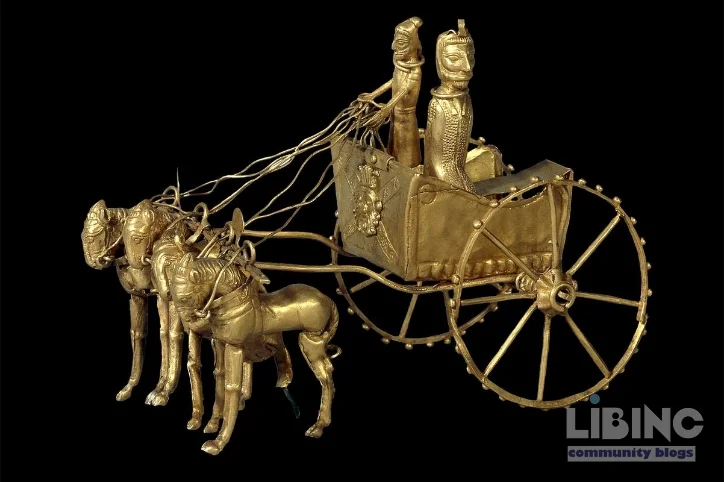
History has long followed a familiar compass: Greece and Rome at the center, Egypt and the Near East as picturesque but peripheral settings, with others receding into the margins. Yet the deepest patterns of the ancient world do not stop at the shores of the Mediterranean. New evidence—archaeological networks, textual traces, and material culture that leaps across deserts, seas, and trade routes—compels a rethinking: antiquity was a global system long before the term existed. This is the core of the shift toward global antiquity, a framework that treats Afro-Eurasia as an interconnected whole rather than a collection of discrete regional stages. In a moment when global connectivity is once again a defining force, we can better understand how ancient societies learned from and depended on distant neighbours.
Two consequences crystallize early. First, the classical Mediterranean core is no longer the sole benchmark; second, the trajectories of empires, commerce, and ideas reveal a web that stretches from the Indian Ocean to the North European plain, from Han China to the kingdoms of Central Asia. The result is not a homogenized past but a layered, comparative history in which contexts, institutions, and technologies travel and transform as they move. The argument is simple and consequential: to understand ancient world-making we must map how global antiquity—especially Afro-Eurasia—produced long-distance exchange, empire-building, and cultural circulation in ways that the old, narrow lens never captured.
A concise snapshot of interregional exchange grounds the argument in tangible paths and hubs rather than broad claims alone. The compact view that follows shows how Afro-Eurasia formed a transcontinental web of routes, goods, and ideas.
Transcontinental Exchange Routes
| Route | Core Region | Period | Main Goods | Evidence |
|---|---|---|---|---|
| Maritime Indian Ocean | Arabia, India, SE Asia | 1st millennium BCE–1st millennium CE | Spices, textiles | Port networks, shipwrecks |
| Overland Silk Roads | Central Asia to Mesopotamia | 2nd c. BCE–6th c. CE | Silk, metals | Travelogues, inscriptions |
| Desert Caravan Routes | Levant to Central Asia | 1st millennium BCE–CE | Gems, salt | Caravanserais, inscriptions |
| Mediterranean Sea Lanes | Egypt, Anatolia, Italy | Classical–Late Antiquity | Grain, olive oil | Amphorae, ship registers |
| Northern European Rivers | Rhine, Danube basins | Late Iron Age–Late Antiquity | Metal goods, furs | Towns, markets, hoards |
This snapshot demonstrates overlapping corridors that connected distant nodes, creating a resilient web that persisted across centuries.
Key connectivity metrics
40,000–120,000 t/yr
Across oceans, deserts, and rivers
The figures show exchange ran through multiple channels that reinforced each other rather than a single artery.
Pathways of diffusion
- Goods and technologies
- Ironwork, coinage, irrigation tools
- Textiles, pottery, glassware
- Knowledge and ideas
- Astronomy, mathematics
- Calendars, horology
- Institutions
- Standardized measures and weights
- Maritime law and trading rights
The nested patterns show how innovations traveled with practices and rules that stabilized long-distance exchanges.
Key moments in the web
| Era | Event | Region |
|---|---|---|
| 2nd c. BCE | Emergence of maritime routes linking Indian Ocean with Mediterranean | Afro-Eurasia |
| 1st c. CE | Expansion of Silk Roads and caravan cities | Central Asia / Near East |
| 3rd–5th c. CE | Urbanization along rivers and coastlines; coin diffusion | Europe, Near East |
| 8th–9th c. CE | Standardized trade practices expand across the Islamic world | Afro-Eurasia |
The chronology shows networks building in stages, layering technical, financial, and social mechanisms that made long-distance exchange possible.
Viewed together, these elements reveal a dynamic, multi-centric world where connections mattered as much as centers of power.
What does global antiquity mean in practice?
Global antiquity reframes the ancient world as a vast, interconnected web in which long-distance exchange, shared technologies, and overlapping political formations linked communities across deserts, seas, and landscapes, rather than privileging a single urban core; it treats Afro-Eurasia as a living, cross-cutting system where cargoes, ideas, people, and institutions moved through multiple routes and hubs, shaping cities from the Indian Ocean littoral to the North European plain, embedding innovations in ways that become visible only when viewed as a continental network rather than a collection of discrete cultures. This perspective foregrounds merchants, scholars, and administrators, and highlights the rhythms of seasonal travel, the integration of religious and artistic traditions, and the spread of technologies as part of everyday life.
Analysts use this lens to track how innovations in coinage, irrigation, shipbuilding, and timekeeping spread; how empires formed and transformed through cross-regional cooperation and competition; and how ordinary people participated in a shared, evolving world.
What kinds of evidence support long-distance exchange?
Long-distance exchange is demonstrated by material traces such as Arabian, Indian, and Chinese pottery styles found far from their origin, coin hoards indicating cross-regional markets, shipwreck cargoes revealing maritime routes, and inscriptions that show diplomatic and trade ties across continents. Additionally, urban planning, cemetery findings, and archive fragments reveal the existence of connected networks beyond local economies.
Scholars also compare textual references across languages to identify common technologies, religious exchanges, and political alliances that cross regional boundaries.
How do networks influence our understanding of technology diffusion?
Networks explain why technologies appear in multiple places with similar features or functions within a narrow time window, even when political borders shift. The appearance of standardized weights, calendar systems, or ship-building techniques in distant regions often reflects shared guilds, cross-border traders, or state-backed exchanges rather than isolated invention. This view helps explain why certain innovations spread faster along specific routes and slower along others, depending on political stability and logistical infrastructure.
What methodological steps help map these connections?
Researchers triangulate archaeological data, material culture, and textual sources to chart routes and hubs. They use network diagrams to visualize flows of goods and ideas, integrate isotopic analysis to trace origins, and compare administrative records across languages. The goal is to reconstruct a multi-layered map where merchants, sailors, scribes, and rulers collectively shaped a continental web rather than isolated regional stories.
What are the practical implications for interpreting ancient empires?
Interpreting the ancient world as a network shifts emphasis from single-city supremacy to the interplay of core regions, transit hubs, and peripheral communities. It highlights how alliances, trade agreements, and shared technologies supported resilience and adaptability in empires, explains why cultural diffusion accelerated during certain periods, and emphasizes the role of everyday actors in sustaining cross-regional exchange.
This approach invites reexamination of sources and a broader, more nuanced view of how power and creativity circulated across Afro-Eurasia.
How can this framework inform contemporary studies?
The framework offers a model for analyzing modern globalization by focusing on networks, not just centers of influence. It encourages cross-disciplinary collaboration—archaeology, history, linguistics, geography, and economics—to assemble a more complete picture of how distant societies interact. By applying network thinking to antiquity, researchers can identify previously hidden connections and better explain the dynamics of long-term cultural and technological diffusion.
In sum, the continental web perspective broadens our understanding of the ancient world as interconnected, layered, and enduringly dynamic.



Add a comment
To comment, you need to register and authorize
Comments