

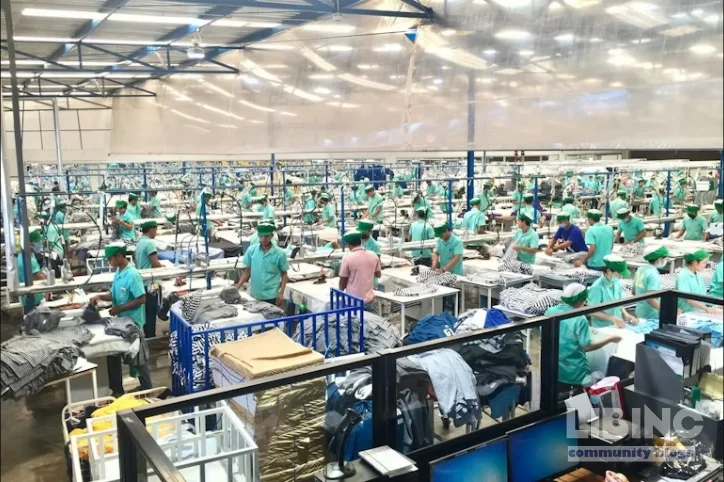
Tariffs, Garment Workers, and the Cambodian Puzzle: An Analytical Look at the Trump-Era Tariffs' Impact
The US tariff saga, framed by politicians and economists, often feels distant from the daily lives of the world’s poorest workers. But for millions in Cambodia, Vietnam, and Bangladesh, tariff policy translates into insecurity about jobs, squeezed wages, and fragile livelihoods. President Trump’s reciprocal tariffs, then paused for 90 days, altered production costs and price lists across the garment sector, with magnitudes that hit the least able hardest. This article traces the pathways from tariff policy to wage outcomes, social downgrading, and the future of garment work in low-wage economies. The central question is not whether tariffs exist, but how they shape the lives of workers who stitch the clothes we wear and bear the consequences of policy choices.
Small tariff changes cascade through the supply chain, lifting costs for brands and factories and then pressuring wages and working conditions. Social downgrading—a term that captures how workers accept lower pay and tougher targets to preserve corporate profits—reappeared after the pandemic and remains a persistent pattern under current policy. If the 10% U.S. tariff endures, many Cambodians and others in the garment sector will feel the pinch in job security and living standards. This lead previews the analysis: we will unpack the mechanism, compare experiences from Cambodia and the EU, and sketch how to repair the harm without returning to unsustainable wage levels.
Analytical perspective on the tariffs impact on garment workers
The tariff schedule cited in the current discussion—high rates for Cambodia, Vietnam, and Bangladesh—creates a wedge that expands production costs without a straightforward domestic alternative for many suppliers. Vietnam faced tariff levels around 46%, Bangladesh about 37%, and Cambodia nearly 49% on certain lines. Even at a reduced 10%, these tariffs magnify the cost base for low-wage producers whose unit labor costs already press against margins. The key question is not only the tariff level but how firms adapt to it within a deeply embedded global value chain and a cost pass-through that often lands on workers in the form of wage suppression or intensified output demands. The central mechanism is cost pass-through: when production costs rise, brands and retailers push some costs down the chain, leaving workers bearing the most visible burden in wages and hours. This is not a purely hypothetical risk; the pandemic demonstrated how social downgrading accelerates under demand shocks and policy stress, as brands sought to protect profits at the expense of workers’ real incomes.
Why this matters goes beyond headline tariff percentages. Garment clusters in low-wage economies rely on predictable orders, long-standing supplier relationships, and the ability to absorb shocks without breaking social contracts. The Cambodian minimum wage, for example, sits around US$208 per month for garment workers, with a workforce that is roughly 80% women who often support children and elderly parents outside a formal pension system. Tariff-driven cost increases threaten real wage growth and job stability precisely when social protection is weakest. The analysis here uses these baseline figures to map how even modest tariff changes ripple through wage dynamics, hours, and the capacity of workers to adapt to higher costs of living. The result is not merely higher prices; it is a higher probability of social downgrading, where workers accept worse conditions to remain employed in an unstable system. The global supply chain’s resilience hinges on more than supply flexibility; it requires social resilience that tariff shocks currently erode.
Geography and specialization matter. Cambodia’s garment industry has become highly specialized around seasonal basics—T-shirts, knitwear, and similar fundamentals—driven by proximity to European buyers and the need for predictable lead times. By contrast, closer countries like Turkey and Morocco emphasize faster fashion cycles due to shorter shipping routes. The EU’s previous experience with Cambodia—duty-free access partially revoked and tariffs averaging around 11% on certain lines—illustrates that there is little incentive to relocate if other variables (political volatility, supply reliability, cluster knowledge) constrain rational reconfiguration. When tariffs rise, the impulse to shift production may be present, but the practical obstacles, including political risk and the technology of supply networks that have evolved to maximize efficiency, dampen that impulse. In short, while the tariff regime creates uncertainty, it does not necessarily trigger a wholesale restructuring of the world’s garment supply chains.
In the short term, tariff shocks magnify investment risk and uncertainty. Investors become wary of long-term commitments, orders slow, and price inflation for end products becomes a credible outcome. The risk isn’t merely a one-off price spike. It is the deeper chilling effect on long-run planning, capital expenditure, and the ability of workers to secure stable employment. This is the heart of the analytic puzzle: tariffs alter incentives without delivering the domestic employment miracle their proponents promise. The durable effects hinge on how brands, factories, and policymakers respond to a new equilibrium where costs, prices, and wages are in a constant, uneasy negotiation with each other.
Contrasts in policy and practice
Their stated aim is simple: bring back jobs by shifting production closer to demand. The reality is messier. The global garment industry is deeply embedded in a network of production that cannot be easily moved overnight. The U.S. policy stance assumes that tariffs will encourage domestic manufacturing back into the United States; however, even when markets are open to domestic revival, the lack of specialized capabilities, skilled labor, and the capital intensity of modern apparel lines makes a full domestic transition impractical. That limits the effectiveness of tariffs as a tool to reconstitute the U.S. labor force and raises the question of whether the policy achieves its intended goals without imposing costs on workers elsewhere in the chain. These dynamics illustrate how the tariffs’ reach extends far beyond the border and into the daily wages of garment workers who rarely benefit from the proposed reindustrialization narrative. The concept at stake is resilience: can a policy that raises import costs for foreign producers coexist with a fair and stable wage system for workers who depend on those same producers?
Consider the EU’s 2020 action against Cambodia, where punitive tariffs surfaced as a response to human rights concerns. The response was quick: the Cambodian government cut public holidays and workplace benefits to offset the higher costs, and minimum wage growth slowed to outpace inflation. The effect was a direct hit to real wages, not a negotiated improvement in rights. This contrast reveals two important patterns. First, punitive tariff regimes can degrade workers’ purchasing power even when they are aimed at political or ethical goals. Second, supply chains tend to be remarkably inelastic in the face of sanctions once the production architecture is in place, particularly when there are no ready, competitive alternatives in volatile regions. The EU example shows that tariffs can have unintended social costs, undermining the very social protections that labor advocates emphasize. This mismatch between policy rhetoric and on-the-ground outcomes is not unique to Cambodia; it echoes in other low-wage garment hubs facing similar structural constraints.
In terms of production geography, the clustering effect matters. The garment industry has refined a geography of specialization where certain countries become suppliers of basics, while others chase trend-driven lines. Cambodia’s location means it remains a main supplier of staples rather than cutting-edge fashion with rapid turnaround. This specialization helps explain why certain firms do not readily exit Cambodia in favor of nearby competitors despite tariff pressures. The broader takeaway is that tariffs do not automatically generate a reconfiguration of global supply chains; they often generate caution, delayed investment, and price pressures that lower the bargaining power of workers across the board. The historical pattern suggests that the most significant effect of tariffs is not substitution but a shift in risk, with workers absorbing a larger share of that risk through lower wages and worse working conditions.
Finally, the contrast highlights a governance challenge: how to align trade policy with labor rights and living standards without triggering a race to the bottom. The data point to a persistent misalignment between tariff instruments and social outcomes. Tariff policy, in practice, has a limited capacity to fix systemic wage inadequacies or guarantee safety nets. The question becomes how to complement tariffs with targeted policies that strengthen workers’ protections and improve the bargaining position of labor—from wage floors to enforceable labor standards and transparent supply-chain reporting. This requires a recalibration of incentives: tariffs should be calibrated to encourage responsible behavior, not simply punish non-compliance, with mechanisms to shield workers from downward spirals in wages and benefits.
Cause-and-effect in tariff shocks
The sequence is clear: tariff shocks raise production costs, which can trigger price increases and dampened demand. In a tightly linked supply chain, brands push some of the burden upstream and downstream, but workers rarely receive a comparable share of relief. The result is a wage squeeze that compounds the vulnerability of a workforce dominated by women and caregivers. The causal chain thus runs from policy to price, then to wages and working hours, and finally to life-quality indicators such as health, family welfare, and the ability to plan for the future. The causal logic is not linear; it is recursive: higher costs reduce demand, which in turn depresses the ability to raise wages, which then feeds back into social downgrading as workers accept worse terms to stay employed. The policy implication is stark: tariffs that raise costs without a credible plan to shield workers from the fallout are likely to produce durable social damage rather than durable domestic employment gains.
Wage dynamics offer a sharp lens on causality. The Cambodian minimum wage of $208 per month supplies a baseline that already sits near subsistence for many families. When tariffs push up the cost of clothing and textiles, workers face a higher cost of living while holding on to a stagnant wage floor. This is the moment when social downgrading crystallizes: longer hours, higher targets, lower real wages, and fewer benefits. The gendered dimension intensifies the impact; women, who comprise the majority of garment workers, often shoulder caregiving responsibilities and rely on the stability of episodic wage gains to manage households. The causal chain thus reinforces the importance of policies that numerically anchor living wages while protecting workers from retaliatory cost-cutting by employers and brands.
Beyond wage effects, tariff shocks affect capital allocation and resilience. Investment in plant upgrades, automation, or new supplier networks can be delayed as firms reassess risk and the reliability of demand. The result is a slower pace of innovation, a risk of stagnation in productivity growth, and a more precarious employment landscape for workers with limited social safety nets. The causality here is not simply cost-driven; it is risk-driven: tariff fear reduces long-term planning, which in turn perpetuates a fragile equilibrium where workers bear the brunt of policy misalignment. This pattern is consistent with broader labor market evidence that policy-induced uncertainty lowers worker bargaining power and depresses wage growth, particularly in sectors with powerful single buyers and fragmented supplier bases.
Taken together, the causal logic of tariffs and garment work points to two policy-relevant conclusions. First, tariffs must be complemented by robust social protections and enforceable labor standards to counteract the downward pressure on wages. Second, the governance of supply chains must incorporate credible, independently verifiable wage data and living-wage commitments to prevent the social downgrading pattern that tariff shocks can amplify. Without these complements, tariff policies risk delivering a painful distributional outcome: higher costs for consumers and poorer wages for workers, without the hoped-for reindustrialization dividend in the countries most exposed to the shock.
Expert reconstruction and policy design
To mitigate harm while preserving the potential benefits of market access, four operational avenues deserve priority, with concrete steps for brands, policymakers, and international bodies. The following reconstruction is anchored in practical feasibility and a real-world understanding of garment supply chains.
- Living wages and price transparency for supplier contracts, with long-term, enforceable commitments to wage floors aligned with local living costs and inflation. This requires independent wage monitoring and credible auditing to prevent backsliding when costs rise.
- Cost-sharing arrangements between brands and suppliers that protect workers from abrupt wage cuts during tariff-induced shocks, including stability clauses and forward-looking procurement planning that reduces order volatility.
- Labor rights as tariff prerequisites linking access to certain tariff preferences to demonstrable labor rights improvements, monitored by independent bodies with sanctions for non-compliance and relief for workers when violations occur.
- Social protection as a policy anchor combining wage policies with health, retirement, and childcare support to cushion workers from macroeconomic shocks beyond individual firm decisions.
Brand strategies must evolve from price-centric race-to-the-bottom narratives to procurement models that stabilize orders, protect workers, and sustain product quality. This entails longer contracts, transparent order volumes, and shared investment in factory upgrades that improve productivity without eroding wage security. Policymakers should consider tariff design that rewards compliance with labor standards rather than mere production location. An approach that couples market access with enforceable labor protections could reduce social downgrading and encourage responsible investment in garment hubs. International organizations can support by standardizing wage benchmarks and providing credible data channels to evaluate progress, not merely to catalog violations.
Expert reconstruction also requires a candid assessment of relocation feasibility. The evidence suggests that while relocation can be attractive in theory, in practice it is stymied by political volatility, logistics, and the deep specialization of existing clusters. The directive, therefore, is to strengthen resilience within current ecosystems rather than pretend a quick, perfect relocation exists. This involves better risk-sharing across the supply chain, smarter capacity-building for workers, and policies that balance tariff objectives with tangible improvements in living standards. The result would be a more predictable, humane garment industry capable of absorbing shocks without deepening wage precarity.
Tariffs are not neutral instruments. They alter incentives, reallocate risk, and press workers in wage and living standards discussions that policymakers often overlook. The Cambodian garment puzzle shows that the path to a more resilient and fair industry lies not in punitive price hikes but in a recalibrated framework where trade policy, labor rights, and social protection reinforce each other. The challenge is to design a system where tariffs incentivize responsible production while maintaining real wages and secure livelihoods for the people who make the clothes that fill global wardrobes.
Closing the gap: concrete resilience toolkit
The central gap in the analysis is the absence of clear, actionable design that shields workers from tariff shocks while preserving the value of market access. The following tools translate theory into practice.
Table 1: Tariff pass-through scenarios to wages
| Scenario | Tariff Level | Pass-Through to Wages | Notes |
|---|---|---|---|
| Baseline | 0% | 0–2% | No tariff impact assumed |
| Moderate | 5% | 5–12% | Partial pass-through with some relief through longer lead times |
| High | 10% | 12–30% | Wage pressure rises if orders stay volatile |
| Severe | 20% | 35–60% | Significant real wage erosion without countermeasures |
These scenarios illustrate how the same tariff level can translate into very different wage outcomes depending on procurement practices, price transparency, and the strength of social protections. The policy signal is clear: design procurement and wage safeguards in tandem with tariff measures to prevent downward wage spirals.
Impact snapshot
To operationalize this, brands can adopt longer contracts, publish order volumes ahead of time, and share investments in factory upgrades that boost productivity without eroding pay. These steps align incentives across the chain and cushion workers from abrupt shocks.
Policy levers (nested)
- Living wages anchored to local costs and inflation, with independent monitoring
- Procurement stability clauses to reduce order volatility
- Labor rights prerequisites tied to tariff preferences, with credible audits
- Social protection packages including health, childcare, and retirement supports
In sum, resilience comes from coupling trade access with strong protections and predictable business practices, not from higher costs alone.
FAQ
How do tariff shocks translate into wage pressures for Cambodian garment workers?
Tariff shocks translate into wage pressures through a chain that begins with higher production costs, which brands attempt to offset by squeezing supplier margins, delaying orders, or demanding higher productivity. In practice, factories may respond with reduced allowances, compressed wage growth, or longer shifts, while social protections erode due to stagnant minimum wages and rising living costs. Among Cambodia's female workers, who shoulder caregiving duties, the impact compounds as cash wages fail to keep pace with inflation and essential expenses. The net effect is weaker purchasing power and greater volatility in monthly earnings. The broader implication is that wage outcomes depend as much on procurement terms as on the tariff level itself. Analytical note: ensure wage data and supplier contracts reflect fair living standards even when costs rise.
What mechanisms transmit tariff costs to workers?
Tariffs raise unit costs for fabrics and components, and brands respond by pricing adjustments or tighter delivery schedules. This often contracts margins for factories, who then adjust wages, overtime, or benefits to maintain profitability. In practice, workers—predominantly women—may face slower wage growth, longer hours, and fewer discretionary benefits as living costs climb. The cause-and-effect chain is reinforced by demand volatility and limited social safety nets, creating a precarious wage trajectory even when tariff changes are modest. Analytical note: transparent wage benchmarks help gauge whether protections are keeping pace with cost changes.
Which policy steps best shield workers without killing market access?
Key steps include tying tariff preferences to enforceable labor standards, establishing forward-looking procurement plans, and guaranteeing living wages through independent monitoring. Social protections—health, childcare, and retirement—provide a buffer against macro shocks. A phased approach avoids abrupt disruption, while data transparency reduces information asymmetry between brands and suppliers. Combined, these levers reduce social downgrading and stabilize employment and earnings over time. Analytical note: policy should reward responsible investment and transparent wage reporting.
Can supply chains become more resilient without widespread relocation?
Yes. Strengthening current clusters with risk-sharing, supplier diversification, and capacity-building helps preserve jobs while improving productivity. Relocation is hindered by political risk, logistics, and specialized cluster knowledge, so resilience investments inside existing ecosystems often yield faster, more stable outcomes for workers. Analytical note: resilience is about steadier demand, fair wages, and predictable investments rather than shock-driven shifts.





Add a comment
To comment, you need to register and authorize
Comments
We should also ask how to separate policy shocks from other disruptions such as lingering pandemic effects, currency swings, or shifts in buyer demand. Causality is never perfectly tidy in global supply chains, but robust research designs can reveal signals. Comparative case studies across garment hubs facing similar demand patterns but different tariff exposure would be illuminating. Data transparency is essential: independent wage monitoring, supply chain traceability, and publicly disclosed order books would empower researchers and workers alike.
Finally, policy design deserves equal attention to technique and fairness. The debate should consider not only whether tariffs can generate domestic reindustrialization but how to shield workers from abrupt wage reductions when shocks occur. In this light, discussions of living wages, social protection, and risk sharing across brands and suppliers move from optional add-ons to core components of a fairer system. What experimental models or pilot programs could test these ideas without sacrificing product quality or jobs? And how can we build a broad consensus among governments, buyers, and civil society about a retrofit that aligns trade policy with decent work?