

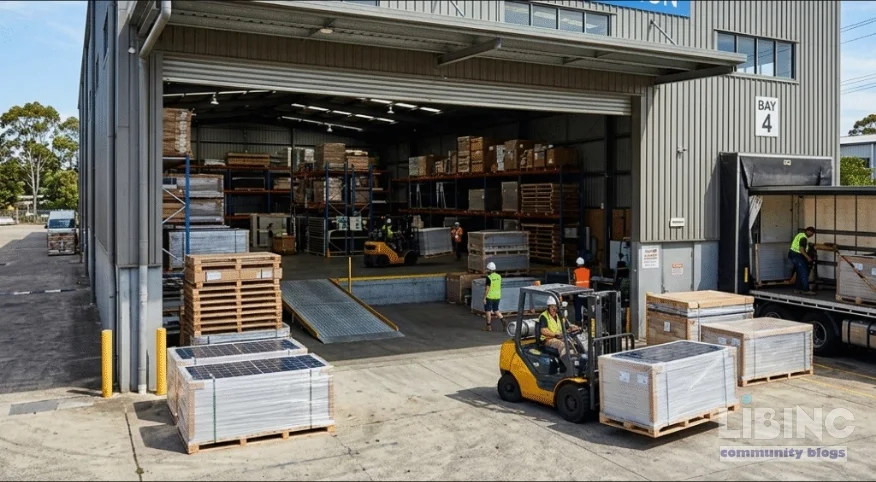
For the second time this year, solar module prices across technology classes have not risen in lockstep with the previous month. The data point the market watched most closely is that price movements for full-black and low-cost modules were effectively negligible, while shifts in other segments remained marginal. Availability across most power classes improved again, reducing procurement frictions for installers and developers. Yet the story is not uniform. Back-contact modules with efficiencies above 24% continue to exhibit demand outpacing supply, producing localized shortages in the higher power categories. This niche, while small, matters because it tests the elasticity of the overall index and signals where investment and capex will flow next. The broader market, however, remains governed by capacity utilization, manufacturing realignments, and the tug between ongoing innovation and the need to recover sunk investments.
In a broader sense, the central question is not merely price, but the trajectory of technology adoption. Back-contact solar modules epitomize a higher-efficiency, aesthetically sleek option favored by residential rooftop projects, but their affordability hinges on rapid line ramp-ups and patent clarity. The July 2026 data set indicates that while TOPCon-based production has stabilized, the market’s pulse is driven by the balance of supply expansion, demand resilience, and the pace of upcoming breakthroughs such as perovskite integration. The result is a price environment that is stable on the surface but underlain by complex capacity dynamics and strategic licensing decisions among major players.
1. Analytics perspective on pricing stability and the back-contact niche
2. Contrasting price trajectories by technology
3. Causes and effects shaping market equilibrium
4. Expert reconstruction: Outlook and strategic implications
Analytics perspective on pricing stability and the back-contact niche
From an analytics standpoint, July 2026 reveals a clear bifurcation in the solar module market. Prices for high-volume, status-quo formats remain anchored, while premium classes drift only marginally, driven by scarce supply rather than aggressive price increases. The back-contact niche emerges as a focal point for price signaling because it sits at the intersection of high efficiency and consumer demand for black, aesthetically pleasing modules suitable for residential rooftop installations. The overall index thus remains largely flat, but the internal composition shifts as supply and demand recombine around the most technologically advanced offerings.
Intersolar Munich this year underscored the pivot toward back-contact cells as a mainstream production proposition. Several leading producers presented mass-production modules leveraging back-contact architectures, signaling that the technology is moving from niche pilot lines to broader European deployment. Oxford PV has moved from demonstration to field-testing with tandem configurations in Brandenburg, while other European and Asian players advance licensing strategies and contract manufacturing arrangements. These signals matter because they map a pathway from constrained supply to broader accessibility, even as patent dynamics and line conversion costs create near-term frictions.
- Capacity utilization and line upgrades: Manufacturers are pushing TOPCon and back-contact lines to maximize throughput and lower per-watt costs, but investment cycles remain capital-intensive and slow to scale.
- Patent and licensing landscape: While TCL has signaled a willingness to license patents, many back-contact processes still face cross-licensing hurdles that limit rapid, widespread production.
- End-market demand: Residential rooftop segments favor high efficiency and black aesthetics, which sustains interest in back-contact solutions even if entry prices are higher.
The implications are twofold. First, the back-contact segment can act as a price stabilizer in the upper-end market, resisting downward pressure as demand remains robust in niche high-power applications. Second, the broader index remains sensitive to how quickly large-scale production can absorb capex and how effectively patent thickets are navigated, because even small shifts in licensing flow can alter the cost structure of entire supply chains.
Contrasting price trajectories by technology
The current landscape shows a deliberate tilt in pricing dynamics across technology classes. Full-black and low-cost modules preserve a conservative trajectory, their price levels buoyed by established supply chains, lower material costs, and mature manufacturing processes. In contrast, back-contact modules—especially those at or above 24% efficiency—see more volatile pricing signals due to persistent demand outstripping supply in higher power brackets. This divergence creates a widening gap between residential rooftop modules and commercial or utility-scale installations, where the economics of higher efficiency must justify the additional capex and longer payback periods.
From a product mix perspective, the residential rooftop market remains the key battleground for back-contact technologies. The premium aesthetic and efficiency advantages align with consumer preferences for sleek, nearly all-black appearances, but price sensitivity remains a critical constraint. The gap between high-end back-contact products and mid-range variants is poised to widen if supply cannot be commensurately expanded, particularly as demand for 26%+ blueprints and flexible formats grows in Europe and neighboring markets.
- Residential rooftop demand vs commercial/ground-mounted deployments: different return profiles drive separate price paths.
- Mass-production risk: bottlenecks at high-efficiency lines can limit price reductions and keep premium segments buoyant.
- OEM and licensing dynamics: reliance on a handful of licensed back-contact producers can stabilize supply at a price floor but may cap competition-driven price erosion.
Despite these contrasts, the overall price environment remains anchored by a core principle: capacity must chase utilization. The market that cannot absorb investment costs and financing charges for idle capacity faces sustained margin pressure, potentially curtailing further upgrades. In practice, this means TOPCon lines are being pressed to operate at high utilization, while back-contact lines in high-efficiency strata face the opposite dilemma—scarcity and premium pricing in the short term, followed by potential normalization as supply expands and new entrants enter the market.
Causes and effects shaping market equilibrium
Why is price stability persisting in most segments while back-contact modules confront shortages? Several intertwined forces are at work. First, the push to higher performance has intensified capital intensity. Production lines optimized for TOPCon and back-contact processes require substantial reconfiguration and investment, which slows the pace of capacity expansion and keeps supply tight in premium segments. Second, the incentive structure created by recent gains in module efficiencies has redirected some investment toward research-intensive, next-generation formats like perovskite tandems, potentially diverting capital away from incremental improvements in traditional silicon lines. Third, the patent landscape remains unsettled in key back-contact processes, adding strategic risk to licensing decisions and delaying comprehensive scale-up across the market.
The perovskite question looms large. Although the physics promise efficiencies well over 30%, manufacturing remains a bottleneck and long-term stability under diverse climate conditions is not fully proven. In the near term, perovskite is most visible as a research-led pathway—highlighted at Intersolar and The smarter E shows—rather than a mass-market replacement for crystalline silicon. Oxford PV’s tandem pilots in Brandenburg illustrate a path forward, with early field data guiding engineering choices for future deployments. The timing of mass-market perovskite products, likely late 2027 or early 2028, could shift pricing and capacity pressures once reliable production scales emerge.
Consequently, the market faces a balancing act: maximize utilization of upgraded TOPCon lines to support growing demand while managing the financial costs of maintaining idle capacity, which previously were used as a price-support mechanism. This balancing act constrains aggressive price upswings this year, even as demand for high-efficiency back-contact modules sustains prices in the premium segment. The broader implication for investors is clear—whether the industry can sustain high utilization rates without triggering a spiral of ever-lower prices hinges on the successful scaling of both current lines and next-generation technologies, alongside stable licensing regimes.
Expert reconstruction: Outlook and strategic implications
What does this mean for manufacturers, installers, and policymakers seeking to optimize outcomes in back-contact modules and beyond? Three threads emerge as the most consequential. First, production reality will determine price stability. With AIKO, Longi, and TCL currently driving back-contact module production in Asia and Europe, the capacity mix will shape supply resilience. TCL’s willingness to license patents to multiple players, rather than pursuing exclusive white-label manufacturing, signals a more collaborative pathway to scale—though it remains contingent on patent settlements and cross-licensing outcomes. The remainder of the market depends on OEM strategies to secure manufacturing capacity and maintain margins as demand broadens.
Second, the European market is polarizing toward high-efficiency residential solutions. Installers will increasingly favor back-contact options for rooftop projects that demand a superior black appearance and higher power density per roof area. This trend could intensify price discrimination within the residential segment, expanding the premium for top-tier modules while pushing mid-range products to compete more aggressively on price. Such dynamics heighten the importance of reliable supply chains and timely delivery, given the premium placed on rapid deployment for rooftop programs and grid-adjacent micro-schemes.
Third, technology migration toward perovskite tandems remains the strategic horizon. While near-term mass-market adoption faces manufacturing and stability hurdles, pilots and research initiatives across Europe are accelerating the knowledge base and readiness for next-generation integration. The key for market participants will be deciding when to reallocate capital toward tandem production while preserving the throughput and reliability of existing high-utilization lines. In practice, this means a stepped approach: capitalize on current back-contact demand and capacity to stabilize returns, then gradually incorporate tandem architectures as trust and supply chain maturity improve.
Strategic implications for market participants include:
- Invest in scalable licensing and joint development agreements to mitigate patent risk and accelerate capacity expansion for back-contact modules.
- Prioritize supply chain resilience, ensuring on-time delivery to maintain rooftop project timelines and avoid cost overruns.
- Monitor perovskite development closely, aligning capital deployment with proof of stability and field performance metrics to time entry into tandem markets.
- For policymakers, support measures that reduce risk in capital-intensive upgrades and encourage transparent licensing to unlock broader access to high-efficiency modules.
In sum, the back-contact module market in 2026 sits at a crossroads: the niche is expanding toward mass production, but the path to universal applicability will be constrained by licensing realities, capital costs, and the pace of perovskite maturation. The immediate impact on prices will be modest, but the long-run implications for market structure, installer economics, and project design could be profound. The prudent play is to align production with demand signals, diversify licensing strategies, and prepare for a gradual but meaningful shift toward tandem and higher-efficiency architectures as supply chains mature.
In closing, the near-term price landscape will be defined less by broad-based jumps and more by the strategic coordination of capacity, licensing, and pilot-scale breakthroughs. Back-contact solar modules will remain a barometer for high-end residential demand and a proving ground for next-generation technologies. The market will watch closely how quickly the niche can scale without sacrificing profitability, and how efficiently the industry can translate technological promise into affordable, reliable solar power for homes and businesses alike.
Looking ahead, the blend of steady price signals in mainstream segments with tightness in the back-contact high-efficiency space will shape project economics for the coming year. Installers, suppliers, and financiers should prepare for a year where execution risk and licensing negotiations carry as much weight as technical performance. If capacity ramps proceed smoothly, the industry may enjoy a period of relative price stability that catalyzes a broader rollout of premium modules, while an acceleration in tandem development could redefine the affordability curve for high-efficiency rooftop solar in the medium term.
For stakeholders, translating price signals into procurement and project decisions is essential. The compact guidance below adds concrete scenarios to complement the macro view and helps align budgets, schedules, and licensing strategies across teams.
Table: Price signals by technology class
| Technology | Efficiency | Capex intensity | Current price trend | Availability |
|---|---|---|---|---|
| Back-contact (>24%) | 24-26% | High | Stable to slight lift | Tight in high power |
| Full-black | 20-23% | Moderate | Flat | Ample |
| Low-cost | 17-19% | Low | Flat | High |
| TOPCon | ~22% | Medium-High | Moderate | Good |
These signals suggest a bifurcated market: mainstream classes stay price-stable due to mature supply, while premium back-contact offerings move with supply constraints and licensing clarity. Installers should align procurement cycles with license agreements to prevent stockouts. Plan for 8–12 week lead times and consider multi-sourcing across licensed suppliers to mitigate risk. Pull-through from regional demand, financing terms, and project scale will compound these effects. LSI keywords include back-contact solar modules, high-efficiency residential panels, and premium rooftop solar solutions.
For residential installers, the decision to adopt back-contact requires balancing roof-area efficiency and installed system cost. In markets with favorable building codes, the premium can be justified; for others, bundling with financing or performance warranties can improve uptake. The practical takeaway is to map supplier calendars to project milestones and build contingencies into the procurement plan.
July 2026: Back-contact modules above 24% command a sustained premium of 6–12% against mainstream high-efficiency silicon, reflecting scarce supply in 26%+ variants and resilient residential demand. Real-world procurement planning should count this premium in project budgets and seek allocations with license-holding suppliers to reduce risk. Scenario planning with 8–12 week lead times and lock-in contracts can protect margins while capacity expands.
In practice, early engagement with license partners and a diversified supplier roster improves predictability and reduces the probability of costly delays in rooftop installations. This approach supports on-time project delivery and steadier cash flows for installers and developers alike.
Together, these levers create a pathway to more stable premium pricing as capacity comes online and licensing becomes clearer. The sector is likely to see gradual normalization rather than sudden price swings in the near term. Stakeholders should track license settlements, capacity announcements, and regional demand shifts to adjust plans proactively.
What factors are driving price stability for back-contact modules in 2026?
Price stability in 2026 is driven by the combination of durable demand for high-efficiency back-contact modules, the deliberate pace of capacity expansion on premium lines, and licensing dynamics that encourage multiple suppliers to participate without triggering sharp price competition; supply constraints in 26%+ variants keep premiums intact for now, while mainstream segments benefit from mature manufacturing ecosystems that absorb new investments with slower margin erosion. For installers, this means you can lock in material costs with mid-term contracts if you align procurement windows with license agreements and monitor regional demand signals. Additionally, residential adoption in favorable markets adds price resilience, supporting steadier procurement planning.
The practical implication is to favor contracts with staged deliveries and price holds, while maintaining a diversified supplier base to mitigate region-specific disruptions.
How do licensing and patent landscapes affect supply and pricing for back-contact modules?
Licensing and patent dynamics influence both the pace of capacity growth and the cost structure. When licenses are concentrated, royalties and minimum commitments can create price floors, while broader cross-licensing unlocks incremental capacity and reduces single-source risk. As more players obtain licenses, competition increases and price erosion becomes possible, but only after settlements establish predictable, scalable supply. Installers should monitor license terms and diversify sourcing to minimize exposure to licensing bottlenecks.
Strategic actions include pursuing multi-party licensing agreements, engaging in joint development with suppliers, and aligning schedules with license renewal cycles to avoid last-minute price shocks.
When might perovskite tandems impact pricing in practice?
Perovskite tandems offer a long-term pathway to higher efficiency, but near-term mass-market impact is tempered by manufacturing scale, stability, and long-term field performance. In the 2027–2028 window, pilots and early demonstrations in Europe indicate readiness for staged integration, which could gradually compress the premium for top-tier back-contact configurations as supply chains mature. Installers should watch pilot results, supplier readiness, and regulatory approvals to time any capital shifts toward tandem production.
What procurement strategies should installers use for back-contact modules?
Adopt a procurement strategy that blends price certainty with supply flexibility. Lock in allocations with licensed suppliers, negotiate price-hold options, and diversify across regions to mitigate regional disruptions. Use longer-term contracts (8–12 weeks lead times) and require performance warranties to protect rooftop project economics. Build risk-adjusted budgets that assume modest premium volatility and plan phasing to align with financing cycles.
How do regional market dynamics differ for back-contact adoption?
Europe tends to favor premium residential rooftop solutions with sleek aesthetics, driving higher demand for back-contact modules in urban programs. Asia remains a key production hub with ongoing licensing and capacity shifts, potentially moderating regional price swings through scale. North America can experience more price volatility depending on module shortage dynamics and local incentives. Installers should tailor sourcing and financing to regional demand signals, regulatory environments, and project types to optimize cost of ownership.
How should stakeholders evaluate total cost of ownership for high-efficiency rooftop modules?
Total cost of ownership combines upfront module costs, installation labor, warranties, and system performance over time. High-efficiency back-contact modules can offer better roof-area power density but may carry premium pricing and longer lead times. A robust evaluation includes lifecycle cost modeling, financing terms, anticipated degradation curves, and expected savings from higher efficiency; sensitivity analyses around equipment cycles, licensing costs, and supply reliability help identify the most resilient investment path.




Add a comment
To comment, you need to register and authorize
Comments
Deeper questions for practitioners include how to balance investment in back-contact lines with other high efficiency formats, and what contract structures can protect customers against delayed shipments or quality issues during ramp. Could procurement entities benefit from dynamic pricing arrangements tied to actual line utilization or fairness metrics that ensure suppliers are incentivized to accelerate volume without compromising long term profitability? In terms of policy, what kinds of regulatory signals could reduce financial risk for rooftop installers when choosing premium modules, especially in markets with rapid code changes or performance incentives? Finally, what would be the practical implications if licensing dynamics converge toward more open access, enabling a larger number of manufacturers to participate in back-contact production without escalating litigation risk? This confluence of supply discipline, licensing clarity, and demand readiness will shape the trajectory of back-contact modules for years to come.