

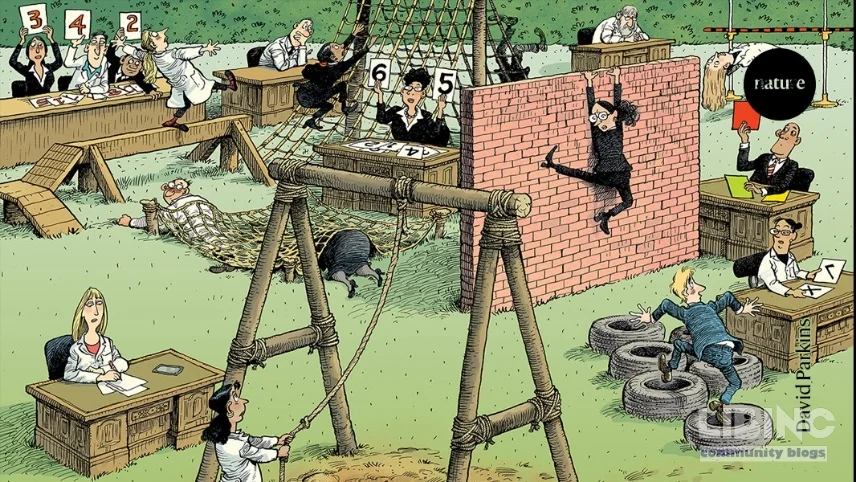
Mastering Multistage Interviews for Industry Roles: A Scientist's Practical Guide to Transition
Table of contents
- Analytics view — mapping the interview journey
- Contrast — academia vs industry interview dynamics
- Cause and effect — what changes outcomes in multistage interviews
- Expert reconstruction — a practical playbook to win
- Conclusion
The problem facing many researchers is not a lack of qualifications but a misalignment between academic storytelling and industry evaluation. Multistage interviews for industry roles test a blend of technical prowess, communication, and team fit across distinct audiences. A single polished CV often vanishes in a black hole when you fail to tailor it to each stage or to demonstrate impact in terms decision-makers care about. This guide reframes the journey as a staged information exchange, where every interview should reveal ability to translate research into tangible outcomes, collaborate across functions, and drive value within a team. If you face repeated first-round eliminations, this approach offers a methodical path to convert interest into offers.
Analytics view: mapping the multistage interview journey
To win in multistage interviews for industry roles, you must decode the information sought at each gate. Treat the process as a pipeline where your responses, metrics, and narrative climate shift with the audience. The Nature Careers insight from 2024 reinforces a core truth: soft skills — communication, collaboration, and fit — often determine hiring outcomes as much as technical ability. Translating this into action requires audience-focused storytelling, not generic claims.
Typical gatekeepers in a health science or analytics company include recruiters, hiring managers, technical interviewers, and senior leaders. Each group evaluates a different facet of you, so your preparation must tailor evidence accordingly. Behavioral questions and problem-solving demonstrations dominate early stages, while later rounds probe strategy, product sense, and cross-functional impact. You should prepare three compact stories that showcase your ability to lead, collaborate, and deliver data-driven outcomes at scale.
Key stages in the pipeline and what they seek:
- Screening call — recruiter triage; quick assessment of fit, salary expectations, and immediate concerns about gaps or role alignment.
- Hiring-manager interview — team fit and practical performance questions; how you translate research into business-relevant outcomes.
- Technical interview — applied problem solving; your ability to manipulate data, design analyses, and communicate results to non-experts.
- Panel or peer interview — collaboration, leadership style, and the potential to mentor others; multi-perspective assessment.
- Senior-management/strategy interview — strategic thinking, market awareness, and representation of the company in the field.
Prepare with precision for each gate. Do not recycle the same anecdotes. Each panel expects different evidence: the recruiter wants clarity and compensation alignment; the technical panel wants reproducible thinking and methodical work; the senior audience wants alignment with business goals and competitive positioning. The goal is to move from information delivery to actionable dialogue that demonstrates impact, not just expertise.
Contrast: academia vs industry interview dynamics
Academic interviews often prize completeness of knowledge, depth of theory, and autonomy. Industry interviews, by contrast, reward applied problem solving, stakeholder management, and rapid learning. The distinction matters because your instinct from academia — lecturing about your niche — can undermine your candidacy in industry settings where interviewers expect you to listen, diagnose, and propose concrete actions quickly.
Transitioning researchers frequently stumble when they default to listing publications, methods, or datasets without tying them to business impact. In conversations, interviewers seek evidence of transferable skills such as cross-disciplinary collaboration, domain fluency, and the ability to simplify complexity for diverse audiences. The upshot is not abandoning technical rigor but reframing it as a driver of value: what problem you solved, what metrics improved, and how you influenced decisions beyond your lab bench.
To bridge the gap, treat each stage as a different audience with distinct questions. The recruiter values clarity and fit; the hiring manager probes team integration and impact pathways; the technical interviewer tests practical execution; the senior manager evaluates alignment with the company roadmap. Practice is not showmanship; it is evidence-based storytelling that aligns with each audience's priorities. This approach makes your CV come alive during the early chats and turns technical competence into strategic capability.
Cause and effect: what changes outcomes in multistage interviews
The path from applicant to offer hinges on cause-and-effect dynamics you can influence. When you fail to progress, the root cause often lies in three areas: misalignment of your narrative with the stage, insufficient evidence of impact, or a lack of proactive engagement with the interviewer community within the company. The Nature survey underscores a related truth: soft skills and team fit carry weight at scale; you can enhance both by deliberate practice and audience-aware storytelling.
The first cause you can address is narrative alignment. Ensure your stories map directly to the role's outcomes: how your work improves patient outcomes, reduces costs, or speeds time-to-insight. Use quantified results where possible: e.g., reduced time-to-result by X%, increased model accuracy by Y%, or improved decision latency for clinicians by Z minutes. This is not mere bragging; it demonstrates real impact in business terms.
The second cause is evidence quality. In technical rounds, couple code or model concepts with a narrative that explains why you chose a method, what alternatives you considered, and how you validated results. The third cause is interviewer engagement. Treat the interview as a two-way conversation. Ask thoughtful questions, reveal your curiosity about the product and customers, and show how you would collaborate with teams across functions to move initiatives forward.
Linking causes to outcomes creates a feedback loop: better alignment drives clearer explanations, which in turn yields stronger signals to interviewers about your fit. When you encounter rejections, extract the data from the feedback: was the concern about technical fit, collaboration style, or strategic orientation? Use that signal to tailor your next application, not as a fixed limitation of your profile.
Expert reconstruction: a practical playbook to win multistage interviews for industry roles
The expert playbook below translates the analysis into concrete steps you can implement now. It emphasizes a structured, evidence-based approach that many scientists have found decisive when facing a multistage interview process for industry roles.
Week 1–2: role mapping and CV-to-story alignment
- Identify target roles. Build a short list of health-science, data-analytics, and healthcare-analytics positions that fit your expertise and interests. Map each role to two to three outcomes you could influence.
- Audit job postings. Extract keywords, required skills, and quantifiable outcomes. Align your stories to those outcomes and translate jargon into business impact terms.
- Craft three impact stories. Each story uses the STAR framework but tailored to a specific audience: recruiter, technical panel, and senior leadership. Focus on the problem, your action, and the measurable impact.
Week 3: evidence packages and portfolio
- Build a data-analytic portfolio. Include short case studies with problem statements, data sources, methods, results, and business implications. Keep visuals crisp and ready to explain in 3 minutes.
- Prepare one-page project briefs. For each brief, summarize the business need, your approach, and the outcome in plain language suitable for non-technical readers.
Week 4–5: practice and mock experiences
- Mock interviews. Run multiple rounds simulating recruiter calls, technical panels, and senior-management sessions. Record feedback and adjust timing, language, and emphasis.
- Practice concise storytelling. Each answer should be 90–120 seconds, with a clear beginning, middle, and end. End with a tying statement that links your capability to the company goal.
Week 6: readiness and negotiation
- Ask strategic questions. Prepare a set of deep questions about product roadmap, success metrics, and team dynamics that reveal your strategic orientation and curiosity.
- Salary and role clarity. Have a clear salary range based on market data. If needed, present a justification grounded in impact, risk mitigation, and domain expertise.
- Exit with momentum. After each interview, summarize what you learned and what you will do next. Keep a lines-of-communication open with recruiters and potential future teammates.
The playbook is designed to be iterative. Use every interview as a structured learning loop: extract feedback, refine your stories, and tighten your evidence package. The aim is not to memorize a script but to cultivate a fluent, adaptable narrative that travels across audiences without losing authenticity.
Practical questions to help you assess fit and readiness
During the first recruiter call and beyond, asking informed questions helps you gauge fit and showcases strategic thinking. Consider using a few well-timed questions at each stage to shift the conversation toward tangible outcomes and mutual clarity.
- Are there gaps in my CV for this position. Ask this in the first interview to address concerns early and prepare precise responses for later rounds.
- What is the salary range for this position. Early clarity saves time for both sides and shows you approach compensation pragmatically.
- What would I need to achieve in the first six months to demonstrate value to the team
- How does the leadership recognize impact and how are accomplishments rewarded
Additionally, cultivate questions the interviewer cannot easily predict and that reveal your alignment with the company culture and strategic priorities. This technique highlights your analytical mindset and your commitment to long-term impact rather than a single role at a single moment.
Conclusion
Multistage interviews for industry roles demand more than scientific achievement; they require audience-aware storytelling, concrete demonstration of impact, and proactive collaboration. Ground your approach in the pipeline of recruiters, hiring managers, technical peers, and senior leaders. Build three core stories, assemble a compact evidence portfolio, and practice stage-specific delivery. Treat each interview as a dialogue that moves beyond knowledge to alignment with business goals. With disciplined preparation and a strategic perspective, a second postdoc can transform repeated interviews into tangible job offers and a durable transition into health science, data analytics, or healthcare analytics.
Practical alignment framework for multistage interviews
Despite the strength of your research, the gap often lies in aligning the narrative to each interview gate. This compact framework maps your evidence to audience questions and packages it into three ready-to-deliver stories, plus a portfolio you can show during interviews. It accelerates clarity, supports faster decisions, and improves consistency across recruiters, technical panels, and senior leaders.
| Gate | Audience | Evidence Type | Example Metric | Delivery | Notes |
|---|---|---|---|---|---|
| Screening | Recruiter | Fit & value proposition | Salary alignment; gaps addressed | 2–3 bullets | Clear value first |
| Hiring-manager | Team lead | Impact pathway | Time-to-insight reduced by X% | Brief narrative | Tie to team goals |
| Technical | Analysts | Reproducible thinking | Code snippet; method choice | 3 steps | Explain alternatives |
| Panel/Peers | Cross-functional | Collaboration | Mentoring outcomes | STAR story | Leadership style |
| Senior management | Executives | Strategic value | Roadmap impact | Big-picture framing | Market awareness |
In practice, prepare three compact stories aligned to these gates. For example, a story about building a cross-functional analytics pipeline that shortened clinician decision time by 6 minutes per case demonstrates both technical acumen and team impact. A second story could cover a scenario where you translated a toxicology dataset into a decision-ready dashboard for operations, cutting costs by 15% per trial cycle. A third story may illustrate mentoring junior colleagues while delivering reproducible code in a shared repository, signaling leadership and collaboration. Use plain language and quantifiable outcomes to keep the narrative credible for non-specialists.
Additionally, assemble a compact evidence portfolio: one-page briefs, visuals of data flows, and links to reproducible notebooks. This gives interviewers a tangible trail they can review after the call. The framework also supports iterative improvement: after each interview, map feedback to the gates and revise your stories and metrics accordingly.
- Story A: Leading cross-functional analytics
- Audience: recruiters and executives
- Value: faster insight, improved patient outcomes
- Story B: Translating research into product impact
- Audience: product, design, operations
- Value: measurable process improvements
- Story C: Mentoring and team leadership
- Audience: peers and managers
- Value: scalable, repeatable workflows
Whether you are targeting health-science or data-analytics roles, this framework keeps your delivery tight, your evidence credible, and your narrative aligned with business goals. Use it as a living guide that you refine after each interview cycle.
How can I translate research outcomes into business impact during multistage interviews?
In multistage interviews, translating research outcomes into business impact requires mapping your technical results to concrete benefits that matter to decision-makers, such as reducing patient time-to-treatment, lowering costs, or accelerating time-to-insight. You should attach three compact stories tailored to recruiters, technical panels, and senior leaders, each with a clear problem-action-result sequence and a quantified metric. Practice delivering these with a 90–120 second structure and accompany with a brief portfolio that visualizes data flows and outcomes. This alignment makes your value proposition immediate and actionable for cross-functional interviewers.
Analytical depth: tie metrics to business drivers, and ensure you can explain choices in simple terms to non-experts.
What three core stories should I prepare for a multistage interview?
In multistage interviews, prepare three compact stories that cover cross-functional analytics, product-impact translation, and leadership/mentoring. Each story should state the problem, your action, and a measurable impact, with audience-specific emphasis. For example, a cross-functional story might show how a data pipeline reduced clinician decision time; a product-impact story could illustrate how a dashboard accelerated operational decisions; a leadership story should demonstrate mentoring and scalable collaboration. This trio ensures you can speak to recruiters, technical peers, and executives with credibility.
Analytical depth: keep each story under 120 seconds and end with a tying statement to business goals.
How should I assemble evidence for the interview portfolio?
In multistage interviews, a concise evidence portfolio combines problem statements, data sources, methods, results, and business implications into short case studies. Include one-page briefs that non-technical readers can grasp, plus visuals of data flows and links to reproducible notebooks. Present these as a quick, rotating set you can reference during different gates, ensuring you can walk an interviewer through the steps in three minutes or less. This tangible evidence reduces ambiguity about your capabilities.
Analytical depth: emphasize reproducibility, decisions, and business value, not just methods.
How can I tailor questions to show strategic fit?
In multistage interviews, asking strategic questions demonstrates your alignment with the company roadmap and market priorities. Start with questions about product roadmap, patient outcomes, or cost initiatives, then connect their answers to your prior stories. Demonstrating curiosity about customers and competitors signals readiness to contribute beyond the current role. Frame questions to reveal how you would collaborate with teams across functions to move initiatives forward, thereby showing you can operate at scale.
Analytical depth: align questions with the company’s strategic priorities and your evidence portfolio.
What metrics resonate most with healthcare analytics teams?
In multistage interviews, metric selection should reflect real-world impact: incremental time-to-insight reductions, operational cost savings, patient outcome improvements, and decision-cycle acceleration. Prefer metrics that are auditable, such as percentage improvements, time saved, or financial impact. Include context showing baseline performance and the relative improvement. This clarity helps non-technical audiences grasp value quickly and makes your case memorable.
Analytical depth: pair metrics with a narrative that explains baseline conditions and causality where possible.
How do I handle salary discussions across stages?
Across multistage interviews, approach salary discussions with market-aligned ranges and transparent rationale tied to impact, risk, and domain expertise. Start with a data-backed range, then provide three reasons supporting the ask including your contribution to strategic goals, risk mitigation, and expected time-to-value. Use a collaborative tone and keep the conversation forward-looking, focusing on mutual momentum rather than a fixed figure. This approach reduces friction and preserves negotiation leverage across stages.
Analytical depth: anchor compensation to quantified outcomes and strategic fit.





Add a comment
To comment, you need to register and authorize
Comments