

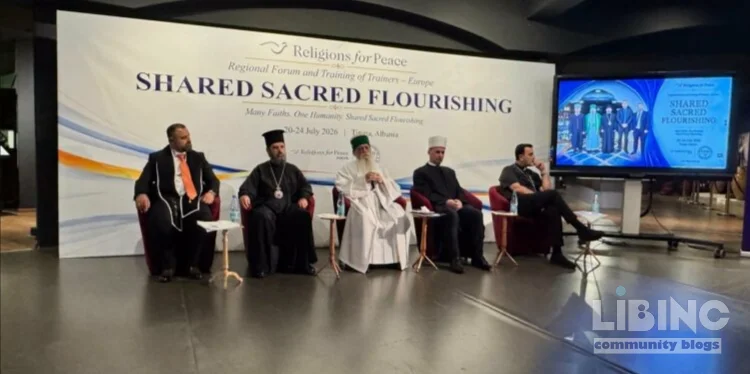
Transcendent Peacemaking: Faith, Interreligious Dialogue, and the Shared Sacred Flourishing in Albania
- Analytical perspective on the Transcendent as peace-building
- Contrasting visions: faith, fear, and coexistence
- Causes and effects: pathways from belief to peace
- Expert reconstruction: practical pathways for shared sacred flourishing
The world remains fractured by fear, suspicion, and competing claims over truth. Archbishop Ioannis of Albania reframes this fracture by urging a pursuit of the Sacred as a common horizon that can anchor peace. His greeting to the European Regional Forum of Religions for Peace Europe casts faith not as a tool of division but as a resource for reconciliation, mutual respect, and human service. The stakes are existential: without credible, practice-ready faith leadership, societies drift toward polarization; with it, religious communities can mobilize moral authority, material support, and courageous leadership for the common good. The central tension is not whether belief matters, but how the Transcendent is translated into concrete acts that heal rather than wound.
Analytical perspective on the Transcendent as peace-building
The Transcendent operates as a shared horizon that transcends sectarian boundaries while preserving doctrinal integrity. It offers a normative frame that binds human dignity to public action, forcing religious actors to answer for how their faith translates into just, non-violent practice. This is not about erasing differences; it is about embedding differences within a common moral economy that prioritizes life and liberty for every person. In this sense, the Transcendent becomes a practical standard by which to measure rhetoric against everyday outcomes—how people live, how they treat the vulnerable, and how conflicts are managed without escalation.
Interreligious dialogue becomes the primary conduit by which the Transcendent is operationalized in plural societies. When faith communities engage in ongoing conversation, they reduce misperceptions, reveal shared concerns, and generate collaborative responses to suffering. The dialogue is not a celebration of sameness but a disciplined, patient process of listening, testing assumptions, and building trust. This is where peace-building moves from theory to practice and where the Archbishop’s insistence on dignity translates into institutional arrangements that support joint care for the vulnerable. The consequence is a network of relationships that can absorb shocks and reframe grievance as a shared problem rather than a zero-sum contest of truth claims.
- Shared dignity anchors rights and responsibilities for all people, regardless of belief.
- Nonviolent accountability requires religious bodies to condemn violence and condemn the dehumanization of any group.
- Mutual respect as a procedural default in all interfaith encounters.
- Service to humanity as a universal language that bridges doctrinal differences.
Still, the practice of peace is not automatic. The Transcendent cannot bypass political, economic, or social power dynamics. It must be integrated with civic institutions, legal frameworks, and education systems to yield durable outcomes. The analysis here emphasizes that authentic peace requires ongoing formation—of conscience, of leadership, and of communities—so that religious actors remain credible custodians of public trust rather than isolated moral authorities. In this sense, the Transcendent is not a retreat from public life; it is a call to a deeper form of civic courage exercised through service and dialogue.
Principles that emerge from this reflection include a commitment to the sanctity of life, a refusal to use faith to humiliate or dominate, and a clear mandate for confession to be reconciled with responsibility. Interreligious engagement becomes a practice of peace when it centers on shared service, joint prayerful discernment, and transparent collaboration with other communities. The historical Albanian arc—marked by suppression of religious expression and a later renewal of coexistence—provides a living laboratory for these insights. The Transcendent thus becomes a lens for evaluating present and future policy choices, not merely a theological postulate.
Contrasting visions: faith, fear, and coexistence
The address makes visible a tension that haunts many plural societies: whether faith is a source of unity or a trigger for division. On one side, faith can inflame fear when identities are treated as exclusive zones of belonging. On the other, faith can catalyze solidarity when it foregrounds universal human dignity and the welfare of the vulnerable. The Albanian experience offers both cautionary tales and hopeful precedents. When religious identities are weaponized, communities shrink and others suffer; when faith communities model restraint and service, trust grows, and common safety rises. This tension is not merely theoretical; it shapes how policies are written, how schools teach values, and how media frame conflicts.
In this context, the role of interreligious dialogue becomes a litmus test for sincerity. Dialogue without accountability risks becoming performative; dialogue with action becomes a durable bridge. The Archbishop’s emphasis on not using the name of God to humiliate others underlines a counter-logic to exclusionary rhetoric: accountability to a transcendent standard is only meaningful when it is visible in actions that respect difference. The Albanian lesson is clear: coexistence is not passive tolerance but proactive engagement—joint service, shared rites of mercy, and a public witness that peace is not the absence of conflict but the presence of just relations among diverse peoples.
- Inclusive solidarity requires recognizing the worth of every person across traditions.
- Non-discrimination in law and practice protects minorities from unfair treatment.
- Constructive disagreement allows for debate without demonization.
- Public witness through cooperative service demonstrates faith’s constructive side.
This contrast highlights why some efforts to advance peace stumble: they confuse mere coexistence with active partnership. The Transcendent in practice asks religious leaders to demonstrate that faith can liberate communities from fear and prejudice, not weaponize those emotions against neighbors. The historical memory of Albania—where religious life endured, adapted, and eventually contributed to societal renewal—serves as a warning against two extremes: quietism and coercive exclusivism. The preferred path lies in public, dialogic, and service-oriented engagement that remains firm in truth while generous toward others.
In this framing, a key question becomes: what is the cost of failure? The price is measured not only in lost opportunities for reconciliation but in the erosion of human dignity and the fracture of social trust. Conversely, the cost of success is measured in the daily acts of mutual aid, the protection of minorities, and the creation of institutions capable of weathering conflict. The Transcendent thus anchors a practical peace that is visible in policies, programs, and partnerships more than in sermons alone.
Causes and effects: pathways from belief to peace
Understanding the causal chain from belief to peaceful outcomes requires tracing actions, incentives, and social feedback. When religious communities commit to concrete acts of service, they alter the cost-benefit calculus of intergroup relations. The immediate effect is reduced fear and heightened trust; the longer-term effect is more resilient social cohesion and a lower likelihood of mass violence. The Archbishop’s call to service underlines a practical mechanism: peace emerges not from abstraction but from reliable, predictable acts that heal wounds and build shared life.
One pathway is the alignment of religious ethics with civic responsibilities. Churches, mosques, synagogues, and temples that organize joint relief efforts, mentorship for youth, and mutual aid for the sick model a shared stake in the common good. This reduces the salience of us-versus-them narratives because everyday needs—illness, loneliness, unemployment, and poverty—reframe the moral landscape. The Transcendent becomes a guiding light here, directing energies toward inclusive projects that all communities can own. In this way, the relationship between faith and peace becomes a practical governance tool rather than an abstract aspiration.
Another causal thread runs through education. When religious educators integrate concepts of human dignity, mutual respect, and nonviolence into curricula, young people learn to interpret religious difference as a resource rather than a threat. Interreligious dialogue, then, functions as a pedagogical instrument, not just a diplomatic ritual. The result is a citizenry capable of civil disagreement without dehumanization, a condition that reduces incentives for radicalization and increases resilience to manipulation by extremists. The longer arc is a society in which spiritual commitments reinforce, rather than destabilize, political communities.
- Service-led peace programs bridge communities and reduce grievances.
- Education for peace fosters critical thinking about difference and power.
- Accountable leadership ensures religious voices contribute to policy in constructive ways.
- Public trust improves when religious groups act transparently and inclusively.
These causal links are not automatic. They require deliberate structuring of interfaith collaboration, clear norms against coercion, and accountability mechanisms that prevent religious authority from devolving into factionalism. The Albanian experience demonstrates that a society can rebound from periods of suppression and violence only when spiritual communities commit to a common ground of service, reconciliation, and mutual care. The Transcendent thus becomes a testable hypothesis: if religious actors organize around concrete acts of mercy, the probability of peaceful coexistence increases in measurable ways.
Expert reconstruction: practical pathways for shared sacred flourishing
To translate the Transcendent into durable peace, religious communities can adopt a four-paceted program that aligns belief with institutional action, public policy, and social imagination. This reconstruction emphasizes concrete steps, measurable outcomes, and enduring partnerships across faith boundaries.
- Interfaith service networks: Create regional coalitions that pool resources for the poor and marginalized, coordinating relief, education, and healthcare in joint initiatives.
- Joint education and formation: Develop curricula for youth and adults that explore common values, the history of religious coexistence, and the ethics of conflict resolution.
- Public accountability and transparency: Establish shared codes of conduct for religious leaders, with independent review bodies that monitor rhetoric and actions that could incite hatred or violence.
- Policy collaboration: Engage in policy dialogues with secular institutions to align moral imperatives with practical governance, ensuring that religious voices support social welfare without compromising doctrinal integrity.
Implementation requires a deliberate sequencing: begin with local coalitions that prove the model, then scale to national and regional programs, and finally institutionalize best practices into education, media, and policy. The Transcendent stands not as a certificate of belief but as a standard of action—an ethical compass that guides how communities respond to suffering, how they treat outsiders, and how they steward shared resources. Albania’s history of rupture and renewal offers a compelling template: rebuild trust through consistent service, cultivate dialogue as a daily practice, and measure success by the restoration of dignity and freedom for all. The goal is Shared Sacred Flourishing: a social order where faith communities lead by example, and peace becomes the normal state of public life.
In sum, the path to durable peace lies in aligning the Transcendent with everyday acts of mercy, public accountability, and inclusive collaboration. The Archbishop’s message is not simply idealistic rhetoric; it is a call to construct institutions, habits, and cultures where faith serves humanity first. When religious communities enact this vision with discipline, they realize a form of peace that endures beyond the cessation of hostilities and into the steady flourishing of a shared life.
Conclusion in brief
The Transcendent offers a universal standard for peace that respects identity while demanding responsibility. By turning faith into service, dialogue into practice, and difference into collaboration, religious communities can model a form of peace that is as reliable as it is hopeful. Albania’s legacy shows that renewal is possible when sacred longing translates into concrete care for the vulnerable. The path forward is clear: sustain honest dialogue, commit to joint acts of mercy, and hold leadership to account—so that peace becomes an everyday achievement rather than an intermittent achievement.
Closing the practical gap: translating transcendent principles into everyday action
Lofty ideals guide peace-work, but real change comes when communities translate them into concrete acts that people can observe and rely on. The most critical missing piece is a scalable, locally owned model that connects interfaith service with daily public life, so faith leaders become credible partners in welfare, education, and civic governance. This section offers concrete pathways communities can adopt this year, with simple indicators to track progress and practical examples drawn from Albanian renewal, using interfaith dialogue and shared service as the engine of change.
Description: Concrete outcomes to monitor progress in interfaith service networks.
| Measure | Baseline | 12 Mo Target | Rationale |
|---|---|---|---|
| Welfare reach | 2,500 served | 5,000 | joint relief expands access |
| Volunteer collaboration | 12 groups | 40 groups | cross-faith networks form |
| Public trust in faith actors | 42% | 60% | visible service builds legitimacy |
| Coordination with civil authorities | Low | Moderate | shared response capacity grows |
Analysis: The table shows how grounded action converts ethical ideals into measurable community benefit, strengthening social fabric and reducing grievances that fuel division.
Putting these into practice starts with small, repeatable steps: joint relief drives, shared youth mentorship, and public forums moderated by neutral leaders. Education and media can amplify, but the engine is local networks that commit to transparency, mutual care, and nonviolence. In the Albanian context, such networks built on shared care for the vulnerable can absorb shocks and reframe grievance as a shared challenge.
Description: A concise visualization of impact when religions cooperate on education and youth formation.
Joint education and service activities correlate with stronger civil engagement.
Analysis: When education and youth programs emphasize human dignity and nonviolence, communities interpret difference as a resource rather than a threat, reinforcing peaceful coexistence.
To scale, communities can embed these actions into municipal planning, with yearly cycles, budgets, and evaluation. The Transcendent becomes a practical standard by which to measure not only belief but behavior—hence the emphasis on service, accountability, and inclusive policy dialogue.
Description: Implementation steps to turn shared sacred values into everyday governance.
- Build local coalitions
- Map stakeholders
- Define shared goals
- Joint education programs
- Curriculum development
- Youth mentorship
- Public accountability
- Codes of conduct
- Independent review
- Policy collaboration
- Dialogue with schools, health, and local government
With these steps, the Transcendent shifts from an abstract ideal to a daily practice that shapes policy, institutions, and communal life. The Albanian example reminds us renewal flows from steady acts of mercy and inclusive dialogue that respect difference while building common life.
Frequently asked questions
What is the Transcendent's role in practical peace-building?
The Transcendent is a shared horizon that guides concrete action for the common good; it does not erase differences but anchors dignity in public service. By framing care and dialogue as duties owed to all, religious groups become credible partners in welfare, education, and civic life. This shifts focus from ritual to responsible action, ensuring peace-building is visible in schools, clinics, and neighborhoods. It also invites continuous accountability, so words translate into trusted outcomes.
How can interfaith dialogue translate belief into action?
Interfaith dialogue becomes action when it yields joint service projects, shared educational curricula, and transparent collaboration with civil institutions. Dialogue acts as a laboratory for trust-building, testing assumptions, and adopting common solutions to suffering. The practical effect is a network of cooperative activities that can be scaled through local councils, while respecting doctrinal integrity.
What role does education play in this peace-building model?
Education reinforces the dignity of every person and frames difference as a resource. Joint curricula, youth mentorship, and community mediation programs nurture critical thinking about power and conflict. The result is a citizenry capable of civil disagreement without dehumanization, which reduces radicalization and improves resilience to manipulation.
What can Albania teach other communities about sustaining peace?
Albania demonstrates that renewal comes from steady, inclusive service and dialogue that honors diversity while building shared life. The key is to embed faith-led initiatives within public systems—education, healthcare, and governance—so efforts endure beyond a single project and are accountable to all communities involved.
What metrics indicate progress in peace-building efforts?
Metrics include welfare reach, cross-faith collaboration, public trust in religious actors, and coordination with civil authorities. Monitoring these indicators over time shows whether joint actions are expanding access to services, strengthening social cohesion, and improving trust in public life. Transparent reporting and independent reviews enhance legitimacy.
How should communities begin implementing these ideas locally?
Start with small, trusted coalitions that map stakeholders and define shared goals. Build joint education programs, establish codes of conduct, and pursue policy dialogues with secular institutions. Use annual cycles to plan, budget, and evaluate outcomes, ensuring that religious actors contribute to public life without compromising core beliefs.





Add a comment
To comment, you need to register and authorize
Comments