

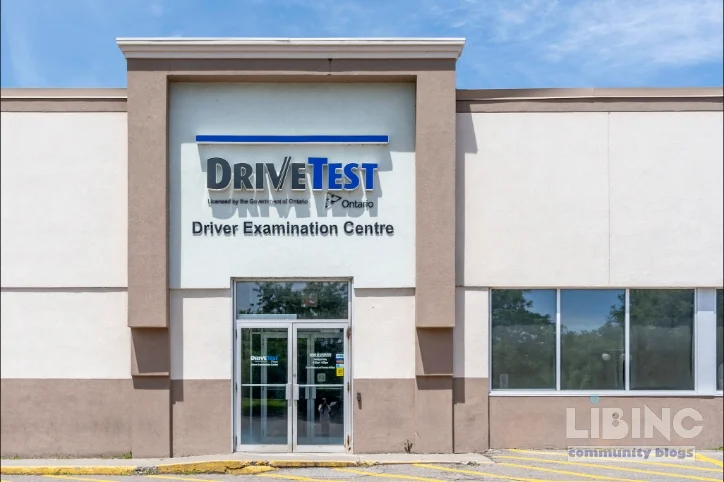
Ontario truck driver licensing under audit: exposing oversight gaps and paths to reform
Table of contents
- Lead
- Analytics of the Ontario truck driver licensing landscape
- Contrasts in oversight and practice
- Cause and effect: incentives, enforcement gaps, and safety costs
- Expert reconstruction: reforms and governance for Ontario truck driver licensing
Ontario's commercial truck driving sector has long suffered from patchy oversight. The Ontario Auditor General Shelley Spence's latest report pulls back the curtain on a licensing ecosystem that prizes speed over skill, with road test pass rates and familiarity with DriveTest routes shaping outcomes more than real competency. The stakes are blunt: every misstep behind the wheel endangers lives, while the public bears the costs of crashes and remediation. The governance setup combines oversight from MCURES and the Ministry of Transportation, creating gaps that inspectors rarely close. This analysis dissects the audit, maps structural weaknesses, and outlines reforms rooted in enforcement, transparency, and professional accountability while acknowledging that capable schools and professionals do exist and deserve scrutiny, not blanket vilification.
The landscape is defined by a tension between market incentives and public safety. The audit underscores that training pipelines funnel students toward the road test with insufficient emphasis on the broader skill set required for safe operation. DriveTest routes become de facto training grounds, test center selection influences outcomes, and pressure to certify drivers accelerates at the expense of competence. This is not an abstract concern; it translates into a safety trajectory that affects every motorist sharing Ontario roads with commercial trucks.
Analytics of the Ontario truck driver licensing landscape
The AG's findings reveal a systemic tilt toward passing the road test rather than building core trucking competence. In practice, instructors and administrators report that a candidate's success hinges on route familiarity, test center choice, and the ability to navigate DriveTest scheduling—often at the expense of broader skills such as trip planning, load securement, and safety checks. This is not a theoretical concern; it translates into a training culture where the final hurdle defines the learning arc and the student exit ramp becomes the primary objective.
As of March 2025, roughly 25 percent of Ontario private career colleges offering MELT were never inspected by MCURES. In total, 54 of 216 MELT providers fall outside formal oversight, and one in four driving schools have not been inspected. The consequence is a two-tier reality: a minority of schools operate under rigorous scrutiny, while a sizable cohort trains hundreds of students who may later operate large, road-legal vehicles without robust external validation. The problem is not isolated to a few bad actors; it reflects a structural flaw in the regulatory architecture that governs trucking education in Ontario.
Oversight currently lives at the intersection of two ministries. MCURES inspects and licenses private career colleges, including truck driver training programs, while the MTO handles licensing administration and road safety oversight. In practice, this dual remit has produced inconsistent scrutiny and, at times, inconclusive accountability. The auditor general notes that MCURES inspectors may lack sector-specific expertise in trucking, which reduces the chance of catching nuanced training deficiencies before students hit the road. This is not merely bureaucratic trivia; it shapes the safety trajectory of thousands of new drivers.
Progress has followed public attention. The province has since inspected 14 additional career colleges offering Class A truck driver training, and the government plans to visit all remaining colleges offering such programs by the end of June. While the activity signals a corrective impulse, the pace and scope of the reform remains a function of political will, resource allocation, and the ability to translate inspection findings into sustained practice changes on the ground.
Contrasts in oversight and practice
Two realities coexist in Ontario trucking education. On one side lies disciplined oversight with defined training hours, demonstrable trainer-to-student ratios, and independent verification of MELT sign-offs. On the other, a rapid, fee-driven market that publishes limited public data and relies on patchwork inspections. The difference underlines a fundamental question for the public: which schools train drivers who keep roads safe, and which schools operate as profit centers with weak external validation?
- Rigorous schools: frequent inspections, robust instructor qualifications, documented hours, transparent pass rates.
- Failed or uninspected schools: limited oversight, potential for inflated pass rates, unaudited training hours, sign-offs that may occur for a fee.
- Public safety implications: increased risk when oversight does not align with actual training quality.
In practice, well-regulated providers tend to maintain better outcomes and public confidence; meanwhile uninspected schools contribute to an opaque market that undermines safety norms. The 2025 audit highlights that enforcement actions exist but remain uneven in scale and scope, and that this mismatch fuels the perception that the licensing process rewards speed over skill. The recent increase in inspections demonstrates political responsiveness, yet it does not automatically translate into durable governance, nor does it guarantee a uniform standard across all programs.
Cause and effect: incentives, enforcement gaps, and safety costs
The core mechanism behind the observed rot combines economic incentives with regulatory ambiguity. A market-driven appetite for quick licensure creates demand for shorter training times, while the absence of strong penalties for noncompliance reduces the perceived cost of substandard practice. The result: schools push cheaper MELT sign-offs, routes and timing become the de facto curriculum, and the public bears the risk of undertrained drivers sharing the road with others. In other words, incentives misalign with safety and competence.
- Incentives: profit margins tied to enrollment growth, competition among schools, and demand for license-ready drivers.
- Enforcement gaps: MCURES resource constraints, two-ministry complexity, and limited trucking-specific expertise among inspectors.
- Immediate risks: flawed trip inspections, inadequate training hours, and the potential for drivers to rely on on-road learning rather than structured education.
- Long-term costs: erosion of public trust, higher accident costs, and reputational damage that accompanies a safety crisis in the trucking sector.
The auditor general's findings imply that a misalignment between licensing outcomes and actual road-safety performance may persist unless reforms address both the supply chain of training and the transparency of enforcement. The consequence is not merely regulatory friction; it is a direct link to how safely commercial trucking operates in Ontario and how the public perceives the integrity of the licensing system.
Expert reconstruction: reforms and governance for Ontario truck driver licensing
Reform requires a coherent architecture that aligns incentives with safety, closes oversight gaps, and makes results visible to the public. The following elements provide a pathway for durable change in Ontario truck driver licensing:
- Competence over duration: tighten MELT standards to require demonstrated ability in core driving skills, pre-trip inspection accuracy, and hazard recognition, not simply hours logged.
- Unified oversight: define clear roles for MCURES and MTO, or create a single regulator with sector-specific expertise and independent audits, to avoid mixed signals and jurisdictional drift.
- Risk-based inspections: deploy data-driven surveillance to target programs with the weakest outcomes, focusing on hours, trainer qualifications, and student-to-trainer ratios.
- Accountability through auditing: require independent audits of MELT sign-offs and a public dashboard showing inspection results, disciplinary actions, and program-level metrics.
- Transparency and consumer protection: publish detailed program information, pass rates, training hours, and instructor qualifications to empower students and parents to make informed choices.
- Enforcement and remedy: establish meaningful penalties for misrepresentation, fraudulent MELT sign-offs, or disregard for mandated training hours, with scheduled follow-ups to ensure compliance.
- Implementation timeline: 12–18 months for critical reforms with a 24-month horizon for full harmonization across all trucking training programs.
These steps should be framed by ongoing stakeholder engagement, rigorous data collection, and transparent accountability. The auditable trail linking training quality to road safety must become a public asset rather than a private concern of a few institutions. The objective is not punitive isolation but a practical upgrade to the licensing ecosystem that protects learners and the riding public alike.
The auditor general's report marks a turning point. If reform momentum translates into durable governance, Ontario truck driver licensing can regain public confidence, raise safety standards, and restore trust in the education providers that deserve to be recognized for genuine excellence.
Integrated governance for reliable driver competence
To close the most critical gap, Ontario must move beyond hours and routes to measure genuine skills and outcomes. A unified governance model with public data can align incentives, tighten MELT standards, and elevate safety in the licensing pipeline.
| Provider type | Oversight body | Public transparency | Typical pass signal | Average training hours | Audit status |
|---|---|---|---|---|---|
| Rigorous schools | MCURES + MTO + independent audits | High | Outcome-based | 120–160 | Annual |
| Inspected but variable | MCURES or sector agency | Medium | Partial data | 90–150 | Periodic |
| Uninspected schools | Limited oversight | Low | Opaque pass signals | Varies | Rare |
Concrete steps to bridge the gap include:
- Unify oversight or assign clearly scoped duties with sector expertise to avoid mixed signals.
- Publish a public dashboard showing pass rates, training hours, and instructor qualifications.
- Institute independent audits of MELT sign-offs to deter misrepresentation.
Real-world scenarios illustrate the path forward:
- Scenario A: A rigorous college shares dashboards, adheres to documented trainer qualifications, and reports trip-planning and safety-check outcomes. Trainees and employers gain confidence; safety indicators improve.
- Scenario B: A budget provider relies on DriveTest routing familiarity and rapid sign-offs with limited data. Outcomes vary, disclosure is limited, and safety risk rises.
Implementation timeline
- 0–6 months: formalize governance, update MELT standards, initiate public dashboard pilot.
- 6–12 months: implement risk-based inspections, finalize penalties for misrepresentation.
- 12–18 months: full harmonization, expand independent audits, monitor safety indicators.
What is the main gap in Ontario truck driver licensing identified by the audit?
The audit shows a misalignment between training quality and road-safety outcomes, driven by fragmented oversight between MCURES and the Ministry of Transportation, with many MELT providers operating outside formal scrutiny. This creates data gaps, inflated pass signals, and uneven emphasis on core competencies such as pre-trip inspection, trip planning, and load security. Public data are inconsistent, which undermines informed decisions by learners and employers. In short, safety outcomes lag behind the stated aims of the licensing program.
Analytically, the gap reduces accountability, hampers continuous improvement, and shields weak programs from timely corrective action. A unified, data-enabled framework would align incentives with safety and make program-level results observable to the public and regulators.
How would unified oversight improve safety and training quality?
Unified oversight would clarify roles, require competence-based assessments, and mandate independent verification of MELT sign-offs. This would shift the focus from hours logged to observable skills, such as hazard recognition and trip planning. Public dashboards would enable learners to compare programs, prompting higher-quality training and reducing variation in outcomes. The governance change would also streamline enforcement actions and ensure consistent monitoring across all providers.
Analytically, outcomes would become more predictable, driving a market where quality is rewarded and substandard providers face meaningful consequences. This alignment enhances road safety by elevating the baseline skills of new drivers.
What is MELT and why is it central to reform?
MELT stands for the sign-off process used to certify a trainee’s readiness to operate a CMV on public roads. Reforming MELT means tightening criteria for pass signals, standardizing assessment tools, and requiring independent validation of trainer conclusions. This is central because MELT determines the official transition from training to licensure, so its integrity directly affects safety outcomes on Ontario roads.
Analytically, reinforcing MELT integrity reduces uncertainty about a driver’s true competence and lowers the risk of underprepared graduates entering the highway system.
How will public dashboards help learners and the public?
Public dashboards provide transparent indicators such as pass rates by program, average training hours, and trainer credentials. For learners, this information supports smarter school choice and better expectations. For regulators and employers, dashboards illuminate performance trends and highlight programs needing reform or closer scrutiny.
Analytically, transparency tightens feedback loops: providers adjust practices to improve scores, while students select higher-quality programs, collectively raising the sector’s safety performance.
What is the proposed reform timeline?
The plan envisions 0–6 months for governance agreement and pilot dashboards, 6–12 months for risk-based inspections and penalties, and 12–18 months for full harmonization and audit expansion. Timelines may adjust with resource allocations and stakeholder input.
Analytically, staged implementation reduces disruption while building measurable safety outcomes over time.
What penalties are proposed for misrepresentation or mis-sign-offs?
Proposed penalties include fines, temporary or permanent loss of MELT sign-off authority, mandatory retraining, and public notices of disciplinary actions. Follow-up audits would ensure compliance and reinforce deterrence.
Analytically, robust penalties deter fraudulent practices and accelerate corrective actions, protecting both students and the public.
What indicators will measure reform success?
Key indicators include reductions in safety incidents involving new drivers, improvements in pre-trip inspection accuracy, and increases in independent audits completed. Public dashboard metrics and year-over-year pass-rate stability also signal progress.
Analytically, data-driven monitoring links training quality to safety outcomes, enabling iterative improvements and accountability.






Add a comment
To comment, you need to register and authorize
Comments