

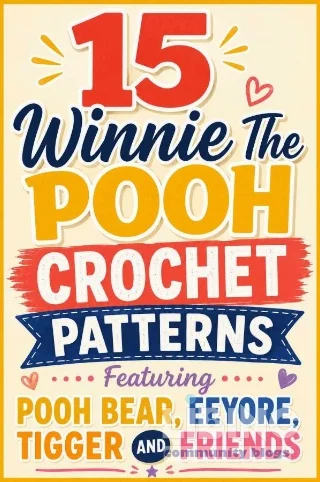
Winnie the Pooh Crochet Patterns: An Analytical Guide to Free Amigurumi and Handmade Friends
Childhood characters linger because they are tactile memories: the soft touch of a Pooh-patterned blanket, the familiar chubbiness of a Pooh amigurumi, and the way a cuddle can quiet a busy afternoon. Winnie the Pooh and friends migrate through generations, not just in storybooks but in handmade projects that sit on nursery shelves and lull sleepy heads to rest. The most comforting invite is not just Pooh himself, but the ensemble: Piglet's gentle bravery, Eeyore's quiet melancholy, and Tigger's unstoppable bounce. This article analyzes Winnie the Pooh crochet patterns through four lenses: analytics, contrasts between free and paid patterns, material choices and their effects, and expert reconstruction for a cohesive Hundred Acre Wood set. The goal is to help you craft pieces that honor the originals while staying practical for modern makers.
Nostalgia aside, the craft is about technique and decision-making: choosing the right yarn, maintaining gauge, and matching a consistent style across a whole cast of characters. By examining the patterns themselves and the communities that share them, we reveal how genuine handmade sets emerge from disciplined practice rather than lucky improvisation.
Table of Contents
Analytics Perspective on Winnie the Pooh Crochet Patterns
The Winnie the Pooh crochet patterns landscape shows a persistent pull between nostalgia and practicality. The phrase Winnie the Pooh crochet patterns anchors searches across free and paid offerings, but the underlying demand reflects a broader hobbyist trend toward amigurumi and heirloom gifts.
Analysts observe that amigurumi patterns for Pooh are among the most saved on craft blogs and video tutorials; the data suggests that people crave approachable projects that deliver high charm with modest effort.
- Classic Pooh Amigurumi – a timeless design that anchors a nursery set.
- Pooh with red shirt – iconic and simple to assemble.
- Eeyore cuddly pattern – introduces a soothing palette.
- Tigger stripes pattern – teaches color changes and shaping.
- Piglet gentle version – scales down for a complete cast.
The catalogue shows three recurring motifs: Pooh in his red shirt, Eeyore's muted palette, and Tigger's stripes. The consistency across patterns helps beginners build confidence and lets crafters compare approaches. Trademarked characters and names belong to their respective copyright holders, so these fan-made patterns stay aligned with personal crafting and gift-giving norms. Designers' usage terms should always be checked before selling finished pieces.
From this analytics snapshot, the path forward is clear: analyze free options for accessibility, then leverage paid bundles for consistency when planning a full Hundred Acre Wood set. This leads us to a closer look at the core contrast between free and paid patterns in the next section.
Contrast: Free vs Paid Winnie the Pooh Pattern Bundles
Free Winnie the Pooh crochet patterns democratize crafting, inviting anyone with a hook and yarn to begin. But the flexibility comes with variability in instructions and outcome; the same character set can look very different across creators.
- Pros of Free Patterns: wide variety, no cost, quick experimentation.
- Pros of Paid Bundles: cohesive style, complete color guides, and step-by-step visuals.
A bundled pattern collection on a marketplace demonstrates how designers standardize color changes, seam placements, and finish touches, reducing the cognitive load for beginners and saving trial-and-error time.
Quality signals vary; paid PDFs often include reliable stitch counts and clearer photos; free patterns rely on community contributions and user comments. Usage terms and licensing matter: some free patterns allow personal use but restrict commercial sale; paid bundles may offer broader permissions or little risk of losing access due to a site change.
Evaluation tips: check for gauge recommendations, finished object dimensions, and whether the pattern provides troubleshooting notes for common issues.
Cause and Effect: Materials and the Crafting Experience
Materials choices drive the tactile reality of Winnie the Pooh crochet patterns; the color palette, the yarn weight, and the finish all determine how faithful the Hundred Acre Wood cast feels in a room. A Pooh in honey or mustard yellow, a soft blue-grey Eeyore, and Tigger's orange with black stripes set a consistent narrative across the set.
Yarn weight and hook size shape the amigurumi proportions. A heavier yarn yields chunkier forms, while a lightweight yarn preserves delicate shaping; the interplay between gauge and stitch density affects the character's personality from the first row of a head to the last tail curl.
Facial details decide the friendliness of each piece: embroidered eyes create a gentler, baby-safe look, while safety eyes read as more playful for display pieces. The placement of eyes, eyebrows, and mouths matters—move a stitch and the expression shifts, often more than a single pattern line.
- Finishing order: assemble pent-up pieces in a test-fit, pin and adjust before sewing.
- Security considerations: secure joints and reinforce seams for durability.
Pattern notes that address finishing touches—nose shapes, mouth curves, and tails—often yield the most personality per character, without sacrificing reliability or simplicity.
Expert Reconstruction: Designing a Complete Hundred Acre Wood Set
Expert reconstruction starts with alignment: define a uniform scale, a cohesive color palette, and one consistent amigurumi style across Pooh, Piglet, Eeyore, and Tigger. This approach avoids a mismatched gaggle of characters that feels stitched together rather than curated as a family.
The workflow emphasizes modular pattern design: draft core pieces first (head, torso, limbs), then map color changes and seam positions across the set. The plan includes recommended finishing techniques such as embedded noses, embroidered features, and a light air of whimsy in Tigger's stripes to preserve readability across characters.
Presentation matters: pose options, display stands, and protective packaging can elevate a privately crafted set into a cherished gift or nursery display. Teaming Pooh, Piglet, Eeyore, and Tigger in the same finish and weight helps maintain a cohesive looks across the entire Hundred Acre Wood.
- Materials efficiency: reuse scrap yarns to create texture variation without breaking color harmony.
- Safety and longevity: for baby gifts, favor embroidery over safety eyes, and reinforce joints for durability.
Practical next steps include testing patterns for gauge consistency, compiling a master color palette, and sequencing assembly steps to minimize handling and increase reliability. A well-planned Hundred Acre Wood set demonstrates how thoughtful design and disciplined craft turn fan patterns into durable keepsakes.
When Winnie the Pooh crochet patterns are treated as a cohesive project rather than a collection of separate odds and ends, the result is more than the sum of stitches. The work yields a tactile microcosm of childhood memory that can be passed along with care and patience. Whether you start from free patterns or invest in a curated bundle, the discipline of color, gauge, and assembly elevates a simple hobby into a durable, comforting craft that endures beyond the shelf.
| Feature | Free patterns | Paid bundles | Practical takeaway |
|---|---|---|---|
| Instructions clarity | Varies by author | Often step-by-step | Look for gauge notes |
| Gauge documentation | Occasional | Consistent | Swatch first |
| Color management | DIY palette | Guided palette | Use hex codes |
| Finish touches | Varies by model | Coordinated finishes | Plan seams early |
| Usage rights | Personal use often allowed | Clear licenses | Check seller terms |
| Support | Limited | Dedicated updates | Prefer bundles with updates |
Practical Cohesion Plan for a Hundred Acre Wood Set
Creating a cohesive Pooh set means aligning inputs: a single gauge target, a unified color palette, and a common construction method across all characters. This plan closes the gap by offering actionable steps and concrete decisions you can apply in your next project. Start by selecting a base yarn weight (worsted) and a hook that yields a consistent stitch count. Build a master palette with Pooh's honey-yellow, Eeyore's blue-gray, Piglet's blush pink, and Tigger's orange with black stripes. Document the hex codes and dye lots to avoid drift between pieces. For each character, map a pattern block: head, body, limbs, and ears; keep seam placements consistent to preserve the family look. Use embedded noses for baby-safe versions and embroidered faces for a calm display piece.
Practical scenarios: 1) Nursery shelf set: soften the palette and ensure all figures are the same size. 2) Baby gifts: avoid safety eyes and test with embroidery. 3) Display stands: choose yarn that holds shape and a light finish to reduce fuzz. Steps below translate widely shared patterns into a curated, enduring display.
- Document a master color palette and dye lots
- Define a uniform gauge target and test swatch
- Draft modular blocks (head, torso, limbs) for all characters
- Map color changes and seam positions across the set
- Choose finishing techniques that align across characters
- Validate safety and durability before gifting
Implementation steps for a cohesive set
- Coherence foundations
- Uniform size targets
- Single finish method
- Color governance
- One base palette
- Document color codes
- Pattern alignment
- Core pieces first
- Color changes mapped
- Safety and display
- Embroidered features
- Reinforced joints
Frequently Asked Questions
What yarn weight is recommended for Winnie the Pooh crochet patterns?
Choosing the yarn weight matters because it shapes the character’s silhouette, durability, and overall charm; starting with worsted weight yarn in a soft acrylic blend and a 3.5–4.0 mm hook helps create sturdy, well-defined stitches. Crochet a gauge swatch first, measure stitches per inch, and compare to the pattern gauge; if the gauge runs small or large, adjust by one hook size and recheck final size. For larger figures, switch to a bulkier yarn and adjust proportions, or for finer details, use DK weight and a smaller hook while preserving stitch density. Washability and colorfastness should guide fiber choice for nursery pieces.
Analytically, this approach keeps Pooh, Piglet, Eeyore, and Tigger visually consistent and easy to pair in a set. It also informs color choices and care instructions, ensuring long-term usability.
How can I maintain gauge consistency when making multiple characters?
Gauge consistency across multiple characters starts with selecting a single yarn line and keeping one hook size for most pieces unless a specific feature requires a different approach. Crochet a mid-size swatch at project start, measure stitches per inch, and record the result; reuse that gauge for all head, body, and limb sections, adjusting pattern repeats to match the target size. When you switch characters, crochet the same number of rounds for each section to preserve silhouette; use a fixed tension and technique across all pieces to minimize drift.
Analytically, this reduces size variability across the set and improves the perception of cohesion when the characters sit together on a shelf.
Are safety eyes safe for baby gifts?
For baby gifts, it is prudent to avoid small safety eyes and instead use embroidered features to eliminate choking hazards; embroidery can be used for eyes, noses, and mouths with careful thread placement and knot security. If you do choose safety eyes for decorative display pieces, secure them with multiple passes of yarn or a backing washer to reduce looseness and add a backup seam around the eyes. This choice balances safety with aesthetic appeal and longevity in display pieces.
Analytically, this enhances child safety while preserving the character’s recognizable expression. It also informs the finishing stage and potential replacement plans if a piece becomes damaged.
What finishing techniques best unify a Hundred Acre Wood set?
Unified finishing begins with consistent seam placements, matching stitch density, and a common face treatment across all characters; embedded noses, embroidered facial features, and uniform eye placement help maintain a cohesive look. Decide on a finishing sequence (head and torso first, then limbs, then assembly) and apply the same order for Pooh, Piglet, Eeyore, and Tigger. A light starch or gentle blocking can improve pose stability without altering texture. The result is a timeless, display-ready set that still feels handmade.
Analytically, consistent finishing reinforces the set’s visual harmony and enhances durability for both display and cuddling use.
Can I mix free and paid Pooh pattern bundles without compromising quality?
Mixing free and paid patterns is feasible if you maintain a single gauge, palette, and finishing standard across all pieces; start by standardizing your base colors using hex codes, and apply the same stitch technique everywhere. Use paid bundles to establish a consistent color guide and step-by-step visuals, then supplement with carefully chosen free patterns for variety, ensuring they align with your documented standards. Track any deviations and adjust subsequent pieces to maintain the overall look. This approach balances budget with quality while preserving cohesion in the final set.
Analytically, a disciplined approach to pattern selection preserves cohesion while expanding design options, helping you build a complete Hundred Acre Wood set that feels intentional rather than accidental.




Add a comment
To comment, you need to register and authorize
Comments