

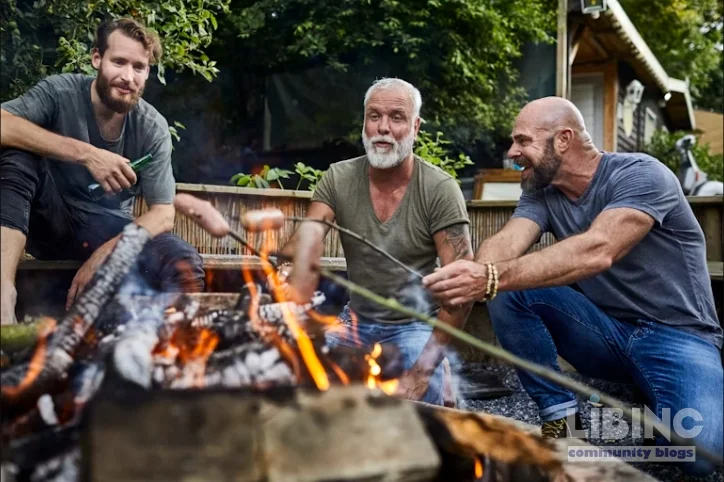
Analyzing the gender dynamics in barbecue: fire, tradition, and power on the grill
The gender dynamics in barbecue run deeper than preferred recipes or flavor. Why does backyard grilling feel like a masculine ritual, and what do we risk when the tongs stay in one pair of hands? As warmer months arrive, the grill becomes a stage where social identity is performed. The problem extends beyond taste: it encompasses who wields the flame, who buys the meat, and who gets to tell the smoke’s story. The stakes are cultural. When gender scripts harden around cooking, families neglect labor sharing, brands sell under tired stereotypes, and skill earns social capital in narrow ways. Hidden conflict emerges as new demographics redefine cooking at home while time-honored myths about fire, risk, and authority persist. This article analyzes the gender dynamics in barbecue through four lenses—analytics, contrast, cause and effect, and expert reconstruction—to reveal what the flames reveal about power, work, and society.
Table of contents
- Through analytics
- Through contrast
- Through cause-and-effect relationships
- Through expert reconstruction
Through analytics
Fire is not just a tool; it is a cultural primitive that shapes social roles. The idea that control of fire propelled human evolution gives barbecue its stagecraft: who masters heat, who negotiates space around the grill, and who earns trust at the table. In this lens, the grill becomes a microcosm where power accrues with technical competence and risk management. The central claim of the analysis is simple: gender dynamics in barbecue mirror broader patterns of social organization, but the flame adds a distinctive urgency because mastery over fire channels both knowledge and identity. This is not about flavor alone; it is about access to a technology that makes food a shared spectacle and a symbol of capability.
Despite a long-standing rhetoric that links cooking with domestic labor, the historical arc is more complicated. The early record suggests communal wellbeing often overridden rigid divisions. Yet the contemporary landscape reveals a persistent pattern: when fire enters the narrative, gender symbolism intensifies. In many households today, the majority of household cooking remains performed by women, even as the backyard grill is marketed as a masculine frontier. This tension—between the domestic origin of cooking and the outdoor ritual of barbecue—is a key driver of the current gender dynamics in barbecue. The analysis must consider how fire, labor, and visibility intersect to sustain or challenge stereotypes, and how modern economies and media either reinforce or disrupt those patterns.
In modern Australia, for instance, women do the majority of household cooking, and the language of the kitchen travels into the backyard. The shift is real, yet not uniform. The genderisation of food continues in retail and advertising, where barbecue imagery frequently foregrounds male authority while underrepresenting women as culinary leaders. A closer read shows a split between production and presentation: women perform the practical work of cooking; men perform the display of expertise and leadership. The fire becomes a stage where these roles are negotiated, reinforced, or challenged, depending on context and audience. This suggests that the gender dynamics in barbecue arise not from a single cause but from an entangled web of historical, economic, and cultural forces that persist despite social progress.
Another layer of analytics focuses on how technology reshapes the ritual. The introduction of gas grills in the 1960s, for example, helped codify backyard BBQ as a modern leisure activity with its own rituals of hospitality and prestige. The shift amplified social expectations: efficiency and showmanship around the grill became markers of status, often aligned with masculine personas in branding and media. Yet even as these stereotypes persist, the underlying labor patterns show women active in planning, sourcing ingredients, and coordinating gatherings, challenging the simplistic hunter-versus-gatherer narrative. The analytics thus reveal a paradox: barbecue serves as a site where both equality and inequality are performed, depending on the moment and the audience.
Why does this matter for the broader study of gender and food? Because barbecue crystallizes how culture negotiates risk, authority, and care in the open flame. The analytics illuminate that the flame superbly exposes the power dynamics at play: who speaks, who acts, and who is visible. The evidence points to a pattern where gender stereotypes persist in high-visibility moments while everyday labor often remains invisible or undervalued. These insights set the stage for the next block, where contrast exposes the tensions between idealized myths and lived practice.
Through contrast
Contrast reveals the friction between public myth and private labor. The outdoor grill has long carried a masculine aura, reinforced by media, branding, and professional kitchens that celebrate the grill master as a figure of rugged competence. Advertising and marketing have reinforced this imagery for decades, shaping expectations about who belongs at the fire. In many BBQ campaigns, a man stands at the grill with confident posture, while the surrounding world shows little equal representation of women in control of the flame. This visual rhetoric matters: it signals who is permitted to lead, who bears responsibility for outcomes, and who is entrusted with social credit during a cookout.
Yet the actual division of labor often tells another story. Across households and communities, women shoulder substantial cooking responsibilities, from meal planning to marination and finishing touches. The public face of the barbecue—often the man at the grill—masks the crucial behind-the-scenes work that keeps a gathering thriving. The disparity extends into the hospitality sector, where the restaurant kitchen and the pool of professional chefs show nuanced gender dynamics: leadership in some settings remains male-dominated, while mastery at the grill in other contexts emerges from women who demonstrate precision, timing, and flavor intuition. This contrast underscores that barbecue is not simply a test of firepower; it is a cultural artifact where social roles are negotiated in everyday practice and in marketing alike.
There is a persistent association between outdoor cooking and paternal provision. The ritual of carving, presenting, and serving becomes a visible display of generosity, which often translates into prestige. At the same time, the domestic labor essential to any gathering—procurement, cleaning, and cleanup—tends to be undervalued and less visible in public narratives. The contrast between what is celebrated publicly and what happens behind the scenes exposes the gendered expectations embedded in barbecue culture. These disparities are not static; demographic shifts, changing work patterns, and evolving brand strategies continuously reframe who is seen, who is heard, and who shares the load in the backyard or the restaurant kitchen.
Where does this leave us in terms of studio logic and social practice? The contrast makes clear that the barbecue's gender dynamics in barbecue are not the result of a single factor but a constellation of signals—advertising cues, labor division, and ritualistic meaning. The evidence points toward a widening gap between symbolic authority and practical labor, a development that offers opportunities for renegotiating roles and rethinking how communities value all forms of cooking and caring labor. The next section traces the causal chains that connect these patterns to broader social structures and historical moments that produced today’s landscape.
Through cause-and-effect relationships
To understand why gender dynamics in barbecue persist, we must map causal chains that connect ritual, labor, and power. Fire’s centrality in cooking creates an arena where skill, knowledge, and risk management translate into social capital. When a culture glories mastery over flame, it elevates the grill master to a position of visibility and authority, reinforcing the association between masculine identity and technical prowess. This is not merely about flavor; it is about a system that valorizes certain forms of competence and marginalizes others, shaping who gets heard at the table and who gets work acknowledged within the household economy.
Historical media and consumer culture reinforced these hierarchies. The postwar American and European markets saw backyard BBQ emerge as a symbol of prosperity, leisure, and patriarchal hospitality. The gas grill’s introduction in the 1960s accelerated a ritual of outdoor entertaining that blended technology with social signaling. In this frame, the act of grilling became a public display of capability and leadership, often aligned with male identity in advertising narratives. The effect is a cultural script: men are imagined as the guardians of taste, control, and the social moment, while women are cast in supporting roles that prioritize organization and sustenance.
However, the causes are not monolithic. Economic shifts, including women’s increased labor force participation and evolving domestic division of labor, reshape who actually performs cooking tasks. The care economy—the work of provisioning, scoping dietary needs, and maintaining home life—remains largely invisible in the public mythos but is essential for the barbecue’s existence. In many households, women still drive meal planning and execution, while men hold the lead role in the grill's spectacle. These cause-and-effect relationships create feedback loops: visible leadership reinforces stereotypes, while uncelebrated labor underpins the entire event and enables future occasions to occur. Recognizing these connections helps explain why progress toward gender parity in barbecue remains uneven across communities and brands.
The causal chain also runs through ritual meaning and social reward. Backyard BBQs perform generosity, hospitality, and status, and these performances are imbued with gendered expectations. As demographics shift and media begin to diversify representation, new patterns emerge—some households increasingly share the front-of-house leadership and the flame, while others maintain traditional divisions. The analysis thus points to a path forward: by expanding the range of voices who claim the grill and by acknowledging diverse labor, communities can reframe the ritual as a collaborative practice rather than a display of masculine prowess. The final section offers a reconstruction from experts that tests these ideas against lived experience and professional practice.
Through expert reconstruction
Experts remind us that fire is indifferent to gender. Sydney chef Lennox Hastie observes that fire carries a primal mythology—often framed as masculine—yet the oldest, most enduring fire traditions have always lived in the hands of women as well. He notes that fire doesn’t care who you are. It doesn’t respect ego. It requires attentiveness, intuition, and patience—qualities that are not inherently male or female but cultivated through practice. This perspective helps disrupt essentialist narratives and invites a more inclusive view of barbecue as a craft that crosses gender lines. The expert reconstruction argues for a kitchen and a grill that reflect the same care and expertise, regardless of who is at the flame.
From this vantage, the path forward combines two strands. First, broaden branding and media representation to acknowledge women as grill leaders, range captains, and creative contributors to smoke, heat, and flavor. Second, restructure household labor to value all forms of cooking and preparation as essential, visible contributions to social life, not just the outward display of culinary prowess. The goal is a culture where the fire remains the shared medium for connection and learning, not a gatekeeper of gendered identity. In practice, this means inclusive cookbooks, balanced advertising, and workplace norms in hospitality that encourage collaboration and shared leadership around the grill.
In sum, the expert reconstruction supports a shift from myth to practice: the grill becomes a site of collaboration rather than a stage for masculine bravado. As brands adapt and households evolve, the gender dynamics in barbecue can transform from a pattern of unequal labor and representation into a culture that values skilled cooking, fire safety, and conviviality across genders. The flames will still tell stories, but those stories will reflect a broader spectrum of cooks, contributors, and communities. A more equitable grill is possible when we treat fire as a shared technology, not a fortress of identity.
Longer-term implications include rethinking training, mentoring, and media narratives around barbecue. By foregrounding technical mastery, care, and collaboration, the field can expand access and recognition to anyone who can tend the flame—whether they were born to it or learned to earn it. The gender dynamics in barbecue thus become a lens for examining how societies value labor, knowledge, and belonging in shared culinary spaces. When we reframe the grill as a collaborative craft, we also rewrite the stories we tell about who can lead, who can learn, and who deserves a seat at the table.
Ultimately, the flames illuminate not just meat and smoke but the conditions under which people contribute to communal meals. As the discipline of culinary anthropology shows, cooking is a social technology for building solidarity and trust. The gender dynamics in barbecue reveal where that technology has worked as a bridge and where it has hardened into a barrier. The path ahead lies in combining analytic clarity with inclusive practice—so the grill becomes a common ground where everyone can bring their skill, care, and voice to the fire.
In the end, best to keep a fire extinguisher handy. The same flames that feed us can also remind us how far we have yet to go toward a truly equitable kitchen and grill culture.
Practical pathways for equitable grilling
To translate insight into action, households can implement deliberate, measurable shifts that make barbecue a shared skill and shared celebration. Below are practical steps and a simple framework that supports inclusive grill leadership and labor equity.
| Task | Male-led | Female-led |
|---|---|---|
| Planning & shopping | 70% | 30% |
| Marinating & seasoning | 40% | 60% |
| Preheating & setup | 50% | 50% |
| Grilling | 70% | 30% |
| Monitoring & timing | 60% | 40% |
| Cleanup | 20% | 80% |
Representative data help families measure progress toward a more inclusive barbecue culture and guide task reallocation.
- Rotate leadership weekly so different cooks tend the flame.
- Document tasks track who does what and rotate responsibilities.
- Openly discuss expectations have a pre-fire briefing about roles and safety.
- Celebrate non-grill contributions highlight planning, shopping, and hosting skills.
Adopting these steps lays the groundwork for an inclusive barbecue culture that values skill, safety, and care across genders.
Frequently asked questions about gender dynamics in barbecue
How can households start sharing grill leadership more equitably?
Direct answer: Start with a short, agreed pre-cook meeting to rotate leadership roles, assign safety rules, and explicitly value all forms of labor around the grill. In practice, aim for equal speaking time, rotating tasks weekly, and documenting who handles planning, shopping, marinating, grilling, and cleanup. This creates a transparent baseline and reduces unspoken workload imbalances. Over time, families discover that equitable leadership improves meal quality, trust, and shared learning, while kids observe constructive collaboration as a normal rhythm of cooking together.
Analytical note: When leadership rotates, visibility shifts across tasks, breaking a single hero narrative and distributing responsibility. The result is a more resilient kitchen culture that values both technique and care, which in turn supports broader gender equity goals.
What practical steps should brands take to represent women as grill leaders?
Direct answer: Brands should feature women in lead roles across advertising, storytelling, and product campaigns, and create messaging that emphasizes collaboration over bravado. In practice, include female grill specialists in demo videos, publish recipes led by women, and showcase diverse families in adverts. This signals that grill mastery is a shared skill, not a gendered attribute. Over time, these representations help normalize women as grill leaders and encourage inclusive engagement at home and in hospitality settings.
Analytical note: Inclusive marketing aligns with changing consumer expectations and can shift demand toward brands that model equitable labor, fire safety, and shared expertise in real environments.
How can families balance safety and inclusivity around the grill?
Direct answer: Establish clear safety rules, assign a rotating safety lead, and provide accessible training on heat, fuels, and tool usage. In practice, a simple checklist before every cookout—glove use, fire extinguisher within reach, and a buddy system for tending the flame—reduces risk while inviting everyone to participate. Inclusive approach means encouraging questions, validating new skills, and avoiding shaming mistakes. This balance preserves safety and invites diverse cooks to contribute without fear.
Analytical note: Safety protocols become a shared language that lowers barriers for newcomers and reinforces trust within mixed teams, essential for scalable cultural change.
What metrics signal progress toward equal grilling roles?
Direct answer: Track measurable indicators: distribution of tasks by role (planning, grill leadership, cleanup), frequency of rotating leadership, and the perceived fairness of workload via short surveys after cookouts. In practice, set quarterly targets (for example, 40–60% female-led grilling days or equal rotation of preparation tasks) and review results with the family or team. This data-driven approach helps identify bottlenecks and confirms improvements in both participation and satisfaction.
Analytical note: Quantitative feedback complements qualitative experiences, guiding practical adjustments and helping brands evaluate inclusive campaigns.
How can communities promote inclusive barbecue culture beyond the home?
Direct answer: Create local events and workshops that pair experienced grillers with newcomers of any gender, emphasizing technique, safety, and shared leadership. In practice, host rotating-grill-lead nights, publish community cookbooks featuring diverse contributors, and partner with schools or clubs to demonstrate inclusive hosting. By normalizing cross-group collaboration, communities build social capital and broaden access to skilled cooking as a shared asset.
Analytical note: Community programs act as force multipliers for narrative change, extending inclusive practices from households into civic spaces.
What role do education and training play in reshaping perceptions of grill leadership?
Direct answer: Education and mentorship demystify barbecue craft and validate non-traditional contributors. In practice, integrate fire-safety training, hands-on demonstrations by diverse instructors, and step-by-step guides that emphasize technique over bravado. This reduces intimidation and creates pathways for everyone to learn and lead around the flame.
Analytical note: Training programs shift culture from gendered myths toward practical expertise and mutual respect, reinforcing a durable, inclusive ecosystem around grilling.





Add a comment
To comment, you need to register and authorize
Comments
To push discussion forward, we could push the analytics to widen the set of variables. How do families quantify and reward different forms of competence around the grill—the act of directing heat, the framing of the meal, the management of risk, or the curation of hospitality—and who gets credit for these moves in real households and social spaces? How do nonbinary and trans cooks fit into the frame, and how do communities adapt when households share more of the front of house and the flame equally? The piece hints at a broader structural forces—economic participation, media representation, and evolving domestic labor—but lacks granular mapping of who actually performs each task across communities. A robust discussion might propose field observations in diverse neighborhoods, coupled with interviews and diaries that trace who purchases meat, who handles marination and cleanup, and how those choices shape who feels welcome to lead at the flame. We should also consider intersectionality: how do class, race, and immigration status intersect with gender to shape who can claim expertise or visibility around the grill? For instance, in some households or communities, elders or younger siblings may carry the flame's authority in ways that disrupt conventional stereotypes. In light of these complexities, what would a more inclusive, data‑driven portrait of barbecue leadership look like? And how can such portraits inform more equitable practices in families, brands, and restaurants?
We close with this question as a prompt for debate: as the practice of outdoor cooking continues to evolve, which experiments—smaller shifts in kitchen routines, inclusive advertising, or coauthored family leadership—are most likely to yield meaningful shifts in both perception and practice?