

Yemen regional escalation and the fragility of de-escalation: how an Iranian flight incident reshapes the regional security order
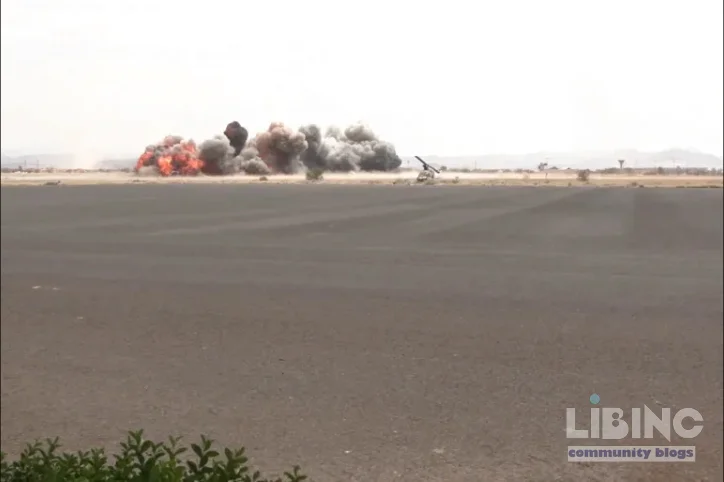
Within a matter of days, Yemen's fragile de-escalation was tested by an episode that was hardly just a flight dispute. An Iranian aircraft penetrated Yemeni airspace, attempted to land at Sanaa, and ended up diverting to Hodeidah after the runway was targeted. The event exposed how the Yemen conflict has become a proxy arena in the broader US-Iran confrontation, and it revived a core question in a new form: can Yemen remain outside any wider regional escalation? The incident functioned as a pressure test for sovereignty, external leverage, and the durability of informal arrangements that have kept the front lines relatively contained. Sanaa's vulnerability, Abha's retaliation, and the tactical calculus by both the Houthis and their patrons underscore how regional power rivalries leak into civilian infrastructure.
From this point of departure, the stakes run beyond a single air incident and into the wider Yemen regional escalation. The question becomes what the incident reveals about the broader strategic logic driving actors on the ground and in the capitals. Washington’s stance, in concert with Riyadh and Muscat, signals a preference for contained responses over full-scale war, even as hyphens of tension sharpen between Iran and its adversaries. The direction of analysis here will map fault lines, scrutinize mediation attempts, and outline plausible trajectories for de-escalation, restraint, or renewed escalation that could redraw the regional security order.
Analytics perspective on the Iranian incident and the Yemen regional escalation
The Iranian aircraft episode is best read as a data point within a shifting regional calculus. It did not merely test airspace sovereignty; it exposed how Tehran’s leverage through its proxies translates political aims into military signaling. The pivot from a purely Yemen-centered dispute to a broader US-Iran dynamic is the key analytic thread. The event suggests that de-escalation in Yemen remains contingent on outside pressure points and the willingness of external patrons to restrain their local allies. This is the essence of the Yemen regional escalation: a localized war becoming a variable in great-power competition.
The U.S. State Department’s careful wording—linking Houthi actions to Iranian influence and to Red Sea security—signals a recalibration of how Washington views the Houthis. No explicit war mandate exists, but the language marks a shift in geostrategic calculus. The Red Sea’s freedom of navigation and the avoidance of a broader confrontation are framed as core U.S. interests, making the Houthis a more consequential factor in regional risk assessments. This is not merely a small country contest; it is a proxy arena with global implications for maritime security and energy routes.
- sovereignty test in Sanaa: the runway attack highlighted the fragility of imposed restrictions and the limits of de facto control in Houthi-administered space.
- Iran's regional leverage: Tehran’s capacity to influence events through proxies was illustrated again, raising questions about the durability of any de-escalation that ignores patron-state dynamics.
- US deterrence calculus: Washington’s framing of the Houthis as part of Iran’s network raises the threshold for acceptable actions and complicates limited responses.
To understand the dynamics, one must map the sequence of actors and incentives. The Houthis are not only defending a political position in Sanaa; they are operating within an ecosystem where Iranian support provides a strategic umbrella. That umbrella allows limited but real advantages in signaling and coercion, expanding potential pressure fronts beyond Yemen’s borders. The Abha attack, tied to the Sanaa incident, is an explicit demonstration that today’s escalation can spring from two fronts—airspace violations and retaliatory strikes—each reinforcing the other and raising the cost of restraint for the Saudi-led coalition.
On the ground, mobilizations in Marib, al-Jawf, and Harf Sufyan are not random. They reflect a broader pattern: external pressure multiplies internal urgency, and all parties calibrate their actions against the risk of a wider conflict. The analysis shows a convergence of strategic aims among the Houthis, their Iranian patrons, and the Saudi coalition, where containment becomes a shared objective, even if the means differ. This is the core of the Yemen regional escalation: a multi-front contest whose cost-imposing logic holds the potential to spiral if any party misreads the other’s red lines.
The bottom line of the analytics view is sobering: there is no automatic path back to a steady status quo. The incident demonstrates how de-escalation depends not just on one agreement, but on a constellation of commitments—sovereignty respect, maritime security guarantees, and credible signals of restraint from external patrons. The calculus remains cautious, because an error or misperception could tip the balance toward a larger confrontation. The risk calculus therefore centers on credible deterrence and credible diplomacy, not on a single diplomatic note or a limited strike.
Analytical takeaway: the core mechanism driving Yemen regional escalation
- External patronage translates into coercive signaling that can bypass direct confrontation with the target state.
- Maritime security and freedom of navigation are central leverage points in regional power competition.
- De-escalation rests on reciprocal restraint and credible, verifiable signals from all major actors.
Contrast with historical de-escalation patterns
Historically, the Yemeni conflict has shown a pattern of episodic escalations followed by negotiated pauses mediated by regional players. The current episode diverges from past cycles in two crucial ways. First, the linkage to Iran’s broader confrontation with the United States and its allies elevates Yemen from a regional war into a theater of strategic testing. Second, the presence of a formal attempt to balance de-escalation with limited retaliation complicates any simple “pause” narrative. The result is a landscape where restraint is deliberate, calculated, and contingent on signals that transcend Yemeni borders.
In this sense, the current dynamic differs from the 2022 informal truce in two dimensions. The first is the immediate strategic calculus: a broader set of external actors—primarily Iran and the United States—now clearly view the Houthis as part of a regional network rather than as a distant, purely Yemeni faction. The second is the institutional context: mediation efforts in Muscat and led by the United Nations appear to be aimed at stalling escalation rather than delivering a comprehensive settlement, reflecting a cautious approach to avoid triggering wider military engagement. This contrast matters because it frames the present moment as a test of whether mediation can translate into durable restraint or whether systemic tensions will overwhelm negotiated constraints.
The practical implication of this contrast is that de-escalation now requires more than just a static agreement; it demands a reconfiguration of incentives across borders. The Houthis need credible assurances about the regional security environment and the redrawing of risk in Red Sea waterways. The Saudi-led coalition must demonstrate that restraint does not imply weakness, while the United States must reconcile its deterrence posture with a willingness to support a mediated settlement that reduces broader conflict potential. That reconciliation is the central challenge for the Yemen regional escalation at this moment.
From the observers’ standpoint, a critical difference emerges in how restraint is validated. In the past, pauses were verified by the cessation of cross-border strikes and the mounting of gradual confidence-building steps. Today, verification must incorporate not only ceasefire observables but also the sequencing of Iran’s proxies’ actions and the alignment of international mediation with on-the-ground incentives. This is the new test for de-escalation: can a multi-party framework translate into precise, measurable reductions in risk that all sides believe are credible and enforceable?
In sum, the contrast with earlier cycles highlights the fragility of any de-escalation that relies on limited instruments. The Yemen regional escalation is not just a local problem; it is a barometer of how regional power competition shapes, and potentially destabilizes, peace efforts. If the current moment yields a durable agreement, it will signal a move toward more sophisticated diplomacy that can withstand external shocks. If not, it will reveal the persistence of a high-stakes environment in which small-scale incidents can escalate into strategic crises.
Causes and effects: mapping the cause-and-effect chain
Understanding the chain of causality is essential to predict possible trajectories for Yemen regional escalation. The causal sequence begins with the Iranian aircraft incident, which serves as a provocative test of Sanaa’s sovereignty and as a signal to both regional actors and external patrons. The immediate effect is a retaliatory maneuver by the Houthis against Abha airport, which in turn reactivates the Saudi security dilemma and invites a calibrated response from Riyadh. The intermediate effect is a reconfiguration of risk attitudes in Washington, Riyadh, and Muscat, which now perceive Yemen as a strategic hinge rather than a peripheral conflict.
From this point, the chain branches into multiple feedback loops. A strengthened emphasis on maritime security in the Red Sea reinforces the U.S. insistence on counterterrorism and anti-weaponization coordination, which in turn pressures Tehran and its proxies to calibrate their actions. Simultaneously, UN-mediated talks under Hans Grundberg in Muscat seek to prevent a new war by offering a de-risked path to de-escalation. The net effect of these loops is a high-stakes negotiation environment where even minor missteps can ripple through regional security architectures, affecting shipping lanes, energy markets, and alliances.
The causal map also highlights the role of internal dynamics within the Houthis and the Yemeni government. Domestic legitimacy concerns, battlefield momentum in Marib and Harf Sufyan, and the temptation to exploit any international pause for gains on the ground interact with external signals from Tehran and Washington. Because these internal drivers are sensitive to external pressure, the overall trajectory remains inherently uncertain. The damage from misinterpreting signals would be asymmetrical, potentially trading limited tactical victories for strategic vulnerability across the Red Sea corridor.
A critical effect to monitor is the evolution of U.S. policy language. If Washington continues to explicitly link Houthi actions to Iranian influence, the risk of miscalculation rises among regional actors who may see the United States as committed to punish rather than negotiate. Conversely, a more nuanced approach that ties restraint to verifiable steps on the ground could create a feasible path to de-escalation, albeit one requiring sustained diplomacy and credible enforcement mechanisms. This causal analysis underscores that the Yemen regional escalation is less about one incident and more about how a complex web of incentives unravels or tightens under stress.
Expert reconstruction: scenarios and policy implications
Experts outline several plausible trajectories for the next months, each with distinct implications for Yemen regional escalation. The most favorable scenario envisions a successful de-escalation that stabilizes Sanaa’s sovereignty claims, preserves Red Sea freedom of navigation, and maintains the informal truce while expanding confidence-building measures. In this scenario, Muscat leverages trust-building channels, the Houthis accept limited but verifiable restraints, and the United States coordinates with regional partners to provide deterrence without escalation. The payoff would be a more predictable security environment and a gradual shift toward a political settlement that accommodates competing claims.
A less favorable path involves a slow drift toward renewed, higher-intensity conflict. In this trajectory, miscalculations in the airspace regime or renewed Abha-type strikes could provoke a stronger Saudi response, prompting Iran to intensify its support to the Houthis. The risk here is a spiraling cascade that could draw in regional actors or trigger unaffordable costs for commercial traffic through the Bab al-Mandab and the wider Red Sea. The key danger is that a partial de-escalation lacks a credible enforcement framework, enabling each side to claim incremental victories while the overall situation deteriorates.
A third possibility embraces a hybrid approach: periodic spikes but no full-scale war. This path would rely on a structured, externally mediated sequence of pauses and pegs—temporary truces aligned with verifiable actions on the ground, creating a fragile rhythm that prevents major breakthroughs or major breakdowns. Such a pathway would require robust verification, clear triggers for both escalation and de-escalation, and a sustained diplomatic commitment that adjusts to shifting regional calculations. If achieved, it would redefine the Yemen regional escalation as a managed risk rather than a crisis with an uncontained trajectory.
Policy implications for the players involved are clear. First, any durable de-escalation must anchor in verifiable steps: access to air corridors, confidence-building on cross-border strikes, and transparent mediation. Second, the mediation effort needs to be more than a forum; it must be a framework with enforceable commitments, credible backstops, and a mechanism to respond quickly to violations. Third, Washington, Riyadh, and Muscat should align on red lines that safeguard Red Sea security while signaling a willingness to normalize relations as the conflict evolves. Finally, regional diplomacy should be integrated with broader regional security architecture, including Iran’s containment calculus, to reduce incentives for other actors to imitate this escalation pattern elsewhere.
Conclusion
The Iranian aircraft incident in Yemen has not produced a sudden collapse of de-escalation, but it has markedly altered the strategic landscape. The Yemen regional escalation remains a delicate balance of coercive signaling, mediation, and risk containment. The coming months will reveal whether the parties can translate cautious talk into verifiable restraint, allowing the Red Sea to function as a corridor of trade rather than a battlefield. The outcome will test whether the current framework can endure external shocks or whether the region slides toward a broader confrontation that neither Yemen nor its neighbors can afford.
Endnotes
All analysis here treats the conflict as a function of regional power dynamics and does not claim to reflect official policy positions. The views expressed are those of the author and do not necessarily represent Al Jazeera policies or editorial stances.
FAQ
What sparked the current Yemen regional escalation, and how does it connect to wider regional rivalry?
The escalation began with the Iranian aircraft incident over Sanaa, followed by an Abha attack that appeared to be a targeted, retaliatory signal. The sequence linked Yemen’s local conflict to the broader US-Iran confrontation by showing how Tehran’s proxies can translate strategic aims into military signaling and how external patrons calibrate responses to avoid a wider war. This means that a single incident can become a proxy event in a high-stakes regional contest when credibility, signaling, and red lines are at play.
Analytically, it demonstrates that de-escalation now hinges on a wider set of external cues and a credible framework that can be observed and verified by all major actors.
How does Iranian influence shape Houthi actions in this phase?
The Houthis operate within an ecosystem where Iranian support provides a strategic umbrella, enabling signaling and leverage beyond Yemen’s borders. Iranian influence can push the group to test de-escalation commitments, while Tehran’s preference for limited, controlled actions tends to discourage full-scale war but encourages episodic escalations. In practice, this means that any restraint by the Houthis is likely conditioned on visible signs of regional restraint and credible assurances from Iran’s patrons.
This dynamic creates a moral hazard: external patronage can both deter and provoke, depending on signals and perceived consequences.
What concrete steps can de-escalate the conflict?
The practical path includes establishing air corridors for humanitarian flights, a monitored Red Sea transit regime, and an independent verification mechanism with observers from neutral states. Example steps: a 72-hour cross-border pause, verified flight routes into Sanaa, and published weekly compliance reports. These steps reduce ambiguity, align incentives, and provide a clear response framework if violations occur. A phased approach, with confidence-building measures preceding broader commitments, improves the probability of durable restraint.
In a real-world setting, this would require buy-in from the United States, Saudi Arabia, Oman, and key regional partners, plus a credible sanctions and consequences regime for violations.
What role does Red Sea security play in the calculation?
Red Sea security is central because it links Yemen’s local contest to global trade and energy routes. Ensuring freedom of navigation and secure shipping lanes reduces incentives for escalation and creates tangible, observable benefits for all parties. A formal framework that guarantees corridor access and transparent maritime data sharing can deter opportunistic attacks and provide assurance to commercial stakeholders about route safety.
Practical steps include joint patrols, shared tracking data, and clear red-line definitions for attacks on ships or critical chokepoints in Bab al-Mandab.
What are the plausible trajectories for Yemen in the coming months?
Three trajectories dominate: (1) a durable but fragile de-escalation that stabilizes core areas while expanding confidence-building; (2) a slow drift toward renewed, higher-intensity fighting if misperceptions persist or external patronage shifts; and (3) a hybrid scenario with periodic spikes but no full-scale war, maintained by an externally mediated sequence of pauses. The realistic outcome will depend on whether verification mechanisms are credible, enforceable, and capable of withstanding political changes among major actors.
How can mediation efforts improve verification and enforcement?
Effective mediation must move beyond talks to a structured framework with verifiable steps, compliant timelines, and credible backstops. This includes clearly defined triggers for escalation/de-escalation, independent observers, and transparent reporting. The more that mediation is anchored in real-world monitoring—air corridors, maritime data, and on-the-ground commitments—the less room there is for misinterpretation or selective violation, increasing the odds of sustained restraint.
These elements collectively reduce the volatility of the Red Sea theater and offer a practical route toward a political settlement that is both credible and durable.






Add a comment
To comment, you need to register and authorize
Comments
This would require rethinking the role of external patrons: what would it take for Tehran to align its proxies with a regional security order that reduces risk of misperception and accidental conflict? How might Washington recalibrate deterrence to balance punishment with diplomacy and ensure that signals do not become interpreted as coercive demands beyond what is politically feasible for regional partners? The diplomatic toolkit would have to include not only statements and pauses but also concrete measures such as airspace management, shipping corridor guarantees, and a timetable for confidence-building steps. Those elements must be anchored in a shared understanding among the United States, Saudi Arabia, Oman, and the Houthis that misinterpretations carry real consequences.
In what ways might regional security architecture be expanded to absorb the Yemen question without triggering a wider regional collision? Could a Muscat led framework be upgraded into a formalized mechanism with cross border verification and independent observers that has legal or quasi legal status? How would international organizations coordinate with regional players to monitor and enforce agreements, and what are the political costs of failing to deliver? These questions are not abstract; they shape the roadmap toward de escalation or drift, and they invite participants to think beyond the next airstrike to the sustained architecture that could stabilize the Red Sea and allow economic activity to resume with confidence.
Beyond political calculus, the legal dimension matters. A credible de escalation framework should rest on international law norms governing armed conflict, civilian protection, and freedom of navigation, yet translate those norms into concrete obligations that can be monitored and disputed with transparency. Observers, ceasefire commissions, and permit regimes could be part of the architecture, as could clear remedies for violations including targeted sanctions or backtracking of support to proxies. The presence of humanitarian corridors and international humanitarian law oversight would serve as both a trust builder and a safety mechanism. The challenge remains to ensure that legal language is implementable in a region where disputes cross borders rapidly.
But how to translate restraint into credibility on the ground? The core challenge is to craft a verification regime that is both robust and operable across diverse actors with divergent incentives. Any de escalation framework must embed clear, observable steps that can be checked without forcing one party to reveal sensitive intelligence. For instance, access to air corridors is a potentially useful bargaining chip, yet it must be paired with independent monitoring, transparent incident reporting, and a credible backstop if violations occur. This implies a mediation architecture that transcends hospitality and rhetoric and becomes an enforceable framework with red lines, triggers, and swift enforcement mechanisms. It also requires a strategic stance from external patrons that demonstrates restraint themselves, lest they appear to be using Yemen as a pressure point to gain leverage elsewhere.
As participants consider the next moves, several questions emerge for discussion. Can the red lines be articulated in a way that preserves strategic autonomy for all parties while preventing misinterpretation that could escalate to crisis? How can regional mediation secure political convergence without becoming an arena for bargaining over every operational detail of the conflict on the ground? What models exist for transforming episodic de escalation into durable restraint when external patrons have competing security objectives in other theaters? And how should policy makers balance deterrence against escalation with the risk of normalizing a regime of perpetual low level contest in the Red Sea corridor?
This discussion invites not only technocratic prescriptions but also a reckoning with the political symbolic value of sovereignty and maritime access. If de escalation remains conditional on foreign patrons avoiding cross border escalation, is there room for a Yemeni pathway toward sovereignty that is simultaneously credible to international partners and acceptable to the front line actors? The interaction of domestic legitimacy concerns with the durability of regional agreements will determine whether what looks like a moment of restraint becomes a lasting architecture of stability, or simply a brittle pause that invites another break in the status quo when a misstep occurs.