

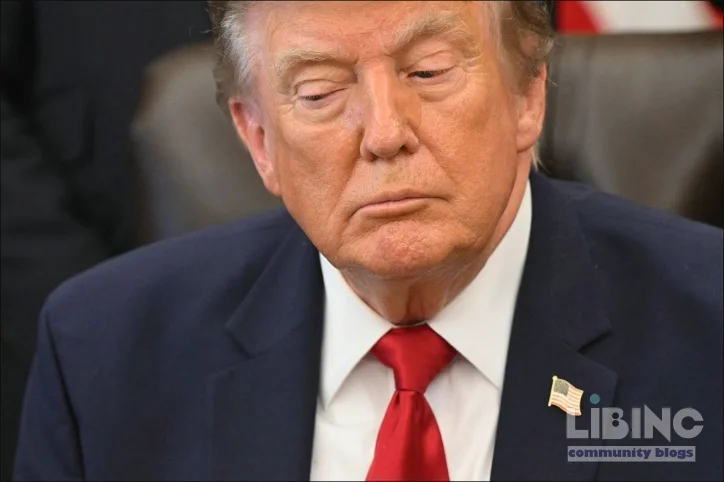
Iran-US Confrontation Reframed: How Tehran Uses Geography and the MOU to Shape the War’s Dynamic
- Analytics in the Iran–US confrontation
- Contrast with past deals and approaches
- Cause-and-effect dynamics
- Expert reconstruction and policy paths
The Iran–US confrontation has entered a phase where Tehran’s geographic leverage and a vague memorandum of understanding shape outcomes more than raw military power. The memorandum briefly paused hostilities, yet its ambiguous language invites Tehran to read it as permission to redefine zones of control, especially through the Strait of Hormuz. The stakes are stark: a miscalculation could pull the region into broader war with cascading economic costs. Hidden conflict operates in domestic political calculations in Washington and Tehran, where timing, signals, and the fear of casualties determine whether either side blinks. This article proceeds along four analytic lines: how the MOU was read versus what it actually allowed, how Iran’s geography translates into leverage, what deterrence looks like in a low-war environment, and what credible paths to de-escalation would require.
Analytics in the Iran–US confrontation
From a data standpoint, the MOU reads like a stopgap with open-ended conditions. It requires Tehran to facilitate the safe passage of commercial vessels for 60 days and to work with Oman on future administration of maritime services in the strait. This is not a treaty; it is a tactical signal. The core issue is interpretation: will Tehran treat it as a capstone achievement or as a bargaining chip for a longer, more comprehensive deal that includes checks on the nuclear program? In practice, Tehran has read the instrument as a lever to demand concessions or at least to deter a rapid American escalation. The result is a shift in how both sides calibrate risk, not a replacement for a formal framework. In geopolitical terms, it signals Tehran’s intent to preserve leverage through chokepoints rather than concede it through a full-scale diplomatic settlement.
- The language’s vagueness creates room for divergent readings, which is precisely the strategic effect Iran seeks to induce.
- Ambiguity itself becomes a weapon: it raises the cost of miscalculation for Washington while preserving Tehran’s options on the ground.
- Measurement of risk now hinges on maritime signaling, not only on missile trajectories or naval patrols.
Indeed, the 60-day horizon embedded in the MOU is less a timeline than a tempo: it pressurizes both sides to demonstrate resolve within a politically salient window. This has the curious effect of converting a temporary pause into a pressure point, where Tehran can claim compliance while narrowing the US’s ability to impose a decisive cost. The contrast between what is written and what is inferred thus becomes a central feature of the Iran–US confrontation. Geopolitical dynamics around chokepoints amplify the consequences of every minor incident, making escalation easier to manage for Tehran than for Washington.
Contrast with past deals and approaches
The current moment sits between two historic templates: the JCPOA framework that linked nuclear constraints to sanctions relief and the unilateral coercion approach that dominated Washington’s post-2018 posture. The MOU borrows from neither fully: it eschews comprehensive verification in favor of a short-term maritime arrangement, while advertising itself as a step toward broader diplomacy. The contrast reveals a fundamental mismatch in expectations. In the JCPOA era, multilateral diplomacy and a robust verification regime created a long-arc incentive for compliance; in the current moment, domestic political calculations in Washington and Tehran dilute the credibility of any long-term bargain.
- JCPOA-style diplomacy relied on a verification regime that reduced uncertainty; the MOU relies on signaling and contingent arrangements, which heighten ambiguity about long-term intent.
- Sanctions pressure remains a default instrument, but its effectiveness is constrained by allied coordination, regional costs, and political volatility at home.
- In contrast to the JCPOA’s structured timeline, the MOU’s open-ended cadence offers Tehran leverage to shape outcomes without conceding ultimate strategic objectives.
Historically, the most stable outcomes occurred when there was a credible linkage between nuclear concessions and mutual security guarantees, combined with a clear enforcement mechanism. The current instrument, lacking that binding framework, risks becoming a rhetorical ladder: each side climbs to a higher demand without resolving the underlying conflict. The nuclear diplomacy question remains central because it constrains or enables broader concessions. The MOU therefore tests whether diplomacy can outpace the tug-of-war between domestic audiences and regional actors who watch every move for signs of weakness or resolve.
Cause-and-effect dynamics
Geography is not a passive backdrop in the Iran–US confrontation; it is a strategic force multiplier. The Strait of Hormuz concentrates risk on a narrow corridor that governs a sizable share of global oil and gas trade. Tehran’s leadership understands that any sustained disruption in this chokepoint imposes a price that Washington cannot ignore without altering its posture. The causal chain operates thus: geography shapes incentives, incentives shape signals, signals influence risk calculations, and risk calculations recalibrate policy choices. This feedback loop helps explain why Iran can hold leverage even without achieving parity in air power or naval superiority.
- Geographic leverage reinforces deterrence by complicating rapid coercive action for either side, raising the political and economic costs of any misstep.
- Economic costs—oil price spikes, insurance premiums, and supply chain volatility—translate strategic threats into domestic political calculations for both capitals.
- The escalation ladder remains dangerous but narrow: small-scale attacks as reprisals can be calibrated to avoid tipping into full-blown war—yet each step raises the risk of an unintended, irreversible move by either side.
Is there a plausible path to de-escalation? The answer depends on whether Washington accepts a governance framework that binds behavior beyond the 60-day window and whether Tehran accepts verification and certain restraints in exchange for durable security assurances. The dynamic is not resolved by force alone but by a calibrated sequence of confidence-building measures that reduce the perceived need for rapid, high-cost retaliation. In this framework, deterrence rests on credible signaling, not on the capacity to obliterate fortified targets. Deterrence theory thus remains a pivotal lens for understanding how both sides interpret risk and respond to it in real time.
Expert reconstruction and policy paths
What would credible de-escalation require? Four pillars emerge from a synthesis of security expertise and regional insight. First, crystallize the MOU into a binding, time-bound framework with transparent verification and independent monitoring. Second, create a regional, multilateral security architecture that includes Gulf states, EU observers, and relevant international organizations to translate maritime assurances into verifiable behavior. Third, implement practical crisis-management and CBMs (confidence-building measures): hotlines, advance notice of naval exercises, and rapid deconfliction protocols to prevent accidental engagements. Fourth, link any future tactical gains to a comprehensive negotiation on the nuclear program and broader regional security guarantees, tying short-term maritime assurances to long-term nonproliferation objectives.
- Convert vague commitments into a formal accord with defined milestones and enforcement provisions.
- Establish maritime CBMs to reduce misperception and miscalculation, including real-time communication channels and agreed-upon thresholds for retaliation.
- Advance a broader security framework for the Gulf, balancing Iranian sovereignty concerns with regional stability and international norms.
- Attach maritime concessions to a verifiable plan on nuclear constraints, ensuring reciprocity rather than opportunistic readouts of success.
These steps are not mere bureaucratic tweaks; they represent a shift toward a credible, risk-aware statecraft that recognizes the lesson of the current phase: the Iran–US confrontation is unlikely to be resolved through force alone. It requires a disciplined, transparent, and carefully staged diplomatic architecture that can withstand domestic political pressures while offering a path away from the brink. By reframing leverage as a function of verifiable commitments rather than battlefield theater, both sides can reduce the probability of miscalculation and move toward a more durable equilibrium.
In a longer arc, the region benefits when the United States and Tehran demonstrate a willingness to trade short-term tactical gains for long-term strategic predictability. The alternative—the persistence of a high-stakes stalemate—risks normalizing periodic crisis and eroding the global willingness to engage in constructive restraint. The Iran–US confrontation, read through the lens of geography, incentives, and credible commitments, thus becomes less about victory in a single confrontation and more about shaping a sustainable framework for coexistence in a volatile region.
In sum, the MOU’s ambiguity is not a neutral feature but a strategic instrument leveraged by Tehran to preserve leverage at a chokepoint that matters to the global economy. The United States must decide whether it will use this moment to construct a verifiable, legally anchored framework that binds behavior beyond the next 60 days, or whether it will accept a continuing pattern of high-cost signaling with limited durable effect. The path chosen will define the trajectory of the Iran–US confrontation for years to come.
As analysis concludes, the most plausible exit path combines credible maritime assurances with a binding nuclear dialogue, underpinned by regional security guarantees and robust verification. Without this, escalation remains the easiest option for both sides, and de-escalation will depend on disciplined diplomacy rather than tactical wins on the sea lanes.
Closing the path to credible restraint
Turning signals into durable constraint demands a formal, time-bound frame that translates maritime assurances into verifiable behavior and regional guarantees. A practical path pairs a binding maritime accord with independent verification and a Gulf security mechanism.
Analytic snapshot: governance options at a glance The table below outlines choices, participants, and trade-offs that would shape the next phase.
| Mechanism | Actors | Timeframe | Pros | Cons |
|---|---|---|---|---|
| MOU maritime pause | Iran, US, Oman | 60 days | Immediate signaling; reduces risk | Ambiguity on long-term limits |
| Hotline deconfliction | Naval commands | Ongoing | Rapid warning of miscalculation | Reliant on timely compliance |
| Observers and transparency | EU/UN | Defined window | Builds trust | Political sensitivities |
| Linked security talks | P5+EU | Longer arc | Mutual guarantees | Slow progress |
| Regional framework | Gulf states | Medium term | Broad legitimacy | Complex diplomacy |
Analytical takeaway: credibility grows when obligations are observable and time-bound, not mere promises. Without a binding long-term core, signaled progress can stall at the brink of a wider confrontation.
Hierarchical confidence-building steps A structured set of measures clarifies roles, preserves channels, and reduces misreading of every incident.
- Core CBMs
- Real-time naval hotlines
- Advance exercise notices
- Deconfliction thresholds
- Communication architecture
- Public incident reports
- Regular risk assessments
- Observers and verification
- EU/UN observers
- Independent data sharing
Analytical note: The nesting clarifies roles, keeps channels open, and reduces the chance that a minor incident spirals into escalation.
Urgent emphasis on de-escalation paths A concise, numbers-focused view highlights the steps most likely to lower risk.
Concluding thought: translating the pause into a durable framework, anchored in verification and regional guarantees, changes risk from a volatile chess game to a measured negotiation.
What is the MOU and how does it affect Hormuz and shipping?
The MOU is a 60-day, non-binding signal designed to allow safe passage for commercial ships through the Strait of Hormuz. It is not a formal treaty and lacks a robust verification regime, so Tehran can read it as either a temporary pause or leverage for broader concessions. For shipping, it creates a provisional corridor with continuity risks if tensions spike. To translate the pause into lasting restraint, any future framework must include binding obligations, independent monitoring, and explicit consequences for violations. Analytically, the key is to turn signal into verifiable obligation rather than rely on goodwill alone.
How does geography at Hormuz create leverage for Iran?
Geographic chokepoints at Hormuz concentrate risk in a narrow sea lane that handles a large share of world oil flows. Iran can leverage this by provoking disruptions that trigger global price reactions, prompting external pressure for restraint. The deterrence effect rests on risk and signaling rather than battlefield strength. The MOU’s ambiguity feeds this dynamic by allowing flexible readings, keeping both sides near a careful equilibrium that avoids open war. In short, leverage is location-based, not force-based.
What are confidence-building measures and why are they essential here?
Confidence-building measures are practical steps that reduce misperception and prevent mistakes. They include real-time hotlines, advance notices of naval activity, standardized incident reporting, and agreed post-incident procedures. By making actions predictable, CBMs slow escalation and sustain dialogue. Their credibility depends on binding commitments, credible observers, and transparent verification. The result is a sturdier platform for longer talks that address core concerns beyond maritime passages.
How can de-escalation be achieved practically?
De-escalation can unfold through a staged sequence of verifiable moves that reduce risk. Practical steps include tying maritime assurances to a nuclear-talk timetable, establishing crisis-management teams, and creating automatic deconfliction protocols after near-miss events. Public risk assessments and credible observers further reduce miscalculation. The aim is to shift from separate tracks to a shared posture anchored in verifiable commitments that invite steady progress rather than reactive moves.
Why does nuclear diplomacy matter in reducing risk here?
Nuclear diplomacy matters because credible constraints on Iran’s program reduce broader strategic risk. Verifiable limits enable sanctions relief and regional normalization while lowering incentives for sudden escalation. Linking maritime assurances to a broader nonproliferation framework creates a durable security order and lowers the odds of miscalculation in the Gulf. A credible nuclear track thus reinforces maritime stability rather than competing with it.
What should be the next steps for both sides to stabilize the region?
Next steps involve moving from signals to a formal, verifiable framework. The US should offer a time-bound security mechanism with milestones, observers, and penalties, while Iran should accept robust verification and limits on sensitive programs. A Gulf-wide crisis-management mechanism and open risk-sharing can prevent drag-net escalations and promote a staged path toward broader security guarantees. The aim is to anchor restraint in a balanced package that spans maritime, diplomatic, and nuclear domains.





Add a comment
To comment, you need to register and authorize
Comments