

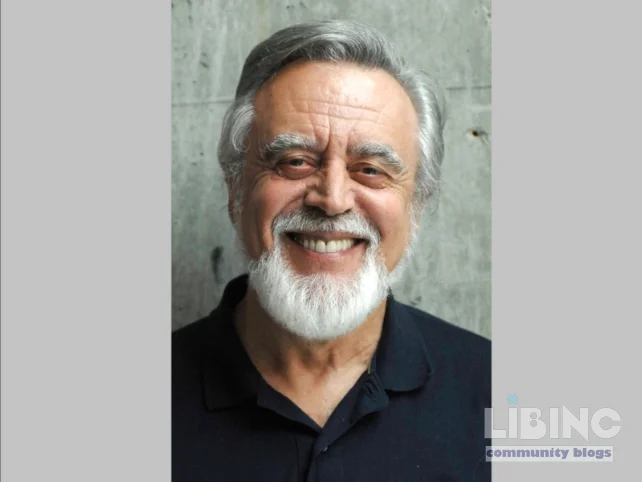
In the realms of optimization, control, and intelligent systems, Dimitri Bertsekas stands as a defining reference. His career mapped a trajectory from foundational theory to pedagogical mastery, shaping how entire generations approach complex decision problems. The problem is not merely to catalog his achievements but to understand the architectural logic that ties together his research, teaching, and mentorship. The stakes are high: if we lose sight of this synthesis, we risk undervaluing the integrative approach that made his work enduring across industries and academia. Yet the field’s rapid evolution — parallel and distributed computation, reinforcement learning, and data driven control — presents a hidden conflict: the danger of fragmenting ideas into silos. This article follows Bertsekas's through line, tracing the analytics, contrasts, causal chains, and expert recollections that reveal a cohesive intellectual project.
Analytics: unifying theory and pedagogy in Dimitri Bertsekas's work
Dimitri Bertsekas built an intellectual program that treats optimization, control, and learning as a single ecosystem rather than separate compartments. The educational arc begins with a solid foundation: an undergraduate degree from the National Technical University of Athens, followed by an MS in electrical engineering at George Washington University in 1969, and a PhD in system science at MIT in 1971. These steps were not random; they signaled a design: form a durable set of principles and carry them into diverse domains. His faculty career traces a deliberate ascent. He started at Stanford for a brief but formative period, spent five years at the University of Illinois at Urbana-Champaign, and then returned to MIT in 1979 where he remained for decades. The move from institution to institution was not mere mobility; it mirrored a unique capacity to transplant ideas, refine them in new ecosystems, and build bridges among departments and disciplines. The pattern is not simply biography; it is a working hypothesis about how to cultivate a durable research program that survives shifts in funding, computational architecture, and industry needs.
Beyond positions, the core of his analytics lies in a singular pedagogical method. His textbooks and monographs did not merely present results; they organized entire subjects into coherent wholes. Colleagues remember a writing voice that could translate abstract mathematics into clear, actionable insight. The impact extends beyond MIT or LIDS; a generation of researchers learned from book after book that rigor can coexist with accessibility, and theory can illuminate concrete problems in networks, control, or decision making.
Many peers highlight a consistent theme: the ability to connect theory to important problems without sacrificing formal precision. His work on dynamic programming and stochastic control laid the groundwork for what later became reinforcement learning and approximate dynamic programming. The co authored book with John Tsitsiklis on neuro dynamic programming is a focal point in this lineage. That project did not simply catalog results; it anticipated a shift in how researchers understood learning from data under uncertainty, long before the practical surge of modern AI. Mentors and students alike describe a mentor who modeled discipline without sacrificing curiosity. Former students remember one on one sessions that blended deep dives into proofs with patient guidance on how to frame a problem, test assumptions, and present findings with elegance. The end result was a lineage that turned theory into reproducible pedagogy, which then fed back into new generations of researchers who continued to publish, teach, and mentor.
Several specific testimonials illuminate the analytic core of Bertsekas’s influence. Asu Ozdaglar, MIT’s EECS department head, recalls that taking his nonlinear optimization class redirected her research into the realm of feasible, impactful questions rather than pursuing trendy but diffuse lines. The clarity and mathematical precision of his presentations provided a model for how to build a research program around a few robust ideas. Jinane Abounadi, now executive director of the MIT Sandbox Innovation Fund Program, remembers Bertsekas as a master in guiding students through optimization, dynamic programming, and neuro dynamic programming—areas that later became central to her own work and leadership. Steven E. Shreve, a former Illinois student, reports being drawn not just by results but by the process: a professor who shared drafts early, invited critique, and then acknowledged contributors with humility and fairness. The shared memory across these voices is a pattern: Bertsekas’s influence travels through his writings as much as through direct mentorship, shaping how readers think about problems and how students approach problem posing.
The consequence of this analytic footprint is a durable methodological stance. A central claim is that a disciplined synthesis—combining rigorous mathematics with a keen sense of problem structure—produces knowledge that travels across domains. This is visible in his collaboration with colleagues like Gallager on data networks, where the synergy between theory and practical system design produced texts that still anchor introductory and advanced teaching. The same philosophy appears in his work on parallel and distributed computation and in his exploration of information architectures for decision making. In short, Bertsekas’s analytic program is a structural worldview: solve the core problem once, and the solution informs many adjacent domains, from control to learning to large scale computation.
How the analytic method translates into impact
- Unified theory of decision processes that spans optimization, control, and learning
- Pedagogical clarity that makes dense math accessible to students and practitioners
- Textbook as infrastructure—a durable set of reference works used across institutions
- Mentorship as program architecture—a network of scholars who extend his ideas into new problems
The analytics block therefore reveals a consistent through line: fewer but deeper ideas, presented with strategic pedagogical craft, scaled across domains and generations. The pattern is not accidental; it is a deliberate design to preserve the capacity to think clearly about complex decision problems while remaining relevant to evolving technical landscapes.
Contrasting Bertsekas with peers: a cohesive intellectual project
In a field that often fragments into specialized subcultures, Bertsekas maintained a unifying thread. He built and extended a coherent set of tools that could be learned in a single sequence of courses or chapters and then applied to seemingly unrelated domains. This contrasts with some contemporaries whose influence is strongest in narrow niches, where a single breakthrough defines a career but lacks cross domain translation. Bertsekas’s work is more like an ecosystem than a silo: a few core ideas ripple outward, giving structure to many problems in optimization, networks, and learning.
One reason for this coherence lies in his ability to think in layers. He treats a problem as a system: a decision process, a cost structure, a source of uncertainty, and the computational architecture that makes a solution possible. When he speaks about nonlinear optimization or dynamic programming, the discussion never stops at a local result; it expands to the implications for algorithm design, numerical methods, and the pedagogy required to convey the method. This layering is evident in the joint book with Tsitsiklis on neuro dynamic programming, where the authors navigate from theory to algorithmic ideas and finally to empirical validation. The result is not just a set of results but a framework that can absorb new developments without losing coherence.
Another contrast arises in how Bertsekas treated the function of the textbook. He did not create reference works to showcase clever proofs alone; he built pedagogical volumes intended to be used in classrooms and research laboratories alike. This dual function is rare and valuable: a book that educates and simultaneously advances a field. Colleagues like Robert Gallager point to a mutual reinforcement between writing and thinking: the moment you distill a concept into a precise illustration, you crystallize the underlying insight. The data networks collaboration became a milestone not because it introduced a single breakthrough but because it demonstrated how to knit together theory, practice, and exposition into a durable enterprise.
The contrast also highlights a strategic choice: Bertsekas prioritized broad applicability over disciplinary specialization. His textbooks became the scaffolding for a generation of engineers who needed a common language across complex subjects. The breadth did not erode depth; it amplified it by ensuring that fundamental ideas could be revisited and repurposed as new technologies emerged. In that sense, his career offers a template for researchers who want to impact both theory and practice without surrendering intellectual rigor to trends.
Cause and effect: from theory to practice in modern decision making
The causal chain in Bertsekas’s work runs from abstract mathematical principles to concrete tools used in industry and research labs. A few milestones illustrate the mechanism of influence:
- Dynamic programming and stochastic control laid a robust foundation for later reinforcement learning and approximate dynamic programming. The methods, proofs, and problem formulations remain relevant as modern AI systems must operate under uncertainty and with limited data.
- Neuro dynamic programming integrated learning with control in a systematic way, anticipating the current emphasis on RL architectures and policy optimization. This work helped scholars understand how value functions, policies, and approximations interrelate under stochastic dynamics.
- Textbook ab initio architectures provided a stable platform for teaching, enabling countless students to rebuild their own research programs with confidence in core principles.
- Athena Scientific served as a publishing and collaboration hub, enabling coauthors to produce high-quality pedagogical volumes with broad reach, in turn influencing curricula across institutions.
These causal steps are not isolated episodes. They form a chain where a rigorous theoretical base feeds algorithmic design, which in turn informs experimentation, education, and policy discussions in related fields. The result is a lineage of methods that remains relevant as the field transitions from classical optimization to modern, data-driven decision making. The awards and honors—ranging from the INFORMS prizes to the IEEE Control Systems Award—serve as external attestations that this causality holds across time and institutional contexts. They signal that the core ideas have traversed academia and industry, reshaping both how problems are posed and how solutions are evaluated.
The practical consequence is a continuous recalibration of what counts as foundational knowledge in optimization and learning. Bertsekas’s work teaches a consistent lesson: if you want robust, scalable methods, you must ground them in a principled understanding of problem structure, computational viability, and clear communication of results. This triad—structure, computation, pedagogy—lets the theory endure as the field evolves toward larger systems and more ambitious learning objectives.
Expert reconstruction: mentorship, pedagogy, and lasting legacy
Beyond the technical contributions, Bertsekas’s greatest legacy lies in how he shaped people. The warmth and mentorship described by colleagues and former students offer a vivid counterpoint to the austere image of a rigorous theorist. John Tsitsiklis recalls their collaboration as a fusion of craft and artistic insight, with research as a creative act that readers can sense in the writing. The joint works on neuro dynamic programming became milestones not merely for their results but for the process of creation itself—a model for how to turn a difficult idea into a readable, teachable form.
Nedich, a former MIT student who later joined Arizona State University, captures a deeply human dimension. Bertsekas was an exceptional mind, a gifted soul who shed light for seekers while remaining humble. Road trips in the Southwest, coffee breaks, and shared moments of everyday life shaped a mentorship that extended beyond the classroom. The same warmth appears in lifelong friendships with colleagues who describe their professors as generous, patient, and insistently clear in their explanations. Such traits are not incidental; they reinforce the idea that education is as much about translators of knowledge as it is about the knowledge itself.
Former students also note how Bertsekas encouraged researchers to write well and to present their ideas in ways that invite readers to participate in the discussion. Shreve’s anecdote about receiving a manuscript before it became a book underscores a pattern: mentorship that prioritizes collaborative growth, fosters independence, and rewards clarity. Another line from peers emphasizes Bertsekas’s interdisciplinary taste—his fascination with algorithmic ideas drawn from parallel processors, chess, and emerging computational platforms. The portrait that emerges is of a Renaissance mind who used writing not only to preserve knowledge but to extend it by provoking new questions and inviting critique.
In sum, the expert reconstruction reveals a figure who cultivated both a rigorous scientific program and a humane mentorship style. The result is a community of researchers who carry forward the same equilibrium between theory and practice, writing and teaching, independence and collaboration. The memory of Dimitri Bertsekas endures not just in his published pages but in the dispositions he nurtured: a relentless curiosity, a commitment to mathematical precision, and a belief in teaching as a form of leadership.
Survivors carry the testimony of a personal life intertwined with professional achievement. He is survived by his wife and children, yet his true successors live in the labs, classrooms, and collaborations that continue to pursue the ideas he helped crystallize. The field keeps moving, but the Bertsekas imprint remains a constant reference point for those who seek to understand how rigorous theory can continually inform practice in a rapidly changing world.
A selection of recognitions that contextualize the causal impact
- INFORMS Prize for Research Excellence in the Interface Between Operations Research and Computer Science for Neuro Dynamic Programming
- ACC John R. Ragazzini Education Award
- INFORMS Expository Writing Award
- ACC Richard E. Bellman Control Heritage Award for foundations of optimization-based methods
- Khachiyan Prize for Life Time Accomplishments in Optimization
- SIAM MOS George B. Dantzig Prize
- IEEE Control Systems Award
- John von Neumann Theory Prize (with John Tsitsiklis) for Parallel and Distributed Computation and Neuro Dynamic Programming
These recognitions do more than decorate a resume. They map the practical consequences of Bertsekas’s work: a set of enduring tools and perspectives that informed both classroom instruction and real-world decision making in engineering and beyond.
In the end, the story of Dimitri Bertsekas is not a catalog of triumphs but a narrative about how to think clearly under uncertainty, how to teach with passion, and how to craft books that become the scaffolding for decades of new work. The fields that bore his imprint—optimization, control, and learning—continue to evolve, yet they do so within a framework that his students and colleagues helped to establish. That framework remains the most durable testament to his influence: a coherent, practical, and humane intelligence that endured through changing technologies and generations of scholars.
His passing closes a chapter, but his intellectual edifice invites ongoing exploration. For researchers and practitioners who seek to solve decisions under uncertainty, the Bertsekas model offers a blueprint: define the problem with mathematical clarity, build a scalable, implementable approach, and teach it with a clarity that invites others to read, critique, and advance.
Dimitri Bertsekas will be remembered as a bridge figure—someone who made the abstract concrete, the complex accessible, and the field itself more coherent. The work endures because it was designed to endure: to help people think, to guide projects, and to educate the next wave of scholars who will tackle increasingly intricate systems with the same insistence on rigor and vision.
As the landscape of optimization, control, and learning continues to mature, the path Bertsekas laid out remains a reliable compass. The combination of deep theory, a commitment to pedagogy, and the mentorship of generations of researchers creates a living legacy that will inform both research agendas and classroom conversations for years to come.
Ultimately, the measure of Dimitri Bertsekas’s influence is not merely in the theorems proven or the books published, but in the way his ideas continue to inspire careful thinking, precise writing, and thoughtful mentorship across a global community of engineers and scientists.
Closing the most critical missing element: translating theory into deployment
In practice, readers seek a clear path from principles to repeatable, implementable workflows. This section closes the most critical missing element by outlining a concrete deployment blueprint that spans problem framing, formulation choices, approximation strategies, and evaluation metrics. The Bertsekas frame remains robust across optimization, dynamic programming, and reinforcement learning, guiding decisions from product design to operating policies.
Deployment blueprint
| Problem class | Core method | Practical domain |
|---|---|---|
| Discrete decisions under uncertainty | Dynamic programming with value-function approximation | Supply chain planning |
| Sequential control | Stochastic dynamic programming | Energy grid operation |
| Learning with limited data | Neuro dynamic programming / RL with function approximators | Autonomous systems |
Practical scenarios include inventory optimization for retailers using approximate dynamic programming, microgrids tuned by data-driven control, and freight fleets scheduled in real time with policy optimization. These cases illustrate how core ideas migrate from abstract models to real-world value, underscoring the relevance of optimization, dynamic programming, and data-driven decision making in contemporary systems.
Deployment steps at a glance
- Frame the objective and constraints clearly
- Select a tractable mathematical form
- Design approximations with proven accuracy
- Run small pilots and collect evidence
Who was Dimitri Bertsekas and what is his central contribution?
Dimitri Bertsekas was a foundational figure in optimization, control, and learning. His central contribution was a coherent framework that unifies theory, pedagogy, and application, enabling researchers and engineers to translate core principles into practical methods across domains. This unification helps teams solve decision problems under uncertainty with rigor and clarity. Analytically, the work layers dynamic programming, stochastic control, and scalable algorithms into a durable scaffold for teaching and practice.
How does Bertsekas unify optimization, control, and learning?
He treats these areas as parts of a single ecosystem rather than isolated topics. By presenting a common language, rigorous proofs, and executable algorithms, his texts and research demonstrate how a single principle — solve the core problem once, then adapt — applies from networks to robotics. The result is curricula and project plans that stay coherent as technologies evolve.
What is neuro dynamic programming?
Neuro dynamic programming combines learning with control in a principled way, connecting value functions, policies, and approximations under stochastic dynamics. It anticipated current reinforcement learning practices by showing how data-driven updates can improve decision policies without sacrificing theoretical guarantees. The framework remains a bridge between rigorous theory and practical, data-driven control loops.
How can Bertsekas’s ideas be applied to modern AI systems?
Apply the idea of unified problem framing: start with a clear objective, model uncertainty, and select a tractable DP or RL formulation. Use modest approximations and iterative pilots to validate. This fosters robust, scalable implementations in domains such as energy management, logistics, and autonomous systems, where uncertainty and real-time decisions are common.
What core principles should students focus on?
Focus on the interplay between problem structure, algorithmic viability, and transparent communication. Learn to translate proofs into implementable steps, and practice documenting assumptions and results clearly. The emphasis on pedagogy ensures that ideas endure beyond a single project or technician’s tenure.
What recognitions illustrate his impact?
Honors include INFORMS prizes, the IEEE Control Systems Award, and joint recognitions like the John von Neumann Prize. These accolades map a legacy that blends theoretical depth with practical influence across industry and academia, validating the enduring value of his integrated approach.





Add a comment
To comment, you need to register and authorize
Comments