

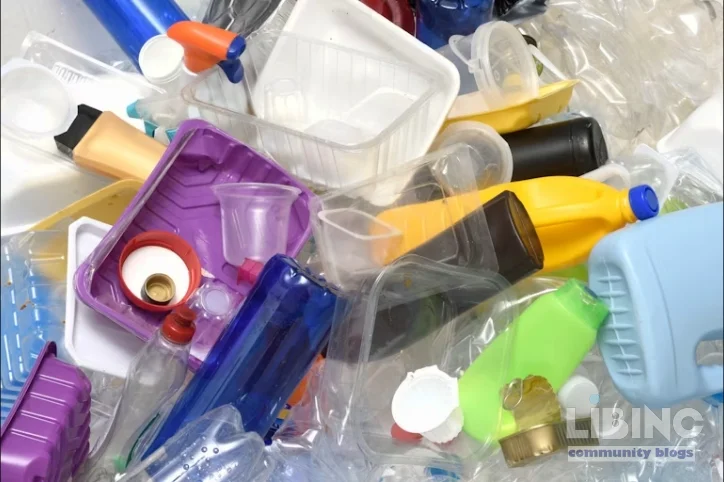
Plastic waste snarls oceans, soils, and supply chains. Downcycling traps us in a loop where most recycled plastic becomes lower-quality items that quickly end in landfill or incineration. The stakes are not just environmental: microplastics infiltrate food webs; chemical leachates threaten health; and the energy costs of virgin plastic production remain stubbornly high. The hidden conflict is that while we know recycling must improve, the physics of plastics resist true recycling back to original polymers. The Manchester study hints at a path forward: engineering enzymes that digest polycarbonate into building blocks that can be reused to synthesize new plastic. Yet enzymes battle heat, synthetic chemistry, and the gulf between natural substrates and human-made polymers. This article traces the logic, evaluates the promise, and outlines a realistic pathway to a circular plastic economy through super-enzymes.
Table of contents
- Analytics: the crisis and the limits of current recycling
- Contrast: a tale of two recycling futures
- Causes and effects of plastic digestion
- Expert reconstruction for a circular system
Analytics: the crisis and the limits of current recycling
Plastic waste overwhelms systems designed for linear take-make-dispose models. Across the world, a large share of plastic ends up in landfills, the environment, or energy recovery streams rather than being captured for high-value reuse. This reality arises from a mismatch between the chemistry of many polymers and the economics of waste handling. The lack of standardized streams, contamination, and the sheer diversity of plastics complicate recycling and raise costs for downstream processors, undermining the prospects for green recycling and a circular plastic economy.
Conventional recycling relies on melting and remolding, which breaks polymer chains and leads to materials whose properties degrade with every cycle. This downcycling limits the potential for high-quality reuse and makes the circular economy feel like a mirage. The core opportunity, however, is to recover the original monomers or building blocks so these inputs can be repolymerized into equivalent or superior materials. In other words, green recycling hinges on closing the loop at the molecular level, not just reshaping the same plastic into a different form.
Economically, the system lags well behind the theoretical benefits. Energy penalties, sorting costs, and the complexity of multi-material streams erode the value of recycled plastics. Public policy and industry incentives sometimes push firms to export waste rather than invest in better recycling infrastructure. The net effect: most plastic remains outside a truly circular flow, and the energy and resource intensity of virgin polymer production remain high relative to recycled alternatives.
Hidden tensions complicate progress. Researchers look to extremophiles and thermo-stable enzymes as blueprints for heat tolerance. The resulting designs aim to operate at higher temperatures without denaturing the catalysts, a necessary step to access robust plastics in real-world waste streams. The gap between lab demonstration and scalable deployment remains wide, but the demand for a truly circular system keeps pushing this line of inquiry forward.
Contrast: a tale of two recycling futures
Two futures sit before the plastics industry: continuing downcycling that yields intermediate products with limited value, or embracing enzymatic digestion that releases building blocks for high-quality materials, bringing green recycling and a true circular plastic economy closer to reality.
Actual practice diverges sharply. Conventional recycling creates a mismatch between product performance and end-of-life destinies, while enzymatic strategies promise a clean loop if the catalysts sustain activity across diverse waste streams. The pressure points—sorting, contamination, and the need for heat-tolerant enzymes—shape how quickly adoption can scale. The most effective response combines process engineering with data-driven selection of enzyme variants, harnessing directed evolution and AI-guided design to move variants toward the desired function before bench testing begins.
The Manchester group's polycarbonate digester demonstrates this principle and highlights the role of thermo-stable enzymes in real-world settings. The result points to a future where hard plastics can re-enter production with minimal new inputs and maximal circularity.
Cause-and-effect pathways in plastic digestion
The fundamental barrier remains the temperature and structure of synthetic polymers. Opening the dense glassy regions of plastics requires heat, but thermo-stable enzymes can resist denaturation. The consequence is a tightly coupled problem: to digest plastics fast enough, we need catalysts that survive and remain selective in crowded waste streams.
Directed evolution offers a practical route to tailor enzymes to plastic substrates. In the hands of engineers, repeated cycles of mutation and selection compress natural evolution into weeks, yielding variants with higher activity on synthetic targets. When paired with AI-guided design, the search space expands dramatically, enabling the computer to predict which mutations will move a protein toward the desired function before bench testing begins.
Because real-world waste streams present mixtures of plastics, additives, and contaminants, the next step requires robust biocatalysts that tolerate solvents, salts, and other stressors, a design challenge informed by extremophile biology. The goal remains catalysts that blend structural rigidity with catalytic flexibility to keep pace with diverse polymers and contaminants.
In short, the cause-and-effect chain links heat tolerance, substrate promiscuity, and process economics. Stable enzymes enable operation at practical temperatures, broad substrate compatibility expands feedstock options, and improved process yields trim energy costs while boosting material recovery. The result is a clearer path toward a circular plastic economy where waste becomes feedstock rather than fate.
Expert reconstruction: designing a viable circular system
To translate lab breakthroughs into industry, engineers must address scale, cost, and supply chain constraints through biocatalysis-driven integration. Enzyme production must drop per-volume costs, purification steps must simplify, and downstream processing must integrate with existing recycling lines. The core tests lie in throughput, purity, and compatibility with mixed streams that real-world facilities handle daily.
- Process integration: integrating enzymatic steps into existing mechanical and chemical recycling lines with minimal disruption.
- Economic viability: achieving competitive cost per kilogram of recycled material through improved yields and lower energy inputs.
- Quality control: maintaining polymer purity and performance when monomers re-enter polymerization.
Beyond industrial kneading and chemical engineering, policy and business models will shape adoption. Incentives for higher recycling rates, extended producer responsibility, and public procurement policies can accelerate capital expenditure in enzyme-enabled facilities. Collaboration across universities, startups, and incumbents will determine the speed at which factories retool and scale.
Beyond plastics, the same design principles—directed evolution and AI-assisted optimization—apply to other waste streams such as synthetic textiles, electronics, and even off-world residues. A future toolkit could deploy specialized, heat-tolerant biocatalysts to reclaim metals, dyes, and polymers from complex products, abating environmental harm while reducing raw-material extraction.
Realistic roadmaps call for staged milestones: pilot lines, performance benchmarks, regulatory clearances, and transparent cost-benefit analyses. These milestones serve as both pressure tests and guides, ensuring researchers keep a sharp eye on practicality as well as possibility. The ultimate aim remains a truly circular plastic economy powered by a family of robust, intelligent enzymes.
Ultimately, super-enzymes for plastic recycling could shift the dynamic from waste to resource, but success hinges on coordinated action across biology, data science, and industry. Investors, policymakers, and operators must align incentives, share data, and push through the early bottlenecks with clear metrics and risk controls. The payoff would be a durable, scalable solution that narrows the gap between production and reuse, turning plastic waste into a dependable feedstock for new materials.
Closing the scale pathway: pragmatic routes to industrial adoption
Lab breakthroughs prove feasibility; the missing link is a practical bridge to factory floors that can reliably produce high-purity monomers at competitive costs. The plan calls for tightly defined pilots, transparent performance metrics, and integrated process design that blends enzymes with existing recycling lines. Real-world streams demand robustness to contaminants and variable feedstocks—conditions where AI-guided design and directed evolution can adapt catalysts quickly. By pairing shared data with staged investments, the industry can cut energy use, raise material value, and demonstrate true lifecycle benefits.
Table: Comparative metrics
| Aspect | Conventional | Enzymatic | Impact |
|---|---|---|---|
| Energy use | High | Lower with integrated steps | Up to 40% reduction |
| Material quality retention | Degrades per cycle | Higher, closer to virgin | Better recyclate |
| Throughput in mixed streams | Challenging | Improved with robust enzymes | Greater resilience |
| Purity requirements | Stringent | Relaxed with selective catalysts | Lower downstream costs |
| Capital costs | Capital-intensive upgrades | Modular, scalable | Faster ROI potential |
Beyond metrics, operators must secure supply chains, purification steps, and end-use purity.
Operational leverage
In practice, stability and substrate range decide throughput. Practical scenarios include staged digestion of a mixed stream (PC, PET, and polyolefins) by a sequence of bespoke enzymes, yielding monomers for repeated polymerization and high circularity.
Roadmap to deployment
- Pilot lines with shared data
- Scale-up, supplier integration, and plant retrofits
- Policy incentives and financial models to de-risk capital
What are super-enzymes in plastic recycling?
In plain language, super-enzymes are specially engineered biological catalysts designed to break down plastic polymers into their building blocks. They aim to operate under practical processing conditions to recover monomers that can be reused to make new plastics with virgin-like properties. Unlike traditional methods, these enzymes seek to transform the end-of-life stream into a high-value feedstock rather than merely altering form. The key value lies in enabling cleaner loops, reducing energy demand, and improving material purity when integrated with existing recycling lines. In real-world pilots, early gains show energy reductions and better yields as designs are tuned to mixed streams.
Analytically, the advantage is the potential to shift from downcycling toward closed-loop production. The challenge is ensuring stability, selectivity, and compatibility with contaminants and additives present in waste streams. Achieving these conditions requires iterative design cycles, data sharing across projects, and careful benchmarking against conventional processes.
How close are enzymatic processes to industrial deployment?
Direct deployment depends on scale, cost, and reliability. In practice, pilot facilities demonstrate modest energy savings, with ongoing work improving enzyme stability at higher temperatures and broadening substrate ranges. Economically viable operations depend on modular plant designs, predictable monomer quality, and access to end-use markets. Policy support and investment in shared infrastructure can accelerate pilot-to-plant transitions by lowering capital risk and enabling standardized data reporting.
What do AI-guided design and directed evolution contribute?
AI-guided design expands the exploration space for enzyme variants, predicting mutations that enhance activity on synthetic polymers before bench testing. Directed evolution then iteratively selects high-performing variants under simulated waste conditions. Together, these approaches shorten development cycles from years to months, improve robustness to contaminants, and tailor enzymes for specific polymer streams. The practical payoff is a faster route from lab success to steady-state operation at scale.
What is a realistic roadmap for deployment and policy support?
A pragmatic plan combines staged pilots, clear performance benchmarks, and regulatory clarity. Early-stage pilots focus on specific streams, then expand to mixed streams with robust purification. Public-private partnerships and extended producer responsibility can shift incentives toward capital investment in enzyme-enabled facilities. Transparent cost-benefit analyses and shareable data accelerate learning and adoption, while standardized lifecycle assessments quantify environmental gains.
How do lifecycle and environmental impacts compare to traditional recycling?
Lifecycle assessments typically show energy and emission savings when enzymatic steps replace energy-intensive melting and reforming, plus higher recyclate quality. However, benefits depend on feedstock mix, enzyme costs, and integration efficiency. When designed with circular goals—high-purity monomers, minimal additives, and efficient purification—the overall footprint improves. The key is comprehensive assessment across production, use, and end-of-life phases to avoid shifting burdens elsewhere in the system.
What can policymakers and industry players do to accelerate progress?
Coordinated actions include funding targeted R&D, supporting modular plant pilots, and creating procurement rules that favor recycled monomers with virgin-like performance. Investment in data-sharing platforms, standard testing protocols, and open databases helps align expectations and reduce duplication. Encouraging collaborations among academia, startups, and incumbents speeds the translation of breakthroughs into durable recycling infrastructure.



Add a comment
To comment, you need to register and authorize
Comments