

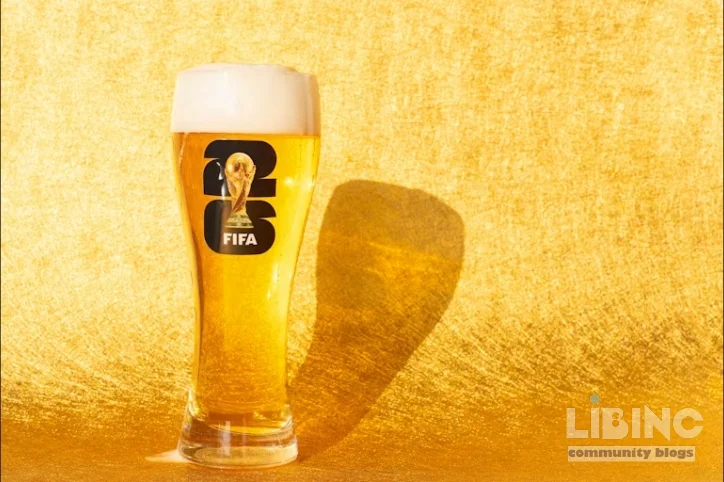
Alcohol sponsorship in football: a critical analysis of the 2026 World Cup and youth health implications
The 2026 World Cup delivered more than goals and glory. It delivered a business model where broadcasting rights, ticket sales, and commercial sponsorship converge to generate billions in revenue. At the same time, AB InBev operates as a long standing partner, with Budweiser as the official beer and Michelob Ultra tied to player of the match honours. This convergence shows how sponsorship can fund sport at scale, but it also foregrounds a public health question that does not fit neatly into a scoreboard narrative.
The central question is whether alcohol sponsorship in football shapes youth drinking trajectories and broader attitudes to alcohol. The stakes are high: health systems worry about earlier initiation and heavier consumption, while regulators risk losing ground if pervasive branding continues to normalize drinking as part of sport. The hidden conflict lies in the fact that sponsors and leagues defend the social and economic value of the game even as health advocates press for tighter controls to shield vulnerable audiences. This analysis maps the tensions, traces the mechanisms, and considers policy options that could tilt the balance toward safer outcomes.
Analytics in focus
Global tournaments compress media, hospitality, and sponsorship into a single value chain. FIFA's broadcast rights, ticket sales, and commercial partnerships create revenue streams that ripple across economies, brands, and fans. The World Cup template makes alcohol brands not just advertisers but ongoing participants in the fan journey, with visibility that spans stadiums, screens, and personal devices. The business logic is clear: sponsorship pays for production, hospitality, and legacy initiatives, while brands seek to integrate themselves into moments of collective emotion.
The analytics view asks who benefits and how the benefits are measured. Sponsorship value translates into reach, engagement, and brand equity rather than short term sales spikes alone. AB InBev's long standing involvement demonstrates the durability of this model, where the intent is to cultivate long term relationships with football audiences rather than pursue one off campaigns. In this frame, the World Cup becomes a perpetual marketing platform, embedding brand presence into the ritual of watching and celebrated competition.
Yet the evidence base for the public health tradeoffs remains contested. Across disciplines, scholars document that repeated exposure to marketing, especially when distributed across multiple channels, strengthens brand familiarity and social desirability. The health implications depend on context, including family norms, school environment, and peer influence, but the capacity for marketing to shape attitudes is well established. The challenge for analysts is to separate the signal of sponsorship from broader social influences while acknowledging that the marketing ecosystem often outlives a single match.
A notable feature is the rise of zero alcohol products and alibi marketing strategies. Brands present non alcoholic options that resemble core products, preserving color schemes, logos, and slogans while avoiding explicit references to alcohol. This technique sustains brand equity in a way that is harder for regulators to dislodge, because it blurs the line between advertising and brand experience. The public health implications of such practices require careful scrutiny, because they may bypass traditional restrictions while continuing to condition attitudes toward drinking.
These dynamics matter because they occur where fans live their sporting lives—on screens, in stadiums, and on social feeds—creating a durable association between sport, celebration, and beverage brands. The question is not simply whether a single ad influences a choice, but whether the accumulation of cross platform branding over years shifts norms and expectations around alcohol in a sport that commands family attention. In other words, sponsorship becomes a cultural force that can quietly recalibrate what counts as acceptable consumption during, and after, the match.
Contrast with public health narratives
From a health policy perspective, the case for tighter controls rests on established evidence about exposure effects and adolescent behavior. Repeated marketing exposure correlates with earlier drinking initiation and higher consumption among those who already drink, a pattern seen in cross sectional and longitudinal studies. The 2026 World Cup’s sponsorship ecosystem intensifies this exposure by weaving alcohol branding into broadcast narratives, digital content, and live experiences, not merely through fixed advertising boards but through interactive promotions and fan zones. The public health argument is that reducing exposure can lower risk, particularly for youth who are impressionable and still forming drinking norms.
Supporters of sponsorship argue that sport deserves to monetize its global audience and that sponsorships fund the very events fans love. They propose responsible marketing playbooks, better age gating of content, and community health programs that accompany sponsorships rather than condemn them outright. The tension here lies in the practical impact of these measures across channels. When a brand’s presence is designed to be felt in a stadium, on a streaming feed, and within social media, it becomes hard to isolate the promotional moment from a larger brand experience that normalizes the product category.
Another dimension is the perception gap between sponsorships that promote healthy sport culture and campaigns that appear to promote alcohol through achievement, camaraderie, and national pride. Young viewers described how branded experiences felt ubiquitous and easy to encounter, turning sponsorship into an omnipresent companion to the game. This ubiquity reinforces the idea that sport and drinking belong together, a perception that can persist even if a specific product line emphasizes no alcohol content. The practical takeaway is that normalization can outpace policy constructs designed to minimize risk for young people.
In this contrast, researchers note a critical ambiguity: some sponsorships are framed as responsible by promoting zero alcohol variants, yet many young people do not distinguish these from traditional beer marketing. The line between responsible messaging and sub silent promotional craft blurs under continuous exposure, inviting policymakers to consider clearer rules about how sponsorships are implemented on and off the field. If the objective is to protect youth, the policy response must address both explicit messages and the broader emotional alliance with sport that sponsorship engenders.
Causes and effects chain
To understand the mechanism, we must trace how sponsorship signals propagate through the fan ecosystem. First, sponsorships create emotional associations—excitement, belonging, national pride—that become part of how fans remember a tournament. Second, these associations translate into brand recognition, which in turn shapes preference and perceived normalcy around drinking. Third, the combination of family influence, peer culture, and marketing exposure increases the likelihood that adolescents will view alcohol as part of sport led celebrations, a perception that translates into experimentation and consumption for some once legal age is reached.
The causal chain is reinforced by the way campaigns are designed to travel across platforms. In stadiums, brand colors and imagery are pervasive; on screens, highlight reels carry sponsor logos; in social channels, fans co-create endorsements through memes and fan-generated content. This simultaneous, cross platform presence amplifies the salience of sponsorship cues and accelerates the formation of brand related memories that endure long after a given match ends. This is precisely the kind of reinforced learning that policy makers seek to temper with targeted restrictions and stronger age verification in digital spaces.
Another causal element is the public health messaging around sports and nutrition that sometimes competes with alcohol branding. Young people gauge the relationship between athletic achievement and healthy lifestyles, and then confront brands that appear to celebrate both. The dissonance is not lost on adolescents, who often articulate it in striking terms. A participant from a Scottish study described how the same brands appear in contexts that promote healthy living yet remain tied to alcohol, leaving them unsettled and skeptical about the alignment between sport and healthy choices.
Ultimately, the sponsorship ecosystem can either be managed to minimize risk or allowed to escalate exposure that embeds favorable attitudes toward alcohol. The catalyst for change lies in policy design that recognizes sponsorship as not only a commercial activity but a cultural practice with long lasting implications for youth development and public health. In this sense, regulation must be crafted with both marketing science and social context in mind to avoid unintended consequences while preserving the integrity of the sport.
Expert reconstruction and policy implications
Several researchers and practitioners argue for a structured reform that preserves the positive aspects of sport sponsorship while protecting young viewers. A practical path includes clearer boundaries around cross platform sponsorship, stronger distinctions between promotional content and event branding, and robust monitoring of how alibi marketing operates in practice. Another strategy is to require health education and counterspeech campaigns that accompany major sponsorship moments, making the health tradeoffs explicit rather than implicit in the fan experience. These measures aim to preserve sport as a unifying cultural force while reducing its potential to inadvertently normalize risky behaviors among youths.
From a policy design perspective, regulators should consider tiered restrictions that reflect audience composition and media channel. During youth-centric time windows and youth-dominated platforms, stricter controls on brand presentation may reduce exposure without crippling the sponsorship model. For adult audiences, marketing can continue under transparent safeguards and clear age verification. The end goal is a healthier ecosystem where sponsorship contributes to sport’s vitality without eroding the public health gains achieved by limiting early exposure to alcohol cues.
Experts emphasise the need for ongoing, independent evaluation of sponsorship strategies and their health outcomes. Youth perceptions of sponsorship reveal a paradox: many understand the motives of sports brands yet still experience emotional pull toward the excitement of the event. This indicates policy efforts must address both cognitive understanding and affective resonance by aligning health messaging with the emotional strengths of sport. The result should be a more resilient framework that sustains the social value of football while reducing unintended health costs.
In summary, the 2026 World Cup illustrates how an elite sport can become a powerful marketing vehicle. The central challenge is to reconcile the civic and health objectives with the economic logic of sponsorship. By combining targeted regulatory measures, enhanced health education, and transparent accountability, it is possible to preserve football’s global appeal while mitigating risks to young fans who grow up in a world where sponsorship and sport are deeply interwoven.
Ultimately, the goal is a sustainable sponsorship ecosystem that respects public health without stifling innovation in sport marketing. If policymakers and sport organizations act with clarity, the experience of watching football can remain exhilarating while becoming a little safer for future generations.
In the end, communities, families, and athletes benefit when sport preserves its integrity as a shared cultural event rather than a conduit for brands that capitalise on youth attention. The dialogue between health priorities and commercial viability continues, but it is a dialogue that can be steered toward outcomes that honour both the thrill of the game and the wellbeing of young spectators.
Ultimately, the capacity to shape outcomes lies with those who design and regulate the sponsorship landscape. A thoughtful equilibrium will keep the World Cup exciting and economically vibrant, while ensuring that the spectacle does not come at the cost of vulnerable audiences and long term public health.
The most critical gap in the current analysis is the lack of a concrete, outcomes‑focused policy blueprint that lowers youth exposure to alcohol sponsorship while preserving the financial and cultural value of sport sponsorship. This expansion proposes a practical design that ties rules to measurable indicators, clarifies cross‑platform boundaries, and assigns independent accountability. It foregrounds health education counters, transparent dashboards, and staggered implementation to balance public health goals with sponsorship viability. The approach also incorporates cross‑platform advertising realities, zero‑alcohol variants, and alibi marketing nuances to ensure policies are enforceable and meaningful for youths, families, and brands. Key terms to anchor the plan include youth exposure, sponsorship regulations, cross‑platform advertising, and health education.
Policy design blueprint
| Option | Key Mechanism | Expected Impact | Enforcement Notes | Risks |
|---|---|---|---|---|
| Tiered Restrictions | Limit branding in youth windows and on youth‑heavy platforms | Reduces exposure hours without removing sponsorship entirely | Requires cross‑jurisdiction rules and timing definitions | Operational complexity |
| Age Gating & Verification | Rigorous age checks for digital content and apps | Emergent online exposure mitigated | Privacy safeguards needed | Inaccurate verifications risk excluding adults |
| Alibi Marketing Controls | Ban cross‑branding that hints at alcohol in non‑alcohol lines | Clarifies messaging and reduces brand confusion | Definitions must be precise | Enforcement gaps across media |
| Health Education Counters | Point‑of‑exposure health messages and school partnerships | Increases awareness and context | Requires sustained funding | Potential message fatigue |
| Independent Evaluation | Regular audits of exposure and health outcomes | Ensures accountability and learning | Audit cadence must be credible | Resource intensity |
Implementation requires clear definitions, cross‑border coordination, and a public dashboard tracking youth age groups and platform reach. For example, during a World Cup cycle, alcohol branding could be restricted in youth apps and health counters mandated in fan zones. This tangible plan converts broad aims into measurable outcomes using the cross‑platform advertising lens, sponsorship regulations, and health education counters.
Implementation steps follow a layered approach and should be transparent to fans and sponsors, with community oversight and periodic review to adapt to new platforms and behaviors.
How can a policy blueprint reduce youth exposure without harming sponsorship value?
To reduce youth exposure, a policy blueprint should blend clear, enforceable rules with practical protections across the most used channels (digital platforms, in‑stadium activations, and youth‑dominated broadcasts), while preserving sponsorship's funding role; this requires precise definitions of youth, durable brand separation standards, age‑verified access, and independent reporting dashboards that track exposure hours, logo visibility, and health counter reach; it also demands credible review cycles and stakeholder transparency to maintain trust among fans, regulators, and sponsors. This combined approach keeps sport financially viable and health mindful.
Analytically, outcomes must be monitored with baseline measures and ongoing audits to adjust rules as media habits evolve. The focus is on real exposure hours and the reach of health messages, not only on nominal branding numbers.
What concrete measures belong in a tiered regulatory approach?
Tiered measures should distinguish youth‑dominant moments from general audience moments, apply stricter controls on digital and in‑stadium touchpoints during youth windows, and require health counters at major sponsorship moments; they must be adaptable across regions and platforms, with clear definitions and published enforcement calendars; the balance avoids choking sponsorship while reinforcing prudent limits that protect young viewers. Regular reviews ensure policies stay relevant as technology shifts.
In practice, this means combining time‑based bans with transparent reporting and a public dashboard to build legitimacy and facilitate adjustment.
How can independent evaluation ensure accountability?
Independent evaluation should include standardized exposure metrics, health outcome tracking, and cross‑platform data audits, conducted by credible bodies with public reporting. An evaluation framework helps separate marketing effects from broader social influences, providing actionable insights for policy tweaks and enforcement improvements; it also builds trust with communities and sponsors by showing ongoing commitment to public health goals.
Analytically, continual feedback loops are essential so findings translate into policy adjustments rather than becoming ceremonial.
What are practical scenarios for applying these rules during events?
Practical scenarios include restricting alcohol branding in youth apps during finals, deploying health counters in stadium lounges, and enforcing age checks on streaming feeds with youth‑centered content. Real world use cases help demonstrate how rules function across platforms and in live settings, guiding operators to implement consistent practices while preserving the sporting experience.
These scenarios illustrate how policy choices translate to day‑to‑day operations and stakeholder education.
What is the risk of over‑regulation and how can it be avoided?
The main risk is constraining legitimate sponsorship value and innovation. To avoid this, policies should be outcome‑driven, not prohibitive, with phased implementation, transparent metrics, and ongoing dialogue with leagues and brands; evaluation results should inform adjustments rather than rigidly lock in a single model. This approach preserves sport’s vitality while protecting public health.







Add a comment
To comment, you need to register and authorize
Comments