

Unknown Indie Games Uncovered: An Analytical Look at Indie-Penance Day's 250th Edition
Table of contents
- Analytics view: Unknown indie games in the spotlight
- Contrasts: A spectrum of prototypes
- Causes and consequences: The indie ecosystem and visibility
- Expert reconstruction: Pathways to impact
Indie publishing has long felt like a quarry, with a handful of mega studios shepherding predictable franchises and a restless crowd of solo developers hammering away in their basements. This feature surveys unknown indie games—the titles that arrive in inboxes, appear on forums, or slip into Steam wishlists yet seldom break into the mainstream spotlight. The stakes are simple but consequential: discovery translates into opportunity, while obscurity compresses creative risk into silence. The semiquincentennial edition of Indie-Penance Day doubles down on emancipation from publishers by giving under-the-radar projects a comprehensive, critical gaze. The goal isn’t empty praise; it’s to test which discoveries endure, which mechanics travel beyond novelty, and which storytellings offer a durable reason to press that wishlist button. This piece maps why each title matters and how it might find a broader audience.
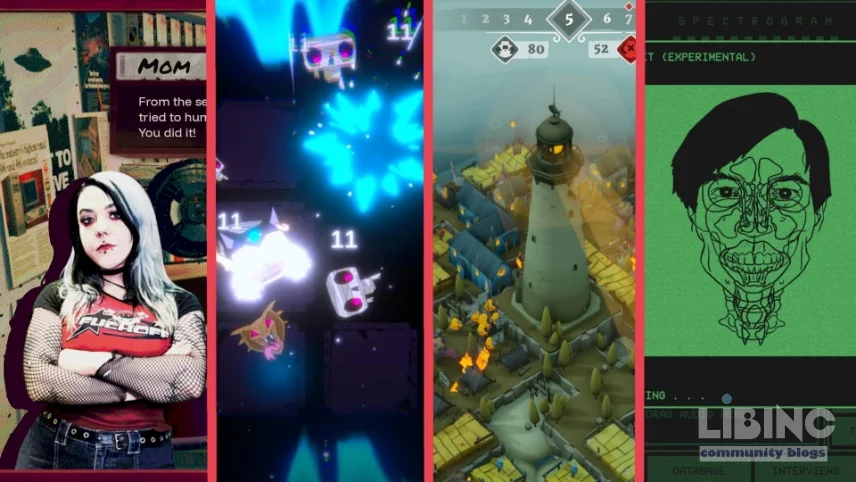
From concept to public testing, unknown indie games are shaped by a tight feedback loop that fuses practical constraints with bold experimentation. In practice, we watch for indicators drawn from indie game development: a distinctive core loop, a memorable visual signature, and a distribution path that doesn't require a publisher's seal. Market signals matter: steam presence, wishlist momentum, and the quality of a playable demo can outperform lavish marketing eight weeks before launch. The examples in this edition—ranging from I m Your Host to Dungeon Bodega Simulator—serve as data points about how small teams translate curiosity into playable promise.
Different prototypes reveal different routes to impact. Some lean into procedural systems that reward long play sessions; others hinge on a singular art direction that turns a modest budget into a memorable frame. The challenge is not merely to look attractive; it is to deliver a stable experience that scales with limited resources and still invites curiosity from a player base that already has many choices.
Core mechanics, adaptive challenge, and accessible depth separate ephemeral curiosities from potential staples in unknown indie games. For example, KAZ uses a four-button input to drive fast, grid-based diagonals through chaotic scenes, promising a score-chasing rhythm that rewards experimentation. Sparrow Warfare plays with public-domain bird imagery reworked into a deckbuilder framework, which hints at a tactile, discoverable mastery. These design decisions carry signal value for discovery algorithms and for players evaluating whether a title deserves a place on a wishlist.
Beyond mechanics, this batch demonstrates how tone, setting, and genre blend can broaden appeal without bloating budgets. From Dredge-adjacent moods in ShoreTiles to the cozy calamities of Clowntown, these titles show the spectrum of indie vibe that can help a game stand out in crowded storefronts.
Visibility calculus matters as much as the playtest itself. Indie developers optimize for discoverability by crafting crisp trailers, approachable demos, and metadata that aligns with player intent. The rinse-and-repeat cycle of updates, community polls, and feature flags becomes part of the development discipline. In this edition, Dungeon Bodega Simulator and Hoop Dungeon illustrate how daily loops and social play can seed word-of-mouth momentum, a key signal for indie game visibility on Steam and Itch. Signals to watch include:
- crisp trailers that communicate core loops in under 60 seconds
- approachable demos with a clear start and exit path
- transparent metadata and design notes that reduce guesswork for players
- consistent update cadence and community responsiveness
Yet there are traps. A promising concept may falter if the player experience is unpolished, if the UI fights the core loop, or if promise outpaces delivery. The set also shows how scope creep and platform fatigue can derail even bright ideas. The goal remains to separate the interesting from the ephemeral by asking: does this title offer durable play, or is it a passing moment?
Those outcomes hinge on cross-pollination between teams and communities. Feedback from indie development communities, streamer-first previews, and early-access playtests help tune difficulty curves, pacing, and accessibility. In our sample, the threads linking aesthetics, control schemas, and player autonomy point to future standards for unknown indie games: strong first impressions, reproducible mechanics, and a sense of possibility that invites continued engagement.
Other entries experiment with social play and co-op puzzles, where group dynamics become the primary engine. Clowntown offers over 100 minigames in which coordination, timing, and shared misfires determine the outcome, signaling a trend toward communal playspaces in unknown indie games. Cost-to-quality ratios shape the final impression. Some games pack a lot of idea into a small aesthetic package; others require extended play sessions to reveal depth. The contrast helps us see how writers, artists, and coders decide what to show early and what to reserve for later.
These choices also reflect market realities: a smaller studio may lean into stylized visuals to cut production risk, while another leans into procedural or deck-building depth to sustain engagement across play sessions. Taken together, the lineup demonstrates how unknown indie games can stretch players' expectations without technical miracles. The thrill is not only novelty but a proof of concept that small teams can deliver distinctive experiences.
Contrasts: A spectrum of prototypes
Viewed side by side, these titles reveal a spectrum where ambition meets constraint in distinct ways. At one end, experiments lean on compact, high-skill loops that demand practice and curiosity. KAZ embodies this with its sharp tempo and grid-based movement, turning four inputs into a fluid roguelite-like dance of risk and reward.
At the opposite end, titles emphasize mood and narrative texture over twitchy systems. Sparrow Warfare, with its colorized archival bird imagery, hints at a slower burn: strategy framed as a turn-based card duel with aesthetic charm.
Other entries experiment with social play and co-op puzzles, where group dynamics become the primary engine. Clowntown offers over 100 minigames in which coordination, timing, and shared misfires determine the outcome, signaling a trend toward communal playspaces in unknown indie games. Cost-to-quality ratios shape the final impression. Some games pack a lot of idea into a small aesthetic package; others require extended play sessions to reveal depth. The contrast helps us see how writers, artists, and coders decide what to show early and what to reserve for later.
These choices also reflect market realities: a smaller studio may lean into stylized visuals to cut production risk, while another leans into procedural or deck-building depth to sustain engagement across play sessions. Taken together, the lineup demonstrates how unknown indie games can stretch players' expectations without technical miracles. The thrill is not only novelty but a proof of concept that small teams can deliver distinctive experiences.
Causes and consequences: The indie ecosystem and visibility
The cause-and-effect web behind visibility is surprisingly transparent: audience discovery is a function of presentation, accessibility, and credible demonstrations of depth. This is where unknown indie games become a testbed for refining signal strategies and building durable fanbases. When a game communicates its core loop clearly and opens with a fair difficulty curve, it earns the trust of curators and players alike.
Publishers once claimed the gate; today, players wield platforms and wishlists to push a title into attention. Yet gatekeeping remains: algorithmic sorting, review bias, and the sheer volume of prior releases compress time to first impression. The unknown indie games framework thrives on repeatable loops and recognizable motifs, so developers must design milestones that signal progress to both curators and players.
Because the unknown indie games framework thrives on repeatable loops and recognizable motifs, developers must design milestones that signal progress to curators and players alike. A playable week-one demo, a documented design thread, and transparent update cadence become the trust signals that shrink the gap between concept and adoption.
ShoreTiles to Dungeon Bodega Simulator illustrate different paths to similar outcomes: community engagement, clear value propositions, and consistent delivery reinforce long-term interest. However, risks mount when novelty outpaces usability: if interface decisions hinder learning, or if early access experiences do not converge toward a polished product, players walk away and the wishlist blobs dry up. This ecosystem is also a testbed for accessibility: color contrast for ShoreTiles, control remapping for KAZ, and scalable difficulty for Hoop Dungeon.
Indie press and influencer ecosystems also shape outcomes. A favorable write-up or a credible gameplay clip can change the trajectory of unknown indie games far more effectively than a press release. All of this compounds into a future where unknown indie games can become stable annual touchpoints for their communities if they prove sustainable, reproducible, and persistent.
Expert reconstruction: Pathways to impact
Developers, curators, and platform holders share responsibility for moving ambitious titles from novelty to durable presence. First, invest in a robust demo strategy: a standalone playable segment, clear goals, and a short feedback loop to tune difficulty curves, pacing, and accessibility.
Second, align narrative framing with player intent: stories that explain mechanics rather than bury them in cryptic hints help players decide early whether a game matches their tastes.
Third, enforce predictable development cadences: transparent roadmaps, weekly devlogs, and community test waves convert curiosity into trust and turn casual interest into wishlist momentum.
Fourth, optimize for distribution channels that reward experimentation: a Steam page that communicates core loops clearly, a demo that travels on Itch and social feeds, and optional early-access pathways for longer-form feedback.
Fifth, protect accessibility and inclusivity as design constraints, not add-ons: adjustable difficulty, scalable UI, and inclusive audio cues ensure a broader audience can engage with unknown indie games.
Sixth, for curators, implement a disciplined, skeptical but generous coverage approach: sample broadly, test with a critical eye, and publish balanced verdicts that acknowledge experimentation alongside polish.
The takeaway is that unknown indie games can become durable deltas in the market when quality signals, community engagement, and consistent iteration align. The 250th edition is as much a celebration of process as product, a reminder that discovery depends on human curation as much as machine recommendations.
Practical roadmap for durable visibility
Indie teams often have good ideas but struggle to repeatably attract players. This compact framework translates signals into a predictable path from concept to wishlist momentum.
Below, an action-oriented sequence converts core loops, accessibility, and community signals into measurable milestones that studios of any size can apply.
Demo-to-Wishlist conversion matrix
These steps anchor indie projects to storefront realities, aligning development with metrics that matter for indie game discovery, such as wishlist momentum, demo quality, and accessibility signals. A clear demo and metadata reduce friction for players evaluating whether a title fits their preferences, boosting discovery through the Steam algorithm and indie platforms alike.
Milestones timeline
- Week 1: solidify core loop and craft a 60-second trailer that shows start-to-feel within 15 seconds
- Week 2: publish a playable itch.io demo, solicit structured feedback
- Week 3: refine accessibility options and update metadata
- Week 4: release a devlog and push a wishlist-focused marketing push
By treating these milestones as a production plan rather than a one-off event, teams build a resilient pipeline for ongoing discovery, paving the way for durable engagement beyond initial novelty.
Key discovery signals to monitor early
With these concrete steps, indie teams translate curiosity into sustainable wishlist momentum, leveraging core loop clarity and inclusive design to widen the audience base for indie games.
Frequently Asked Questions
What defines durable visibility for unknown indie games?
Durable visibility comes from repeatable signals: a clear core loop, accessible design, a compelling demo, and consistent updates. By aligning these with wishlist momentum and community feedback, a title can move from novelty to a steady audience segment.
In practice, measure how quickly players grasp the core loop, how many complete the demo, and how many add the game to a wishlist after viewing a trailer or reading design notes.
How should a playable demo be structured for maximum impact?
A compelling demo presents a self-contained loop, a clear objective, and a clean exit. Start with a 10–15 second setup, show mechanics in action, then offer a tangible payoff to encourage exploration. This directly influences discovery signals and player intent.
What metadata helps discoverability without overwhelming players?
Use concise core-loop descriptions, bullet points for features, and accessible tags. Include a short design note that explains difficulty and progression. This reduces guesswork for players and curators alike.
Where does accessibility fit in the early stages?
Accessibility should be a design constraint, not a post-launch add-on. Plan for adjustable difficulty, remappable controls, and clear visual contrast from the start to widen audience reach and reduce early churn.
How can developers track and improve wishlist momentum?
Track weekly wishlist changes, trailer views, and conversion rates from demo to wishlist. Use devlogs and community polls to steer pacing and reflect player feedback in updates, maintaining trust and curiosity.
What role do developers and curators play together?
Developers provide transparent progress and reliable demos; curators offer balanced coverage that highlights experimentation alongside polish. A collaborative cadence supports sustainable discovery over time.






Add a comment
To comment, you need to register and authorize
Comments