

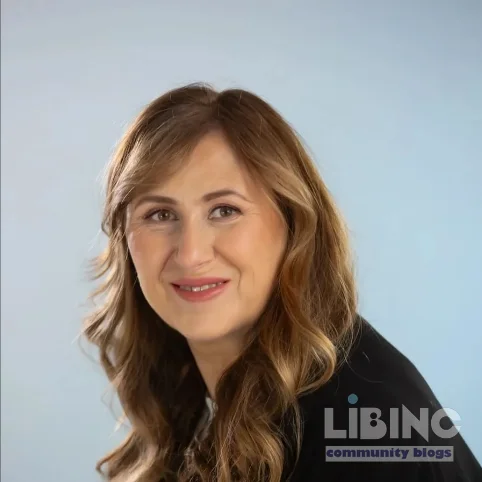
Practice-Driven Mastery in Bridal Hairstyling: The Cross-Border Path of Angelica Tanta
- Analytics: Practice-Driven Mastery in Bridal Hairstyling
- Through Contrast: Traditional Constraints vs Modern Cross-Border Education
- Cause and Effect: How Mentorship, Repetition, and Digital Tools Accelerate Careers
- Expert Reconstruction: Reassembling a 20-Year Career in Bridal Hairstyling
In the world of bridal artistry, success hinges on more than knack or aesthetics. It rests on disciplined, repeatable practice that cements technique into muscle memory, paired with an unyielding commitment to continual learning. Angelica Tanta, a veteran in the craft, reveals how a Romania-born stylist leveraged an online mentorship from across Europe, a translation app, and relentless repetition to refine her bridal hair language. Her trajectory—rooted in bridal styling, balayage, and color—illustrates a broader truth: mastery in bridal hairstyling is a product of deliberate practice, cross-border knowledge exchange, and durable client relationships.
This article analyzes Tanta’s career through four lenses. It depicts the analytics of practice, contrasts traditional constraints with modern education pipelines, maps cause-and-effect links between learning tools and career milestones, and reconstructs a blueprint that other professionals can adapt to their own paths. The aim is not merely to describe success but to dissect the mechanisms that render it reproducible in a competitive industry.
Analytics: The Case for Practice-Driven Mastery in Bridal Hairstyling
The bedrock of Angelica Tanta’s career is a constant feedback loop between practice and outcomes. In bridal hairstyling, precision is as important as artistry: the ability to sculpt movement, volume, and texture that hold through a wedding day demands hundreds, even thousands, of micro-repetitions. The analytics of craft here are simple but powerful:
- Time-to-completion per hairstyle and per client session, enabling predictable scheduling and reduced wedding-day stress.
- Retention of signature techniques across seasons, tracked by client feedback and repeat bookings.
- Color and texture precision quantified by client satisfaction surveys and professional audits of finished looks.
- Consistency of outcomes across different hair types, densities, and lengths, demonstrating transferable skill rather than site-specific talent.
Why does this analytics frame matter for bridal hairstyling? Because repeatable outcomes convert curiosity into confidence, and confidence drives referrals. Tanta’s practice regime—refining one hairstyle to near-perfection and then applying the same process to varied heads of hair—creates a scalable blueprint rather than a one-off achievement. The result is a portfolio that transcends stylist demographics and becomes a language brides can trust across occasions and seasons.
A crucial element in this analytics approach is the embrace of online mentorship. Tanta’s mentor, based in Ukraine, demonstrated that expert guidance can traverse borders when intentional practice aligns with clear feedback, even when communication relies on Google Translate. This is not a novelty but a model for modern craft: mentorship scaled by digital access, with practice as the universal translator.
The practical implication for peers is straightforward: design your practice around outcomes you can measure. For bridal hairstyling, that means documenting hairstyle shapes, movement, and longevity; coding lessons into a repeatable routine; and standardizing color and cutting protocols so differences in client requests become opportunities to apply a stable core method. In short, analytics make the craft legible for both the practitioner and the client, turning intangible artistry into demonstrable reliability.
The broader takeaway extends beyond one haircut. Lifelong learning, when coupled with disciplined practice, accelerates growth and opens doors to opportunities such as professional recognition and industry nominations, including awards that reflect consistent, high-quality execution over time.
Through Contrast: Traditional Constraints vs Modern Cross-Border Education
The beauty industry has long tied success to in-person apprenticeships and local reputations. Yet Angelica Tanta’s career demonstrates that the most influential learning often occurs when borders dissolve, and education is measured by outcomes rather than geography. The contrast between traditional constraints and modern, cross-border education can be summarized in four axes:
- Access vs proximity: An online mentorship replaces physical proximity with curated expertise and flexible scheduling.
- Language barriers vs translated practice: Translation tools and shared professional language allow complex technique transfer without misinterpretation.
- Static curricula vs evolving techniques: Global educators continuously update methods, keeping the student ahead of trends rather than reacting to them.
- Individual talent vs repeatable process: The emphasis shifts from “who you are” to “how you execute,” enabling consistent results across clients.
The practical effect is a more resilient career pathway for bridal hairstylists. When a stylist can access diverse European techniques, they can synthesize a signature approach that blends softness, movement, and volume in unique ways. Tanta’s preference for soft-dramatic styles with movement illustrates this synthesis: the result is a look that honors tradition while embracing contemporary aesthetics.
The contrast also highlights a risk: relying solely on local networks can narrow stylist development. Online education expands the repertoire, but it demands intentional practice to translate ideas into reliable, repeatable outcomes on real clients. In Tanta’s case, this risk is mitigated by the discipline of nightly practice on mannequin heads after family hours, turning away-from-home learning into a homegrown mastery.
The lesson for readers is clear: embrace distributed learning, but anchor it with a practice system that guarantees consistency. Cross-border education expands possibility; disciplined practice makes the possibility reliable in the real world of weddings and client expectations.
Cause and Effect: How Mentorship, Repetition, and Digital Tools Accelerate Careers
The chain of cause and effect in Tanta’s story is crisp and instructive. An online mentor, communication through translation tools, and relentless repetition converge to produce mastery in bridal hairstyling that translates into career milestones and industry recognition.
- Cause: Access to a diverse set of European techniques via online education. Effect: A larger palette of styles to draw from when tailoring looks for brides with different hair types and preferences.
- Cause: Daily after-hours practice on mannequin heads. Effect: Refined muscle memory and reduced service time on live clients, increasing booking capacity and client satisfaction.
- Cause: Use of social media as a learning tool and showcase platform. Effect: Networking opportunities, competition nominations, and collaborations with educators and brands.
- Cause: Consistent communication with clients about home care and styling expectations. Effect: Higher client trust, repeat bookings, and longer-term relationships that sustain business growth.
The cross-pollination of ideas from educators across Europe feeds Tanta’s signature approach. She notes that she loves learning techniques from educators across Europe and adapting them into her own signature style. This is not mere imitation; it is selective assimilation—extracting principles, validating them on real clients, and reinserting them into a personal practice language that resonates with brides seeking movement, volume, and natural elegance.
Social media, far from trivializing craft, serves as a perpetual classroom for the modern bridal hairstylist. It accelerates exposure to new color formulas, haircutting methods, and product knowledge, while also offering a feedback loop from peers and clients. The risk is oversaturation, but disciplined curation—focusing on techniques that align with one’s signature approach—keeps the learning channel productive.
The causal chain is reinforced by the professional recognitions that result from sustained practice and learning. Tanta’s inclusion in the MODERN SALON 100 list in 2021 is not a solitary achievement; it’s a distal signal that a career built on practice and continuous education yields credible, visible impact in a competitive market.
Expert Reconstruction: Reassembling a 20-Year Career in Bridal Hairstyling
Reconstructing Angelica Tanta’s career involves tracing the deliberate steps that convert aspiration into a durable professional trajectory. The reconstruction emphasizes four pillars that others can adapt: disciplined practice, cross-border mentorship, strategic use of digital tools, and a client-centered ethos.
- Origin and exposure: Born in Romania; early exposure to diverse European techniques through online communities and educators.
- Mentorship and language as enablers: An online mentor from Ukraine who communicated via translation software; the barrier became an opportunity for creative problem-solving and precision-focused practice.
- Signature framework: Development of a personal approach that blends movement, volume, and soft drama in bridal hairstyles, enhanced by balayage and color work.
- Business acumen: Transition from service mastery to a salon leadership role, emphasizing client experience, ongoing education for staff, and wellness in the beauty profession.
The practical reconstruction for peers is simple: anchor your craft in a repeatable process that tests itself against live outcomes, then expand that process with mentors who push you to refine core techniques. Create a signature language in your work—an identifiable aesthetic that combines mechanics with emotion—and protect it as a core asset of your business.
Angelica Tanta’s journey also shows the value of intentional experimentation. She describes how she would practice the same hairstyle repeatedly until mastery emerged, a method that allowed her to transfer the technique across clients with different hair textures and preferences. This approach turns the unknown into a predictable service profile, a crucial factor in building trust with clients on their big days.
The broader implication for the industry is that success is not a one-off moment but an ecosystem. It thrives when practitioners combine constant practice with curated knowledge, shared through digital channels and validated by real-world outcomes. For bridal hairstyling, this ecosystem translates into better client experiences, stronger professional communities, and a more resilient career path that can weather market shifts and evolving trends.

In sum, the cross-border learning narrative paired with relentless practice yields a sustainable, high-quality practice in bridal hairstyling. By treating practice as a craft discipline rather than a hobby, stylists can convert curiosity into mastery, and mastery into a credible, lasting career.
If you want to apply this blueprint, start by mapping a signature set of bridal looks you want to master. Create a weekly practice plan, engage with mentors online, document outcomes, solicit honest feedback, and align your learning with client-facing outcomes like time efficiency, look stability, and long-lasting texture that survives a wedding-day environment. Practice makes perfect, but deliberate, reflective practice makes a career.
"Practice makes perfect. The more you learn, the more successful you become."
A Practical Progression Framework for Bridal Hairstyling Mastery
To convert learning into consistent outcomes, adopt a four-phase progression that links deliberate practice with real client results. Phase 1: Core technique capture. Build a personal library of foundational looks—sleek low buns, soft volumized half-ups, and movement-forward blowouts—and document a recipe: prep, base shape, sectioning, setting, finish. Phase 2: Repetition with variation. Practice each technique on mannequins or volunteers with different hair textures, recording time, texture stability, and hold. Phase 3: Real client translation. Apply the same looks in staged client sessions, gather feedback on stability and longevity, adjust timing and products. Phase 4: Mentorship integration and scale. Schedule regular mentor reviews, apply feedback to new looks, and train staff using the same repeatable routines.
| Week | Focus | Practice Hours | Expected Outcome |
|---|---|---|---|
| 1 | Core techniques capture | 6 | Baseline recipes memorized |
| 2 | Variation on textures | 5 | Texture control across hair types |
| 3 | Mannequin to model transfer | 6 | Time efficiency improved |
| 4 | Live client pilot | 4 | Longevity and movement validated |
Interpreting the plan: it creates a stable baseline that you can reuse for diverse clients, while strengthening your confidence and client trust through predictable results. This approach emphasizes practical, observable outcomes over abstract theory.
With this framework, any stylist can build a durable practice that scales with opportunities, not just with time.
What is the Practical Progression Framework for bridal hairstyling mastery?
In practice, the framework comprises four clearly defined phases that start with capturing core techniques, then progress through structured variation and controlled live sessions, before culminating in mentorship-driven expansion that scales across clients and seasons, ensuring that each technician can reproduce the same outcomes regardless of hair type, texture, or wedding setting, and that the learning journey remains transparent, auditable, and repeatable from one client to the next. This approach ties deliberate practice to measurable outcomes such as time per look, hold, movement, longevity, and client satisfaction, turning artistry into a dependable service that couples can plan around with confidence.
Depth: The four-phase model creates a durable framework you can reuse across clients, trends, and seasons, while enabling a scalable learning path that aligns with real wedding-day needs.
How does online mentorship accelerate skill development across borders?
In practice, online mentorship connects a learner with diverse techniques and feedback without requiring physical proximity, creating a continuous feedback loop that speeds mastery. This approach hinges on structured practice, clear milestones, and regular check-ins, so improvements are visible and actionable on real clients. It also minimizes geographic limits, letting stylists access top educators, fresh formulas, and global trends that enrich local work.
Depth: When paired with disciplined practice, cross-border mentorship expands a stylist’s repertoire and builds confidence that translates into superior client outcomes and broader opportunities.
Which metrics should a stylist track to quantify improvement?
In practice, track time per look, movement quality, hold through ceremonies, and client satisfaction scores after each wedding or editorial session. Add a consistency metric across hair textures and densities to verify transferability of skills. Regular audits of finished looks by peers or mentors provide objective progress checks and help normalize outcomes across diverse client requests.
Depth: Quantitative metrics turn subjective artistry into demonstrable reliability that clients can trust and that teams can scale.
How can a stylist translate practice into durable wedding-day results?
In practice, implement a signature routine for each look that includes precise timing, product usage, and setting techniques, then validate on live clients with follow-up feedback. Use a color and texture protocol that remains stable from prep to photos, regardless of environmental factors. Regular mentorship feedback helps refine this protocol so it remains robust under pressure.
Depth: A durable routine reduces last-minute improvisation and improves client confidence and satisfaction on a bride’s big day.
What steps can a beginner take to start applying this approach during a busy season?
In practice, map a four-week starter plan: week one captures core techniques; week two introduces controlled variations; week three runs a small live-client pilot; week four invites mentorship feedback and scales to a second look. Maintain a simple log of outcomes, time, and client feedback, and gradually expand once consistency exceeds a preset threshold. This phased start keeps momentum without overwhelming schedules.
Depth: Starting small with measurable milestones makes mastery achievable even in peak wedding seasons.








Add a comment
To comment, you need to register and authorize
Comments