

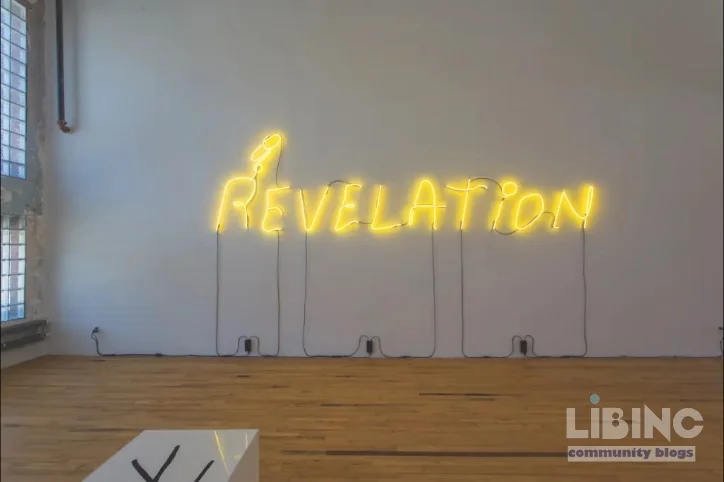
Steffani Jemison and the Open-Ended World-Making of Past and Present in New Humans
Table of Contents
- Analytics: Jemison's method and the five books
- Contrast: museum display and literary practice
- Cause and effect: how reading shapes making
- Expert reconstruction: lessons for curators and artists
Steffani Jemison's installation for New Humans at the New Museum puts a quiet motor to work, refining dredged debris into material memory. Her method folds reading into making; she moves between writing and sculpture with a calm, precise cadence. In this piece, she singles out five books she keeps returning to, not as simple reads but as operational frameworks. The selection reveals how Jemison thinks historical narrative is open-ended, how pasts and presents keep talking to each other. In reading this way, we glimpse her project of world-making that resists final closure and makes room for misfit voices. This article analyzes the books as evidence of a method, and shows how Jemison's open-ended approach reshapes how we read archives in contemporary art.
Analytics: Jemison's method and the five books
Jemison positions reading as a practical toolkit for making, a stance she described in a 2019 Artforum essay as seeking "a route to drawing, and a route to writing, that does not pass through any masters at all." That insistence on autonomy becomes a procedural rule for her studio practice. The five books she flags are not mere recommendations; they function as operating systems that recalibrate time, voice, and authority within a work of art. In this sense, her practice resembles a software update for how we approach archives, memory, and the politics of form.
One of the most explicit threads in her selections is a departure from linear, master-inflected narratives toward open-ended, multi-voiced reimaginings. Keene's short stories, which reframe historical language and documents from perspectives that unsettles conventional timelines, provide a model for Jemison's method. The stories operate like probes that reveal how history can be read from multiple angles at once, rather than as a single, authoritative account. This aligns with the larger cultural project of critical fabulation, a term Saidiya Hartman popularized to describe the imaginative reconstruction of Black stories outside the archival record. Jemison's fascination with this mode signals a deliberate shift away from archival fidelity as the sole measure of legitimacy toward narrative experimentation as a form of resistance.
Kevin Quashie's Black Aliveness expands the horizon further by insisting that world-making is not confined to overt political acts but is enacted through everyday poetics and communal practice. Quashie offers a theory of Black world-making rooted in the present and the possible, where the subjunctive tense—what could be, what might be—becomes an orientation toward collective life. Jemison absorbs this stance and translates it into studio rhythm: a gradual, patient, iterative process that treats form as a living conversation rather than a static record. In this light, the five books function as navigational instruments for sustaining a posture of openness toward history and its borrowings.
Another pivotal reference in Jemison's canon is Lydia Davis, whose craft anthology returns attention to the micromechanics of revision and language itself. Davis does not preach a grand theory of literature; she shows how drafting, reworking, and close reading of texts can reveal the hidden architectures of writing. The emphasis on revision resonates with Jemison's own preference for developing ideas through practice, where every turn of the tumbler and every removed fragment invites a rethinking of what the work could be. This responsiveness to language and form reflects a broader strategy: let materials speak in their own keys and let process generate meaning rather than force-proof conclusions on an audience.
S.A. Cosby represents a different register—a voice rooted in the South's working-class contexts, where humor and grit coexist with sharp social observation. Jemison highlights Cosby’s approach to narrative, which refuses to reduce Black life to a single stereotype and instead paints a richly textured social ecology. The portrayal of drag racing and other subcultural textures signals how everyday scenes can become political sites when authors resist sanitized depictions. Jemison absorbs this texture into her practice, acknowledging that culture is braided from many informal channels, not merely canonical or prestige-driven pathways. The effect is a form of art-making that privileges ambient knowledge and informal literacy as legitimate sources of meaning.
Nazareth Hassan’s work—spanning plays like Bowl EP and Practice—extends the lesson into dramatic form. Hassan’s texts stage dialogues that explode into other modes, melding narrative with song-like cadence and vignette-like discontinuities. Jemison recognizes in these experiments a reminder that Black artistic production does not conform to a single genre or discipline. The interpenetration of theater, language, and visual rhythm becomes a model for how her installation might fold textual cadence into mechanical motion and material accumulation. The result is an art that entertains multiple frames of reference rather than prescribing a single interpretation.
Finally, Slow Mania’s hybrid materials—photographs embedded with language—underscore the contemporary tendency to fuse image and text as a single perceptual field. Jemison’s interest in this volume lies in its cultivation of atmosphere and texture, moving beyond flat storytelling toward a richer sense of living environments. The Brooklyn-leaning sensibility of Slow Mania echoes the exhibition’s urban scale, inviting viewers to inhabit a porous boundary between memory and mobilization. The five works together illuminate a clear throughline: Jemison’s method treats reading as a form of making, and making as a form of reading—an interlacing of text, object, and action that resists tidy closure.
Contrast: museum display and literary practice
Jemison’s approach stands in deliberate opposition to traditional museum pedagogy, where text often serves as label and annotation rather than an active instrument in the artwork’s making. The table of artifacts in New Humans reads more like a field notebook than a curated catalog, inviting viewers into a workflow rather than a conclusion. This is not a retreat from interpretation but a reallocation of interpretive power: readers become participants, and objects become prompts for reading rather than endpoints of meaning.
One major contrast lies in temporality. Museums often curate with a desire for archivable stability, while Jemison choreographs an unstable temporality that mirrors literary practice. Her debtor to the past is not a faithful transcription but a re-voicing of past voices within present concerns. This shift matters because it reframes what counts as evidence. If the archive is a set of mobilizable fragments, then literary practice becomes a method for reorganizing those fragments into living conversation.
Another contrast concerns authorship. In Jemison’s space, authorship no longer resides solely with a single writer or a confirmed canon. Rather, authorship dissolves into a constellation of voices that cross disciplines and generations. The installation presents a collaborative economy in which text, object, and motion negotiate a shared authorship. Viewers encounter a porous boundary between authorial intention and audience interpretation, a boundary that is typical in avant-garde writing but unusual for museum display.
In terms of audience engagement, Jemison treats spectators as co-creators of meaning. The work expects viewers to bring linguistic and historical literacy to the encounter, and to participate in the ongoing process of world-making. This participatory stance contrasts with a model that prescribes a fixed narrative arc or a definitive interpretation. It echoes the sense that world-making is an ongoing practice, not a completed project assigned a single reading.
Cause and effect: how reading shapes making
The relationship between Jemison’s reading and her making operates on multiple causal threads. First, the books cultivate a habit of listening to marginal voices. Keene’s experiments with perspective encourage Jemison to listen for voices that archives overlook, and to translate that listening into sculpture and mechanism. The result is a kinetic rhetoric: a tumbler turning as if to sift history, letting certain residues rise while others recede. The cause is not mere inspiration; it is a methodological choice to reframe what counts as evidence in art.
Second, the concept of Black Aliveness reframes the purpose of world-making. Rather than constructing a closed, utopian blueprint, Jemison’s practice uses world-making to sustain alive relations—between past and present, between text and image, between human and material. The subjunctive present becomes a strategic stance: what relations could emerge if we imagine them into being? The effect is to shift the audience’s expectation from resolution to ongoing negotiation, a hallmark of world-making that remains insistent even in a gallery setting.
Third, the practice of revision, as highlighted by Davis, informs Jemison’s process of trial and error. Her work resembles a living manuscript: drafts come into being through making, and each iteration redefines the parameters of the next. This iterative loop creates a feedback mechanism where material constraints shape narrative possibilities, and narrative ambitions recalibrate the material setup. The causal chain links revision, materiality, and narrative potential into a single ongoing experiment.
Fourth, the inclusion of Cosby’s grounded, regionally specific life-worlds demonstrates how authenticity emerges from friction. The humor, material culture, and social texture of Cosby’s South challenge abstract universalism. The effect on Jemison’s practice is to ground her open-endedness within concrete social ecosystems, ensuring that world-making remains attentive to lived experience and local specificity rather than sweeping generalizations.
Fifth, Hassan’s theatrical sequences—where dialogue fractures into new forms—remind Jemison that form itself can be polyvalent. The audience experiences crossing points between language, performance, and object. The causal implication is a hybrid installation logic: objects, text, and sound operate together to generate meaning rather than to reinforce a single explanatory key. The result is a densely layered encounter that rewards repeated viewing and reading.
Expert reconstruction: lessons for curators and artists
To translate Jemison’s method into future practice, curators should design environments that foreground process as content. Rather than presenting writing as separate panels or wall texts, integrate textual acts into the fabric of the installation. Panels can emerge as reactions to the work rather than as authoritative explanations. This approach preserves the sense that interpretation is an ongoing negotiation, not a finished map.
Exhibitions could model a continual dialogue between making and reading. For example, curators might commission companion objects that act as literal interfaces for reading—fold-out pages, movable drawers containing fragments, or mechanical devices that transform text into form. The goal is to create a dynamic system in which material and text co-evolve, echoing Jemison’s orbit of open-ended inquiry.
For artists, Jemison’s example invites a shift from “influence as lineage” to “influence as operative framework.” When choosing source materials, practitioners can treat books as experiments rather than as sources of stylistic replication. Use the ideas to recalibrate your own practice rather than to reproduce norms. Embrace multiplicity, dissenting voices, and cross-genre experimentation as essential components of a robust artistic program.
Educationally, programs surrounding such work should emphasize critical reading alongside making. Facilitators can design workshops that pair short literary experiments with hands-on fabrication sessions. The aim is not to convert visitors into specialists but to nurture a literacy of interpretation that mirrors Jemison’s own approach: read, make, revise, and re-read in an iterative loop.
Ultimately, Jemison’s practice models a form of art that refuses a final verdict. The open-ended relationships between past and present—borne from a varied library, and enacted through mechanized debris—offer a durable framework for thinking about how art engages with history. The New Humans installation becomes less a completed project than a living instrument for ongoing inquiry, inviting viewers to participate in the work of world-making rather than to witness its conclusion.
In sum, the five books Jemison selects are not tokens of preference but schemata for practice. They demonstrate how literature can operate as a co-creator with sculpture and sculpture as a counterpoint to text. The result is a porous, collaborative form of art that locates value in process, dissent, and the generative friction between voice and material. This is the essence of Jemison’s contribution to the discourse around art, literature, and memory: an insistence that archives live when we continuously reimagine them through action and reading.
What follows is a concise synthesis of the core argument: Jemison’s New Humans program reveals that the most vital contemporary art asks not what history has given us, but what history can still become when opened up to reading, making, and collective imagination. Her method—rooted in a disciplined openness to multiple voices and forms—offers a practical path for artists and curators seeking to cultivate literature-informed practice that remains dynamically responsive to the present.
In the end, Jemison’s work invites a simple but ambitious invitation: let the past speak through the present, and let the work of making keep questions alive. Open-ended world-making demands this ongoing collaboration between readers, objects, and makers. The result is art that remains in motion, never fully settled, always ready for the next turn of the tumbler.
Practical pathway: applying Jemison's reading-as-making framework
To translate the article's ideas into practice, practitioners need a concrete workflow that connects reading to making without losing openness. The following pathway focuses on a repeatable process that curators and artists can adapt, while foregrounding the core ideas of open-ended reading, critical fabulation, and world-making as living practice.
- Step 1 — Select operating texts: choose five volumes that model open-ended inquiry, with voices across disciplines and contexts. Provide a one-sentence rationale for each selection to anchor its use in the studio and gallery.
- Step 2 — Translate ideas into material tasks: convert textual prompts into physical actions—paragraphs become mechanical cues, phrases become embedded marks on debris, and narrative tensions become kinetic triggers.
- Step 3 — Design interactive displays: craft prompts for viewers to participate, such as movable text panels, audience-led readings, and fragments that visitors can rearrange, keeping interpretation iterative.
- Step 4 — Embrace iterative revisions: reveal drafts, revisions, and failed attempts as visible parts of the installation to demonstrate that making and reading are ongoing conversations.
- Step 5 — Measure engagement and respond: track dwell time, paths through text-object clusters, and qualitative feedback to inform subsequent iterations while preserving openness.
Scenarios define how this plays out: a gallery display where five operating shelves translate passages into modular sculpture; a residency where weekly readings drive live fabrication cycles; a classroom where students build a field notebook linking quotes to artifacts. These formats demonstrate how critical fabulation and Black Aliveness guide world-making as a durable, inclusive process rather than a fixed narrative. The result is a structured yet open-ended workflow that keeps audiences inside the dialogue: reading informs making, and making, in turn, reframes what counts as evidence in art.
By foregrounding process, memory, and communal meaning, the approach travels across galleries, studios, and education spaces, enabling artifacts and texts to co-evolve in a shared language of memory and material memory.
FAQ
How does Steffani Jemison's reading-to-making approach operate in practice?
Steffani Jemison treats reading as an active design tool rather than a passive archive reference, using books as operating systems that recalibrate time, voice, and authority within a work of art; she repeatedly tests how written text can move through fabrication, sound, and object form, turning passages and marginal notes into mechanical cues for sculpture and installation. This approach invites viewers to join a conversation where literature and material practice co-create meaning, rather than delivering a single interpretation. The practice encourages a collaborative, iterative workflow that values revision and audience engagement as integral parts of the artwork.
Analytically, this method foregrounds the porous boundary between authorial intention and viewer interpretation, making the installation a living conversation rather than a finished product.
Why are the five books treated as operating systems rather than mere references?
Because each text provides discrete procedures, constraints, and prompts that guide object-making, narrative pacing, and how time is experienced within the work. They function like software updates that reframe how archives, memory, and form interact in an artwork. This framing shifts the center of gravity from canonical authority to practical experimentation, enabling multiple voices to shape the project over time.
Analytically, the operating-system metaphor helps curators and artists design systems that remain adaptable and teachable, even as components change.
How does this method alter museum pedagogy and audience involvement?
The method reconfigures the audience from passive observers to active participants who contribute to reading-in-motion. Text becomes a living element in the installation, and viewers are invited to engage with fragments, revise meanings, and co-create connections between text and object. This approach challenges traditional label-driven display by prioritizing process, dialogue, and open-ended interpretation. It mirrors avant-garde writing practices where authorship is distributed and where the audience completes the work through participation.
Analytically, it aligns with contemporary curatorial strategies that value multiplicity, inclusivity, and the politics of reading as a form of practice-based research.
What practical steps can curators take to implement this approach?
Start by identifying five texts whose ideas can translate into objects, textures, or mechanical prompts. Design a workspace that makes reading and making visible in parallel—drafts, prototypes, and viewer responses should be part of the display. Create interactive elements that invite visitors to engage with the text through movement or rearrangement of fragments. Finally, document iterations to reveal the project’s ongoing dialogue rather than a finished narrative.
Analytically, this creates a feedback loop between research, fabrication, and reception that can be audited and revisited in future exhibitions.
How do critical fabulation and Black Aliveness inform the practice?
Critical fabulation invites imaginative reconstruction of marginalized histories beyond the archival record, while Black Aliveness centers the present and possible futures through everyday acts, language, and community. Jemison’s method operationalizes these ideas by building world-making that thrives on plurality, resilience, and tied-to-life experimentation rather than closure. The practice foregrounds voices outside the canonical canon, ensuring that the work remains open to revision and re-interpretation as social contexts evolve.
Analytically, these frameworks provide ethical and methodological grounds for inclusive, dynamic installations that invite ongoing communal participation.
How can educators and artists evaluate impact and iteration?
Evaluation should combine qualitative feedback with observable engagement metrics—where visitors read, move, or contribute, and how meanings shift over time. Document revisions and audience prompts as part of the exhibit record and use that data to plan subsequent iterations. This approach treats impact as an evolving attribute of the work, not a final score.
Analytically, assessment becomes part of the artwork’s life cycle, mirroring the continuous loop of reading, making, and re-reading that defines Jemison’s practice.





Add a comment
To comment, you need to register and authorize
Comments