

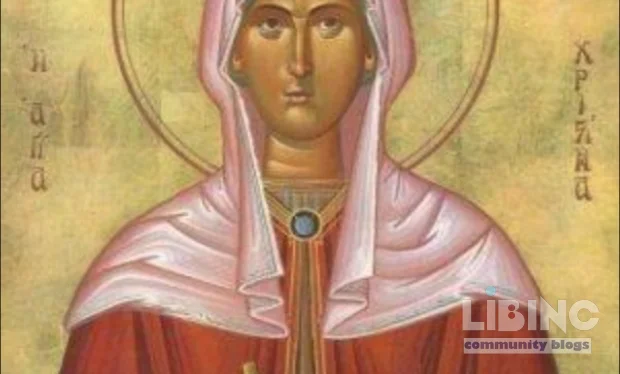
Table of contents:
- Analytics: Saint Christina in the framework of martyr narratives
- Contrast: Christina’s story against pagan power and imperial authority
- Cause and effect: From confession to miracles and mass conversions
- Expert reconstruction: Memory, gender, and the iconography of martyrdom
The problem examined here is not merely who Saint Christina was, but how her story operates within the larger tapestry of early Christian memory. The tale frames a young woman’s conversion as a contest between a dynastic pagan priesthood and a rising Christian identity. In doing so, it raises the stakes about religious authority, social legitimacy, and gendered agency in a world where power is wielded through ritual, coercion, and public spectacle. The hidden conflict emerges in the tension between filial duty and spiritual fidelity: Urban, the governor and Christina’s father, seeks to control her body and belief; Christina answers to a higher authority that refuses to be domesticated. The direction of analysis is to reveal how the narrative’s architecture—accusations, miracles, punishments, and public conversions—produces a robust counternarrative about the nature of true belief and communal memory. This is not merely a biographical sketch; it is a case study in how martyr legends function as instruments of religious legitimation and social cohesion.
In this analysis, Saint Christina is treated as a node in a web of early Christian memory that links personal virtue to collective identity. The story’s insistence on dramatic signs—the angelic visitation, the breaking of idols, and the miraculous survivals—serves to translate private conviction into public legitimacy. The stakes extend beyond Tyre or Syria; they touch on how communities parse authority when imperial power edges toward coercion of belief. Our aim is to unpack how the narrative’s analytic structure reveals causes and effects that resonate with later Christian memory, iconography, and missionary strategy. By focusing on how the martyr’s life travels from isolation to influence, we illuminate a pattern repeated in other hagiographies: private faith catalyzing public reform.
Analytics: Saint Christina in the framework of martyr narratives
The narrative begins with a striking inversion of expected power. A girl of exceptional beauty is kept in isolation within a tower or a secluded room, surrounded by gold and silver idols, symbols of a religious system that claims ancient legitimacy. Yet the text presents beauty as a vulnerability that awakens spiritual discernment rather than as a tool for social manipulation. Christina’s awakening is not incidental; it is recognized by an angel who marks her as the bride of Christ and guides her toward decisive action. This moment—divine sign in a controlled space—functions as the germ of the martyr’s vocation, transforming private contemplation into public disruption. The core mechanism is clear: spiritual revelation disrupts pagan economy and lineage, creating a chain reaction that culminates in public trial and persecution. The miracle logic that follows—idols smashed, wounds healed, enemies confounded—serves as a rhetorical strategy to convert onlookers and authorize a new social order centered on Christ. In this sense, the Saint Christina narrative is best understood as a testing ground for the credibility of miraculous testimony within early Christian memory, where the authenticity of the believer hinges on observable signs that cannot be easily dismissed by a skeptical public. The motif of the angel and the revelation to a young woman also reconfigures gendered expectations in antiquity, offering a counter-model to elite patronage by showing spiritual authority as transcendent rather than hereditary.
The chain of events—conversion, idol destruction, arrest, torture, and repeated miraculous salvation—serves a unified analytical function: it links personal integrity with communal legitimacy. The Martyr’s testimony becomes a social technology that persuades by example, not merely by doctrine. The depiction of Christina’s endurance under the wheel, the furnace, and the sea imprisonment demonstrates a cause-and-effect pattern where divine guardianship transforms pain into a sign that converts crowds. These dynamics align with the broader genre of martyr narratives in early Christianity, which rely on extraordinary persistence to demonstrate the superiority of a Christ-centered universe. The text thus operates as an early analytic of persuasion, using dramatic sequences to test the resilience of faith under public scrutiny. The historical materials suggest that the Christina story, like other martyr legends, is as much about shaping memory as it is about recounting an event, leveraging theatrical exposure to recalibrate religious elites and lay believers alike.
Contrast: Christina’s story against pagan power and imperial authority
At the heart of the narrative lies a stark contrast between the sanctity of Christ and the material spectacle of idol worship. Urban’s household, filled with gold and silver idols, embodies a religious economy that equates political power with sacred legitimacy. Christina’s act of smashing the idols is thus a double betrayal: she rejects established family rites and rejects the coercive order of the state that depends on pagan ritual for social cohesion. The immediate consequence is not merely familial anger but public alarm: the ruler’s authority is challenged in a space—the home—that should be a sanctuary of paternal control. The subsequent trials marshal the crowd as witnesses, turning private defiance into a political crisis; the threats against Christina become a proxy war over which spiritual allegiance should govern Tyre. In this sense, the narrative uses the domestic sphere as a proving ground for loyalties the state cannot officially concede without undermining its religious legitimacy. The power dynamic is layered: a father’s personal grievance escalates into imperial implications as the Governor’s office becomes a site of religious contestation. The tension highlights how pagan institutions rely on spectacle—idol markets, public executions, and imperial decrees—to maintain social order, while Christina’s confession introduces a competing public that prizes mercy, divine protection, and invulnerability against worldly coercion. The contrast thus reveals the fragility of pagan hegemony when confronted by a faith that claims a universal sovereignty beyond state boundaries. In the broader frame of early Christian memory, this clash demonstrates how martyr narratives function as political commentary about who controls religious authority and who authorizes the memory of a people.
The story further contrasts the epistemology of belief with the logic of power. Pagan ritual, as depicted, is dependent on manufactured signs and human agency, whereas Christina’s faith rests on signs that originate beyond human means—angelic direction, miraculous healing, and survival against lethal devices. The repeated miracles operate not as fanciful exceptions but as epistemic milestones that reframe what counts as credible testimony in a world where eyewitnesses are the primary arbiters of truth. When the crowd witnesses Christina’s courage and the supernatural sustenance she receives, belief migrates from fear to conviction. The conversion of about three hundred people in Tyre is not a peripheral statistic; it is the tangible outcome of a narrative that intertwines moral courage with divine intervention. Such conversions signal a shift in public memory from the old gods to a new center of meaning, thereby increasing the legitimacy of Christian communities within a city that once defined itself through imperial and pagan loyalties.
Cause and effect: From confession to miracles and mass conversions
The chain of causation in the Christina narrative moves from private conviction to public consequence with remarkable clarity. Christina’s early prayer, tearful plea, and fasting create a substrate for the angel’s intervention, which in turn precipitates the destruction of idols and the examination by Urban. The immediate effect is brutal punishment: torture, imprisonment, and attempts on her life that are intended to deter future apostasies. Yet the pattern of effect reverses course through divine intervention. A healing in the night and the miraculous resilience under torment produce a reputational effect that outruns the literal events of the day. The public is convinced not by eloquence alone but by signs that sustain life where life should have ended. The subsequent wave of conversions—reaching about three hundred pagans who abandon their idols—gives the narrative empirical weight, transforming personal faith into a collective transformation. The cause-and-effect logic thus operates as a model for how individual piety can catalyze social change, particularly in regions where religious adherence is entangled with political loyalty. The martyrdom becomes an instrument of social engineering, shaping how Tyrians perceive authority, miracles, and the possibility of change under Christian auspices. The chapter ends with a final demonstration of power imbalance: the savage punishment by Julian and the ultimate sword, which confirms the martyr’s unwavering fidelity while consolidating her status within the Christian tradition as a figure of transcendent authority over temporal rulers. This sequence—confession, violence, resurrection-inflected signs, and ultimate execution—embeds a theory of martyrdom as the strongest countervailing force to state-sponsored paganism and imperial coercion. It also foregrounds how memory preserves not just a life but a model for future Christian communities. The genealogies of belief rely on these dramatic turning points to justify continued perseverance in the face of persecution and to anchor communal identity in shared spiritual triumphs rather than inherited privilege alone.
A deeper examination reveals a causality that extends beyond Tyre. The Christina narrative participates in a wider pattern of martyrdom literature in which public violence against devout believers is transformed into a public proclamation of faith. The text suggests that the endurance of the saint under torture does not merely demonstrate virtuous resolve; it rewrites the terms of power. The afflicted body becomes a pedagogy of belief, teaching communities how to interpret suffering as meaningful and divine protection as real. The mass conversions are not incidental; they are the functional outcome of witnessing a life that refuses to bend under pain. This pattern—private piety turning into public reform through miraculous signs—begins to structure the memory of early Christian communities, shaping how later generations narrate the relation between faith, power, and social change. In this way, the Christina story acts as a microcosm for understanding martyr narratives as vehicles for cultural transformation and ideological endurance within a contested historical landscape.
Expert reconstruction: Memory, gender, and the iconography of martyrdom
Scholars approach Saint Christina’s life as a composite of historical memory and literary invention. The presence of an angelic guide, the dramatic destruction of idols, and the recurring miracles are not transparent historical events; they are symbolic devices that encode a portable theology of fidelity under pressure. The hagiographic framework makes Christina a model for both female virtue and heroic resistance within a public sphere that often muted women’s voices. The gendered dimension of Christina’s story is not incidental; it reframes authority by presenting a woman whose faith becomes a catalyst for national and communal renewal. The physical mutilation she endures—severed breasts and tongue—reads as a brutal extremity designed to test the limits of faithfulness and to condemn the pagan cult of body and image. Yet the text’s resilience to such wounds—her continued presence and the crowd’s conversion—reframes bodily integrity as a site of spiritual potency. This inversion is not merely sensational; it is a deliberate rhetorical strategy to reallocate moral authority away from the state and toward a divine horizon that transcends human power. The expert reconstruction of this legend emphasizes the role of memory in shaping religious identity, where the martyr’s legacy becomes a lasting emblem for ecclesial communities facing similar pressures. The narrative’s endurance across generations also implies a form of iconography that later Christian art would inhabit: the angel, the wheel, the furnace, the sea, and the sword as charged symbols of divine protection and ultimate witness. In this sense, Saint Christina is not only a figure of faith but a progenitor of the way martyrdom is imagined, remembered, and taught within early Christian culture. The text invites us to view the Christina story as a social artifact—an instrument for stabilizing belief, negotiating authority, and projecting a transcendent frame of reference onto historical contingencies that would otherwise erode communal identity.
The reconstructive exercise highlights how this martyr narrative travels beyond its Tyrian setting. Its themes—cosmic conflict between a true God and manufactured idols, the sovereignty of divine will over human power, and the promise of ultimate vindication—resonate with broader early Christian concerns about truth, authority, and mission. The tale’s durability can be traced to its capacity to convert spectators into believers while offering communities a recognizable pattern for describing persecution and triumph. The Christina story thus becomes a textbook example of how martyr legends function as memory technologies: they encode doctrinal truth in vivid scenes, they justify social practices, and they provide a shared language for interpreting suffering as meaningful witness. Ultimately, Saint Christina embodies a form of religious authority that is earned not by birthright alone but by steadfast fidelity under pressure, a template adopted by later saints and martyrs who would carry forward the same logic into new historical moments.
One critical gap in the current analysis is the absence of concrete social context for Tyre in the third century and how gendered expectations shaped the reception of Christina’s story. This closing section adds that texture by linking public memory, ritual performance, and iconography to real urban life, showing how a martyr tale travels from private piety to collective identity.
| Motif | Action | Sign | Public Response |
|---|---|---|---|
| Angelic visitation | Guides Christina | Divine sanction | Legitimates vocation |
| Idol destruction | Icons shattered | Ephemeral power exposed | Public shock; shifts allegiances |
| Miraculous survival | Endures torture | Evidence of protection | Mass conversions |
| Public martyrdom | Witnessed by crowd | Visible witness | Community memory solidified |
The grid above helps readers see how ritual signs become public proofs that move belief from private conviction to collective action. For example, the angelic guidance functions as a social signal that legitimizes Christina’s authority beyond family ties, while the smashing of idols operates as a dramatic event with real social consequences for Tyre’s religious economy.
Conversions illustrate the tangible social impact when private fidelity becomes public testimony.
To bridge the analysis to lived experience, consider three practical scenarios in a Tyrian context: (1) a festival where a miracle sparks personal devotion and forms a new local practice; (2) a city tour where iconographic signs reframe public space as a site of worship; (3) a guild gathering where Christina’s story offers a model for negotiating authority between families, cities, and imperial power. Each scenario shows how memory, gendered agency, and sacred signs can recalibrate social norms in real communities.
| Stage | Action | Sign | Impact |
|---|---|---|---|
| Isolation | Christina remains secluded | Monastic-like devotion | Sets stage for public miracle |
| Idols smashed | Public confrontation | Divine defiance of pagan order | Public alarm in Tyre |
| Arrest & torture | Perseverance under pain | Martyr’s courage | Stubborn witness reshapes memory |
| Miracles & healing | Survival signals | Divine protection | Mass conversions |
| Execution | Final witness | Transcendent legitimacy | Enduring icon in Christian memory |
These elements together model how martyr narratives function as memory technologies: they encode doctrinal truth in vivid scenes, justify communal practices, and provide a shared language for interpreting persecution and triumph. Christina’s story thus becomes a enduring template for how faith asserts itself in the face of political coercion and how communities preserve a transcendent frame of reference across generations.
What role does Saint Christina's story play in early Christian memory?
Saint Christina's martyrdom functions as a memory technology that anchors communal identity by turning private conviction into public allegiance. The narrative offers a portable script—signs, suffering, and victory—that later Christian communities reuse to teach resilience and faithfulness. This pattern helps explain why martyr legends endure and shape ritual life long after the events allegedly occurred.
Analytically, the tale operates as a template for how memory preserves belief under pressure, influencing iconography and preaching in subsequent centuries.
How do miracles and signs influence conversions in the Tyre narrative?
Miracles act as observable proofs that push skeptical onlookers toward belief. The destruction of idols, healing, and survival under torment provide compelling testimony that public witnesses equate with truth. This dynamic is central to why about three hundred pagans are described as converting, signaling a shift in social consensus rather than a mere individual choice.
In broader terms, miracle rhetoric becomes a social mechanism for legitimating new religious belonging.
What is the significance of iconography (angel, wheel, furnace, sea) in Christina's story?
Iconography encodes theological claims in memorable images. The angel signals divine sanction; the wheel, furnace, and sea depict danger transformed into protection. These motifs translate private faith into a communal visual language that supports teaching and worship across generations, reinforcing the shift from pagan to Christian authority in Tyre.
Used consistently, such imagery becomes a common vocabulary for religious education.
How does the tale address gender and authority in antiquity?
The narrative foregrounds a woman's agency within a male-dominated political world. Christina's fidelity and public courage challenge patriarchal norms, reframing spiritual authority as a transcendent power that can override dynastic or imperial claims. The story thus contributes to a broader conversation about gender, power, and sanctity in late antiquity.
Readers can trace how female voices in martyr legends contest social hierarchies while modeling virtuous leadership for Christian communities.
What broader pattern does Christina's martyrdom illustrate within early Christian memory?
The episode exemplifies how martyr stories function as memory technologies that encode truth claims through dramatic scenes. This pattern supports communal continuity, informs liturgy, and provides a narrative toolkit for interpreting persecution and social change in later centuries.
Scholars use this pattern to compare other saints and to understand how memory, ritual, and iconography co-create a durable Christian identity.
How can readers apply the Christina narrative to understand religious coercion and memory in modern contexts?
Modern readers can view Christina as a case study in evaluating how communities preserve belief when political power attempts to regulate faith. The core takeaway is that memory can empower resilience, mobilize collective action, and sustain ethical commitments even under pressure from dominant authorities.
In practice, this means examining how contemporary narratives use signs and stories to foster shared values while guarding against coercion.





Add a comment
To comment, you need to register and authorize
Comments