

Table of contents:
- Through analytics
- Through contrast
- Through cause-and-effect relationships
- Through expert reconstruction
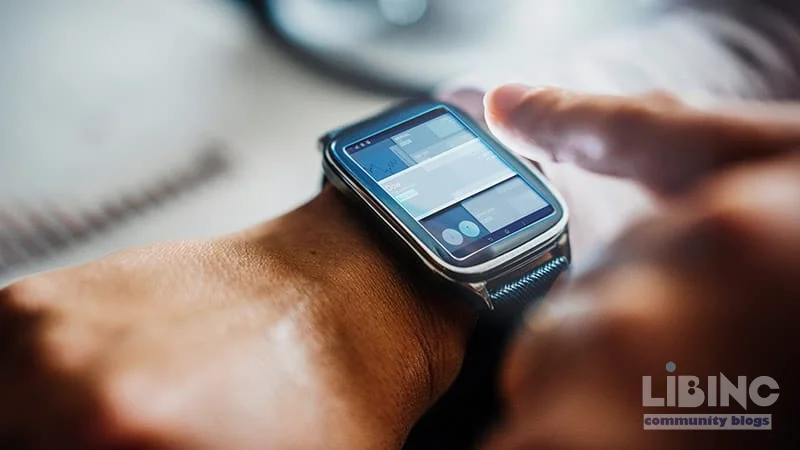
Today, a patient arrives for an appointment carrying months of health information captured long before stepping into the clinic. Their smartwatch has tracked heart rhythm, sleep quality, activity, and recovery, weaving a longitudinal narrative that can inform care decisions. The challenge is not data collection but turning wearable health data in clinical practice into meaningful action. The stakes are high: earlier detection, personalized interventions, and richer physician–patient conversations, balanced against workflow friction, liability concerns, and reimbursement hurdles. Innovation has outpaced the systems that support it, revealing a quiet conflict: more data does not automatically translate into better care. The direction is clear—to leverage wearable data in a way that enhances clinical judgment and strengthens the physician–patient relationship.
Through analytics
Wearable health data in clinical practice generate signals that are fundamentally different from episodic measurements. Time-series data demand analytical frameworks that distinguish noise from meaningful trajectory shifts. Clinicians benefit when analytics elevate contextual signals—consider an episode where a week-to-week rise in resting heart rate, sleep disruption, and reduced activity converges with a recent illness. In such moments, data fusion becomes critical: combining device-derived metrics with vital signs, patient history, and physical examination creates a more reliable hypothesis than any single metric alone.
To translate streams into care, we must advance beyond raw counts toward clinically validated features and actionable thresholds. That means establishing baselines tailored to individuals, not averages, and recognizing that context trumps any single score. For wearable health data in clinical practice to matter, we need standardized processing pipelines, reproducible validation studies, and interfaces that surface clinically meaningful trends rather than overwhelming dashboards. The most durable gains arise when technology supports judgment, not when it attempts to replace it.
Practical analytics require alignment with clinical workflows. When data streams are piped into electronic health records (EHRs) with clear, patient-specific annotations, physicians can act quickly without sorting through irrelevant noise. The method matters as much as the data: transparent algorithms, validation on diverse populations, and explicit confidence levels help clinicians interpret signals responsibly. This is why the push for wearable health data in clinical practice emphasizes not just data collection but rigorous evidence of utility in real-world care pathways.
Through contrast
Across six countries, physician interest in wearable data remains high; the divergence lies in the surrounding systems. In settings with mature clinical workflows, standardized data formats, and reimbursement pathways, wearable information begins to inform decisions more readily. In regions lacking interoperability, clear governance, and implementation support, data drift into a pile of information that fails to influence care. The contrast is not a matter of physician willingness but of infrastructure, policy, and organization design.
Key system differences that shape adoption include:
- Interoperability standards and data semantics that ensure consistent interpretation across platforms
- Clinical decision support that aligns wearable signals with existing guidelines
- Reimbursement structures that reward productive use rather than data collection alone
- Liability frameworks that clarify responsibility for remote monitoring decisions
- Training and support enabling clinicians to interpret patient-generated data confidently
Even with high physician engagement, routine integration remains below 6% in every country surveyed. That statistic reflects a systemic bottleneck: enthusiasm without scalable support produces limited practical impact. The outcome is not a failure of technology but a failure of ecosystems to absorb and act on the information wearable devices generate.
Through cause-and-effect relationships
To understand why wearable health data in clinical practice struggle to meaningfully reshape care, we must map causal chains from data capture to patient outcomes. In many settings, the root causes cluster into four interconnected domains:
- Data interoperability and standardization → Fragmented records and time spent reconciling disparate data sources
- Clinical validation and evidence → Uncertain actionability of signals without robust, context-aware studies
- Workflow integration and user experience → Clinician burden rises when devices do not fit existing routines
- Reimbursement and liability → Financial and legal ambiguity dampen adoption and sustained use
Each cause yields tangible effects. Interoperability gaps produce data silos that require manual curation, slowing clinical reasoning and undermining trust. Lack of validation means a clinician cannot distinguish a meaningful trend from a random fluctuation, reducing confidence in decisions derived from wearable signals. When workflows fail to accommodate continuous data streams, clinicians default to episodic assessment, effectively nullifying the potential advantage of remote monitoring. Ambiguity around reimbursement and liability makes institutions reluctant to scale efforts even when pilots demonstrate promise.
Ultimately, the chain is clear: supply-side limitations in systems and governance constrain the clinical value of wearable data, which in turn dampens clinician confidence, patient satisfaction, and health outcomes. The inverse is also true—well-designed standards, validated use cases, and supportive workflows can convert volumes of data into timely, life-improving actions. The objective is not to collect more data but to create reliable, context-aware signals that clinicians can trust during routine care.
Through expert reconstruction
A constructive reconstruction requires collaboration among clinicians, technology developers, health systems, policymakers, and researchers. The AMA’s Center for Digital Health and AI explicitly frames this as not merely an innovation push but a disciplined effort to build evidence, standards, and policy that ensure patient outcomes improve. Expert reconstruction proceeds along four pillars:
- Clinical co-design of devices and interfaces to fit real patient visits and workflows
- Standards development for data formats, provenance, and interoperability
- Robust clinical validation and demonstration projects that quantify impact on outcomes
- Policy and reimbursement models that align incentives with patient-centered value
Practically, what this means for daily practice is a staged approach. First, embed wearable data within a shared decision-making framework that respects patient context—stress, illness, medications, and life events matter as much as any metric. Second, adopt standardized, auditable data streams with transparent algorithms so clinicians can interpret trends with confidence. Third, integrate decision-support prompts that are precise, actionable, and non-disruptive to patient encounters. Fourth, secure reimbursement pathways and clear liability guidance to sustain long-term use without penalizing clinicians for uncertainties inherent to new technology.
The overarching aim is not to replace clinicians but to empower them with trustworthy signals and a clearer roadmap for action. When systems, standards, and trust align, wearable health data in clinical practice can support better conversations, earlier interventions, and more precise care—ultimately translating data into better health outcomes for patients.
From here, the path forward hinges on disciplined collaboration and measured implementation. The promise is not simply more information but better medicine—where patient-generated signals become the backbone of proactive, personalized care, and where clinicians feel supported rather than overwhelmed by data streams.
In this framework, patients remain at the center. They gain a partner whose recommendations are informed by continuous observation and clinical reasoning, not by isolated measurements. The result is a health system that treats health as a dynamic, longitudinal process rather than a series of snapshots—a transformation enabled by wearable health data in clinical practice, when paired with robust systems, rigorous standards, and shared clinical purpose.
The main question remains: what are the biggest barriers preventing you from using patient wearable data in your practice? Share your experiences in the comments to help shape the next steps in this ongoing evolution.
John Whyte, MD, MPH, is CEO of the American Medical Association.
Note: The content reflects trends and positions discussed in professional discourse about wearable health data and digital health, emphasizing the need for evidence-based integration into clinical practice.
Closing the practical barrier: turning wearable signals into care
Wearable data should feed a simple, repeatable workflow where signals are quality-checked, summarized into a patient-specific trend within the electronic health record, and paired with precise, action-oriented steps that a clinician can execute during the visit; this approach reduces noise, preserves clinician time, strengthens patient trust through transparent rationale, enables timely interventions such as scheduling a tele-visit or medication review, and creates a durable evidence trail by documenting outcomes and adjustments that can be evaluated in future visits and across diverse populations, driving continuous improvement in care delivery.
| Data Type | Signal | Actionability | Clinical Context |
|---|---|---|---|
| Resting heart rate | Weekly trend | Moderate | Infection risk, recovery |
| Sleep duration | Consistency | Moderate | Recovery quality |
| Activity steps | Week-to-week | High | Functional status |
| Heart rhythm | Irregularities | High | Arrhythmia screening |
In practice, this means presenting trends as patient-specific narratives within the EHR, with confidence levels and explicit next steps. A simple rule: if a week-long uptick in resting heart rate coincides with sleep disruption and lower activity, alert the clinician with a suggested action (e.g., schedule tele-visit, review meds) rather than a raw number. Such signals should be validated in diverse populations and surface only when clinically meaningful.
Tailored thresholds increase clinician confidence and patient trust.
- Data capture and quality checks
- Ensure device pairing and data completeness
- Mark missing days for context
- Data processing and interpretation
- Contextual dashboards with confidence scores
- Surface only clinically meaningful trends
- Clinical action and feedback
- Provide concrete steps and patient-facing explanations
- Close loop with follow-up and outcomes tracking
Applying this framework fosters better conversations and timely care. For success, institutions need interoperable data formats, clear governance, clinician training, and reimbursement models that reward value, not volume.
What is the practical workflow to integrate wearable data into routine care?
Wearable data should be incorporated through a defined routine that starts with patient-specific baselines, quality checks on the stream, and a concise trend summary surfaced in the EHR along with a clear action plan for the visit; this enables timely interventions such as a tele-visit or medication review, and provides an auditable rationale so clinicians can explain decisions to patients and refine thresholds over time. This end-to-end flow supports consistent decision-making rather than ad hoc use of data.
In practice, begin with a small patient cohort, validate the data pipeline, and measure impact on visit efficiency and patient outcomes before scaling.
Which wearable data types provide the most actionable signals in clinics?
Signals that couple duration and quality, such as resting heart rate trends, sleep consistency, and day-to-day activity, tend to be most actionable when interpreted in context with recent illness, medications, and functional status. Heart rhythm data add screening value for arrhythmias, while multi-parameter trends improve specificity when combined with vital signs. The key is to predefine what constitutes a meaningful change for each patient and surface those changes with a confidence score rather than raw numbers alone.
How can clinics address interoperability and data governance?
Interoperability requires standard data formats, clear provenance, and consistent terminology so that signals are comparable across devices and records. Establish governance policies that specify who can act on signals, how patient consent is captured, and how data quality is monitored. Regular audits, standardized dashboards, and audit trails help maintain trust and reduce legal risk as use expands beyond pilots to routine care.
What role does clinical decision support play in this approach?
Clinical decision support translates wearable signals into actionable prompts aligned with guidelines. It presents concise recommendations, confidence levels, and justifications, so clinicians can decide quickly during visits without sifting through raw streams. Effective decision support reduces cognitive load, standardizes care, and fosters better patient conversations by providing consistent, explainable recommendations.
What steps are needed to implement a wearable data program, including reimbursement?
Implementation starts with governance, data standards, and clinician training, followed by a phased rollout that includes monitoring impact on outcomes and workflow. Reimbursement considerations require demonstrating value through improved outcomes, reduced gaps in care, and time saved during visits. Build a business case showing measurable benefits and align with payer policies that reward patient-centered value rather than data collection alone.








Add a comment
To comment, you need to register and authorize
Comments