

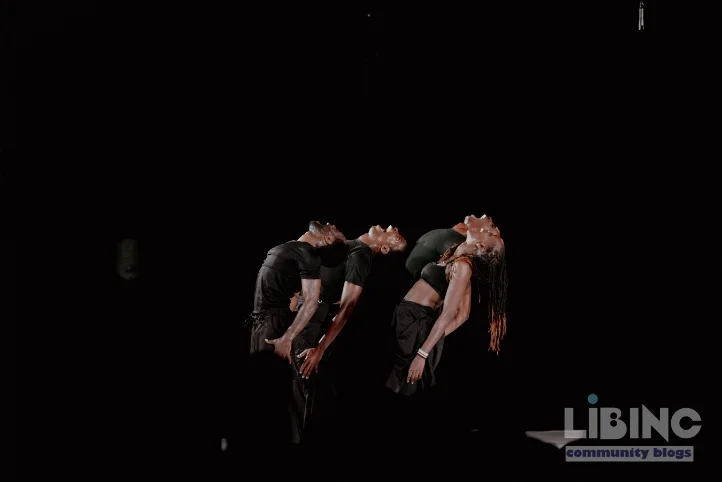
Crimes against humanity—whether the Armenian genocide, the Rwandan genocide, or ongoing crises affecting today’s generations—do not end with a moment of violence. They seed long shadows that shape bodies, memories, and futures. Art offers a countervailing force: a space where memory can be tested, where imagination can reframe pain, and where communities can practice care and recovery. This essay examines how performance becomes a vehicle for resilience, drawing on the experiences of Sonya Armaghanyan and Wesley Ruzibiza, two artists who meet across continents to exchange stories, build trust, and imagine healing through shared practice. The central question is simple and stubborn: how can artistic practice catalyze healing when history keeps reasserting its scars?
In this analysis, the main concept is resilience through art. The term stretches beyond endurance; it implies reconfiguration, renewal, and the capacity to reassemble collective memory into meaningful futures. The discussion centers on how artistic processes—collaboration, embodiment, storytelling, and ritualized performance—convert trauma into a learning medium for communities. The focus is not merely on individual catharsis but on social repair: the recovery of trust, the reestablishment of social bonds, and the emergence of new, more adaptive identities. The argument is that resilience through art is less about heroism and more about reinvention—a deliberate, often painful, but necessary re-organization of self and society.
As the conversation with Armaghanyan and Ruzibiza unfolds, the layers become clearer. Imagination acts as a cognitive and physical skill that reorganizes perception. Play and movement become vehicles for memory and inquiry. Love, care, and solidarity become political acts that counter isolation and despair. The analysis that follows builds in four movements: a rigorous analytics of how art shapes resilience; a contrast between different geographies and practices; a cause-and-effect account of mechanisms linking art to healing; and an expert reconstruction that frames practical directions for arts-based healing in conflict-affected contexts. Each section peers at the same question from a distinct vantage, seeking not only to describe but to explain why art matters in times of crisis.
Analytics: Mapping resilience through art
Resilience through art emerges from the stabilizing effect of embodied practice during crisis. Movement creates new neural and social pathways that bypass paralytic fear and foster agency. The mechanisms are not mystical; they are procedural and learnable. When artists collaborate under pressure, they deploy a repertoire of techniques that reframe threat as a prompt for collective inquiry. This is not merely storytelling; it is a form of knowledge production that converts shock into insight. The analytic frame here centers on how process—rehearsal, improvisation, feedback loops—produces measurable shifts in mood, social cohesion, and perceived safety.
One core mechanism is embodied imagination. Sonya Armaghanyan describes a childhood memory of a trapeze artist and magical puppet theatres as a seed for creative identity. This is not nostalgia; it is a practical model of resilience: imagination as action. The body remembers what the mind cannot always bear to recall, and through movement, memory can be tested, revised, and reconciled. Imagination thus becomes a cognitive resource that enables new narratives to emerge from trauma. In trauma-informed practice, this is recognized as a way to reframe distress as information that the body can metabolize rather than suppress.
The analytic lens also foregrounds the social fabric that surrounds art making. The Armenia project described by Armaghanyan—rehearsals that created trust among disparate groups, with English serving as a bridge language—illustrates how collaborative art builds social capital. Trust is not incidental; it is a strategic outcome of shared risk and vulnerability. The process of making art together in a mixed group creates a relational ecology where actors learn to read, respond to, and support one another. This relational tightening is a concrete form of resilience, reducing isolation and increasing collective efficacy. In the broader literature on arts and health, such social dynamics constitute a key predictor of positive outcomes in crisis situations.
To anchor these observations, consider the broader field of performance as a recovery space. The act of performing under shared adversity creates a public arena for truth-telling, witness, and solidarity. The release of tension through movement can unlock previously inaccessible emotional states, allowing individuals to access compassion, empathy, and mutual recognition. For communities facing displacement, eroded trust, and memory fragmentation, performance can serve as a living archive—an improvisational record of collective endurance that remains accessible to future generations. The consequence is a form of resilience that is both plastic and participatory: it can be shaped, shared, and sustained by the community itself.
Finally, the analytics point to an emergent discipline: arts-informed health. A growing corpus of practice-based research supports the integration of arts in health initiatives as a way to measure psychosocial gains. In this frame, resilience through art is not a singular event but an ongoing program of creative interventions that are adaptable to shifting crises. The explicit objective shifts from “overcoming” to “reconfiguring”—to use a language of design rather than merely endurance. This reframing is essential for funding, policy, and institutional support, because it defines resilience as an adaptive system that can be cultivated, evaluated, and scaled across contexts.
In sum, analytics show that resilience through art is a structured capability: it relies on embodied imagination, relational trust, and a shifting understanding of healing from suppression to reconfiguration. It is not a miracle cure, but a credible strategy for navigating collective trauma with agency and dignity. The transformation occurs through practice—the repetition of rehearsals, the risk of collaboration, and the slow accrual of shared memory that outlives the crisis itself.
Contrast: divergent paths, shared impulses
The experiences of Sonya Armaghanyan in Armenia and Wesley Ruzibiza in Rwanda illuminate how resilience through art travels across cultures, yet converges on similar human needs. The Armenian context carries the weight of a century of diaspora memory, genocide prevention, and inherited trauma from Artsakh conflicts. The Rwandan arc carries the aftershocks of 1994 and ongoing questions about belonging, citizenship, and national healing in a post-genocide society. Both contexts reveal how art operates at the intersection of memory work, identity formation, and political possibility. Yet their approaches diverge in form, audience, and structural constraint. This contrast clarifies which elements of resilience through art are universal and which must be tailored to local ecologies of vulnerability and strength.
- Memory as material: In Armenia, memory is not only personal but communal, archived in family narratives, schools, theatres, and diaspora networks. In Rwanda, memory is embedded in the public square and in transformative theatre that collides with political lineage and state narratives.
- Audience and reach: Armenian projects often involve diasporic and local communities in multilingual settings, where English or Armenian serve as bridges. Rwandan works frequently target a younger generation of citizens negotiating peace and belonging after generations of flight and displacement.
- Form and ritual: Armenian resilience may lean toward theatre, puppetry, or performance that interweaves folklore with contemporary memory. Rwandan resilience often leverages dance-theatre, collective storytelling, and ritual procession as sites of communal reconciliation.
Despite these differences, both artists describe healing as a social act rooted in care. The shared impulse is not merely to survive but to testify—through performance, to honor the dead, to acknowledge the living, and to model a future where violence does not define daily life. In both contexts, imagination becomes a practice of political imagination: it invites audiences to re-see the world, to recognize shared humanity, and to reconfigure social contracts around care and equity. The contrast reveals a universal logic: resilience through art requires a space where stories can be told, bodies can move, and communities can assemble new meanings from fractured histories.
Ruzibiza’s Multitude project embodies this ethos as an attempt to “remind us that, before anything else, we are human beings, and that we need one another.” Armaghanyan’s work anchors resilience in childhood memory and communal theatre as a shield against ongoing threat. The synergy lies in the shared conviction that art offers not an escape from pain but a method for inhabiting it with integrity. The contrast underscores a crucial point for practitioners and policymakers: interventions must be culturally legible, participatory, and capable of scaling within local ethical and political landscapes while preserving the core therapeutic aims of healing, dignity, and social cohesion.
From these divergent paths emerge a common architecture of resilience through art: a framework that invites communities to imagine futures where care supersedes fear, where memory is a resource rather than a burden, and where performance becomes a ritual of belonging. The challenge is to translate this architecture into sustainable, place-based programs that can travel with fidelity yet adapt to local realities. The result is a more capacious understanding of healing—one that combines imagination, shared labor, and cultural specificity into a durable practice of resilience.
Cause and effect: how art reimagines futures
The causal chain from art to resilience rests on identifiable, repeatable steps. It starts with invitation: access to creative spaces where people can try things without fear of failure. It continues with embodiment: bodies learn to inhabit new possibilities through movement, voice, and gesture. It proceeds with narrative: stories become shared property, shaping community memory and identity. Finally, it yields social outcomes: increased trust, improved mood, and stronger networks of mutual aid. Each step is contingent on conditions that favor safety, inclusivity, and genuine participation. The result is a reimagined future in which crisis is not the terminus but a catalyst for new social forms.
The act of inviting diverse participants into a creative process already signals a political stance: resilience through art is, in part, an experiment in democratic belonging. When Armaghanyan describes rehearsals that brought together local Armenians, diaspora members, and foreign participants, she highlights a deliberate decentering of monolithic narratives. This decentering itself acts as a healing mechanism: it distributes agency, validates multiple voices, and models how communities can negotiate difference. The political dimension matters because trauma is not only personal; it is structural. By including varied voices, the project creates a proto-democracy of memory where competing truths can be voiced and reconciled through shared practice.
Emotionally, the perception of light—“the light a lot” that Armaghanyan notices—becomes a diagnostic tool for resilience. Light changes mood, signals hope, and marks passage of time. This sensory cue supports the broader proposition that healing is a somatic process as much as an intellectual one. The body learns to anticipate relief, and those anticipations reorganize daily life. In the wider field, such somatic cues are increasingly recognized as vital to trauma recovery, especially for communities accustomed to regular disruption. The cause-and-effect logic thus includes sensory recalibration as a legitimate pathway to resilience through art.
Another causal vector arises from love and care as foundational resources. Both artists frame art as an act of care—a practice that aligns attention, tenderness, and responsibility. This ethical dimension reshapes the risk calculus of communities living with threat: care becomes both protection and resistance. It creates spaces where vulnerability feels permissible, enabling participants to reveal fears, hopes, and needs without crushing judgment. The resulting social atmosphere fosters mutual accountability, enabling people to mobilize resources and support one another through difficult times. Healing becomes a collective enterprise rather than a solitary pursuit, and this collective dimension strengthens community resilience under pressure.
Ultimately, the cause-and-effect architecture of resilience through art rests on the convergence of practice, memory, and care. When communities rehearse, tell, and listen, they generate a living archive of endurance that future generations can consult. The archive functions as a navigational instrument: it helps communities interpret new threats, mobilize allies, and design responses that reflect shared values. The result is not a single dramatic breakthrough but a sustained cycle of creativity and care that gradually shifts social norms toward greater empathy and mutual support. This is the actionable script that practitioners, funders, and policymakers can adapt to local realities while preserving the core healing function of the arts.
In this light, expert reconstruction emphasizes system-wide integration. If arts-based healing is to scale, it must align with health systems, education, and cultural policy. It requires robust training, ethical guidelines, and evaluation metrics that capture psychosocial gains without reducing art to a commodity. It demands partnerships across sectors—arts organizations, health providers, community groups, and policymakers—so that resilience through art becomes a durable infrastructure rather than a one-off intervention. This is the practical horizon: a resilient ecosystem where creativity, care, and community reinforce one another in perpetuity.
Expert reconstruction: shaping arts-based healing futures
The final analytic frame asks how to translate these insights into concrete, scalable practices. The recommended approach blends bottom-up community leadership with top-down policy support, ensuring that local voices shape program design while national or regional structures provide funding, standards, and evaluative tools. The following propositions synthesize the expert reconstruction:
- Co-design and co-ownership: Involve community members, artists, and educators from the outset to ensure relevance, accessibility, and sustainability.
- Trauma-informed creative curricula: Develop training that centers safety, consent, cultural humility, and ongoing assessment to prevent re-traumatization.
- Visible channels for memory and testimony: Create performance and exhibition formats that honor survivors and communities without exploiting pain.
- Evidence-building through arts-informed metrics: Combine qualitative storytelling with quantitative indicators of well-being, belonging, and social cohesion.
- Policy integration: Embed arts-based healing within health, education, and social services frameworks to ensure long-term support and legitimacy.
- International exchange and solidarity networks: Leverage diasporic and transregional networks to scale successful models while preserving local authenticity.
In practice, this means designing programs that can adapt to multiple crises—armed conflict, mass displacement, political repression—without losing their ethical core: care, respect, and shared humanity. The work of Armaghanyan and Ruzibiza demonstrates that resilience through art thrives where communities feel seen, heard, and invested in. As a field, arts-based healing must balance artistic integrity with social accountability, ensuring that creative expression remains accessible to those most marginalized by crisis.
For researchers, the implication is straightforward: document process as a variable as rigorously as outcome. For practitioners, the imperative is action: build spaces that prioritize trust, collaboration, and joy even amid hardship. For funders and policymakers, the message is strategic: invest in durable infrastructures—training, evaluation, ethical guidelines, and cross-sector partnerships—that sustain resilience through art over time. When these elements converge, resilience through art becomes not a momentary relief but a lasting capability—a public cultural mechanism for healing and renewal in the face of persistent crisis.
As the dialogue between Armaghanyan and Ruzibiza suggests, art offers a persistent counter-narrative to despair. It teaches that even in the shadow of crimes against humanity, the human capacity to imagine, to connect, and to care remains a powerful engine for recovery. The practice is not a luxury; it is a necessity for communities seeking to reconstitute themselves, piece by piece, through shared performance, memory, and love. In this sense, resilience through art constitutes a practical politics of healing—one that recognizes pain, honors memory, and builds futures where human dignity can endure beyond catastrophe.
Ultimately, the resilience through art framework invites ongoing experimentation. It invites communities to experiment with form, language, and ritual; to measure what matters; and to cultivate networks that translate imagination into real-world healing. The aim is to transform crisis into opportunity: to demonstrate, in concrete terms, that art can not only reflect human suffering but also catalyze its transformation into solidarity, understanding, and lasting peace.
Practical bridges: turning resilience through art into scalable practice
Real-world adoption requires concise, safe, modular design and simple metrics that practitioners can apply now. This approach supports arts-based healing by linking memory work to daily routines and fostering social cohesion across diverse contexts.
Design essentials
- Trauma-informed design: safety, consent, paced activity, and cultural humility.
- Co-design: involve survivors, local artists, and educators from the start to ensure relevance and dignity.
- Modular curricula: adaptable units for classrooms, clinics, and community centers.
- Simple evaluation: track participation, mood shifts, and perceived belonging.
- Policy fit: align with health, education, and social services for lasting impact.
Scenarios in brief:
- A rural high school launches a 12-week theatre program to build school belonging among teens.
- A refugee camp partners diaspora and host artists for weekly dance-theatre, culminating in a living memory archive.
- A city clinic weaves short arts workshops into care plans with regular mood checks.
Illustrative measurement table
| Phase | Mood | Belonging | Trust |
|---|---|---|---|
| Baseline | 3.2 | 2.9 | 2.8 |
| 2 weeks | 4.0 | 3.4 | 3.2 |
| 6 weeks | 4.6 | 4.2 | 4.0 |
Memory and care become design levers that guide facilitation, pacing, and public sharing, turning trauma into a shared learning process and strengthening social cohesion across groups.
Key insight box
Implementation frames the work as scalable, trauma-informed curricula that preserve artistic integrity while delivering measurable gains in well-being and social cohesion. This calls for modular design, cross-sector partnerships, and ongoing reflection to refine approaches as contexts evolve.
Implementation timeline snapshot
- Months 0–6: Co-design with communities; build facilitation networks.
- Months 6–12: Pilot trauma-informed curricula; establish safety norms.
- Months 12–24: Scale and integrate with schools and health services; monitor outcomes.
With these steps, resilience through art becomes a durable capability, not a one-off event.
How does resilience through art work in practice?
Resilience through art is a deliberate process where creative activities, memory work, and care practices intersect to help communities reframe trauma, rebuild trust, and establish sustainable routines. At its core, the approach uses accessible arts-based methods—like theatre, dance, storytelling, and puppetry—to create safe spaces, invite diverse voices, and translate emotional experience into shared learning that strengthens social cohesion and belonging across groups. This is not a single act but a structured practice that can be scaled with careful attention to safety and cultural context.
In practice, programs emphasize participation, guided reflection, and community-led design to sustain engagement and outcomes over time.
What makes trauma-informed practice essential in these programs?
Trauma-informed practice centers safety, consent, and agency, ensuring that activities do not re-traumatize participants but instead offer predictable, respectful environments. This approach enhances engagement, reduces re-traumatization risk, and builds trust—key prerequisites for meaningful healing, memory work, and social cohesion. By embedding these principles, programs become more resilient, ethical, and capable of adapting to diverse contexts while maintaining core healing aims.
How can programs be scaled without losing community fidelity?
Scaling succeeds when designs are modular, co-designed with communities, and aligned with local health and education systems. This means developing adaptable curricula, trained local facilitators, clear safety guidelines, and simple metrics that reflect well-being and belonging. Cross-sector partnerships help sustain funding and governance, while ongoing community feedback ensures the program remains culturally authentic and responsive to evolving needs.
What metrics best capture impact in arts-based healing?
Effective metrics combine qualitative narratives with simple quantitative indicators. Useful measures include mood or affect ratings, perceived belonging, trust in neighbors, attendance and retention, and the frequency of collaborative actions after sessions. Tracking these indicators over time helps demonstrate social cohesion and adaptive identity formation, while also guiding program improvements and funding decisions.
How can communities co-design these initiatives?
Co-design starts with inclusive forums that bring survivors, youth, elders, local artists, educators, and service providers to the table. Establish clear shared goals, language access, and transparent decision-making processes. Use iterative cycles of pilot, feedback, and revision, ensuring safety and consent norms are central. This collaborative approach sustains relevance, dignity, and accountability across cycles of healing and learning.
What is the long-term value of arts-based healing in conflict contexts?
Long-term value lies in building durable social infrastructure: practices that nurture memory, care, and mutual aid across generations. When communities can rehearse together, share stories, and demonstrate empathy in public settings, they create a public culture of resilience that persists beyond crises and informs policy, education, and health services. This cultivates inclusive identities and peaceful futures rooted in human dignity.




Add a comment
To comment, you need to register and authorize
Comments