

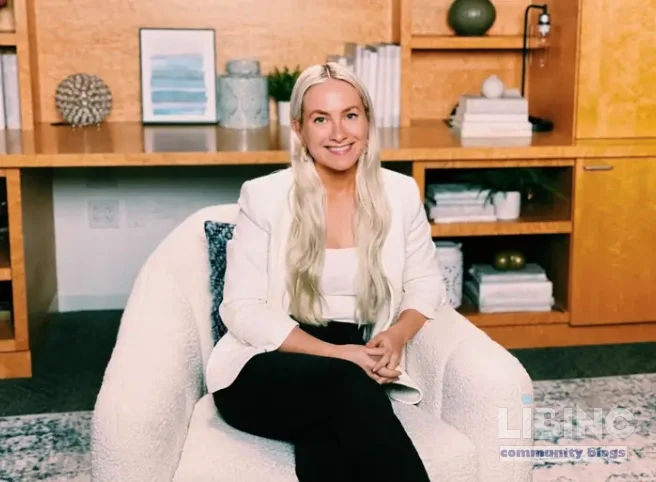
Modern Career Strategy: How Erin McGoff Pivoted from Filmmaking to Direct Audience Impact on TikTok in the AI Era
Table of contents
- Lead
- Analytics view: mapping the shift
- Contrasting paths: traditional roles vs direct-to-audience freelance
- Cause and effect: AI, hiring, and the self-employed shift
- Expert reconstruction: a practical playbook for a modern career strategy
- Moving forward
Lead
The film industry rewards craft, but it has long rewarded patience more than audacity. Erin McGoff built a reputation as a freelance editor by navigating a gatekept ecosystem where credibility is negotiated frame by frame and contact by contact. When the pandemic shuttered documentary work, she faced a choice: wait for permission to tell stories the old way, or reinvent what it means to build a career in a world where attention can be earned directly. She turned to TikTok and offered a simple framework for one of the most dreaded interview questions: tell me about yourself. One sentence about past, one about present, one about future. The video exploded. Suddenly, Erin faced the real test: could a modern career strategy survive outside the conventional pipeline?
That question was more than a viral joke. It exposed a core tension in professional life today: the need to blend craft with audience-building and branding, without sacrificing credibility. Erin weighed the fear of being dismissed as an influencer against the opportunity to reach people who were desperate for practical guidance about job interviews, remote work, pregnancy disclosures, and the realities of a market transformed by AI. The pivot wasn’t just about popularity; it was about recalibrating what counts as impact in a culture where information moves faster than ever. This is a case study in how modern career strategy can coexist with persistent professional standards.
What follows is a structured examination of Erin’s journey, not as a single anecdote, but as a framework for professionals seeking to navigate AI-era hiring dynamics, direct-to-audience channels, and the evolving definition of stable work. The aim is to translate lived experience into a robust playbook: how to validate your market, how to use AI as a tool rather than a threat, and how to balance self-reliance with meaningful collaboration. The focus stays on concrete outcomes, measurable signals, and a disciplined approach to building influence that sustains craft—and purpose—over time.
Analytics view: mapping the shift
The pivot to a direct-audience model didn’t emerge from whim. It followed a precise recognition of signals that defined the AI era’s job landscape: a glut of resumes, overwhelmed hiring managers, and a growing appetite for practical, instantly transferable guidance. Erin’s one-sentence framework distilled a lifetime of experience into a portable narrative that hiring teams could quickly parse. The appeal wasn’t fleeting virality; it was a reliable method that translated complexity into value. This is the essence of a modern career strategy: making expertise legible to nonexperts through concise framing and accessible demonstrations of capability.
From a data perspective, the experiment yielded a critical insight: audiences in this space care about relevance, empathy, and reliability as much as insight depth. The content that resonated the most addressed real-world hiring frictions—how to answer tell me about yourself, how to negotiate flexible schedules, how to disclose pregnancy to current or prospective employers—without sacrificing professional rigor. In this sense, Erin’s work functioned as a two-way signal: she learned what readers needed, and readers learned how to translate those needs into actionable career moves. The result is a feedback loop that aligns data with lived experience, a hallmark of a robust modern career strategy.
A practical implication is the importance of audience intelligence in shaping career decisions. Erin spends hours researching job trends, but she also treats audience messages as real-time market data. That dual input creates a flexible playbook that adapts to shifting hiring standards, the growing use of AI tools in recruitment, and the perennial questions employees face about autonomy and security. In short, the analytics aren’t just about views; they’re about sense-making in a world where AI-assisted screening and LinkedIn verification have become standard practice. This is where data-informed career strategy aligns with authentic storytelling.
Contrasting paths: traditional roles vs direct-to-audience freelance
Traditional career paths in film and media have long depended on ritualized steps: credentialing, gatekeeping networks, long-form portfolios, and permission-based collaborations. The constraints are real: access to edit rooms, festival programming, and the need to prove value repeatedly before broader opportunities appear. Erin’s path, by contrast, treats the career as a portfolio of outputs and relationships rather than a fixed ladder. The modern approach values speed, direct engagement, and the ability to monetize attention without surrendering the core craft. The tension between legitimacy and visibility is not resolved by choosing one over the other; it is rewritten as a new equilibrium where audiences become stakeholders in a professional’s ongoing work.
- Traditional path advantages: formal recognition, established negotiating power, predictable cycles of work.
- Direct-to-audience advantages: immediacy, scale, resilience to industry bottlenecks, potential for diversified income.
- Trade-offs: platform dependency, need for strong personal brand, and the risk of conflating influence with craftsmanship.
Erin’s audience reality is telling: a majority of her followers are women aged 18 to 40, many navigating motherhood or pregnancy while seeking remote or hyper-flexible work options. This demographic detail matters because it reframes value as not only technical proficiency but as a real-time mentorship that navigates a specific life phase. The contrast between the old model and the new is not a rejection of expertise; it’s a recalibration of how expertise is packaged, validated, and scaled in an environment where AI accelerates but cannot replace lived experience.
Cause and effect: AI, hiring, and the self-employed shift
AI’s ascent has altered the screening queue in hiring, and Erin’s story mirrors a broader shift in how candidates present themselves. AI-generated résumés flood applicant pools, making it harder for any single resume to stand out. The damage isn’t merely noise; it’s a signal failure: the system rewards broad keywords and automation-friendly formatting over nuanced, verifiable capability. The consequence is a paradox: candidates feel pressured to optimize for machines, while simultaneously seeking human contact and mentorship—the very things AI cannot replicate.
In this environment, LinkedIn ceases to be a static credential hub and becomes a live verification layer. Hiring managers increasingly look for authenticity cues: a coherent narrative, demonstrable impact, and evidence of ongoing professional dialogue. Erin treats LinkedIn as a real-time extension of her brand, updating it with concrete examples, testimonials, and data-rich posts. The AI era elevates the importance of human signals—credibility, consistency, and the capacity to learn from feedback. That dynamic helps explain why a self-directed route can feel safer and more controllable than a traditional, slower-moving ladder. It’s not an anti-credential stance; it’s a re-engineered credentialing system that blends artifact with audience validation.
This causal chain also intersects with the desire for self-employment, especially among parents who crave location independence and flexible hours. AI tools can amplify productivity, enabling one person to manage a broader scope of work than a traditional role would allow. The upshot is a more diverse set of employment paths—hybrid consulting, project-based editing, and content-driven advisory work—that can all be coordinated through a confident online presence and a reliable client-network. The cause is technological, but the effect is organizational: talent now stitches together craft, audience, and enterprise into a single operating system.
Expert reconstruction: a practical playbook for a modern career strategy
The endgame is not to reject traditional credentials but to reframe them as data points in a broader portfolio. Erin’s approach offers a hybrid blueprint that others can adapt. The core objective is to build a sustainable, self-reinforcing career engine that blends craft, audience, and enterprise.
Practical steps emerge from her experience:
- Define a value proposition that blends tangible expertise with audience-facing relevance. The aim is to translate a specialization into concrete outcomes that readers and employers can gauge quickly.
- Audit and optimize your resume with AI tools, but treat the output as a signal, not a substitute for evidence. List AI capabilities the organization would value, but anchor them with real case studies and measurable results.
- Update LinkedIn to reflect ongoing activity that resonates with hiring managers and potential collaborators. Use the platform to showcase process, impact, and authentic storytelling rather than generic buzzwords.
- Develop a one-sentence storytelling framework for interviews and project pitches. Past, present, future provides a compact narrative arc that makes your trajectory legible in moments of quick decision-making.
- cultivate a direct-to-audience content approach that complements traditional work. Build a content calendar that addresses common hiring questions while illustrating how your craft translates into real-world impact.
- Assess the viability of self-employment or hybrid arrangements. For many, a distributed portfolio of freelance work, consulting, and content creation offers greater resilience in uncertain markets.
- Plan for risk by diversifying income streams. Allocate time to long-term projects, shorter paid engagements, and audience-driven avenues that can scale with demand without sacrificing core craft.
To operationalize, start with a 90-day rhythm: audit and refresh your resume and LinkedIn, publish a weekly video or post that teachs a concrete skill, and map at least three clients or collaborators who align with your updated narrative. The objective is not to chase virality but to create a credible, reproducible workflow that expands your professional boundary and your audience reach. This is the essence of a modern career strategy: a disciplined blend of craft, storytelling, and enterprise that remains anchored in real-world impact.
Moving forward
Erin McGoff’s journey illustrates a broader truth about work today: the safest path is rarely a single ladder, but a lattice. By treating social media as a business tool, she unlocked a direct channel to her audience while preserving the integrity of her craft. The AI era compels professionals to be more proactive about signaling value, not just producing work. The most enduring careers will be those that couple technical rigor with tangible outcomes and a credible, audience-driven narrative. The road ahead may be nonlinear, but it is navigable with a clear framework, disciplined experimentation, and a willingness to redraw boundaries without abandoning what you love about your craft.
If you take away one idea from Erin’s experience, it’s this: the strongest career strategy is not a single move, but a continuous loop of learning, storytelling, and service. You don’t need permission to start building influence where you are; you need a plan to keep delivering value as markets evolve. As AI reshapes hiring and as platforms democratize visibility, the bottom line remains the same: stay curious, stay credible, and stay connected to the people who rely on your skills. A modern career strategy is not about chasing trends; it’s about creating your own resilient path through them.
Practical momentum blueprint for a modern career
To translate insights into enduring momentum, apply a repeatable rhythm that blends craft with audience-building and enterprise. The following 90-day plan offers concrete steps, example metrics, and ready-to-use templates that you can adapt to your field.
| Week | Focus | Output | Channel | KPI |
|---|---|---|---|---|
| 1 | Resume/L1 refresh | Portfolio update | 3 new case studies | |
| 2 | Content series kickoff | Video post | TikTok/LinkedIn | 600 views; 40 engagements |
| 3 | Target client mapping | Prospect list | Email/DM | 10 targets; 2 meetings |
| 4 | Process transparency | Case snippet | 25 saves | |
| 5 | Audience-building | Series starter | LinkedIn/TikTok | 150 new followers |
| 6 | Pilot engagement | First paid consult | Direct outreach | 1 client |
| 7 | Diversify | Micro-projects | Remote | 2 projects; 1 testimonial |
| 8 | Review and refine | Narrative update | All channels | Plan adjusted |
Target: roughly 3 client inquiries per week, 1-2 paid engagements per month, and 4-6 high-value posts that demonstrate impact.
The rhythm integrates craft with practical results, turning every publication into a test that informs the next move. Use this as a living template, adapting weeks, channels, and metrics to your field while preserving a tight link between outcomes and storytelling.
How can professionals balance craft and audience-building in the AI era?
In practical terms, balancing craft and audience-building means designing work flows that treat every project as a portfolio piece while consistently creating shareable, value-driven content that demonstrates impact, error-checking, and learnings, so that hiring managers and clients see repeatable outcomes rather than a one-off skill, and it requires a disciplined cadence: publish a concrete case, solicit feedback, refine messaging, and align every post with a real client win or measurable improvement in process time, quality, or cost reduction. This approach turns attention into evidence of capability, not mere attention, and it works best when you pair a few high-signal outputs with steady audience dialogue to validate demand over time.
This approach turns attention into evidence of capability, not mere attention, and it works best when you pair a few high-signal outputs with steady audience dialogue to validate demand over time.
What metrics help validate a modern, self-directed career?
Key metrics blend craft outcomes with audience engagement: time-to-first-inquiry, conversion rate from audience interaction to paid engagement, repeat client rate, and the depth of documented impact (before/after metrics, savings, or speedups), all tracked in a simple dashboard updated weekly; they tell you not only how many viewers you have, but whether your work translates into real business value and steady revenue streams. Continuous monitoring of these signals supports timely pivots and stronger proposals.
How should one structure a 90-day plan for career resilience?
Begin with a 30-day signal-inventory: refresh your resume, align LinkedIn with concrete outcomes, and compile 3 short case examples; 60 days introduce a recurring content cadence and 2 live networking opportunities; 90 days convert attention into paid engagements by testing a direct-offer with at least 3 qualified prospects. Stage each move with clear metrics and lightweight feedback loops to ensure momentum without sacrificing craft.
How does AI influence the hiring process and the self-employed path?
AI shifts the screening queue toward verifiable impact, narrative coherence, and demonstrated learning; it rewards concise storytelling and evidence of ongoing professional dialogue over raw credentials, and it opens doors for self-employment by enabling broader reach, faster delivery, and scalable advisory work through templates and automation, so the best path blends careful automation with direct human connection. Professionals should teach AI how to help them, not fear it, by documenting outcomes and sharing transparent processes.
What role does direct-to-audience content play in professional credibility?
Direct-to-audience content builds credibility by turning tacit knowledge into observable value: you demonstrate decision-making, explain your methods, and reveal results in real time, which reduces ambiguity for employers and clients; this kind of content should be tightly aligned with real projects, include measurable outcomes, and invite feedback to reinforce trust. When paired with strong craft samples, it becomes a durable signal of reliability and leadership in your field.





Add a comment
To comment, you need to register and authorize
Comments
The piece also foregrounds the tension between authenticity and influence. The fear of being dismissed as an influencer is real, yet influence can enlarge craft without eroding standards if governed by a clear personal code. A fruitful angle for discussion is governance: what boundaries protect craft, privacy, and equity when experts share insights publicly? For people managing life transitions—such as motherhood—how can signal design honor privacy while still offering practical mentorship and real-world guidance? The article’s emphasis on a lattice career invites a broader question: when should someone pursue a direct-to-audience path, and when should they anchor work in traditional institutions? And what forms of collaboration most reliably sustain craft while widening impact? These aren’t binary choices but a spectrum of partnership models, each carrying its own risks and benefits. The discussion could close by mapping a few decision heuristics: how to test viability of a direct-to-audience approach before stepping off a traditional ladder; how to structure collaborations that preserve craft integrity; and how to build a durable professional identity that remains legible across changing platforms and audiences.