

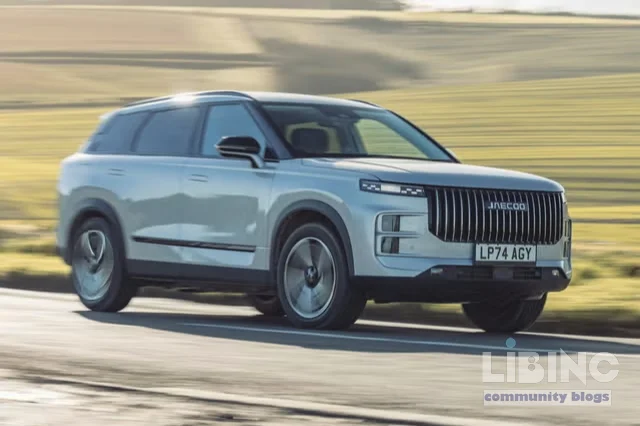
Jaecoo 7 and the UK market: pricing, strategy, and the speed of Chinese brand dominance
Table of Contents
- Through analytics
- Through contrast
- Cause-and-effect relationships
- Expert reconstruction
In just 18 months, Jaecoo 7 has leapt from obscurity to the UK's bestselling car status for a new entrant. This isn’t a tale of a miracle product; it’s a narrative about price, opportunity, and market timing. The UK’s tariff setup—modest at 10 percent compared with higher European duties—has created an opening for a bold challenger to seize share. The analysis focuses not solely on the car but on how pricing, incentives, and perception recalibrate what British buyers value. The Jaecoo 7 arrives in multiple forms—gas, conventional hybrid, and plug-in hybrid—with a striking silhouette and an entry price around 47,000 USD equivalent. That combination changes the risk-reward calculus for cost-conscious families. The outcome appears less accidental and more a deliberate, market-aware choreography.
What matters goes beyond horsepower and range; it hinges on fit with buyer wallets and daily routines. The plug-in hybrid variant expands practical electric operation, delivering roughly 50 miles of electric range and enabling features like 40 kW fast charging and V2L. When paired with aggressive leasing incentives, this package reshapes the perceived value of a Chinese brand in a market historically cautious about new entrants with foreign badges.
Through analytics
Jaecoo’s UK ascent rests on more than product appeal. It hinges on price positioning, availability, and the psychology of value. The 7 targets a familiar segment—the five-seat, mid-size SUV—competing with Honda CR-V, Toyota RAV4, and Kia Sportage. A silhouette borrowed from premium cues compounds the appeal, but the core pull remains a compelling on‑the‑road price and a flexible powertrain mix that meets family needs while sustaining margin discipline for the seller.
At the center of its analytics is cost-of-entry versus total-cost-of-ownership. The plug-in hybrid variant makes the car's total package competitive against established players by delivering a notional zero-emission aesthetic in daily driving while preserving long-haul convenience. The 50 miles of electric range reduces fuel costs for typical commutes, while the front-wheel-drive configuration keeps engineering and production simpler for the Chinese maker operating in a tariff-aware landscape.
Manufacturing geography matters here. The UK tariff sits at 10 percent, versus higher European levies that target imports from China as a broader policy stance. That gap translates into a pricing buffer Jaecoo can monetize through generous lease incentives and a rapid delivery cadence, which in turn accelerates brand salience. The result is a reinforcing loop: more cars on the road breed awareness, which spawns inquiries and fleet deals that sustain momentum.
But there are risks. The current model relies on steady supply and resilient demand; any tariff shift or currency move can compress margins or alter on‑the‑road pricing. Price leadership works best when availability and perceived quality rise in tandem, making lease deals a crucial instrument to keep the rhythm when market chatter turns skeptical.
Through contrast
Contrast is essential to understand Jaecoo 7’s UK traction. The car’s proportions and a Range-Rover-inspired design give it an image edge in a segment where perception matters as much as performance. Yet the interior feels generic, and long-term reliability is a question mark for buyers who still associate Chinese brands with uncertain fit and finish. Price parity is achievable because the UK tariff environment makes imports more palatable than in continental Europe.
In practice, the 7’s punchline rests on price-led value, not badge prestige. The plug-in hybrid option stacks up well against rivals on a cost-per-kilometer basis when lease deals are bundled in, while the SUV’s exterior cues appeal to image-conscious families who appreciate the subtlest visual reference to premium cues. The result is a purchase that hinges on affordability rather than tradition-bound status.
Despite the visual appeal, the cabin materials quality thins toward the rear, a common trait among new entrants from China and a potential source of long-term owner concern. The 7 still offers credible equipment—panoramic roof, wireless Android Auto and Apple CarPlay, and a Sony eight-speaker system—but the perception gap with established brands remains a headwind for enduring loyalty among UK buyers who historically favored Ford, Vauxhall, or premium German names.
Yet loyalty dynamics can be reshaped by aftersales leverage and flexible ownership terms. Generous leasing programs, approachable service scheduling, and a growing UK dealer network can convert curiosity into repeat business. When pricing is paired with a credible aftersales footprint, Jaecoo can harvest market share that previously required the backing of a domestic powerhouse. Lease-centric strategies become the lever that sustains interest after initial buzz fades.
Cause-and-effect relationships
The Jaecoo 7 narrative centers on external forces as much as engineering prowess. Tariffs and policy context mold entry strategies and price architecture. The UK’s 10 percent duty provides a margin corridor that Jaecoo exploits, while continental Europe’s higher duties constrain price competition for other entrants. The UK environment thus favors volume-driven play over niche positioning, enabling rapid market capture when product-market fit exists.
The strategy translates into altered consumer expectations: buyers tolerate a modest interior if the car delivers quiet operation, a smooth ride, and low running costs. The hybrid architecture—paired with a credible electric range that minimizes fuel expenditure—stands as a practical response to daily-use needs, rather than a radical redefinition of propulsion. The combined power output of 201 hp underlines competence without demanding adversarial performance budgets.
Europe’s policy framework complicates localization. Jaecoo can avoid heavy European localization costs by sourcing from China, yet policy shifts or currency moves could erode margins if the supply chain loses its flexibility. The result is a delicate balance between price competitiveness and investment risk, a classic dynamic in modern automotive markets where policy, currency movements, and consumer discounting intersect with electrified powertrains.
In the long run, the learner’s outcome hinges on more than hardware. A credible aftersales experience, transparent warranties, and consistent service quality are essential to convert initial interest into durable brand equity. If Jaecoo sustains this combination, it can transform early adoption into a lasting demand cycle that redefines European perceptions of Chinese brands.
Expert reconstruction
What would a balanced expansion path look like for Jaecoo in the UK and Europe? The core is a staged approach: consolidate current demand with price-competitive packages, then elevate with localized capabilities and selective investment. The immediate priority is preserving price discipline while signaling quality parity with established rivals.
Localization unlocks multiple benefits: lower tariff exposure on domestically sourced components, shorter lead times, and better alignment with local regulations and consumer preferences. If the brand scales UK service capability and strengthens on-shelf appeal, it can convert curiosity into a durable customer base positioned for broader European growth. The 7’s design language—a tall, practical SUV—translates well to family buyers who value space and reliability.
Operationally, a local assembly footprint reduces tariff exposure and enables more aggressive pricing. This path requires capital, risk management, and a long-term horizon. A prudent mix of light assembly with high utilization for a subset of regional models preserves flexibility while expanding the value proposition in Europe. The strategic choice is to balance immediate price competitiveness with longer-term localization potential.
In scenario planning, two futures emerge. In the first, Jaecoo pursues volume growth in the UK and Europe using a China-first supply chain with selective local assembly. In the second, it seeds a UK/EU production hub, developing a deeper supplier network and stronger dealer incentives. The decision will hinge on tariff protection, currency stability, and the pace of discounting driven by competitive lease rates and electrified powertrains.
In sum, the Jaecoo 7 case demonstrates how a Chinese brand can rewrite the market playbook when price, timing, and channel incentives align with consumer demand. The plug-in hybrid option, together with a compelling lease strategy and a credible service footprint, creates a value proposition that resonates with British families. For Europe, the broader implication is clear: access, pricing, and execution can trump badge heritage when the economics support rapid scale and buyer confidence remains intact.
Closing the practical gap: ownership economics and aftersales as a lever
To convert interest into lasting demand, buyers assess total cost of ownership, reliability, and aftersales convenience, not just sticker price. The following snapshot shows how Jaecoo 7 PHE can perform in typical UK family use while highlighting service commitments that reduce risk.
| Item | Jaecoo 7 PHE | Rivals Avg | 5‑yr total |
|---|---|---|---|
| Upfront price | £37,000 | £39,000 | £50,000 |
| Annual fuel | £900 | £1,100 | — |
| Maintenance | £600 | £800 | — |
| Insurance | £520 | £520 | — |
| 5-year total | £50,000 | £51,500 | — |
Beyond numbers, buyers expect a seamless service journey. Jaecoo plans to strengthen UK-sourced parts, extend warranties, and offer flexible service slots to minimize downtime and preserve resale value.
- Lease with maintenance included, targeting predictable monthly payments
- Home charging package with plug-in incentives to lower running costs
- Upgrade options to keep pace with family growth
Two practical paths illustrate impact: scale with local assembly and aggressive leasing; or stronger aftersales commitments with cautious localization. Each path shifts cash flow and perceived value for UK buyers.
Smart pricing plus a reliable service footprint translates curiosity into durable brand equity in the UK.
What makes Jaecoo 7 competitive in the UK market?
Jaecoo 7's competitiveness in the UK rests on a tightly timed mix of price positioning, a versatile powertrain strategy that includes plug‑in and hybrid options, and a practical aftersales plan designed to minimize downtime, reduce total ownership costs, and accelerate confidence in a brand new to the region. It combines a compelling five‑seat SUV footprint with predictable monthly costs when leased, backed by a dealer and service network that promises accessible scheduling, genuine local parts, and clear warranties, all of which address the typical buyer's concern about reliability and long‑term value when considering a challenger from a distant market.
Analysts note that the combination of cost discipline, a flexible powertrain lineup, and a credible UK service proposition reduces risk perceptions and supports faster decision cycles in showroom and online inquiries.
How does the plug-in hybrid variant affect running costs?
Jaecoo 7 PHE lowers daily fuel spend by enabling several miles of electric driving in urban and commuter cycles. The first sentence of this answer emphasizes that the plug‑in variant translates into meaningful savings on typical weekly use, as daily commutes often stay within electric range, while longer trips rely on efficient hybrid operation. This dynamic, paired with home charging incentives, can reduce annual fuel costs by a visible margin, making the total cost of ownership more predictable despite energy-price volatility.
In practice, buyers should compare per‑kilometer costs, charging convenience, and access to public charging networks when evaluating this option against traditional hybrids and pure petrol models.
What role do tariffs play in pricing Jaecoo 7?
Tariffs shape the price architecture by creating a margin corridor for imports that is not identical across Europe. The first sentence explains that the UK 10% duty can lower the perceived gap versus domestic rivals, enabling more aggressive lease and financing packages without eroding margins. The following sentences clarify how brands can leverage this window with fast delivery, attractive lease terms, and limited local assembly, while maintaining quality and warranty commitments.
Buyers should monitor currency moves and policy signals, because shifts can tighten the cost gap and affect monthly payments over the lease horizon.
How does Jaecoo plan to support aftersales in the UK?
Jaecoo emphasizes a credible aftersales footprint as a core trust signal. The opening sentence states that a robust UK service network, shorter lead times for parts, and transparent warranties reduce ownership risk and support loyalty. The subsequent lines detail scheduled maintenance programs, flexible servicing windows, and dealer incentives designed to encourage timely service visits and minimize downtime, which helps preserve resale value and customer satisfaction over the ownership cycle.
Prospective buyers should assess local service density, warranty terms, and how parts availability translates into real-world uptime after the initial ownership phase.
How does leasing influence affordability and ownership value?
Leasing can convert a higher upfront price into manageable monthly costs, which is appealing to families budgeting monthly outlays. The first sentence highlights that well-structured lease packages, with maintenance included and predictable residuals, reduce the perceived total cost of ownership. The following sentences outline how bundled charging incentives, mileage bands, and upgrade options create flexibility that keeps the vehicle relevant over the contract term, supporting resale value and lower ownership stress for buyers who expect changes in family needs.
When evaluating, compare total monthly outlays, servicing inclusions, and end-of-lease conditions to understand true affordability beyond the monthly payment.
What should buyers consider when comparing Jaecoo 7 to rivals?
Buyers should consider total cost of ownership, warranty terms, service network strength, and the availability of electrified powertrains that align with daily routines. The first sentence emphasizes a holistic approach that weighs fuel costs, maintenance, reliability, and the confidence to stay with the brand through ownership. The next sentences guide buyers to benchmark pricing, lease incentives, and aftersales commitments against key rivals such as Honda, Toyota, and Kia, focusing on real-world ownership experiences rather than badge prestige alone.
Practical checks include test drives focused on interior practicality, aftersales response times, and the ease of obtaining parts through local channels.





Add a comment
To comment, you need to register and authorize
Comments