

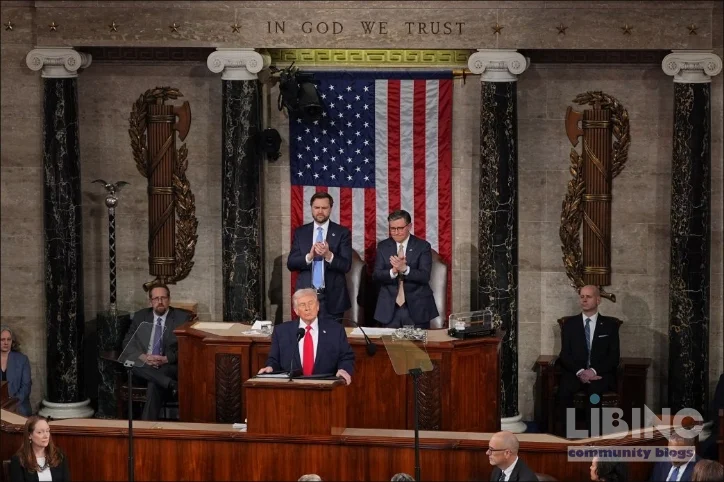
Trump Winning Streak: An Analytical Assessment of Presidential Power, Policy, and Legacy
Table of Contents
- Analytics perspective on the Trump winning streak
- Rhetoric vs reality: contrasts in Trump’s wins
- Cause-and-effect: policy choices and their consequences
- Expert reconstruction: evaluating legacy and future trajectory
- What the data imply for the presidency going forward
In the space between rhetoric and policy, a phrase travels far: the Trump winning streak. It functions as a narrative device that tallies perceived accomplishments, yet it invites scrutiny about what counts as a real win. This article tests that concept against four axes: legal authority, policy outcomes, international standing, and democratic norms. The stakes are high: if the wins are durable, they could reshape governance; if they are episodic, they risk destabilizing trust and institutions. The direction of analysis is unapologetically skeptical, not to debunk the rhetoric but to measure its resonance with reality. We will map the terrain, compare it with historical benchmarks, and forecast what a genuine, lasting win would require of any presidency.
Trump winning streak and the metrics of power: an analytics view
The phrase signals momentum, but the analytic task is to separate signal from noise. The Trump winning streak rests on four visible arenas: judicial permission for executive action, policy outcomes that reshape daily life, international alignments and trade posture, and the durability of political capital within his party. Each arena reveals a different pace and different constraints. In this view, the success of a presidency depends on coherence across these domains, not on isolated victories.
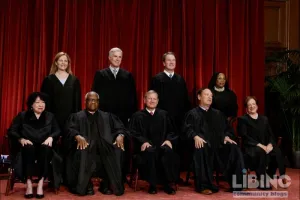
First, constitutional power is not a simple ledger of wins. The Supreme Court balance, especially the right-wing majority, has expanded presidential authority in some areas while curbing it in others. The February tariff ruling, which rejects unilateral tariff imposition, demonstrates a hard constraint: the administration cannot redefine the federal balance through executive orders alone. This outcome, despite Trump’s rhetoric about broad powers, marks a boundary that future presidents can cross only with broader consensus. This is a core element of how the Trump winning streak is framed rather than an unqualified triumph.
Second, immigration policy has provided tangible political wins, particularly where the court has supported measures like limiting asylum at ports of entry or restricting protected status for certain populations. Yet these wins come with a price: the same policy choices provoke legal challenges, humanitarian critiques, and friction with allies. The net impact on public welfare and the rule of law remains contested, and this tension is central to understanding the durability of the Trump winning streak.
Third, economic indicators offer a more conventional measure. Media and some political actors trumpet Dow milestones and stock prices as proof of competence. Critics remind us that affluence must translate into affordable living, healthcare access, and childcare support. The tension between headline numbers and real-world welfare questions the true value of a short-term economic sprint in assessing long-term legitimacy.
Finally, the international arena shows a paradox. On one hand, the defense spending surge and NATO commitments present a visible show of leadership. On the other hand, alliances fracture, and multilateral trust erodes in ways that can outlive a single term. The Trump winning streak, when judged against international history, looks differently: it can project power but also invite strategic challenges from rivals who capitalize on perceived instability.
- Legal authority and constitutional checks
- Policy outcomes and social welfare
- Immigration policy and humanitarian norms
- Economic indicators and public confidence
- Alliances and global perceptions
Social media dynamics form a centrifugal factor. The 24/7 churn shapes public attention and policy salience, enabling rapid wins to translate into political capital, or causing fatigue when the tempo overshadows substance. This dynamic helps explain why a Trump winning streak can feel both exhilarating to supporters and exhausting to opponents.
Through contrast: rhetoric vs reality in Trump’s era
The narrative of a perpetual win rests on selective articulation. When Trump markets his record as an uninterrupted ascent, critics point to real costs: damaged democratic norms, the debasement of norms around truth, and a governance style that thrives on spectacle. The contrast is stark in the political landscape: some MAGA supporters celebrate disruption as a sign of strength; opponents see it as a destabilizing force that corrodes checks and balances. The Trump winning streak, thus, becomes a lens for evaluating political risk rather than a simple sum of achievements.
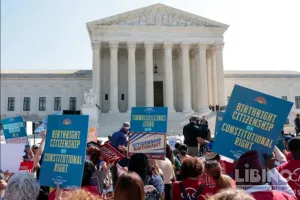
Consider the domestic arena. A string of high-profile court battles has both removed hurdles and created new constraints. The Supreme Court’s decisions on birthright citizenship and asylum policy demonstrate a judiciary that both empowers and limits the presidency. In the immigration policy realm, the administration claimed sweeping gains while courts insisted on adherence to constitutional language. These dualities illustrate the paradox of the Trump winning streak: wins are real, but they are not unbounded and often come with legal or moral costs.
Internationally, the rhetoric of indispensability collides with a growing chorus of skepticism about U.S. reliability and unity among allies. The NATO defense spending chart, affectionately dubbed by some as The Trump Trillion, signals a moment of cohesion, yet fractures persist. The gulf between confident public pronouncements and measured diplomacy underscores a central question: does a strong-man posture translate into durable soft power? The contrast reveals that the Trump winning streak is patchy when the broader system demands sustained consensus and predictable behavior.
Cause-and-effect: policy choices and their consequences
To understand whether the Trump winning streak can persist, we must trace causal chains from policy choices to outcomes. Each major decision produces ripple effects across the economy, the judiciary, and international legitimacy. The causality here is not linear but networks of feedback where political capital interacts with legal feasibility and popular legitimacy.
One lever is executive action. The use of executive orders to shape immigration policy or trade stances yields rapid changes but invites rapid judicial review and political pushback. The February tariff ruling exemplifies how courts reassert constraint after executive overreach. The cause-and-effect logic shows that unilateral moves can accelerate perceived wins, yet they often generate long-run costs in the form of legal challenges and reduced policy certainty for businesses and foreign partners.
A second lever is judicial competition. The Supreme Court’s rulings can broaden or narrow the presidency’s scope. The 14th Amendment interpretation on birthright citizenship provided a clear constraint that the authors of the Constitution intended equal protection and clear citizenship trajectories. The cause is not moral; it is constitutional interpretation, which has a lasting effect on how future administrations implement policy. This is a crucial correction to the narrative of a limitless Trump winning streak.
Third, international alignment matters. The Trump winning streak is subject to the health of alliances and the credibility of commitments. NATO, defense spending, and diplomacy require a steady hand, not a single-term bravado. When allies resist or renegotiate, the perceived success of leadership can erode quickly, turning strategic wins into bargaining leverage for rivals. This causal pathway emphasizes that sustainable leadership rests on dependable institutions and predictable policy, not on episodic outbursts of power.
Policy coherence matters. When policy episodes outpace institutional capacity, the risk of policy inconsistency grows, undermining the credibility of both the administration and the electorate. The causal chain thus reveals a central limiter of the Trump winning streak: without durable policy continuity and legislative buy-in, momentum decays quickly.
Expert reconstruction: evaluating legacy and future trajectory
Experts approach legacy with a sober gaze that privileges durability over spectacle. They assess whether a presidency can outlive its defining disruptions by measuring the endurance of policy frameworks, institutional norms, and public welfare gains. In this frame, the Trump winning streak becomes a test of whether disruption can transform into lasting reform, or whether it withers on the vine as soon as the next administration reshapes the agenda.
Historically, presidents who win big beyond their terms tend to succeed by building enduring institutions, aligning economic performance with broad social gains, and generating cross-partisan legitimacy. This is not a moral judgment but a practical metric. The Trump trajectory, as described in the provided material, shows a paradox: a robust domestic economy and some foreign-policy leverage exist next to a growing perception of governance that challenges long-standing norms. The critical question for the expert reconstruction is whether the current wins yield a sustainable framework—how to maintain rule of law, how to preserve civil liberties during a period of contestation, and how to translate economic resilience into universal access to opportunity.
Another dimension is the personal credibility that the Trump winning streak affords the presidency. If the base sees disruption as a virtue and the mass electorate links affordability and access to victory, the administration may maintain support even as policy outcomes remain contested. Yet this dynamic risks polarization and costlier governance. Experts emphasize the need for negotiated compromises, rule-of-law adherence, and transparent accountability as essential ingredients for turning the Trump winning streak into a durable legacy rather than a chapter of episodic disruption.
Finally, the expert reconstruction considers whether the disruption can be embedded into durable reforms. The real test lies in whether the administration can maintain policy coherence, protect civil liberties, and sustain credible alliances beyond a single term. Without these anchors, the Trump winning streak risks remaining a powerful but transient force in American politics.
What the data imply for the presidency going forward
The synthesis across analytics, contrast, causal analysis, and expert reconstruction yields a sober verdict. The Trump winning streak is not a monolithic achievement with universal legitimacy. It consists of discrete wins tied to specific arenas—court decisions, immigration policy, and selective international cooperation—that show power but not an unassailable sovereignty. To become durable, the wins must translate into tangible improvements in everyday life, stable institutions, and credible foreign policy that endures beyond a single term.
In the end, posterity will measure presidential success against benchmarks of endurance: did policy changes persist, did democratic norms strengthen, did ordinary Americans experience improved opportunities? If not, the record will read as a run of dramatic episodes that, while potent in the moment, fail to redefine the structural parameters of American governance. The Trump winning streak may prove to be a hinge moment—either a preface to lasting reform or a cautionary tale about the costs of disruption without durable consensus.
Future historians may find that the decisive test was not the scale of the wins but the ability to turn them into a coherent, accountable, and sustainable governance model. If such a model emerges, the presidency will have earned more than a headline; it will have earned a place in the durable history of the republic.
Closing the gap between rhetoric and durable outcomes requires a concrete framework that translates episodic wins into steady gains for ordinary people. A practical path defines durability across policy continuity, institutional norms, and measurable welfare impact, offering a repeatable playbook rather than a one-off sequence of events. By grounding judgments in legal feasibility, cross‑administration stability, and observable living standards, we can separate transient leverage from lasting reform. This section provides a compact, actionable model that can be applied to any policy area, emphasizing how durable gains emerge when policy choices survive judicial scrutiny, legislative cycles, and public accountability.
Table: Durability indicators across policy arenas
| Arena | Durable Indicator | Early Evidence | Risks | Concrete Example |
|---|---|---|---|---|
| Judicial authority | Consistency of rulings over time | Sequential decisions align with core priorities | Shifts in jurisprudence; political backlash | Rulings that uphold due process while constraining executive overreach |
| Immigration policy | Policy continuity amid court review | Recurrent approvals or narrow mandates | Humanitarian concerns; administrative challenges | Ports-of-entry standards with guardrails |
| Economic policy | Affordable living and stable incentives | Quarterly indicators show a steady trajectory | Volatility, external shocks | Tax and regulatory fixes that preserve incentives and targets |
| International ties | Alliance cohesion | Shared commitments endure in practice | Diplomatic frictions; trust erosion | Aligned NATO spending and joint exercises |
Next, a compact visualization of durability signals helps translate theory into action. The visual focuses on policy continuity, institutional resilience, and welfare outcomes, all linked to concrete benchmarks that can be tracked over time.
Finally, the operational steps to convert episodic wins into lasting reform center on process, governance, and transparency. This layered approach reduces drift, aligns incentives, and builds legitimacy across stakeholders.
Operational steps to turn episodic wins into durable reform
- Define clear, measurable goals tied to budget cycles and sunset opportunities
- Anchor reforms in bi-partisan institutions or codified law where feasible
- Publish regular impact assessments and make data accessible to the public
- Incorporate sunset clauses or renewal triggers to force periodic reconsideration
- Protect civil liberties and uphold the rule of law in policy design
- Foster cross‑agency coordination and consistent public messaging
In practice, durable gains emerge when these steps become standard operating procedure rather than exceptions, turning powerful moments into a governance trajectory that withstands political change and social scrutiny.
FAQ
How should we measure durable wins?
Durable wins are best understood as policy effects that persist beyond a single administration and endure through legal checks, political cycles, and social feedback. In practice, durability is measured by tracking policy continuity across governments, the resilience of institutions under pressure, and observable improvements in living standards that can be attributed to the policy in question. This requires independent evaluations, transparent data, and time-based benchmarks that extend beyond electoral horizons. A credible measure combines formal, legal, and welfare indicators to create a stable performance picture.
Analysts typically examine: (1) whether key policies survive successor administrations, (2) whether institutions maintain rule-of-law safeguards and preventive checks, and (3) whether households experience sustained gains such as improved income, health access, or reduced costs. While these indicators are imperfect, converging signals across domains increase confidence in durability and reduce reliance on headline optics.
What factors influence durability beyond courtroom decisions?
Durability depends on policy design that anticipates political cycles, broad public buy-in, and credible implementation. Beyond courts, durable reforms require bipartisan or cross‑institutional support, transparent impact reporting, and alignment with fiscal realities. Political leadership that institutionalizes reforms—through law, regular funding, or independent oversight—tends to outlast disruptive terms. Conversely, policies built on executive whim without institutional anchors often erode as soon as political winds shift.
How do economic indicators relate to everyday welfare?
Economic metrics like GDP or stock indices offer signals about macro conditions but must be connected to real-world welfare—lowering costs, improving access to care, and increasing disposable income. A durable win translates macro strength into tangible benefits for households, particularly middle- and low-income families. When broad segments of society feel tangible gains (cheaper goods, higher wages, reliable services), the legitimacy and endurance of reforms rise.
What risks do unilateral actions pose for long-term governance?
Unilateral actions can generate rapid perceived wins but often trigger legal challenges, regulatory uncertainty, and international pushback. They risk politicizing policy design and creating abrupt reversals with future administrations. Durable governance hinges on building consensus, codifying decisions where possible, and maintaining predictable rules that limit sudden shifts in policy direction.
How can future administrations translate gains into lasting reforms?
The emphasis is on embedding reforms into institutions, budgets, and performance metrics. This includes cross-party buy-in, explicit legislative mandates, independent oversight, and public communications that clarify benefits and trade-offs. A sustainable path preserves civil liberties, strengthens the rule of law, and guarantees continuity even when leadership changes. Long-term reforms are less brittle when they are scalable, transparent, and aligned with core public interests.
How do international alliances affect leadership durability?
Alliances shape credibility and deterrence, influencing how domestic reforms are perceived abroad and how they endure at home. Durable leadership requires reliable commitments, predictable diplomacy, and joint problem-solving with allies. When alliances are strong and partners observe consistent U.S. behavior, leadership gains legitimacy that endures beyond a single term. Weak or inconsistent diplomacy, by contrast, invites renegotiation and erodes confidence in policy coherence.





Add a comment
To comment, you need to register and authorize
Comments