

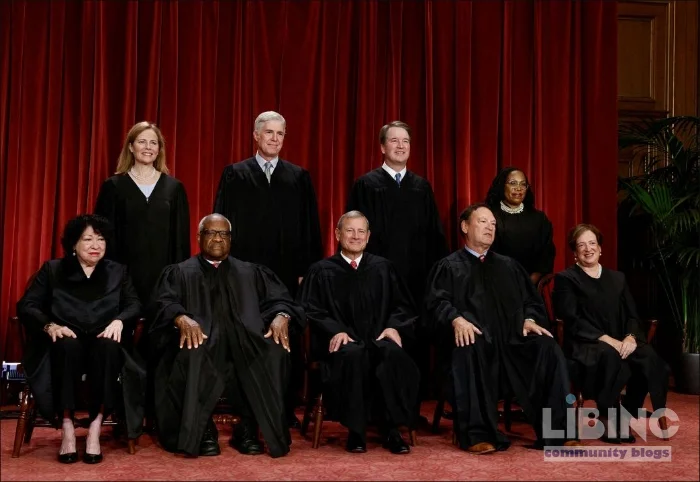
The Supreme Court and Presidential Power: Rebalancing Authority in the Roberts Era
- Analytics: Supreme Court and Presidential Power
- Contrast: The Court as a Political Axis
- Cause and Effect: How Rulings Reshape Power
- Expert Reconstruction: Reclaiming Constitutional Boundaries
The Supreme Court often looks like the country’s de facto governor when constitutional disputes collide with partisan storms. In an era of intensified polarization, the nine justices are repeatedly pulled into fights that originate in domestic politics and policy debates. A president who amplifies constitutional disruption uses court outcomes as leverage, and the Court’s responses increasingly align with broader strategic projects rather than abstract legal testing alone. Yet Chief Justice Roberts stresses that the Court is a modest institution that issues what he terms legal and constitutional balls and strikes. The tension is hard to ignore: a forum of rigorous intellectual debate that nonetheless operates within a political ecosystem more prone to bursts of partisanship than to steady, nonpartisan jurisprudence.
Why this matters goes beyond courtroom drama. The Court’s handling of executive power reverberates through the architecture of government. Decisions about how far the president can push emergency or administrative authority directly shape the powers of the executive branch, the functioning of federal agencies, and the scope of presidential prerogatives in everyday governance. In short, the Court is not merely interpreting the law; it is actively calibrating the balance of power among the branches and reordering the incentives that drive political actors in Washington. The stakes are not merely legal; they are structural, affecting how governance operates under divided government and during moments of national stress.
Hidden in plain sight is a conflict about authority: the Court tends to fill legislative vacuums, especially when Congress falters on broad policy reform. Immigrant policy, administrative independence, and the oversight of powerful agencies reveal a pattern in which the judiciary steps into spaces Congress leaves unsettled. This is not a breakdown in the rule of law; it is a transformation of the way power is distributed when formal processes stall. The result is a judiciary that, in practice, helps determine who runs the country—not by overtly legislating, but by shaping the boundaries and permissions that govern executive action.
This article advances four analytic angles to interrogate the trajectory of the Roberts Court with respect to main keyword: Supreme Court and Presidential Power. It begins with a rigorous analytic reading of the Court’s recent moves (Analytics). It then contrasts public perceptions with internal dynamics (Contrast). It then traces cause-and-effect links between court rulings and shifts in power (Cause and Effect). Finally, it reconstructs a path forward from an expert perspective (Expert Reconstruction). The aim is to separate novelty from noise and to propose a clearer map of how the Court’s stance on executive power interacts with Congress, the bureaucracy, and the politics of contemporary governance.
Analytics: Supreme Court and Presidential Power
The Roberts Court operates at the nexus of constitutional theory and political strategy. Its treatment of executive power rests on a charged interpretive posture that blends originalism with pragmatic assessments of institutional capacity. In this framing, the Court often tests the outer bounds of presidential authority while preserving core checks and balances, producing a dynamic tension rather than a definitive doctrine.
Analytically, the Court’s rulings reveal a pattern: when the executive seeks expansive latitude, the Court sometimes constrains Congress’s capacity to police presidential actions and sometimes expands presidential discretion in national security and administrative governance. The underlying logic traces to the enduring idea of a unitary executive, which many conservatives have urged as necessary to keep the government coherent and efficient. Yet the Court also recognizes the dangers of concentrating power in one branch without effective counterweights. The result is a balancing act where judicial review becomes a critical tool for preserving structural limits while enabling decisive executive action in a national emergency or political crisis.
Consider the Court’s posture toward independent agencies and the insulation of these bodies from political pressure. The recent victory in the FTC-related dispute prompted debates about who controls the president’s firing power over agency leaders and whether long-standing protections for agency independence should give way under unusual political stress. From a searing institutional perspective, this matters because it directly affects the power dynamics between the executive and the administrative state, highlighting how the Court’s choices can either reinforce or erode a century of statutory design. The debate hinges on how to preserve the integrity of regulatory independence while allowing the president to respond to rapidly changing conditions in the economy and society.
From a jurisprudential standpoint, the Court’s approach to emergency powers, tariffs, and national security demonstrates a cautious but consequential stance on executive power. It is not a simple endorsement of expansive presidential authority, nor a wholesale rejection of executive prerogative. The Court weighs the textual boundaries of statutes against the lived realities of governance, often invoking the separation of powers as a constraint that protects liberty and limits arbitrary action. The result is a jurisprudence that invites further inquiry into how presidents navigate constitutional obligations in times of crisis without provoking a constitutional backlash that undermines the entire constitutional order.
In aggregate, the analytics reveal a Court that operates as a stabilizing yet transformative force. It curtails or expands presidential reach not because it is pursuing a partisan compromise, but because it is testing the limits of constitutional text against the practical demands of governance. The analysis shows that the Court’s authority to shape the executive’s power is less about court-policymaking and more about defining the space within which political actors can maneuver under law. This subtle recalibration matters because it sets the stage for future administrations to interpret, test, and potentially redefine the lawful scope of executive action.
Contrast: The Court as a Political Axis
Public perception often treats the Court as a neutral referee, but contemporary coverage emphasizes its role as a protagonist in a partisan drama. The reality is more nuanced: many justices insist their decisions arise from legal reasoning rather than political allegiances, yet the outcomes feed into partisan narratives and mobilize political actors on both sides of the aisle. The contrast is not simply between liberal and conservative readings; it lies in the Court’s capacity to project authority while remaining tethered to legal doctrine. This tension creates a perception gap that shapes how citizens understand the separation of powers and the legitimacy of judicial actions in a politicized climate.
The public-facing thrill of major rulings often obscures the internal friction among justices and the long shadows of historical precedent. The Court’s legitimacy rests on appearing principled and independent, yet its choices frequently reflect the asymmetries in political power that define modern governance. The judiciary’s role in adjudicating disputes about who controls regulatory agencies, who can be compelled to comply with legal norms, and how elections are conducted ends up becoming a referendum on whether the system can adapt to new challenges without sacrificing foundational commitments to due process and procedural fairness.
Within this contrast, several narratives stand out. First, the court’s willingness to rein in presidential power when it threatens the structural integrity of the polity signals a reluctant but essential restraint. Second, the court’s occasional alignment with executive priorities underscores the reality that legal tools can be marshaled to support policy goals even when the political winds lean the other way. Third, observers note that the court’s legitimacy increasingly rides on its ability to yield clear, principled opinions that survive the rough-and-tumble of political rhetoric. When the court falters in this respect, the legitimacy of constitutional governance itself comes under strain.
These dynamics matter because they determine how citizens assess the agency of non-legislative governance. If the court is seen as actively choosing sides, the public may doubt its role as a neutral arbiter and begin to view the judiciary as an extension of political theater. But if the court remains scrupulously methodical, the legal system sustains its claim to protect minorities, enforce rights, and preserve the rule of law even amid upheaval. The current era tests this balance, highlighting the court’s potential to either stabilize or destabilize the political ecosystem depending on how it navigates the tension between law and politics.
Cause and Effect: How Rulings Reshape Power
Rulings ripple outward, altering incentives for presidents, Congress, and the administrative machinery that implements policy. When the Court narrows the presidential capacity to dismiss agency heads to safeguard independence, it can constrain executive management and compel a more collaborative governance style. Conversely, when it endorses broader presidential immunity or limits the scope of judicial review in immigration or national security matters, the Court can empower decisive executive action, potentially accelerating policy change with fewer legal obstacles.
The causal chain hinges on the relationship between statutory design and constitutional interpretation. The Court’s intervention in regulatory independence, for example, can push Congress to clarify statutory language or to legislate anew to reduce ambiguity. This dynamic fosters a cycle where court decisions provoke legislative responses, which in turn shape the next generation of litigation and constitutional argument. In this sense, the Court does not merely declare the law; it actively sculpts the policy environment in which power is exercised and contested.
A separate but related causal thread runs through voting rights, election administration, and independent oversight. When the Court rejects attempts to constrain post-Election Day ballot counting or curtails the reach of the Voting Rights Act, it reshapes political participation and the legitimacy of electoral outcomes. The effect is not a single predicate but a cascade: altered electoral practices reshape party strategies, which then influence judicial selection, legislative agendas, and even turnout dynamics. The long arc of these decisions helps explain why the Court’s influence feels so pervasive in modern political life.
Another important chain concerns executive power and economic regulation. A decision that limits the president’s emergency powers or tariffs can undermine a key policy tool for managing trade or economic crises. That, in turn, pushes the administration to seek new legal authorities or negotiate new statutory frameworks that better align with the Court’s posture. The net effect is a shifting equilibrium: the Court pushes power toward greater constraint in some domains, while enabling agility in others, depending on the doctrinal contours of the moment and the political pressures surrounding it.
Finally, the Court’s governance of the administrative state carries long-term consequences for accountability. Greater independence for agencies can lead to more predictable regulatory regimes and stronger checks on executive improvisation. However, it may also invite strategic misalignment between policy aims and political accountability. The causal logic here emphasizes that legal design and political incentives are two sides of the same coin; when one shifts, the other follows, often in unexpected ways.
Expert Reconstruction: Reclaiming Constitutional Boundaries
From an expert reconstruction standpoint, the path forward should emphasize restoring a transparent, auditable balance among branches. First, Congress must reclaim its constitutional credibility by reasserting legislative primacy in areas where it has abdicated to executive or judicial actors. This does not require dramatic overhauls of the entire system; it demands targeted reforms that clarify the limits of executive action in areas like national security, immigration, and regulatory oversight. Clearer statutory language and robust oversight mechanisms can reduce the Court’s incentive to fill gaps that arise from legislative paralysis.
Second, the judiciary can strengthen legitimacy by articulating narrow, doctrine-based decisions that emphasize textual fidelity and principled reasons rooted in established jurisprudence. The goal is not to prove a partisan point but to demonstrate a disciplined approach to constitutional interpretation that respects the separation of powers. This means resisting the temptation to wield constitutional tests as political tools and instead focusing on predictability and coherence in constitutional law.
Third, the executive branch should embrace a culture of procedural restraint and compliance with independent review. A more collaborative stance toward agency governance and a willingness to defer to statutory limits can reduce political volatility and promote stable policy implementation. In practice, this entails designing executive procedures that enhance transparency, facilitate parliamentary scrutiny, and align with long-standing statutory mandates rather than overtly political calculations.
Fourth, scholars and practitioners should develop a principled framework for evaluating presidential power that integrates constitutional text, historical practice, and empirical governance considerations. This framework would balance the need for decisive leadership with the requirement to protect civil liberties and minority rights. It would also provide a clear analytic vocabulary for discussing unitary executive concerns, administrative state reform, and the evolving meanings of checks and balances in the 21st century.
Finally, an institutionally minded reform agenda should prioritize resilience in a polarized political environment. By strengthening institutional norms, fostering bipartisan cooperation on long-term reform, and improving the quality of judicial appointments with an eye toward durable jurisprudence, the system can better withstand political storms while remaining faithful to constitutional ideals. The aim is not to neutralize politics but to ensure that constitutional governance endures through cycles of disruption and reform, preserving the rule of law while allowing prudent adaptation to changing circumstances.
In closing, the trajectory of the Supreme Court and Presidential Power under the Roberts era underscores a central paradox: the Court wields substantial influence over who governs, yet it operates within a system whose legitimacy rests on restraint and fairness. Recognizing and reinforcing the structural checks that prevent concentration of power requires deliberate, consensus-driven actions across branches. If the United States can align doctrine with accountability, the Court can remain a stabilizing force that respects both legal truth and democratic legitimacy—an enduring guardian of the balance between the presidency and the people it serves.
Through analytic clarity, measured contrast, causal precision, and expert reconstruction, this examination illuminates how the Supreme Court shapes the contours of presidential power. The central takeaway is not merely that the Court matters, but that its decisions become the scaffolding upon which future governance stands or stumbles. The question, then, is whether federal institutions will reclaim their constitutional mandate to legislate, regulate, and adjudicate with the kind of principled restraint that preserves both power and liberty in a fiercely contested age.
Shortly put, the Supreme Court and Presidential Power define the architecture of American governance. The Roberts Court has not created a single doctrine of power; it has charted a field of possible arrangements where branches contend, cooperate, and occasionally collide. As this field evolves, the health of the republic will depend on whether Congress reclaims its constitutional prerogatives, whether the Court maintains a principled interpretive stance, and whether the executive branch respects the institutional boundaries that keep the system accountable and legitimate.
Structured avenues for durable governance
The following practical plan translates analytic insight into concrete steps that any branch can pursue to strengthen constitutional practice without sacrificing decisiveness. It foregrounds statutory clarity, agency independence, and robust congressional oversight as core pillars, while preserving checks and balances that allow swift action in crises.
| Branch | Action | Expected Effect |
|---|---|---|
| Congress | Clarify statutory language; require regular oversight | Stronger checks; clearer mandates |
| Executive | Adopt transparent emergency procedures | Predictable action; reduced volatility |
| Judiciary | Require concise justification in opinions | Clearer doctrine; easier accountability |
Concrete scenarios illustrate implications: Congress passes a narrowly tailored border-control statute; the Court keeps executive actions within textual limits; agencies issue public dashboards on performance and independence. These steps build trust through transparency and predictable governance, aligning with checks and balances while sustaining agility in crisis response.
These indicators provide tangible targets for leadership and the public, enabling ongoing assessment of how reforms affect executive capability, agency independence, and judicial predictability. A bipartisan track record on these measures signals durable governance beyond partisan cycles.
Action Plan
- Clarify emergency powers in statute with sunset provisions.
- Establish independent oversight for key agencies with regular reporting.
- Publish plain-language judicial rationales rooted in textual fidelity.
Adopting such a framework aligns constitutional doctrine with accountability, ensuring governance endures through political storms.
How does the Roberts Court shape executive power within the separation of powers?
Under the Roberts Court, presidential power is navigated through a balance of textual limits, historical practice, and institutional realities. The Court often demands explicit statutory support for major executive moves while recognizing the needs of national security and emergency governance. In practice, this yields a pattern of restraint paired with tactical deference to executive action in crisis, coupled with robust checks when overreach appears. The outcome is not a single doctrine but a pragmatic equilibrium that preserves liberties, clarifies where power resides, and leaves room for adaptive strategy. This approach conditions administrative action, agency leadership, and oversight before major policy shifts, influencing how future appointments and litigation strategy unfold.
Analytically, the posture also affects how the Court reviews agency independence, emergency powers, tariffs, and national security policies, shaping incentives across branches and the regulatory state.
What concrete steps can Congress take to strengthen oversight of federal agencies?
Congress can enact clearer statutory grids that specify agencies’ mission, reporting requirements, and permissible actions, paired with regular, public oversight hearings and sunset provisions. Strengthened bicameral committees and mandatory budgetary alignment for major regulatory actions create durable accountability. Public dashboards and transparent decision records help track independence and performance beyond political cycles, reducing the space for executive improvisation and enabling evidence-based scrutiny. These steps foster checks and balances while maintaining the capacity to respond to urgent policy needs.
In practice, bipartisan commissions and biennial reviews can institutionalize oversight, aligning statutory authority with the realities of governance.
How do independent agencies influence judicial independence and policy outcomes?
Independent agencies set the terms of regulatory implementation, affecting both how law is applied and which interests are protected in governance. When independence is robust, courts can assess agency actions based on merit rather than political pressure, promoting consistent policy outcomes across administrations. Conversely, perceived weakness in agency independence can lead to policy volatility and heightened litigation as regulatory schemes shift with each election. A balanced approach preserves agency expertise, while requiring transparent procedures and clear statutory guardrails to maintain public trust and governance stability.
Practical impact shows up in licensing regimes, environmental protections, and consumer safety rules where court-backed interpretations stabilize the regulatory environment.
How do voting rights and election administration rulings affect participation and legitimacy?
Rulings on voting rights and election administration shape who can participate and how results are tabulated, influencing turnout and electoral legitimacy. When the Court upholds protections against discrimination and ensures accessible procedures, participation tends to rise and trust in outcomes increases. Restrictive interpretations or burdensome procedures can depress turnout, especially among historically marginalized groups. The long-term effect is a feedback loop: voting rules influence party strategies, judicial selections, and policy priorities, which in turn shape future elections and public confidence in the system.
Effective governance requires transparent, evidence-based rules that balance security with access.
What does a balanced approach to constitutional interpretation look like in practice?
A balanced approach emphasizes textual fidelity, respect for precedent, and awareness of institutional capacity. It weighs the central goals of liberty and equality against the practicalities of governance, avoiding overreach while preserving the ability to respond to national crises. In practice, this means opinions that clearly articulate the constitutional justification, without resorting to political rhetoric, and decisions that align with long-standing legal principles while adapting to contemporary realities.
Such an approach fosters predictability, accountability, and legitimacy in constitutional adjudication.
How can governance adapt to polarization while preserving checks and balances?
Adaptation requires procedural safeguards, bipartisan reform efforts, and durable norms that resist the pull of partisan cycles. Steps include transparent appointment processes, nonpartisan oversight mechanisms, and regular cross-branch dialogue to align on core principles. The aim is to maintain decisive governance during emergencies while preventing concentration of power. The result should be a governance framework where institutions negotiate, cooperate, and uphold constitutional commitments even amid sharp political disagreement.
These measures promote resilience and legitimacy across the constitutional system.







Add a comment
To comment, you need to register and authorize
Comments