

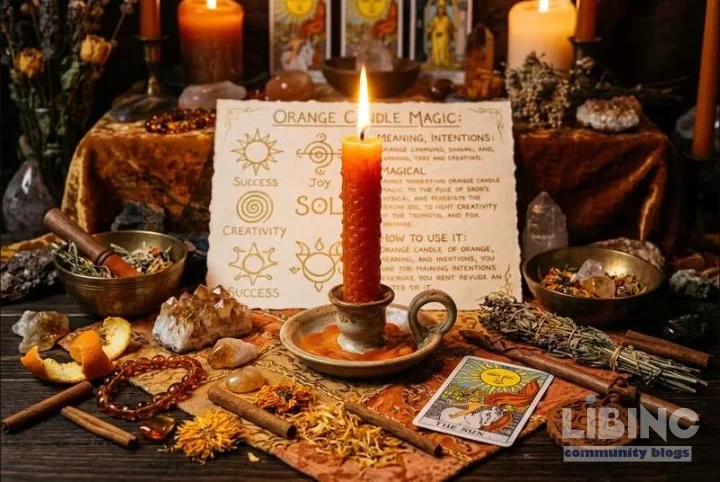
Orange Candle Magic: An Analytical Guide to Harnessing Fire for Personal Power
Orange candle magic taps into a radiant solar energy that strengthens confidence, creativity, and momentum toward your goals. In candle witchcraft, orange sits at a nexus of warmth and will, making it especially potent for launches, negotiations, and creative breakthroughs. Yet many practitioners treat it as a generic mood booster rather than a precise tool. This analysis treats orange candle magic as a deliberate system: how color, element, and rhythm interact with psychology, ritual craft, and outcomes in the real world. We will explore symbolism, prerequisites, and practical mechanics; compare orange with other colors; map cause-and-effect pathways; and present an expert reconstruction for applying this flame with responsibility and effectiveness.
Table of Contents
- Analytical Perspective on Orange Candle Magic
- Orange vs Other Colors: A Contrastive Calibration
- From Intention to Manifestation: Cause-and-Effect Pathways
- Expert Reconstruction: Best Practices, Customizations, and Pitfalls
Analytical Perspective on Orange Candle Magic
At its core, orange candle magic operates as color magic. The color orange emerges from red's passion fused with yellow's intellect, aligning with the fire element's drive to transform intent into action. This positioning matters because it creates a deliberate channel for forward motion: not merely feeling good, but moving toward a defined outcome. The psychological mechanism is subtle but potent: a visual cue aligned with a goal primes attention, reduces hesitation, and biases action toward opportunity. In practical terms, orange serves as a cue for readiness to perform, negotiate, create, and deliver results.
From the vantage point of energy systems within occult practice, orange candles tap Fire energy as a catalyst for transformation, willpower, and rapid change. The flame becomes a focal lens through which intention is focused and amplified. This is not magic apart from action; it is magic that demands disciplined steps and intelligible aims. The Sacral chakra, associated with creativity, pleasure, and emotional flow, directly resonates with orange. When this energy center is open, creative ideas flow more freely and with less internal resistance, enabling clearer decision-making and more resilient execution. The result is a harmonized alignment between intention, emotion, and action steps—a necessary condition for meaningful outcomes.
In practice, the effectiveness of orange candle magic rests on a structured ritual rhythm. You set a direction, select supportive herbs and stones, and engage in a format that channels attention toward concrete results. This is where color magic meets practical craft: the flame and wax become a feedback mechanism for your mental model of success. The system works best when it treats intention as a living target rather than a vague wish. The flame readjusts your focus, the wax reveals momentum, and the subsequent actions you take multiply the probability of realization. This is why preparation matters as much as the flame itself: intention, environment, and follow-through are inseparable in orange candle magic.
LSI: color magic, Fire energy, Sacral chakra, intention, ritual rhythm, momentum, goal-focused spellwork.
Best Practices for Preparation and Dress
Preparation begins with cleansing the candle’s energy and crystallizing intent in a form that’s easy to transfer into action. The steps below reflect an analytic approach to aligning the material with the immaterial. This is not about ritual theater; it is about creating a compact energy container that keeps you accountable to your goals.
- Cleansing—Pass the candle through sage smoke, moonlight, or a bell’s resonance. Cleansing removes extraneous energy and helps the candle become a blank slate for your intention.
- Intention setting—Hold the candle with both hands, feel the warmth of your goal, and state the intention in positive present terms: “This candle burns for [specific outcome].” Avoid negation and vagueness; you are sculpting a precise target.
- Dressing—Rub a small amount of intention-aligned oil from the center outward toward each end. Whisper your desire into the wax as you dress it, reinforcing the link between your mind and the candle’s energy.
- Herbs & Crystals—Roll the oiled candle in dried herbs that align with your aim (see plant list later) and place compatible crystals nearby to reinforce the container’s resonance.
Why this level of structure matters: it builds a predictable and repeatable energy channel. If you only light the flame without context, your results become subject to random fluctuation. The combination of cleansing, clear intention, and physical dressing transforms a simple candle into a tool that mirrors your plan back to you as momentum.
LSI: color magic, flame-focused ritual, intention clarity, energy container, crystals for manifestation.
Key Components
- Herbs—Cinnamon, ginger, bay leaf, marigold, calendula, dried orange peel.
- Oils—Orange essential oil, cinnamon oil, ginger oil, frankincense oil; carrier oils as bases if needed.
- Crystals—Carnelian, citrine, amber, sunstone, fire opal, tiger’s eye.
These ingredients act as an energetic lattice that aligns your mental model with material outcomes. The herbs influence scent and symbolic meaning; the oils carry aroma and skin-contact energy; crystals provide tangible anchors for intention. The synergy of these components is what makes orange candle magic robust rather than merely hopeful.
LSI: aromatherapy, energetic lattice, tangible anchors, symbolic meaning, manifestation materials.
Reading the Flame and Wax: a Feedback Loop
Interpreting flame and wax is not about mysticism alone; it is about reading signals that guide next steps. A tall, bright flame often signals robust alignment between your intention and the universe’s response. A flickering or dancing flame may indicate doubt or competing energies; you can re-center by reaffirming your aim or adjusting the scope. Wax behavior—tunneling, pooling, or heavy sooting—should trigger feedback about your plan’s focus, scope, and practicality. If wax pools to one side, it can indicate a need to shift attention toward the area highlighted by the pool’s direction. This interpretive practice keeps the ritual process adaptive rather than rigid.
LSI: flame interpretation, wax reading, energy feedback, adaptive ritual, manifestation signals.
Orange vs Other Colors: A Contrastive Calibration
Shifting to a comparative frame clarifies when orange candle magic is the most efficient choice. Color-specific dynamics shape outcomes as much as intention. In color magic, red, yellow, blue, and black offer different frequencies of focus, energy, and constraint. By calibrating your candle color to your goal, you avoid wasting energy on misaligned frequencies.
Orange vs red: Orange is the brighter, more calculated cousin of red. Red accelerates action and fuels passionate commitment, but it can trigger impulsivity if not anchored by a clear plan. Orange provides warmth with a steady flame that supports sustained momentum and creative problem-solving without the same spike in risk-taking. For high-stakes negotiations demanding both courage and clarity, orange and red can be used in sequence: ignite orange first to prime confidence, then bring in red when decisive, timed action is essential.
Orange vs yellow: Yellow emphasizes intellect, communication, and quick-witted insight. Yellow can ease confusion and sharpen negotiation tactics, but orange ensures those insights are implemented with momentum. Use yellow to clarify your talking points or draft a plan; use orange to propel you through the actual execution and follow-through. Together, they form a complementary pair that aligns mind and motion.
Orange vs blue: Blue calms the nervous system, fosters trust, and stabilizes emotions. It’s a strong ally in teams and client-facing work where rapport matters. When urgency is high, blue’s steadiness can counterbalance orange’s forward thrust, reducing errors born from overexcitement. In projects needing both speed and reliability, alternate between orange for ignition and blue for sustainable performance phases.
Orange vs black: Orange is a constructive force that builds; black focuses on banishing obstacles and clearing space. Use orange to create opportunities and momentum; turn to black when you need to remove what blocks you, such as fear, self-doubt, or external resistance. The two colors can be used sequentially, but careful timing is essential to avoid negating the other’s energy.
LSI: color frequency, momentum vs caution, ritual calibration, color-complementary practice.
From Intention to Manifestation: Cause-and-Effect Pathways
Understanding orange candle magic through cause-and-effect helps translate ritual into measurable action. The pathway links symbolic acts to practical outcomes, creating a chain that begins with a decision and ends with pursued results. The effectiveness of orange candle magic rests on aligning four core domains: mental state, environmental discipline, symbolic technique, and concrete action.
1) Environmental discipline—Cleansed space, safe setup, and minimal disturbances ensure that the flame remains a reliable conduit rather than a mood-driven distraction. A clutter-free altar reduces noise and helps your intention rise unimpeded. This improves cognitive coherence, which in turn increases follow-through, a key determinant of success.
- Clear workspace, window slightly open for energy circulation
- Secure candle away from flammables and drafts
- Use a stable holder and a timer to avoid unattended burning
2) Intentional clarity—A precise objective guides every subsequent choice. The more specific the outcome, the less room there is for ambiguity in action and feedback. This clarity also reduces cognitive dissonance when obstacles arise, making it easier to adapt productively.
- State goals in present tense: I am achieving [outcome] now
- Break large goals into milestones with measurable signals
3) Symbolic technique—Dressing, herbs, and crystals create a tangible energy network. Each element adds a frequency that supports the target outcome, from confidence to creativity to swift negotiation. The combination of oil, herb, and crystal is not decorative; it’s a designed interface that channels the flame’s energy into your plan.
- Herbs add resonance: cinnamon for success, ginger for power, bay leaf for victory
- Crystals anchor momentum: carnelian for courage, citrine for abundance, sunstone for joy
4) Action orientation—Magic does not substitute for effort. The candle is a catalyst that elevates your drive, but you still must act: prepare, apply, iterate. You measure results by the concrete steps you take after the ritual, not by the flame alone.
LSI: intention-to-action chain, energy network, cognitive coherence, ritual-crafting, momentum catalyst.
Moon Phases and Temporal Strategy
Timing matters. Within orange candle magic, lunar cycles amplify the energy you invoke. The waxing moon aligns with growth and creation; the full moon maximizes power for time-sensitive work; the waning moon facilitates obstacle-clearing; the new moon seeds new ventures. The weekday associations—Wednesday for communication, Thursday for expansion, Sunday for solar energy—provide practical windows for deploying orange energy toward contracts, negotiations, and public speaking. Together, lunar phases and weekday timing create a framework that helps you schedule ritual bursts that fit your real-world momentum.
LSI: lunar cycles, moon phases, timing for manifestation, weekday energies, ritual scheduling.
Expert Reconstruction: Best Practices, Customizations, and Pitfalls
Expert practice blends disciplined craft with adaptive experimentation. The goal is to refine the orange candle magic workflow so that it consistently yields progress while remaining ethical and safe. This reconstruction draws on the four analytical pillars—structure, contrast, causality, and expert synthesis—and translates them into an actionable protocol you can adapt for career, creativity, and personal empowerment.
Four practical customizations—Choose a focus and tailor your tools accordingly:
- Career and business—Pair orange with citrine to channel prosperity and momentum. Use bay leaf and cinnamon to improve clarity in negotiations; rely on carnelian to sustain confidence through tough meetings.
- Creative projects—Enhance flow with orange paired with calendula and amber to invite clear ideas and steady implementation. Sunstone helps sustain joy and creative momentum through long work sessions.
- Confidence and public presence—Carnelian is the core, supported by orange to sustain forward action. Use a larger, steadier flame that discourages distraction and encourages consistent performance.
- Obstacles and resilience—Combine orange with orange peel and rosemary to focus resolve on removing blocks while preserving creative energy. In severe resistance, reevaluate the intention to ensure alignment with ethical practice.
Advanced ritual design emphasizes transition points where momentum can stall. Build in explicit checkpoints—milestones you can observe within a week or a month. Use those checkpoints to reframe the goal, adjust the scope, or re-intensify your action plan. This decision feedback loop is what separates wishful thinking from measured, repeatable progress.
Reading the flame and wax remains a live feedback channel as you refine your approach. If you consistently observe a ravaged, flickering flame amid a well-prepared setup, review the scope of your aim. Narrowing too far can stall momentum; broadening too far can dilute focus. The goldilocks zone lies where your intention remains crisp while leaving space for adaptive execution.
Safety and ethics always come first. Never leave candles unattended. Use natural soy or beeswax candles rather than paraffin. Respect free will and avoid manipulation. Seek aligned action: intention plus effort equals manifestation. Finally, honor the remains respectfully—bury them if you can, or wrap them for disposal in a dignified manner.
LSI: expert protocol, momentum management, decision feedback loop, ethical candle magic, adaptive ritual design.
Wrapping Up: Practical Synthesis
Orange candle magic is a disciplined tool for transforming intention into action. Its strength lies in the synergy of symbol, element, and practice: color magic that guides momentum; fire energy that accelerates movement; and a structured ritual that anchors your focus while allowing feedback and adjustment. When used with care, orange candle magic offers a reliable pathway to confidence, creativity, and tangible success across career, projects, and personal growth.
Closing thought: the flame invites you to show up as you are, but also to become more than you were. The universe does not respond to wishes alone; it responds to deliberate, repeated action aligned with a clear purpose. Light the orange flame, whisper your intention, and let your next steps reveal themselves in real time.
Keywords intertwined throughout: orange candle magic, color magic, Fire element, Sacral chakra, moon phases, crystals, herbs, oils, rituals, manifestation.
A Practical Quick-Start Frame
If you want a compact start, follow this sequence:
- Prepare: cleanse space and candle; ensure a safe setup.
- Intend: declare a precise, positive outcome in present-tense language.
- Dress: apply intention oil and roll in chosen herbs; place crystals at the base.
- Align: position the candle at the center of your altar; place written intention nearby.
- Ignite: light the candle and recite your intention three times; observe the flame.
- Mediate: gaze 5–10 minutes; feel the outcome as if already realized; then take concrete steps toward it.
By following this frame, you apply orange candle magic as a pragmatic, ethical, and auditable practice that respects both personal power and the surrounding world.
LSI: practical framework, start-to-finish ritual, ethical candle practice, momentum-building routine.
Final note: orange candle magic thrives when you treat it as a disciplined tool rather than a ceremonial ornament. The flame is a teacher if you stay curious, precise, and action-oriented.
Keywords embedded in this analysis: orange candle magic, color magic, Fire element, Sacral chakra, moon phases, carnelian, citrine, amber, sunstone, oils, herbs, rituals.
Measuring Momentum with a Concrete Framework
One critical gap in the current guide is a practical way to gauge progress beyond subjective feel. Practitioners benefit from a simple measurement framework that translates intention into observable, repeatable outcomes—without losing the nuance of ritual meaning. This section introduces a compact approach using outcome indicators, ritual effectiveness, and a clear measurement cadence to keep energy alignment honest and actionable.
| Color | Focus | Best Use | Signals | Example Pairing |
|---|---|---|---|---|
| Orange | Momentum | Launches, negotiations, creative breakthroughs | Bright, steady flame; clear wax buildup toward center | Orange + cinnamon oil + carnelian for a product pitch |
| Red | Courage | Bold steps, risk management | Intense, pulsing light; occasional sputter | Use red when decisive action is needed |
| Yellow | Clarity | Planning, communication | Stable flame with crisp wax pooling | Drafting talking points or a project brief |
| Blue | Calm | Team harmony, client trust | Calmer flame, smoother wax flow | Calm-phase review after a fast cycle |
LSI: outcome indicators, ritual effectiveness, measurement framework.
Momentums are tracked by a simple cadence: (1) set a concrete milestone, (2) light the orange candle and perform a brief action, (3) record signals in a journal, (4) take one verifiable step toward the milestone. For a marketing launch, for example, milestone markers might be: a finalized brief, a pilot outreach to 10 prospects, and a first meeting with a decision-maker. The framework keeps interpretation tethered to observable progress.
LSI: measurement cadence, energy alignment, actionable metrics.
Ritual Rhythm and checkpoints
- Define a milestone with a clear completion signal
- Schedule a ritual window tied to the milestone
- Record signals and adjust scope as needed
What exactly is orange candle magic, and how does it differ from simple goal setting?
Orange candle magic is a structured practice that pairs a specific color-energy with a tangible plan. Unlike generic goal setting, it uses intention, environment, and ritual action to prime momentum and sustain execution. This yields observable progress, not just motivation. In practice you create an energy container, then actively follow through with concrete steps that reflect the stated aim.
This approach adds discipline to imagination: you translate desire into measurable actions while honoring ethical boundaries and personal accountability.
How should I choose oils, herbs, and crystals for orange candle magic?
Selection follows intention-driven symbolism and practical resonance. For momentum, use orange oils paired with cinnamon for abundance and carnelian for courage; herbs like ginger boost power while bay leaf signals victory. Crystals such as citrine and sunstone anchor momentum and optimism. The key is alignment: each element must support the target outcome rather than merely decorate the ritual.
Always verify safety and personal sensitivity to any essential oils or herbs.
How can I measure the effectiveness of orange candle magic in real life?
Adopt a lightweight measurement framework with outcome indicators and a ritual cadence. Define a milestone, track signals (flame behavior, wax movement, action taken), journaling outcomes, and quantify progress in weekly checks. This converts ritual energy into actionable data while preserving the ritual's meaning.
Regular reflection helps distinguish genuine momentum from wishful thinking.
When is the best time to perform orange candle magic regarding moon phases and weekdays?
Waxing phases support growth and creation, full moons amplify power, waning phases aid obstacle-clearing, and new moons seed new ventures. Weekdays align with energies: Wednesday for communication, Thursday for expansion, Sunday for solar momentum. Scheduling rituals around these windows increases the probability of aligned action and timely feedback.
Consistency matters more than perfect timing.
What safety and ethical guidelines should I follow?
Never leave candles unattended; use natural wax; keep flames away from flammables; cleanse space to avoid external interference. Ethically, honor free will and avoid manipulation. Document outcomes to maintain transparency and accountability in your practice.
Practicing with care ensures momentum remains constructive and respectful.
How can I troubleshoot a flickering flame or heavy sooting?
A flickering flame often signals misalignment or environmental disturbance. Reaffirm intent, adjust the scope, and ensure the candle sits in a stable holder away from drafts. Heavy sooting suggests impurities in the wax or crowded herbs; trim dressings and re-clean the area. In most cases, small realignments restore smooth momentum.
These checks keep the practice practical and reliable.



Add a comment
To comment, you need to register and authorize
Comments