

America's Workforce Academy: Meta's $115M Bet Reconfiguring the Skilled-Trades Pipeline
Table of contents
The problem is straightforward: data center expansion hinges on a skilled trades workforce, yet the supply remains chronically constrained. Meta is responding with America's Workforce Academy (AWA), a $115 million private bet that bundles free training, housing, a stipend, and a guaranteed job at graduation. The stakes are enormous: without enough electricians, welders, and pipefitters, AI and cloud infrastructure projects stall, raising capital costs and delaying timelines. The hidden conflict lies in the public funding arena, where Pell Grants are opening to short‑term programs while MASA contemplates far-reaching consolidation that could shrink the traditional training pipeline. This analysis uses four lenses—analytics, contrast, cause and effect, and expert reconstruction—to illuminate what AWA means for operators, policymakers, and workers in a shifting labor market.
Analytics perspective on America's Workforce Academy
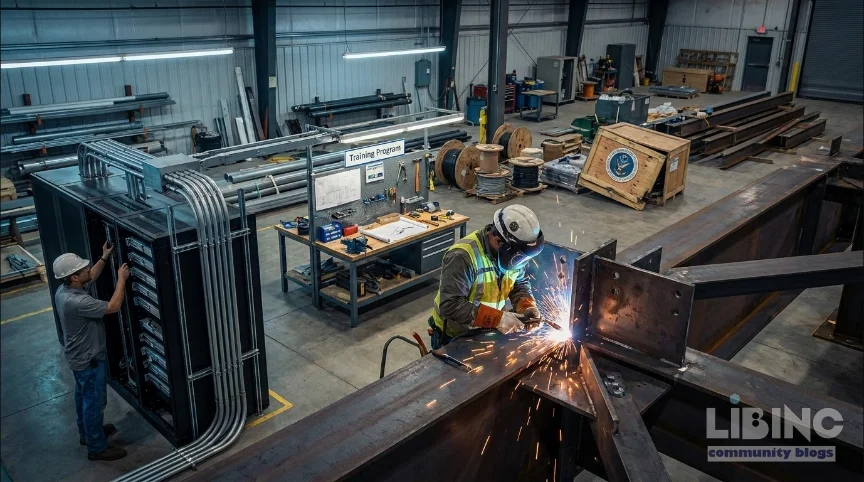
AWA is designed as a private, scalable remedy to a stubborn market failure: large openings in construction and manufacturing trades outpace the entrants capable of filling them. Meta packages the program as a five‑week, tuition‑free training with airfare, lodging, and a daily stipend, culminating in two portable credentials: a National Center for Construction Education and Research (NCCER) credential and an America’s Workforce Certificate that is intended to travel across employers rather than lock a worker to Meta.
- Scale and economics: $115 million backing converts training into procurement for Meta’s data center and AI infrastructure capex. The logic treats the academy as an input in the company’s bottlenecked critical path rather than philanthropy.
- Credential design: NCCER credentials are industry standard; the America’s Workforce Certificate is designed to be portable across employers, reducing vendor lock‑in and expanding labor mobility for graduates beyond Meta’s gates.
- Demand signals: Meta’s LevelUp program previously yielded tens of thousands of applications in days, signaling latent demand for skilled trades. AWA scales that demand signal to electricians, welders, plumbers, mechanics, and related roles across four pilot states.
- Geographic alignment: The four pilot states—Louisiana, Ohio, Indiana, and Texas—mirror Meta’s data‑center and AI infrastructure footprint, turning a workforce initiative into a direct supply chain input for capital projects.
Why it matters: AWA recasts training as a controllable variable in capital project planning. If portable credentials reduce friction for workers to move between employers, the private sector can compress lead times for facility buildouts. The question is whether this private pipeline augments the overall labor pool or simply reassigns scarce talent among high‑bid buyers.
Contrast with public policy and private‑market bets
The public and private bets travel in parallel but pull in opposite directions. On one side, Pell Grants have expanded access to short, outcomes‑tested training programs, potentially accelerating private sector hiring pathways. On the other, MASA's blueprint for consolidating 11 workforce programs and reducing overall funding by roughly $1.64 billion threatens to hollow out the broader training ecosystem that non‑hyperscaler employers rely on. The DOL’s January 2026 plan to invest $145 million in pay‑for‑performance apprenticeships aims at 1 million active apprentices, a scale that sits far below the current openings gap but signals public intent to accelerate the pace of credentialed training.
- Policy tilt: Pell expansion favors rapid, short‑cycle training outcomes; MASA riskily bundles many programs into a leaner architecture, with uncertain capacity across regions and trades.
- Public pipeline fragility: Cuts to foundational programs threaten adult education, Job Corps, and other pathways that feed a broad cross‑sector workforce beyond Meta’s needs.
- Private procurement vs public capacity: AWA converts private funding into tangible build‑ahead capacity, but without a robust public framework, other critical sectors may experience sustained shortages.
The contrast underscores a central constraint: even a bold private investment cannot substitute for an active, well‑funded public training backbone that serves a wide spectrum of industries and regions. The public system is being tested for resilience just as Meta bets that private capital can move the needle faster.
Cause-and-effect dynamics: how the funding mix reshapes labor markets and buildouts
The causal chain runs from training supply to project velocity and economic impact. If AWA graduates seamlessly enter the field and carry NCCER credentials that employers recognize, project lead times for data centers and AI facilities should shorten. This, in turn, reduces capital cost of ownership and accelerates deployment of new infrastructure, potentially giving Meta a competitive edge in AI scaling.
- Immediate effects: faster onboarding of licensed tradespeople into Meta’s construction workflow; improved adherence to critical path milestones; potential wage stabilization as demand concentrates in certified workers.
- Medium-term implications: higher competition for skilled labor could pull wages upward in high‑demand regions, compressing supply in adjacent sectors unless ported credentials expand the universal pool.
- Public funding effects: a sizable MASA drawdown would shrink capacity available to schools and training centers serving non‑Meta industries, potentially widening regional disparities in skilled labor access.
- Credential ecosystem effects: portable NCCER credentials paired with a branded America’s Workforce Certificate could reframe how workers move across employers, reducing lock‑in and enabling cross‑industry mobility if recognized widely.
The overarching effect depends on durability: can AWA deliver a durable job guarantee and a horizon long enough to justify credential portability, or will it function as a private‑sector hedge against public underfunding?
Expert reconstruction: implications for operators, policymakers, and workers
Operators and plant managers should treat AWA graduates as a pathway to expand capacity while preserving safety and quality. That means aligning internal apprenticeship programs with NCCER competencies, establishing rigorous on‑the‑job training, and validating credential portability across contracts and regions. Public policymakers must monitor Pell implementation and MASA outcomes to ensure that private bets do not hollow out the broader training ecosystem. A robust, multi‑provider approach that preserves non‑hyperscaler pipelines will be essential.
- What operators should watch: durability of the job guarantee, wage floors, safety training alignment, and cross‑employer recognition of NCCER credentials. Track placement rates and long‑term retention for graduates within the broader labor market, not just Meta’s projects.
- What policymakers should do: defend core funding for adult education, Job Corps, and WIOA Title II; ensure Pell expansions are accompanied by quality benchmarks; incentivize portable, industry‑recognized credentials across sectors.
- What workers should do: pursue portable credentials with clear career ladders; evaluate job guarantees in context of wage growth and advancement opportunities; diversify training choices to remain mobile across industries.
Meta’s private bet is a watershed moment: it tests whether capital can accelerate the trades workforce without foreclosing the public system’s broader role. The next few years will reveal whether the private pathway merely supplements the public pipeline or redefines workforce development for the entire economy.
Meta’s biggest private bet on the trades signals a shift in how the industry thinks about workforce pipelines. The real test will be whether the public system remains robust enough to staff the plants that aren’t Meta’s and whether portable credentials gain universal legitimacy across employers and regions.
Closing the portability barrier for skilled trades credentials
Portable credentials are not enough unless employers across regions recognize them. The critical step is building a shared standard that spans private employers and public programs.
- Mutual recognition agreements with Meta and peers that accept NCCER credentials and the America’s Workforce Certificate, reducing requalification when workers switch jobs.
- Industry credential registry with interoperable transcripts so hiring teams verify skills quickly across sites and years.
- Policy linkages aligning Pell and MASA outcomes to cross‑employer acceptance, incentives for cross‑site rotations, and public reporting of portability metrics.
Examples: a Louisiana electrician takes a project in Texas under a reciprocal plan; a plumber moves between data centers and plants and keeps the same credential suite. For operators, map NCCER modules to day‑one tasks, enable cross‑site rotations, and monitor placement and wage trajectories. For policymakers, tie funding to portable credential milestones and publish regional mobility indicators that reflect real‑world movement. For workers, portability translates into clearer ladders and geographic options, not just a single employer benefit.
A three‑state pilot could yield early data on time‑to‑fill reductions and total capital cost savings, supporting broader scaling.
What is America’s Workforce Academy and what is its core goal?
America’s Workforce Academy is Meta’s private, five‑week, tuition‑free training program for electricians, welders, plumbers, and related trades, with airfare, lodging, a daily stipend, and a job guarantee at graduation. The core goal is to accelerate the availability of skilled trades workers to support Meta’s data centers and AI infrastructure while testing portable credentials that can travel across employers. It aims to broaden the labor pool, shorten project timelines, and demonstrate whether private capital can complement public training systems.
Analytically, it signals demand for portable credentials and cross‑employer mobility, offering a model that other firms could adapt. The success hinges on durable job placement, wage trajectories, and genuine portability across regional markets.
How do NCCER credentials interact with portability and mobility?
NCCER credentials are industry standards that certify core skills in construction trades. When paired with the America’s Workforce Certificate, they create a portable credential set that employers can recognize beyond a single contractor. This reduces re‑qualification costs for workers switching jobs and supports faster onboarding. In practice, cross‑employer acceptance requires registries and harmonized assessment criteria to ensure consistent skill verification.
For mobility, a shared transcript and common performance benchmarks are essential; without them, portable credentials lose value as workers move between firms or regions.
Why is portability important for data center buildouts and AI facilities?
Portability matters because large projects demand skilled trades at scale. When workers can move between employers without restarting training, project lead times shrink and labor costs become more predictable. Portability also mitigates regional shortages by enabling geographic redeployment of skilled workers as demand spikes occur in different markets.
In practice, portability reduces friction in hiring, supports wage growth for certified workers, and helps coordinate multiple employers around a shared skill set.
What risks accompany private sector training programs like AWA?
The main risks include potential crowding out of public training pathways, uneven geographic coverage, and a reliance on a single employer’s demand cycle. If private programs are not aligned with broader workforce needs, non‑hyperscaler employers and local communities may see persistent shortages in other sectors. Transparent metrics and commitments to shared credentials help mitigate these risks.
Balanced policy and multi‑provider collaboration are essential to ensure public pipelines remain robust while private initiatives scale up.
What policy actions can support portable credentials without shrinking public pathways?
Policy actions include preserving core funding for adult education, Job Corps, and WIOA Title II; ensuring Pell expansions support high‑quality, stackable credentials; and encouraging regulatory environments that recognize portable credentials across firms and regions. Public‑private pilots and credential registries can provide the data needed to refine scaling, while requiring regular reporting on placement, retention, and wage outcomes.
Such alignment helps ensure private bets accelerate overall capacity while public systems continue to feed a broad labor market.
What should workers do to maximize mobility and opportunity?
Workers should pursue portable credentials with clear career ladders, seek opportunities that offer cross‑site training and rotations, and review how wages evolve with credential milestones. Diversifying training across NCCER modules and related safety and inspection certifications can increase flexibility and resilience across industries and regions.
By prioritizing certifications that translate to multiple employers, workers enhance their long‑term employability and geographic mobility.







Add a comment
To comment, you need to register and authorize
Comments