

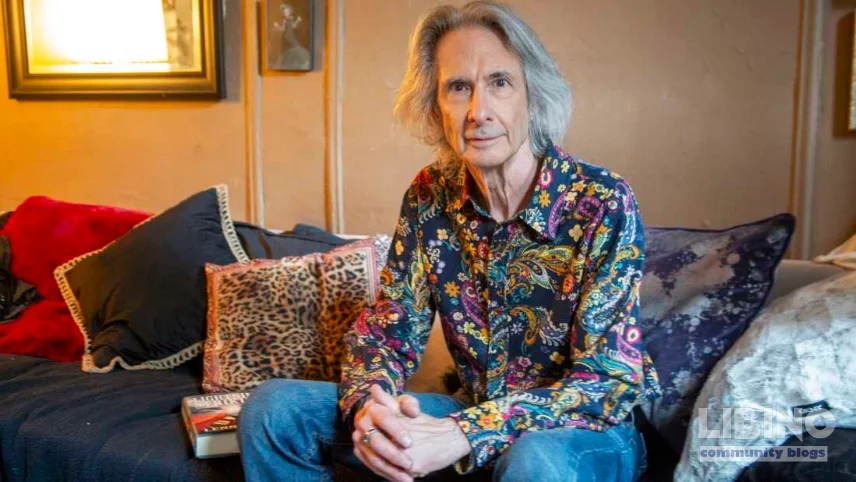
Lenny Kaye and the Local Soundscape: Evolution, Collaboration, and the Future-Forward Goin' Local
Table of Contents
- Through analytics: tracing evolution, influence, and the logic of local sound
- Through contrast: genre-crossing, collaboration, and the tension between past and present
- Through cause-and-effect relationships: how lessons from Patti Smith and the East Village shaped new work
- Through expert reconstruction: what Lenny Kaye’s approach means for the future of rock, performance, and collection culture
Lenny Kaye has been Patti Smith’s guitarist since their apprentice days, when he was a rock critic and she was reading poetry in the lofts of New York. The pairing was not engineered for glory but grew from a shared sense of immediacy: poetry that needed rhythmic propulsion and a guitar voice that could translate literary material into live electricity. The material remains instructive not because it retreads old ground, but because it reveals a method: stay porous to new sounds, stay faithful to art, and let the local become the world. The current moment finds Kaye releasing his first solo album, Goin’ Local, a record that foregrounds the footprints of grassroots music—where sound begins, and where it can still travel farther than fame’s highway. This is not nostalgism; it is a deliberate study of how Lenny Kaye can keep evolving while preserving the core instincts that ignited his career in the 1970s East Village scene.
Why does this matter today? Because the digital age tempts every artist to chase mass reach at the expense of local fidelity. Kaye’s long arc—from a critic who defined listening as critical practice to a guitarist who embodies a living sound—offers a countermodel. The interview material that frames this analysis makes a claim about time: progress isn’t merely accumulation; it is maintaining a dynamic relationship with the present while preserving a sensibility that was born in a particular place and time. The stakes are not merely personal; they concern how a musician’s identity can remain legible across generations while still speaking to new listeners who are discovering music in modes not yet imagined in 1971.
In this study, we test four lenses—analytics, contrast, causal reasoning, and expert reconstruction—to understand how Lenny Kaye’s career synthesizes a devotion to local music with a forward-looking artistry. The aim is to show how a musician can be both custodian and innovator, how a collaboration can become a lifelong discipline, and how a solo project can articulate a “Museum of Me” that is not collectible relic but a living archive in motion.
Through analytics
The analytic frame begins with the premise that Lenny Kaye functions as a conductor of textures rather than a single-voice guitarist. His early influence as a rock critic positioned him to translate disparate sounds into a coherent band identity with Patti Smith. The 1971 loft moment—where poetry meets rhythm—was not a one-off flirtation with novelty. It was a design decision: to embed performance with literary cadence and to allow the sound to emerge from a space of improvisational trust. The result was a band that sounded not like a set of influences but like a unique **soundscape**—a microcosm of a city that was alive with theater, cinema, and street-level energy.
From an analytics standpoint, the key variables are clear: longevity, adaptability, and the capacity to convert collaboration into personal discovery. Kaye repeatedly emphasizes a philosophy of forward motion—an insistence that art must move away from fame or money as primary drivers. This is not purely ascetic; it is a strategic stance for durability. In concrete terms, the evolution takes shape as:
- Cross-genre fluency: Kaye openly references country, pedal steel, heavy music, and the dark edge of his own side project, The Drift, as evidence that the core musical impulse remains constant even as surface styles shift.
- Collaborative asymmetry: his dialogue with Patti Smith—where she writes, he contributes rhythm, and both learn from each other—represents a model of artistic fertilization rather than hierarchical control.
- Local-to-global trajectory: the idea that music begins in the local scene and may travel outward provides a testable hypothesis for how a 21st-century artist can maintain authenticity while engaging broader audiences.
Why does the local-first approach endure? Because it anchors a musician’s sensibility in concrete social and cultural landscapes—places, faces, and conflicts that shape listening communities. Kaye’s “Museum of Me” metaphor (a basement archive of books, records, and personal artifacts) is not a tidy, self-important collection; it is a living inventory that informs the present and tests new material against the past. The solo album Goin’ Local embodies this logic: it looks backward to the traces of the local scene that first forged his identity, then reframes those traces as a current, living sound. In this sense, the album functions as a data point in a broader theory: that a musician can repeatedly rediscover themselves by returning to where sound begins—home, streets, venues, relationships, and communities—before sending that sound out to the world again.
Analytically, the essential dynamic is not nostalgia; it is a disciplined rereading of influence. Kaye’s guitar, which once supported Smith’s lyrical provocations, now supports a broader self-definition. The phrase “Music happens in the local and then sometimes the world discovers it” is not a marketing slogan but a hypothesis about the life cycle of art. Local diffusion, rather than centralized spectacle, becomes the engine of relevance across decades and generations. The result is a portfolio that remains legible yet unsettled—precisely the state in which durable musical authenticity tends to thrive.
Through contrast
Contrast is a productive instrument in understanding Lenny Kaye’s career because it exposes how the same person can inhabit multiple tonal ecosystems without rupture. The early days with Patti Smith placed Kaye at the intersection of poetry and rock, where improvisation relies on shared listening more than technical virtuosity. The contrast between his era-defining, literature-inflected approach and his later, more personal exploration in The Drift illuminates a continual redefinition of what it means to be a guitarist. Patti Smith’s stage presence—an ongoing experiment in delivery and fearless presence—acted as a catalyst that helped him hear his own guitar as an instrument capable of adopting narrative voice as well as accompaniment.
From a comparative standpoint, the most telling differences center on intention and audience. In the Smith partnership, the purpose is generative collaboration: two artists reading each other’s minds in real time, creating a sound that is larger than its parts. In his solo work, the aim is self-authored exploration: a musician who imports various textures to examine the inner texture of his own art. The Drift explores the darker, more elemental flavors of his personality, while Goin’ Local foregrounds the organic, community-based process of making music. The synthesis of these modes is not an abandonment of the past but a deliberate fencing of new ground. The outcome is a spectrum, not a single endpoint: Kaye demonstrates that a guitarist can perform with radical gentleness and fierce intensity within the same sonic orbit.
Contrast also reveals the social role of the artist in contemporary music culture. The East Village scene of the 1970s, with Mapplethorpe in the orbit and Smith’s poetry at its core, was a crucible where boundary-pushing could become a shared ethos. By contrast, today’s globalized music ecosystem demands both specificity and versatility. Kaye’s outlook—embracing hit radio while maintaining a skeptical eye toward the glamor of consumption—demonstrates a balanced stance: he can acknowledge the cleverness of contemporary pop hooks and still anchor his practice in a more local, human-centered practice. This dual awareness is essential for artists trying to navigate a world in which the lines between artistry and media have become porous to a fault. The contrast, then, validates a model of practice: cultivate a distinctive voice from local roots, then test it against the broader palette of modern music without surrendering that voice to fashion.
Thus, the contrast between past collaboration and present self-reinvention is not a fracture but a way station. It shows that Lenny Kaye’s value lies in the ability to listen across eras—hears the old while letting the new speak—and then translate that hearing into performances that feel inevitable rather than contrived. The result is a career that stays in conversation with its own history while remaining relevant to listeners who discover music through streaming, live gigs, or vinyl reissues. The contrast, properly managed, becomes a method for durability rather than a liability for coherence.
Through cause-and-effect relationships
Cause-and-effect logic is essential for understanding how Patti Smith’s early workshop with Kaye shaped both artists and the broader movement. When Smith tested poems in the lofts and Kaye responded with rhythm and guitar, a cause-effect chain emerged: the live delivery of poetry energized by electricity opened a space where language became a performance artifact rather than a solitary act. The effect was twofold: Smith’s words acquired a kinetic aura in performance, and Kaye learned to trust his musical instincts as a co-creator rather than a mere accompanist. This mutual reinforcement fueled a lifetime collaboration that transcended individual projects—an enduring template for sustaining artistic partnership across decades.
Beyond the duo, the East Village’s cultural ecology supplied causal context for Kaye’s later transformations. The scene’s improvisational ethic, its cross-pollination between visual art, poetry, and rock, created a feedback loop in which local venues, critics, musicians, and poets fed one another. The causal chain is visible in how Kaye moved from critic to performer, then to a bandleader who could inhabit different genres—country, pedal steel, space-rock, and punk-adjacent heavy sounds—without disowning his roots. The new album Goin’ Local is a direct effect of that lineage: a conscious harnessing of local music’s energy to create something that can travel, but not at the expense of rootedness. In practical terms, this means the record seeks to translate the grassroots ethos into a contemporary language that still respects its origins. The cause here is a deliberate prioritization of authentic soundscapes over market-aligned arrangements; the effect is a cohesive record that feels both of its place and of its moment.
The “Things You Leave Behind” song offers a concrete case study in causation. The piece grew out of personal reflection on loss and curation—the responsibility of moving someone else’s possessions while honoring their legacy. The song crystallizes a broader causal pattern: preservation decisions about music and memory are themselves performances that shape how audiences judge the value of one’s life’s work. Kaye’s metaphor of the Museum of Me—bodies of work, shelves of books, and the continual need to revisit and reconstitute meaning—demonstrates how personal and cultural artifacts produce new art through the act of re-curation. The cause (the act of moving another person’s curated space) yields an effect (a new song and a renewed sense of artistic responsibility toward one’s own accumulated legacy). This is not nostalgia; it is a disciplined cognitive habit that turns memory into material for creation.
The cause-and-effect loop extends to his views on generational dialogue. Kaye believes in generating a genuine generation gap by making music that is contemporary in its sensibilities while deeply informed by the art that preceded it. He argues that music belongs to the present moment, not to a fixed epoch of taste. As a result, the effect is a readiness to engage with younger musicians, audiences, and producers without surrendering the distinct voice that has defined his work for nearly six decades. This approach challenges a common narrative in veteran circles—that the past should be preserved intact rather than reinterpreted. Instead, Kaye’s practice demonstrates how contemporary music can be built from an archive of experience rather than a denial of it, producing a productive tension that drives both listening and making forward.
Through expert reconstruction
With this final lens, the aim is to reconstruct a plausible future arc for Lenny Kaye’s work, informed by the synthesis of his past and the present mood of rock, poetry, and local music. The expert reconstruction does not attempt a prophecy; it lays out a credible scenario in which Kaye’s method—local-first, audience-aware, and relentlessly exploratory—could shape new formats and collaborations. First, the “local soundscape” idea can be scaled without losing its intensity. In a world where streaming surfaces favor short attention spans, Kaye’s approach—mining micro-scene energy, curating a personal archive, and producing work that speaks to a specific community—could inspire micro-communities around genre intersections (folk-punk, country-inflected rock, or experimental noise pop) that still feel intimate and immediate. The Reid-inspired balance between local specificity and global reach might be achieved through hybrid release strategies: limited vinyl runs paired with online listening experiences tied to local venues and artist-curated playlists. This preserves the tactile thrill of records while leveraging digital discoverability.
Second, the ongoing collaboration with Patti Smith, or with peers aligned with her aesthetic, remains a viable engine for creative risk-taking. The “astral twins” framing is not just a lyric echo—it is a structured collaboration model for cross-generational resonance. If Smith remains a touchstone for narrative intensity, Kaye’s evolving guitar voice and his broader taste for multiple genres could anchor new live projects that entwine spoken word, archival material, and improvisation into a cohesive performance language. The aim would be to sustain the sense of event that characterized their early shows, while using modern production and distribution tools to broaden attendance and accessibility. The expert reconstruction thus imagines a future in which Kaye’s live sets are not nostalgically nostalgic but actively exploratory: curated improvisation, cross-media storytelling, and a renewed sense of communal music-making in local spaces amplified by global audiences.
Third, the concept of the Museum of Me introduces a durable framework for artistic identity that others could emulate. If the archive becomes a living partner in creation, then future projects could fold curated artifacts—vinyl, notebooks, props, and correspondence—into performances or multimedia releases. This is not a gimmick but a disciplined practice of memory as material. It yields advantages: a strong narrative spine for new work, a tangible way to connect past and present for audiences, and a method to maintain authenticity while experimenting with format. The expert reconstruction thus positions Kaye not as a relic of a legendary era but as a seasoned artist who uses memory consciously to improvise toward tomorrow.
Finally, the broader impact on the field of rock and performance design is clear. Kaye’s path demonstrates that a life in music can be sustained by curiosity rather than capitulation to trendlines. The musician’s plantings in local scenes—down-to-earth venues, intimate lineups, and a culture of listening—can serve as a blueprint for independent artists seeking durable relevance. The future is not a single big breakthrough but a chain of small, deliberate acts: choosing collaborative partners who stretch your capabilities, remaining open to sounds that do not fit a single genre rubric, and using archival memory as a tool to invent in the here and now. This reconstruction is not an idealist exercise; it is a pragmatic roadmap grounded in the lived experience of Lenny Kaye and the decades-long arc of his art.
Across these four lenses, the throughline is consistent: Lenny Kaye’s career is not a compass pointing toward some fixed destination. It is a living map of how music travels—from local neighborhoods into global conversations—when the artist remains personally engaged, critically minded, and unafraid to redefine what it means to be a guitarist and a creator. In this sense, Goin’ Local is not merely a record; it is a manifesto for a life in music that treats locality as a locus of innovation rather than a footnote to a larger, market-driven history. The work invites listeners to reconsider how a guitarist’s identity—grounded in collaboration, memory, and curiosity—can continue to evolve in a world where the only constant is change.
In sum, the Lenny Kaye story is a demonstration of how authenticity, crafted in the crucible of a vibrant local scene, can radiate outward without becoming diluted. The album and the continuing Patti Smith collaboration confirm that the future of rock, in Kaye’s hands, remains a dialogue with the past—executed with a present-tense urgency that keeps music alive for new audiences and seasoned listeners alike.
Conclusion
What emerges is not a final statement but a practice: honor the local, trust your evolving voice, and stay awake to the ways in which memory can become material. Lenny Kaye’s career offers a blueprint for artists who want to age with integrity, influence across generations, and a steady flame for live, human music in an era of abundance and distraction. The local is not a retreat but a launchpad—an enduring source of inspiration that can propel someone like Kaye toward a future that remains faithful to the best parts of the past while continually surprising the listener with what comes next.
To translate Lenny Kaye's local-first philosophy into a practical manual for today’s artists, the missing bridge is a concrete playbook that begins with place and ends with sustainable reach. This section offers a field-tested framework you can adapt to any scene, budget, or network, emphasizing repeatable actions and a memory-to-material loop that keeps sound vital across decades.
| Phase | Actions | Outputs | Tools | KPI |
|---|---|---|---|---|
| Ground scene | Map venues, media, fans | Scene inventory | Notes, local data | Active venues identified |
| Build archive | Collect flyers, recordings | Museum of Me items | Notebook, recorder | Cataloged items |
| Micro-release | Plan small EPs or singles | Release package | Home studio | Local streams |
| Live+digital | 2-4 hometown shows w/ livestream | Dual-format events | Venue, platform | Engaged audience |
| Reflect & adapt | Quarterly review | Revised strategy | Analytics & interviews | Audience growth |
| Scale | Replicate in new locales | Network of micro-scenes | Partners | New scenes joined |
In practice, this roadmap turns memory and local flavor into repeatable steps that can be scheduled around gigs and rehearsals, keeping production lean and community-centered. The approach centers on listening to a place before chasing a national audience, ensuring each release or performance carries a recognizable local signature.
- Plan: define local tastes, collaborators, and venues
- Identify 2–3 anchor partners (a club, a radio program, a local festival).
- Record: capture raw performances with minimal overdubs
- Produce: craft a tangible edition for the local scene
- Release: local launch with in-person and online events
- Distribute: geo-targeted playlists and streaming
- Engage: Q&A, live streams, and community discussion
- Iterate: collect feedback for cycle two
The process above is not a gimmick; it creates durable connections by letting local energy steer the material while digital tools maximize reach through authentic contexts.
Together, these elements offer a practical, repeatable framework that keeps sound grounded in place while enabling a broader audience to discover it.
How can artists apply Lenny Kaye's local-first philosophy in the streaming era?
Applied in practice, the local-first philosophy is a disciplined method that starts with your own neighborhood as the primary audience and uses that intimate edge to inform broader reach, so you map venues, clubs, radio contacts, and local listeners to craft a precise musical portrait; you design small, affordable releases that capture the local character—think limited vinyl or cassette editions paired with dedication to a hometown venue—and you couple that with community-focused performances, online streams from intimate settings, and a schedule that treats every show as a storytelling event rather than a one-off gig. The payoff is durable engagement that travels through local pride into streaming playlists. This approach yields a stable, actor-driven growth pattern that rewards consistent local work, feedback loops from nearby fans, and the gradual expansion of regional networks through collaborations with nearby artists and venues.
What is the Museum of Me concept and how can it guide new projects?
The Museum of Me is a living archive that feeds new work, not a static shelf; it gathers records, notebooks, flyers, props, and memory from the local scene and arranges them as sources for performance, storytelling, and composition, turning accumulation into a creative engine. In practice, this means curating artifacts, digitizing selections, and weaving them into live sets or multimedia releases, so memory becomes a material partner rather than a nostalgic relic. The result is a tangible spine for new projects that invites audiences to engage with the artist’s life as a developing narrative rather than a fixed past.
What practical release strategies support local authenticity while achieving visibility?
Effective strategies blend limited, tactile formats with smart digital reach: produce tiny, identity-rich editions (vinyl, cassette, or hand-stamped CDs) tied to a live event; pair them with geo-targeted streaming campaigns and local press; host intimate performances that feature storytelling or spoken-word interludes; and build community playlists with collaborators from the local scene. Each release should feel like a local celebration, not a generic product, while digital channels provide discoverability through targeted showcases and curated playlists that respect the artist’s rooted context.
How does cross-genre collaboration influence career durability?
Cross-genre collaboration broadens a musician’s toolset and audience by introducing fresh textures while maintaining a distinct voice rooted in place. The direct effect is a more adaptable artist who can translate local energy into different formats—acoustic, electric, folk-influenced, or noise-adjacent work—without losing authenticity. Strategically, collaborations unlock new venues, media opportunities, and fandoms, enabling steady relevance across changing tastes and platforms, provided the core local sensibility remains visible in the work.
What opportunities exist for the future of this approach?
The future lies in scalable local ecosystems: replicable micro-scenes that mirror the intensity of the original East Village moment but aligned with modern distribution, live-streamed performances, and memory-driven releases. Opportunities include artist-led partnerships with local venues for rotating lineups, archive-driven multimedia releases, and curated live experiences that blend storytelling, poetry, and improvisation. By treating locality as a launchpad rather than a retreat, artists can sustain growth through curated communities and organic word-of-mouth, while staying true to their artistic roots.




Add a comment
To comment, you need to register and authorize
Comments