

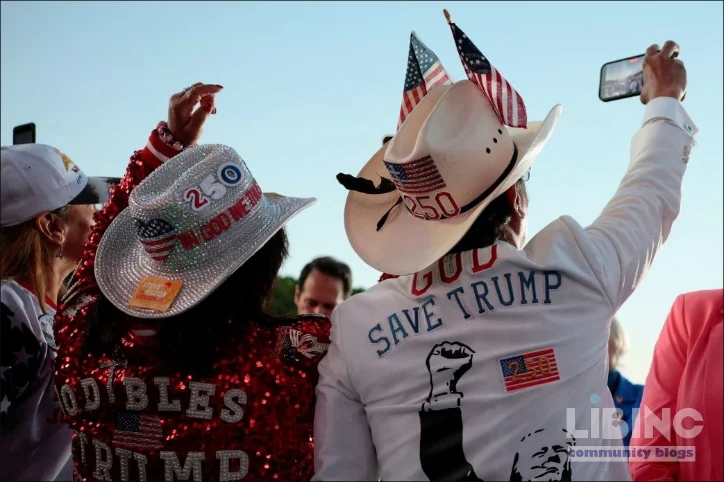
The semiquincentennial turning point: how America's independence celebration becomes a political contest in the Trump era
Table of contents
The United States marks the semiquincentennial of the Declaration of Independence, a milestone that invites both celebration and sober reflection. The moment is more than fireworks; it tests how a centuries-old charter translates into today’s legitimacy. In a polarized era, the way we commemorate reveals what we regard as shared civic ground. The stakes reach beyond symbols, shaping education, public trust, and the legitimacy of institutions.
This year’s festivities have become a contest over leadership and memory. The Trump era has reframed the holiday as a national rally rather than a collective project, highlighting a hidden conflict between singular charisma and plural history. The analysis that follows traces how funding, venues, and memory interact to produce a semiquincentennial that unsettles traditional celebrations.
Through analytics
Analytically, the semiquincentennial rests on a hybrid governance model that blends state coordination with private sponsorship. The America 250 framework coordinates across states, while Freedom 250 operates as a more market-driven initiative. Both claim legitimacy by aligning a grand spectacle with public memory, yet the lines between civic duty and commercial display remain contested.
The funding architecture matters more than spectacle. Funding mechanisms—public appropriations, private sponsorship, and in-kind logistics—shape who participates and what messages dominate. Public-private partnerships accelerate scale but raise questions about governance, transparency, and memory politics.
- Scale: The reach extends from national events to local block parties, affecting inclusivity.
- Participation: Who is invited or represented in the ceremonies, and who is left out?
- Narrative control: Which historical stories take center stage?
- Transparency: How open are decision-making processes and budget lines?
The interplay of these factors shapes national memory and the perceived legitimacy of institutions during a semiquincentennial year.
Through contrast
The 1976 bicentennial offers a useful contrast. Reports of a crowd roughly near a million and traffic jams near the National Mall reflect a different political climate, one less focused on personal political theater and more on broad civic outreach. Then-President Gerald Ford did not stage a single rally; instead, he oversaw a sequence of events along the Northeast corridor and in Philadelphia, emphasizing national unity through institutions rather than spectacle.
Today’s landscape features a public-private overlay and a push for Guinness-level spectacle. The Great American State Fair and the IndyCar race through Washington illustrate a shift toward ceremonial fakelore with logistical complexity. Virginia’s approach—shifting PBS coverage toward Colonial Williamsburg—highlights a deliberate pivot from a centralized DC show to a distributed, history-centered experience. This contrast reveals how the same anniversary can be framed as either a federal showcase or a plural, educational celebration.
- Scale: Modern celebrations aim for mass experiences, yet risk feeling hollow without diverse voices.
- Host signals: The presidency is less the sole driver; public-private coalitions set the tone.
- Political context: Post-Watergate nostalgia in 1976 contrasts with today’s polarization and media fragmentation.
Through cause-and-effect relationships
The sequence of events matters more than any single moment. When a president embeds a national celebration within a rally framework, the holiday morphs into political theater, affecting turnout, media narratives, and public mood. The rebranding of Independence Day as a power display shapes how citizens interpret historical ideals and their relevance to contemporary governance.
The implications cascade beyond entertainment. A politicized commemoration can erode cross-partisan trust in shared symbols, complicate education about the founding era, and pressure cultural institutions to align with partisan expectations. In turn, that pressure feeds a feedback loop: as institutions adapt, the public perceives the celebration as either inclusive or exclusionary, reinforcing existing divisions rather than bridging them.
- Public memory: Collective memory becomes a contested resource, guiding future curricula and civic discourse.
- Policy signals: Budget debates, safety deployments, and security priorities reveal what the state is willing to invest to frame the narrative.
- Media narratives: Coverage can amplify or mute voices, shaping what audiences remember about the day.
- Institutional legitimacy: The way governing bodies host commemorations affects perceived legitimacy in the long term.
These cause-and-effect chains show that the semiquincentennial is not just about a single spectacle; it reshapes national conversation for years to come.
Through expert reconstruction
Experts advocate a reconstruction that respects history while inviting broad participation. Carly Fiorina, honorary chair of Virginia 250 and chair of the Colonial Williamsburg Foundation, encapsulates this sentiment: 'One of the things that you learn when you study our history is that America is bigger than any one man, even a president.' The restoration of trust requires a balance between institutional continuity and inclusive storytelling.
Proposed paths for a responsible semiquincentennial include:
- Historically grounded partnerships: Align celebrations with educational programs at Colonial Williamsburg, PBS, and other academic institutions to foreground primary sources and contextual narratives.
- State and community representation: Build a nationwide schedule of events that reflects regional histories and minority voices.
- Transparent governance: Public reporting of budgets, participants, and outcomes to sustain trust across political lines.
- Education-first messaging: Prioritize civic literacy about the Declaration and its evolving interpretation rather than spectacle alone.
The goal is a semiquincentennial that serves as a platform for persuasion through education, not a platform for power projection. A careful blend of reverence for founding ideals and openness to diverse perspectives can reframe the anniversary as a durable national project rather than a partisan moment.
In the end, the semiquincentennial year offers a test: will the republic treat its birthday as a shared memory to be expanded, or as a stage for political theater to be consumed and forgotten? The answer will set a tone for how Americans understand democracy, memory, and the responsibilities of citizenship for years to come.
Closing the participation and education gap
To translate memory into lasting civic benefit, the semiquinennial must be structured to include diverse voices and emphasize learning over spectacle. A plan that blends national storytelling with local voices creates legitimacy beyond ceremony, building trust across communities and generations. Below are practical steps for governance, programming, and accountability that can yield durable outcomes.
- Broad partnerships align museums, schools, broadcasters, and faith groups to present primary sources and contextual narratives that illuminate multiple civic perspectives.
- Regional representation ensures histories from the Atlantic seaboard to the plains are reflected in schedules and curricula.
- Open budgeting publishes budgets, contracts, and outcomes for public scrutiny, with regular audits and plain-language summaries.
- Education-first messaging prioritizes civic literacy about the Declaration's evolving meaning and its relevance today.
| Category | Rationale | Example |
|---|---|---|
| Education partnerships | Sustain critical literacy via primary sources | Colonial Williamsburg, PBS |
| Regional representation | Inclusive storytelling across states | Regional exhibits |
| Open budgeting | Transparent use of funds | Public dashboards |
By combining accountability with broad, place-based education, the semiquinennial becomes a shared civic project rather than a partisan stage.
Such cross-cutting mechanisms are essential to maintain momentum and trust across political divides.
Ultimately, a balanced approach increases perceived legitimacy, enhances media narratives toward constructive debate, and supports a durable memory that benefits civic education and policy understanding.
Inclusive participation: what steps ensure broad representation?
Inclusive participation is achieved by building a deliberate governance framework that brings regional voices into the planning process from day one, pairing nationwide programs with locally led events, and ensuring that input from schools, libraries, museums, faith groups, veterans organizations, and minority communities is not only heard but codified into the calendar, budgets, and messaging; this requires a formal advisory body elected through open nominations, transparent criteria, and public meetings, plus a shared digital platform where proposals are tracked, rankings are published, and progress is reported in plain language, with opportunities for feedback and revision. In practice, this means monthly public updates and co-created experiences.
Analytical follow-up: This approach strengthens legitimacy, expands civic literacy, and builds trust across stakeholders.
How can budget transparency support trust in the celebration?
Budget transparency is achieved by publishing allocations, contracts, and outcomes in clear, accessible formats, with independent audits and simple dashboards that show how funds are spent across national programs and local partner initiatives. This fosters accountability and helps the public understand prioritization. In practice, regular public reports, plain-language summaries, and pre-approval processes for major expenditures are essential. Analytical value emerges in the ability to compare planned versus actual spend and to adjust plans in response to feedback.
Analytical follow-up: Clarity reduces suspicion and aligns messaging with actual activities.
Why is regional representation important in the commemoration?
Regional representation matters because different regions hold distinct historical experiences and cultural practices; a robust plan includes diverse calendars, exhibits, and educational materials that reflect state and local contexts while reinforcing shared ideals like liberty and civic duty. In practice, partnering with regional museums, schools, and community groups ensures programming that resonates locally and connects to national themes. Analytical value comes from measuring audience diversity, geographic reach, and the inclusion of regional historians in advisory roles.
Analytical follow-up: It broadens memory and strengthens cross-regional trust.
What does education-first messaging look like in practice?
Education-first messaging centers on primary sources, contextual narratives, and teacher resources that illuminate the founding era with attention to marginalized voices; the approach pairs documentary content with classroom-ready materials, public broadcasts, and museum programs that explain evolving interpretations of independence. In practice, collaborations with Colonial Williamsburg, PBS, and school districts ensure materials align with curricula and are accessible to diverse learners. Analytical value lies in assessing learning outcomes through pre/post evaluations and curriculum alignment across jurisdictions.
Analytical follow-up: It strengthens civic literacy and fosters informed discussion.
What risks come from politicizing the celebration?
The risk is that memory becomes a partisan tool, narrowing historical interpretation and eroding cross-partisan trust in public institutions; the celebration then leans toward spectacle rather than substantive education. To mitigate this, establish neutral programming, transparent decision-making, and diverse voices in leadership roles; maintain nonpartisan branding and avoid centralizing messaging in a single office. In practice, independent advisory boards and public dashboards help balance influence. Analytical value is found in monitoring media narratives and public sentiment to identify shifts toward inclusivity or exclusion.
Analytical follow-up: A careful balance preserves legitimacy and encourages constructive dialogue.
How can public-private partnerships balance memory and spectacle?
Public-private partnerships should balance memory and spectacle by formalizing governance, setting clear performance metrics, and ensuring that corporate sponsorship cannot override educational substance; this includes codifying sponsorship rules, ensuring community oversight, and embedding educational goals in contracts. In practice, partnerships should be anchored by publicly funded programming with independent evaluation of impact on civic learning and memory. Analytical value appears in comparing reach, cost-effectiveness, and educational outcomes across partnered versus non-partnered activities.
Analytical follow-up: It secures resources while preserving core civic aims.





Add a comment
To comment, you need to register and authorize
Comments