

Kynren: the Storied Lands and Bishop Auckland's Cultural Regeneration: A Case Study
Table of contents
Kynren: the Storied Lands unfolds as more than a spectacle. It sits at the heart of Bishop Auckland’s dramatic rebound, where a former coal town reimagines itself as an art, heritage, and experience economy. The project tests whether philanthropic largesse and ambitious storytelling can transform place identity, not just attract visitors. The key question is whether the strategy behind this spectacle builds a durable, inclusive local infrastructure.
The analysis here places Kynren within the Auckland Project’s broader framework—an initiative that combines a restored palace, galleries with Spanish masterworks, a viewing tower, and a living history program. The stakes are real: cultural regeneration must deliver lasting jobs, value for local suppliers, and civic pride while preserving authenticity. The hidden conflict lies in balancing spectacle with heritage integrity, and in managing risk—from weather to animal welfare to seasonal swings in demand. The path forward maps how this model performs on both cultural and economic scales.
Kynren: the Storied Lands as a case study in cultural regeneration
Kynren is analyzed here as a mechanism for place-based regeneration rather than a single event. Its success rests on connecting assets—historic spaces, living performance, and educational narratives—into a coherent visitor experience that sustains itself beyond opening nights. The result is a measurable improvement in how Bishop Auckland is perceived and how its economy operates, especially when the program supplements traditional tourism with year-round cultural activity.
Two core drivers shape the analytic picture: local leverage and programmatic breadth. The Auckland Project embeds culture into a wider urban strategy, while Kynren expands the town’s narrative arc from industrial decline to inclusive heritage storytelling. This alignment matters because it converts cultural capital into economic and social capital, a principle central to heritage-led regeneration. Without this alignment, a spectacular show risks becoming a temporary halo rather than a structural upgrade to the town’s resilience.
Key metrics illuminate the trajectory. The project has grown beyond a single performance to a diversified ecosystem of heritage experiences, with measurable commitments that anchor growth in the long run. Consider the following indicators, which reflect both activity and outcomes:
- 201 staff employed by the Ruffers Auckland Project, with 80% from a 10-mile radius
- A 59-bedroom hotel planned on the market square to bolster dwell time and overnight yield
- Projected 1.5 million visitors annually by 2029, elevating Bishop Auckland to a national tourism node
- Two major art galleries featuring mining art from County Durham and the golden age of Spanish art, increasing cultural capital
- A heritage railway and a Roman fort preserved as living heritage assets, diversifying the cultural offer
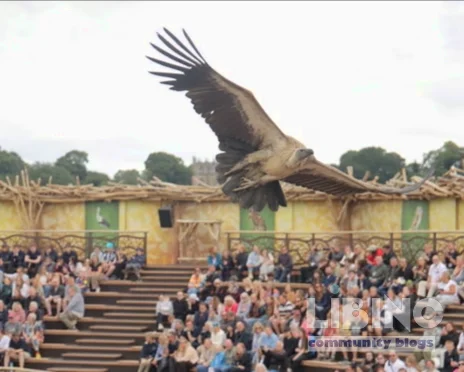
Beyond these numbers, the project demonstrates how a carefully staged mix—historic architecture, world-class art, and high-production live shows—creates a resilient cultural economy. The daytime extension, including the Lost Feather show and other performances, broadens the audience window and reduces seasonality. This is not mere spectacle; it is a deliberate strategy to convert cultural assets into durable economic infrastructure, a hallmark of heritage-led regeneration.
Why does this matter for the broader field? Because Kynren illustrates a reproducible model for other towns with similar endowments: a strong history, available land for staged events, and an engaged philanthropic partner willing to bankroll long-term transformation. The challenge lies in maintaining quality, expanding capacity without diluting authenticity, and ensuring that local communities have a meaningful stake in the ongoing development. If these conditions are met, the town’s identity becomes a platform for continuous innovation rather than a one-off triumph.
Bishop Auckland: contrast between old town and new ambitions
The narrative of Bishop Auckland’s renaissance hinges on a stark switch from a high street dominated by discount outlets to a curated cultural corridor anchored by Auckland Palace and Kynren. The transformation is best understood as a deliberate rebranding of space to align with contemporary audience expectations for authentic, immersive experiences. The turn is not merely commercial; it redefines the town’s social contract, turning residents into stakeholders in a shared cultural project.
Historically, the town’s public image rested on extractive industries and associated decline. The 2003 intervention by Jonathan and Jane Ruffer, who rescued Zurbarán’s Jacob and His Twelve Sons and acquired Auckland Palace, redirected cultural resources into public use. The conversion from private patrimony to public heritage infrastructure unleashed a cascade of developments: two galleries, a lookout tower, a preserved heritage railway, and a modern narrative-driven performance program. This shift from private collection to public venue reframes what the town is for and who benefits from its assets.
Contrasts are revealing signals. The galleries, with curated spaces and international art, foreground a cosmopolitan ambition that sits alongside the more visceral appeal of Kynren. Yet the scale raises questions about inclusivity and access: can such a premium, spectacle-focused model account for broader social equity and regional diversification? Critics may point to the risk of over-specialization, while proponents argue that a diversified program—art, history, and live performance—keeps the town dynamic and legible to multiple audiences.
Two tensions shape the path forward. First, the balance between preservation and spectacle must be managed to avoid commodifying heritage. Second, the town must translate visitors into durable local benefits, not just episodic revenue spikes. The Auckland Project’s strategy embraces both continuity and novelty, but it requires disciplined governance and community co-creation to translate visitor numbers into lasting social value. This contrast, between a town’s old identity and its new ambitions, offers a critical diagnostic for other regions pursuing similar regeneration paths.
Cause-and-effect: the Auckland Project and town revival
The causal sequence behind Bishop Auckland’s revival is a deliberate cascade rather than a single bolt of luck. Each element reinforces the next, creating a feedback loop between heritage, culture, and economy. The project’s genesis rests on philanthropic risk-taking, but the payoff depends on turning assets into a structured system that communities can sustain and govern over time.
The initial act—purchasing Auckland Palace and Zurbarán’s paintings—established a credible anchor for future investment. The renovation of the palace and gardens created a physical and symbolic platform from which broader regeneration could emerge. From there, the Auckland Project layered additional assets: mining and Spanish art galleries, a forest of viewing structures, and a revived heritage railway. Each asset serves a purpose beyond aesthetics: they educate, attract visitors, and anchor local business networks in the supply chain of culture and tourism.
The live shows magnify this effect. Kynren’s scalable formats—night performances growing into daytime experiences—extend the visitor window and diversify revenue streams. The Lost Feather, along with the other five shows, demonstrates how a fixed venue can support a rotating program, increasing dwell time and encouraging repeat visits. The intended outcome is a modern, place-based economy where tourism, culture, and local services reinforce one another rather than compete for attention. Yet this cascade depends on sustained funding, ongoing audience development, and robust community engagement to avoid dependency on a single spectacle.
The town’s social fabric is part of the causal equation. Local employment, volunteer participation, and partnerships with nearby farms, craftspeople, and hospitality providers create a dense network of beneficiaries. The 80 percent local staffing statistic and the planned hotel illustrate how regeneration leans on local capacity to translate cultural capital into real opportunities. The risk, of course, is to overshoot local capabilities or to create uneven distribution of benefits—areas still outside the core regeneration radius may feel left behind unless investment is broad-based and inclusive.
Sustainability and long-term impact: expert reconstructions
Experts weigh the model against long horizons of cultural economics and urban governance. The Kynren framework offers a compelling case for heritage-driven urbanism, yet it is not a guaranteed recipe for all places. Its strength lies in integrating tangible assets with intangible heritage—the storytelling of 2,000 years of English history—and coordinating them through a stewardship model that binds visitors, residents, and local enterprises into a shared project.
From a governance perspective, several pillars emerge as essential for durability: diversified funding streams, community ownership, programmatic flexibility, and rigorous impact measurement. Without these, the model risks drift, dependency, or cultural fatigue. The Auckland Project’s plan to add a 59-bedroom hotel and more daytime shows signals ambition, but it must be matched with transparent governance, shared decision-making with residents, and resilience planning for weather, climate, and economic shifts.
In practice, expert reconstructions advocate concrete steps to strengthen the regenerative arc. The following recommendations aim to translate high-impact spectacle into everyday resilience for Bishop Auckland and similar towns:
- Institutionalize community co-design across gallery exhibitions, performance programming, and urban planning decisions
- Develop diversified revenue models that balance ticketing, sponsorship, philanthropy, and public funding
- Establish robust performance metrics that capture economic, social, and cultural outcomes
- Prioritize training and local supplier development to maximize circular economy benefits
- Embed animal welfare and ethical standards in all live shows and related activities
Despite potential criticisms, the integrated approach offers a replicable template for regional revival: culture as infrastructure, not ornament. The long-term viability depends on maintaining authenticity while expanding the program’s reach, ensuring that growth is inclusive, and aligning visitor experience with residents’ quality of life. If these conditions hold, the Bishop Auckland experiment can serve as a credible prototype for other towns seeking economic diversification through heritage-led regeneration.
What emerges from this synthesis is a cautious optimism. Kynren: the Storied Lands exemplifies how a cultural mega-project, anchored in a historic town, can catalyze a broader regeneration dynamic. The key test now is whether the model sustains momentum, remains responsive to local needs, and scales responsibly without sacrificing the authenticity that makes the story compelling.
In the end, Kynren and the Auckland Project illustrate a practical path for post-industrial towns: culture as infrastructure, heritage as leverage, and community as the ultimate beneficiary. The journey from a ropey high street to a living history precinct is not an end in itself but a framework for ongoing urban renewal that can endure across generations.
Closing the community-co-design gap: a governance playbook
Even as Kynren and the Auckland Project show promise, durable impact requires a formal mechanism that gives residents real voice in programming, procurement, and placemaking. A governance playbook centers community co-design as an ongoing practice, not a one-off consultation. This section outlines concrete steps to translate cultural capital into daily opportunity.
Key actions include establishing a Community Co-Design Council with rotating seats from residents, schools, businesses, and cultural groups; creating Local Supplier Hubs; and building a robust Social Impact Dashboard to track local employment, dwell time, spend with local firms, and ticket affordability. These measures preserve authenticity while widening benefit reach.
Table: Local economic impact projections
| Metric | 2024 | 2025 | 2029 | Notes |
|---|---|---|---|---|
| Local jobs | 120 | 160 | 220 | Within 10 miles |
| Local supplier spend | 4.0m | 5.6m | 9.0m | Cumulative |
| Dwell time (hours) | 3.2 | 3.8 | 5.1 | Night+day mix |
Practical scenarios include pay-what-you-can nights to boost inclusivity, school partnerships to align with regional curricula, and apprenticeship tracks for hospitality, events, and curatorial work. These actions turn visitor attention into durable social value.
- Inclusive access with tiered pricing and accessible venues
- Local procurement via a transparent supplier directory
- Training and apprenticeships for residents
Key stat
Governance cadence
- Asset inventory and community audit
- Co-design cycles with residents
- Pilot programs and learning loops
- Monitoring, reporting and adaptation
Robust governance with transparent KPIs helps balance growth with authenticity and broad access. This lens makes the model portable to other towns seeking durable cultural economies.
Program mix at a glance
| Program | Share | Audience |
|---|---|---|
| Live shows | 40% | Visitors |
| Galleries | 25% | Art lovers |
| Heritage rail | 15% | Families |
| Educational events | 20% | Students |
The road to durable impact relies on a formal mechanism that embeds residents in decision-making across programming, procurement, and placemaking. This governance playbook turns cultural capital into daily opportunity while preserving authenticity.
FAQ
How does Kynren’s model create lasting local jobs?
In practice, the model links live performance, gallery operations, and heritage activities to local training and procurement. By design, staff are recruited from nearby communities, with apprenticeship pathways that build hospitality, technical, and curatorial skills. Over time, this translates into a resilient local labor market that benefits from steady demand, not just seasonal spikes. The approach also supports school partnerships and small business collaborations that extend the impact beyond the venue.
Analytically, the strategy creates durable value by aligning cultural activity with local workforce development and entrepreneurial opportunities, producing a multiplier effect on nearby livelihoods.
What governance structures secure community voice?
A formal council with rotating seats for residents, students, business owners, and cultural groups is created, along with regular public briefings and a published charter. This setup ensures transparency and enables residents to influence planning, exhibitions, and street activations. It prevents drift from the community’s core values and fosters ongoing trust between participants and managers.
Analytically, such structures embed legitimacy and resilience, turning episodic engagement into continuous co-creation that scales with the town’s growth.
How is local procurement integrated into the regeneration?
Procurement is organized through a public supplier directory and a clear pipeline prioritizing nearby firms for catering, transport, crafts, and maintenance. This keeps spend circulating locally, builds capacity, and fosters collaboration between cultural venues and regional suppliers, strengthening the wider economy over time.
Analytically, local procurement ensures that cultural investments translate into practical, inclusive economic benefits rather than isolated spectacle.
What measures track social and economic impact?
A dashboard aggregates employment, dwell time, local spend, and ticket affordability, with regular reporting and community feedback to calibrate programs. Independent checks and public disclosures reinforce accountability and guide iterative improvements.
Analytically, transparent metrics link cultural activity to everyday life, making progress observable and adjustable by both residents and decision-makers.
What risks must be managed for long-term viability?
Weather dependency, funding swings, and potential inequities in benefit distribution are key risks. Diversified revenue streams, strong governance, and ongoing community oversight help stabilize outcomes. Contingency planning for climate-related events and market shifts keeps the regeneration inclusive and adaptive.
Analytically, resilience arises from balancing spectacle with steady, community-centered gains rather than relying on a single revenue or attraction.




Add a comment
To comment, you need to register and authorize
Comments