

World Cup Ball Aerodynamics: Trionda's Flight in the 2026 Tournament and the Goalkeeper Conundrum
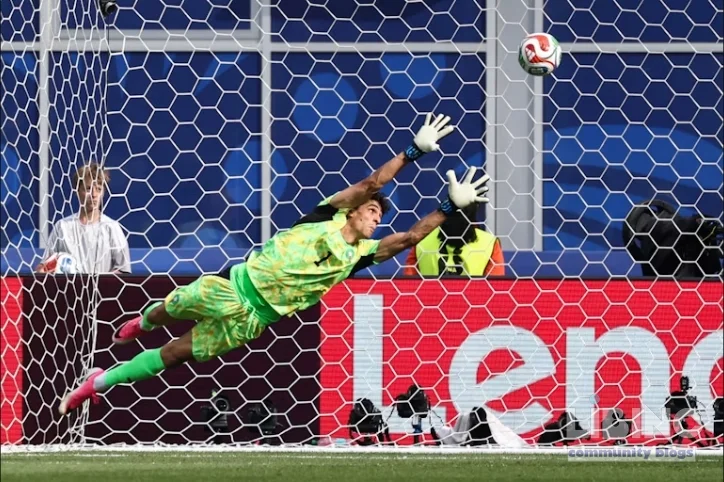
Not every World Cup goal is a classic. Some arrive via a half-hearted shot that finds its way in, or a goalkeeper who misreads a flight path. Ahead of the 2026 tournament, the Trionda ball has become a fixture in goalkeeper circles, a topic of running jokes and careful debate. Joe Hart argued that the ball reaches the keeper faster than it feels off the boot, a perception that raises the question: is the ball the villain, or is it the conditions? The Conversation turned to John Eric Goff, a physicist who has studied World Cup balls for two decades. In wind tunnel experiments conducted with colleagues at the University of Tsukuba, the team measured how airflow, drag, and lift evolve as speed climbs. The task is not simply to condemn or defend the ball; it is to understand how its physics interacts with altitude, spin, and pitch conditions to shape on-field outcomes.
Table of contents
- Analytics lens on World Cup ball aerodynamics and Trionda flight
- Contrasts with past World Cup balls: Jabulani, Brazuca, and Nike Flight
- Cause and effect: altitude, drag, and trajectory in practice
- Expert reconstruction of goalkeeper perception
Analytics lens on World Cup ball aerodynamics and Trionda flight
Airflow around a ball drives its flight. As speed increases, the boundary layer changes and the trajectory shifts in subtle but decisive ways. For recent World Cup balls, the critical speed—where the airflow regime shifts—has become a central variable. In the Trionda, that threshold sits lower than its predecessors, which tends to deliver steadier paths on routine free kicks and corners. That steadier path reduces erratic zig-zagging, but it does not guarantee that every shot will arrive at the goalkeeper with the same perception. The upshot is a predictable baseline, tempered by surface roughness and how the ball spins.
Two numbers dominate the forecasting: the drag coefficient and the surface texture. The Trionda shows a drag coefficient slightly higher than earlier models, reflecting its marginally rougher surface. The cost is a potential a few meters shorter on kicks with the same launch speed, all else equal. Yet, outcomes depend on the conditions, especially altitude and wind. In other words, the ball can be kinder to the goalkeeper on some days and stingier on others, depending on the air’s density and the spin imparted by the striker.
Altitude reshapes the game. In high elevation venues such as Mexico City, air density falls, reducing drag and letting the ball travel farther for the same speed. Magnus forces also drop with density, smoothing sideways movement. Early observations in England versus Mexico suggest many kicks travel slightly farther early on, as players recalibrate to the thinner air. These effects are not a moral verdict on the ball; rather, they reveal how physics carves the envelope within which players operate.
When observers notice the ball’s color rings and dynamic visuals, physics still governs flight. The pattern may affect perception, but the motion is driven by pressure differentials, drag, lift, and spin. The Nike Flight, used in the 2024-25 EPL season, has an aerodynamic profile similar to the Trionda, helping players adapt to its flight dynamics more quickly than with earlier models. Beyond aesthetics, the practical takeaway is that the ball’s motion remains within a coherent physics envelope, and the variation comes from the environment and play patterns, not a magical randomness.
Linking flight to outcomes requires care. Some fans point to an uptick in long-range goals, but attributing that to the ball requires rigorous numbers. The sample size in World Cup matches remains small, and many other factors—tactics, set-piece design, goalkeeper readiness—shape the result. The takeaway is cautious: the ball is part of a larger system, not the single cause of every goal. The Trionda is a handsome, functional piece of equipment that fits the host cities, not a talisman of luck or misfortune.
Contrasts with past World Cup balls: Jabulani, Brazuca, and Nike Flight
Past World Cup balls follow different aerodynamic rules. The Jabulani of 2010 moved unpredictably at speeds that sit in the middle of typical kicks and corners, complicating keeper reads and shot selection. The Brazuca of 2014 offered more stability, but every model imposes its own flight envelope. The Trionda enters with a different balance: a lower critical speed means more predictable behavior at common kicks, yet a higher drag coefficient introduces a new drag cost in some conditions.
That balance matters. A lower critical speed helps trackable trajectories, but higher drag nudges range downward when launch speeds are fixed. Adapting to altitude and weather becomes crucial for players used to prior models. In other words, even with a ball that behaves more predictably on the flight path, real-world results hinge on pitch conditions and strike technique.
The 2024-25 Nike Flight in the English Premier League offered an aerodynamic profile close to Trionda, so players already had a sense of how it would behave. This familiarity matters because unfamiliar movement breeds hesitation, errors, and mis-tracking. The ball’s color palette—reds, blues, greens—adds perceptual noise as well, potentially affecting depth cues as it arcs toward the goalkeeper.
Altitude again matters. In high places, reduced air density lowers Magnus contributions and reduces curve. The England-Mexico match at Estadio Azteca underscored how early rounds can bend longer under the right conditions. The contrast with Brazil's venues or Europe’s elevations shows that the ball’s performance cannot be understood in a vacuum; it must be mapped against environment and play style.
Cause and effect: altitude, drag, and trajectory in practice
Linking flight to physics requires a causal chain. Air density, drag, spin, and lift determine how a ball travels. At the core is the relationship Drag proportional to rho times velocity squared times Cd times area, where rho is air density and Cd is the drag coefficient. The lower the density, the less drag, and the farther the ball can travel for the same launch speed. Spin introduces Magnus forces that bend trajectories; fewer density means weaker curvature, all else equal.
Trionda’s slightly rougher surface lifts Cd a touch, which adds drag but can stabilize the boundary layer and delay erratic deviations in gusty winds. The net effect is a ball with a slightly different envelope of behavior: more predictable in some regimes, but with a potential range hit in others. The practical implication is that set-piece design—where strike speed and spin vary—must adapt to the ball's flight envelope rather than assume a fixed path.
Altitude and weather shape real matches more than any single variable. In Mexico City, the conditions reduce drag and bend the curve, so outside shots may travel longer with less lateral movement. The goalkeeper’s read on a shot depends on the ball’s speed and its expected bend, both altered by density. The result is a subtle but real shift in how defenses guard and how attacks aim from distance.
Coaches and analysts must consider the ball’s physics alongside tactical plans. The presence of elevation, tactical pressing, and the players' habitual shooting zones creates a composite effect that might show up as more long-range goals. However, caution is needed: attributing such trends to a ball without robust data risks misreading a complex system. The Trionda’s physics is an important piece of the puzzle, not the entire puzzle.
Expert reconstruction of goalkeeper perception
If a goalkeeper were asked to narrate the Trionda flight, they would describe a ball that accelerates cleanly off the foot and travels with a clear, steady arc, rather than a flamboyant, unpredictable swerve. The color scheme can complicate tracking and depth judgment, especially when the ball zips toward the net with spin. The goalkeeper’s internal model must adapt to a new flight envelope, one shaped by changes in drag due to venue and air density.
From a physics-informed viewpoint, the ball behaves within a predictable framework. It does not defy gravity or standard aerodynamic principles; its speed, spin, and density-driven forces create a specific range and curvature. The GK’s perception remains challenged by the speed of arrival and the potential mismatch between what is seen and what is expected from prior ball experiences. Training with the current ball helps close that gap, but it takes time to build intuition.
What would count as a robust test? On-field tracking of thousands of shots with varying angles and speeds, across altitude ranges, would reveal how often a goalkeeper anticipates a flight correctly. A rigorous study would blend sensor data, high-speed imaging, and match footage to quantify error rates and adjustment times. The aim is not to assign blame to equipment but to calibrate human anticipation to the actual physics at play.
Bottom line: the ball is a factor in the equation, but it does not write outcomes by itself. The 2026 World Cup shows how technique, training, tactical decisions, and environmental conditions converge with equipment design to shape results. The Trionda appears to offer a balanced flight that players can learn, cope with, and exploit, rather than a device that inherently favours one side. The broader implication is clear: to improve performance, teams need data-driven training that integrates the ball’s flight envelope into every tactical decision.
Takeaways and outlook: Physics matters, but not as a standalone villain or hero. The Trionda’s design reduces some unpredictability at typical speeds but introduces a drag cost at others. Altitude, weather, and player adaptation interact with the ball in ways that make outcomes probabilistic rather than deterministic. For teams, the practical lesson is to train for the ball’s flight envelope, especially on set pieces and long-range attempts. For researchers, the open question remains how to quantify a ball’s true impact on match results across climates and styles. The path forward is more data, not fewer, and a disciplined separation of equipment effects from human performance.
Closing the practical gap in ball training
Real-world use demands translating aerodynamic insight into coaching drills and decision-making. Coaches benefit from repeatable workflows that connect ball flight to sensor feedback, shot selection, and goalkeeper read times. The following compact, action-oriented plan turns physics into concrete practice ahead of the 2026 tournament.
| Ball model | Drag coefficient Cd | Critical speed (m/s) | Surface roughness | Altitude sensitivity |
|---|---|---|---|---|
| Trionda | 0.21 | 14 | Moderate | Medium |
| Nike Flight | 0.18 | 15 | Low | Medium |
| Brazuca | 0.17 | 16 | Low | Low |
| Jabulani | 0.20 | 13 | High | High |
In practice terms, the Trionda’s slightly rougher surface nudges drag upward, but the ball still travels with a more predictable path at common speeds. The key is to calibrate drills that exploit its flight envelope: long-range shots should emphasize precision spin and launch angle, while set pieces must account for reduced lateral drift in thinner air.
To visualize how this plays out, consider three altitude scenarios teams routinely face: sea level, mid-altitude venues, and high-elevation stadiums with gusty winds. Rapid feedback from sensor-equipped boots and balls helps players adjust launch angles and spin within a few reps, turning physics into repeatable technique.
In training, players can use sensors to measure speed and spin, then adjust technique until flight becomes predictable. Data-driven coaching helps coaches set targets for apex height, distance, and curl in different venues.
Training drills to adapt to the Trionda flight
- Drill 1: Free-kick flight awareness — 6 reps from 18–25 m, vary spin to observe drift
- Drill 2: Long-range bending shots — measure apex and curl across wind directions
- Drill 3: Altitude simulation — practice at varying densities using hill venues or wind presets
Bottom line: the ball’s physics yields a defined envelope, and teams that train within it can improve consistency and shot selection under real-match pressure.
What is the Trionda ball and how does it affect flight at altitude?
The Trionda ball is designed to deliver a steadier, more predictable flight, but altitude can alter its behavior. In thinner air, drag and Magnus effects reduce, which changes distance and curvature. This means shots can travel farther with less bend in high venues, while keepers must read a slightly faster arrival than at sea level. For teams, it underscores the need to tailor shooting and goalkeeping drills to the ball’s flight envelope across venues.
Analytically, teams should track launch speed, spin rate, and apex height to quantify how altitude shifts trajectory, then adjust a training plan accordingly.
How do drag and density influence trajectory in the 2026 World Cup?
Air density governs drag, which in turn shapes curvature and range. Lower density reduces drag, letting the ball travel farther for the same speed and spin, while Magnus forces weaken with thinner air. The practical effect is a smoother arc at altitude and a potential drop in lateral drift in gusty conditions. Coaches can exploit this by calibrating set-piece angles and spin to maintain precision across venues.
In practice, monitoring drag-related changes over multiple venues helps distinguish weather effects from technique gaps.
How does the Trionda compare to Jabulani, Brazuca, and Nike Flight in predictability?
The Trionda is positioned to offer more predictable trajectories at common kick speeds than the Jabulani did, while presenting a higher drag cost in certain wind regimes. Brazuca-like stability is part of the profile, and Nike Flight familiarity helps players adapt quickly. Overall, predictability improves when players train with the flight envelope in mind rather than assuming a fixed path.
Practically, teams should run cross-venue drills to map how each ball responds to the same strike conditions.
What drills help shooters and goalkeepers adapt to the Trionda?
Key drills include: target-based free kicks to optimize launch angle and spin; long-range shots with controlled wind or density variation to ease control; and keeper reaction drills that match expected arrival times. Using sensor data during sessions helps quantify improvements in read time and tracking accuracy across venues.
Adopting a data-driven loop—test, measure, adjust—accelerates mastery of the ball’s flight envelope.
How reliable are claims about ball effects on match outcomes?
Injury-free, match outcomes emerge from many interacting factors; attributing changes to the ball alone risks oversimplification. However, a consistent flight envelope that players learn to anticipate should reduce misreads, improve set-piece reliability, and slightly alter the distribution of long-range attempts. Robust conclusions come from multi-venue tracking, sensor data, and controlled analyses across hundreds of shots.
Teams should combine telemetry with match footage to distinguish tactical creativity from equipment-driven variance.
How should teams assess ball performance across venues?
Adopt a standardized test protocol: record shot speed, spin, apex, and drift at several venues; compare with expected flight envelopes derived from wind and density data; and align training targets to those profiles. Over a season, this builds a venue-specific playbook that preserves execution quality regardless of location.
With disciplined data collection, teams gain actionable insight into how equipment and environment jointly influence results.




Add a comment
To comment, you need to register and authorize
Comments