

DAV Governance and Local Chapters: An Analytical Look at Disabled American Veterans' Struggle to Serve Vets
Table of contents
- Analytics lens: structure, assets, and outcomes
- Contrast: local chapters under pressure vs. national machinery
- Cause-and-effect: funding, governance, and veteran services
- Expert reconstruction: redesigning for durable service
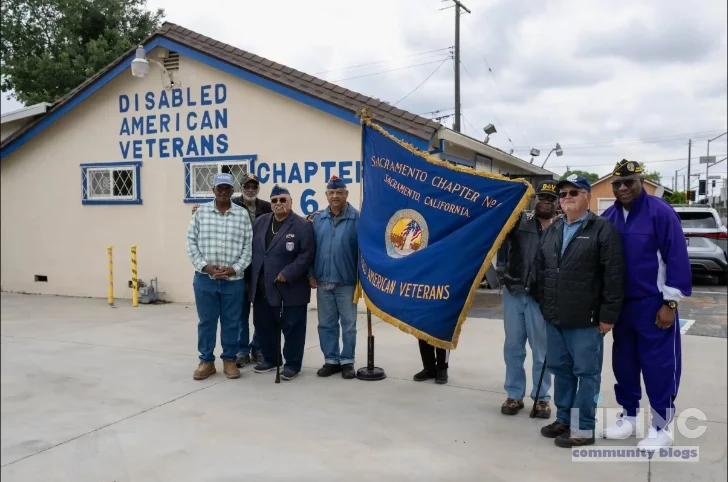
The Disabled American Veterans, known by its acronym DAV, sits at a crossroads where decades of local post culture meet a modern, consolidated national apparatus. A California chapter’s windfall donation, treated by members as a community asset, became a flashpoint that exposed how power and money travel through the DAV ecosystem. The question is not merely who owns a check, but who shapes the trajectory of veteran support when local posts struggle to repair a roof or run a claims clinic while the national organization coordinates large-scale advocacy and fundraising. This analysis asks: what happens to the people who rely on DAV’s local presence when governance concentrates decisions and cash at the top?
In an era of shrinking veteran populations and shifting civic engagement, the stakes are practical as well as symbolic. DAV has long served as a bridge between aging veterans and the federal system that determines disability benefits, medical care, and job opportunities. If the local post model withers, veterans in communities—many of them older, many with limited mobility—lose a trusted access point to navigate VA processes, attend meals, and find the social support that sustains morale. The chapter-level experience—where volunteers drive veterans to appointments, help with PTSD claims, or organize Thanksgiving dinners—may be the litmus test for whether DAV remains a public-benefit institution or becomes a symbol with diminishing reach. The central tension is simple to state and hard to resolve: how to preserve grassroots service when national governance holds the purse strings and sets the rules that govern local activity.
Block 1 — Analytics: structure, assets, and the service imperative in the Disabled American Veterans system
DAV’s architecture spans local chapters, state departments, and a national office, with two affiliated entities designed to support administration and fundraising. The math matters as much as the missions. Local chapters number more than a thousand, yet the flow of resources often travels upward, not outward, in ways that challenge the core duty to serve veterans where they live. The national organization manages a balance sheet that dwarfs the needs of a single post, and that imbalance frames decisions about grants, bylaws, and the distribution of responsibilities across the network.
Key structural facts shape the landscape:
- DAV operates through >1,100 local chapters under state departments, reporting to a national headquarters.
- National net assets surpassed $530 million in 2024, up from roughly $289 million a decade earlier, highlighting a growth in fiscal capacity that outpaces visible local outcomes.
- The three national entities—DAV, DAV National Service Foundation, and DAV Charitable Service Trust—share staff and financial transactions, creating a bundled, multi-entity framework with pooled governance risks.
- In 2024, the three organizations reported about $750 million in adjusted net assets and roughly $171 million in cash expenses, underscoring the scale of operations beyond local posts.
- Local chapters receive a small portion of lifetime dues, with current distributions capped at no more than $3.50 per member annually, or about 1% of lifetime dues—the arithmetic of which raises questions about the adequacy of local funding for ground-level services.
Donor transparency becomes a central analytic concern when the structure appears to channel money through an opaque, multi-layered hierarchy. Charity watchdog analyses note the complexity of the DAV ecosystem, where the national center’s financial operations involve affiliated entities and cross-subsidies that render clear accountability difficult for donors and for local veterans seeking assurance that their gifts translate into tangible help. DAV executives defend the structure as necessary to carry out broad programs—benefits advocacy, job fairs, entrepreneurship training, and legislative wins—while critics argue that the same structure blunts transparency and muddies who ultimately benefits from gifts.
The static numbers tell part of the story, but the live tension is in practice. A national leadership claim that the core mission—getting veterans benefits—happens across all layers stands in tension with the reality that local posts conduct the day-to-day work. Local volunteers carry the front-line workload: driving veterans, helping with VA disability claims, and building community spaces. The contrast between scale and immediacy is not merely academic; it is a daily reminder of what is at stake for veterans who depend on a local post for access to services and social connection.
Block 2 — Contrast: local chapters under pressure vs. national machinery
The Sacramento post story is not an isolated incident. Across the country, DAV chapters reported friction when local decisions clashed with the national office’s governance and rules. In 2023, DAV suspended 399 chapters for failing to comply with updated bylaws after requiring annual financial reports to be filed online. The suspensions were framed as governance enforcement, yet veterans and chapter leaders described them as punitive, curtailing a chapter’s ability to fundraise, organize events, or sustain staff capacity—activities that directly affect veterans’ everyday lives. When chapters stumble on paperwork, they risk losing their charter and limited access to national grant programs, a dynamic that can drain local momentum just as aging veterans rely on reliable local services.
National leadership argues that governance matters for donor confidence and for preventing misallocation of funds. The DAV’s public rationale emphasizes that consistency, transparency, and compliance safeguard a donor’s intent and ensure the non-profit’s mission endures. Still, the tangible effect at the local level appears paradoxical: while donors may gain confidence in a standardized process, veteran services at the street level can stall if a post cannot navigate compliance or if grants flow primarily to the central operations rather than to the post’s immediate needs. In Sacramento, the chapter’s leadership faced a cascade of consequences—suspension, an internal dispute, a civil suit, and a threatened sale of the post building—outcomes that felt misaligned with veterans’ priorities and community service needs.
Despite these tensions, the national system does offer grant opportunities to chapters through a dedicated state structure. A War Horse analysis found that from 2019 to 2023, the California department awarded roughly $175,000 in grants to dozens of local chapters, while the national body channeled nearly $1.9 million in grants to the California department itself. This asymmetry—substantial support to the state and national levels but only a modest per-member distribution to local posts—illustrates a fundamental mismatch between the organization’s resource allocation and the ground-level demand for accessible veteran services. For veterans who rely on a local space close to home, the contrast between grand strategic goals and everyday availability becomes a focal point for evaluating DAV’s relevance.
What does this mean for the broader veteran community? The contrast highlights a persistent paradox: the organization’s strength is its network, yet the network’s vitality depends on the willingness of local volunteers to sustain chapters that deliver direct care. When the national structure exerts heavy control over finances and bylaw enforcement, local posts face the risk of becoming administrative appendages rather than living hubs of support. The practical consequences include reduced capacity to deliver rides, to assist with VA claims, and to host communal gatherings that form a veteran’s social fabric. The question is not only about governance—it's about whether the DAV can preserve the essential local touch in an era of centralized administration and shifting membership.
Block 3 — Cause-and-effect: funding, governance, and veteran services
The DAV’s financial architecture generates a chain of cause and effect that begins with resource allocation decisions and ends with veterans’ access to services. The chain starts with a substantial and growing national balance sheet, which, in theory, should enable stronger advocacy and more robust fundraising. In practice, however, both members and local chapters experience effects that ripple into daily veteran care. The national-plus-affiliates structure creates a centralized budgetary loop in which overhead and administration consume a significant slice of resources, while the portion that reaches local posts remains tightly constrained. The effect is not just financial; it shapes who can hire staff, who can host events, and whether a post can invest in digital tools that keep pace with younger veterans.
Membership trends compound these dynamics. DAV membership stood at just over 900,000 in 2025, down from 1.2 million in 2012. The American Legion and Veterans of Foreign Wars report similar pressures as veteran demographics shift. The VA’s projection that veteran numbers will fall by about 30% over the next two decades adds urgency to rethinking the local post model. However, the implications reach beyond numbers. When younger veterans increasingly juggle work and family obligations, the traditional local post—the place to gather, share experiences, and galvanize volunteers—loses its appeal and its practical existence. This is a cause-effect sequence: demographic change plus governance constraints reduces local engagement, which in turn narrows the pipeline of volunteers, making it harder to sustain essential community services.
The donor dynamics further complicate the picture. Charitable watchdogs have questioned the transparency of a three-entity structure whose overlapping staff and financial transfers can obscure where gifts end up. DAV’s leadership contends that the structure allows the organization to carry out a wide range of programs—benefits advocacy, job fairs, and entrepreneurship training—and to push legislative wins such as the PACT Act. Yet critics argue that donor funds are not always visible at the local level, where the needs—transportation to VA appointments, PTSD claims assistance, nutrition programs, and social events—are most acute. The cause-and-effect logic here is not about malfeasance but about misalignment: when governance moves toward scale without a commensurate focus on local impact, the ability to deliver reliable, on-the-ground veteran support can suffer.
Even when local chapters pursue modernization—podcasts, smartphone-friendly applications, and youth leadership development—these efforts can be undermined by governance delays or funding gaps that render such innovations impractical or unsustainable at the chapter level. The Sacramento episode illustrates how quickly a local faction can collide with national policy, turning a mundane financial decision into a prolonged confrontation that drains time, attention, and morale. The causal chain is not inevitable, but it is instructive: governance choices at the national level shape incentives and constraints that either enable or impede local service delivery, especially when volunteers are aging and younger veterans are less likely to join.
Block 4 — Expert reconstruction: redesigning for durable service
What would a DAV redesigned for durable service look like? The answer must honor the organization’s strengths—its national advocacy voice and its extensive network of local volunteer hubs—while ensuring that the local level has real, predictable access to resources, autonomy within a coherent governance framework, and transparent reporting that builds trust with donors and veterans alike. The following reconstruction ideas aim to align mission with mechanism, without dissolving the identity that veterans recognize in their local posts.
- Clarify and unify donor flows: create a transparent, auditable pathway from gifts to program outcomes, with annual impact reports detailing how funds reach local posts and what services they fund.
- Restore local fundraising channels within guardrails: allow chapters to raise funds locally through vetted, non-competitive channels while maintaining centralized oversight to prevent misallocation.
- Rebalance grant architecture: increase direct post-level grants and reduce the proportion of funds consumed by administration at the national level; provide formula-based allocations that tie grants to measurable local impact (rider: transportation, claims assistance, and social programming).
- Accelerate governance modernization: implement a streamlined online reporting system with real-time dashboards for post-level compliance and performance, and create a fast-track restoration process for posts that correct issues promptly.
- Invest in succession and leadership development: fund a structured pipeline to transition leadership to younger veterans, including mentorship programs, digital literacy training, and cross-chapter knowledge transfer to preserve continuity of services.
- Preserve the local post as a social and service hub: maintain the post as a community space while expanding coordinated, mobile-friendly services (telehealth navigation, remote claims help, transportation coordination) to extend reach without sacrificing personal contact.
- Enhance transparency and external accountability: adopt an independent financial oversight panel that includes veteran representatives and third-party auditors to oversee major donations, grants, and dispersals across all three national entities.
Operationalizing these reforms requires recognition that the value of the local post lies not only in the sum of its grants but in the daily acts of service that veterans experience. To sustain that value, the DAV must align incentives so that local chapters can deliver tangible outcomes while maintaining the integrity and advocacy power that excites donors and lawmakers alike. The Sacramento case is not a final verdict; it is a signal that governance and funding must move in concert with the organization’s mission—to serve veterans where they live, in communities that rely on the trusted presence of a DAV post.
In the end, the question is whether the Disabled American Veterans can evolve from a mid-century post network into a 21st-century backbone for veteran support. The answer will shape not only fundraising and governance metrics but, more importantly, whether veterans find in DAV a dependable, locally embedded ally as the next generation faces its own service-related challenges.
Closing the alignment gap: Transparent funding, tangible local service
Across the DAV network, the most meaningful acts happen at the post level, where volunteers drive rides, assist with VA claims, and organize meals. The critical gap is clarity: donors, posts, and volunteers rarely see how gifts translate into local impact. An outcome-driven approach would tie each donation to measurable service and publish concise impact reports that verify progress against clear targets.
Implementation can begin with three pragmatic steps: map donor flows to local outcomes, restore post-level fundraising within guardrails, and rebalance grants toward front-line services with accountable reporting. As an illustration, a Sacramento post could receive quarterly funding for transportation and a part-time claims assistant, paired with a dashboard that counts rides, claims processed, and participant satisfaction indicators.
| Entity | Grants Disbursed (Illustrative) | Share of Total Funds | Primary Use (Illustrative) | Transparency Signal |
|---|---|---|---|---|
| Local Posts (individual chapters) | $12M | 18% | Transportation, claims help, meals | Annual post report |
| State Departments | $16M | 24% | Grants to posts, program support | State dashboards |
| National Headquarters | $20M | 28% | Administration, advocacy | Independent audits |
| Affiliated Foundations | $8M | 12% | Special programs | External audits |
| Central Programs (trust/foundation) | $9M | 13% | Grants, relief initiatives | Public allocation map |
In parallel, a practical dashboard at the post level acts as a micro-financial report card, showing quarterly targets for transportation, claims support, and social events, with real-time progress bars and recent outcomes to build donor confidence.
Illustrative outcome certainty: When a post can forecast funding for transportation and claims help, it can reliably schedule services for 60–80 veterans per month, improving access and morale.
To ensure this approach works, the organization should adopt a straightforward online reporting system, quarterly post-specific audits, and a fast-track restoration pathway for posts that address compliance issues. This creates a loop where local needs drive decisions, while donors gain visibility into how their gifts are used.
- Governance flow: national guardrails define rules and reporting standards → state oversight translates rules into local expectations → post leadership executes programs and reports outcomes
- Data pipeline: post data feeds into a centralized dashboard with monthly checks
- Accountability: annual, independent audits of post funds and program outcomes
With this structure, the DAV keeps its national advocacy while restoring the local connection veterans rely on every day.
What is the main governance issue facing DAV local chapters?
The direct answer is that centralized governance can outpace local needs, slowing or limiting on-the-ground veteran services such as rides to appointments and claims assistance. This misalignment reduces the immediacy and relevance of local aid, even as the national apparatus expands advocacy and fundraising efforts.
Analytically, the gap emerges when post-level autonomy is constrained by top-down rules without timely feedback loops. Local volunteers and staff may struggle to adapt programs to community specifics, leading to slower responses in critical situations.
How does the three-entity structure affect donor dollars?
The direct answer is that the three-entity model can obscure where gifts end up, making it harder for donors to trace local impact. While multi-entity structures can support broad programs, opaque transfers can dilute visibility into post-level outcomes.
Analytically, donors benefit from transparent reporting and clear mappings from gifts to services. Without that, confidence can erode even if overall fundraising remains strong.
What concrete changes could improve local funding and services?
The direct answer is to implement a transparent donor-flow, raise post-level grants, and introduce independent audits tied to measurable local outcomes. This aligns resources with ground-level needs and enhances donor trust.
Analytically, a simple dashboard, formula-based allocations for posts, and defined guardrails create predictability for local service delivery and accountability for funders.
How can donors verify impact at the local level?
The direct answer is through post-level annual impact reports, dashboards showing outcomes, and independent audits of major gifts. These elements give donors concrete visibility into how funds support veterans locally.
Analytically, standardizing metrics such as rides provided, claims processed, and meals served enables cross-post comparisons and helps identify high-performing chapters for replication.
What steps can a post take to improve compliance and funding?
The direct answer is to implement quarterly reporting, maintain a transparent budgeting process, and participate in a fast-track restoration program for issues resolved promptly. These steps restore trust and unlock continued support.
Analytically, timely reporting reduces backlogs, while a clear restoration path incentivizes proactive governance and keeps veterans connected to essential services.
How will governance modernization affect veteran services on the ground?
The direct answer is that modernization can speed access to rides, claims help, and social programs by aligning resources with local needs and providing real-time visibility into service delivery.
Analytically, the combined effect is greater reliability, better planning at the post level, and stronger donor confidence, which together sustain a long-term, locally embedded support network for veterans.





Add a comment
To comment, you need to register and authorize
Comments
Given this duality, a discussion worth chasing is how to preserve the DAV’s strengths—its extensive network, its advocacy reach, and its veteran‑centered culture—while repairing the structural seams that hamper local outcomes. Is it possible to design a governance model that keeps a robust national voice and fundraising machine, but also guarantees that a clear, auditable portion of every donation reaches the post where it is solicited? What would a donor flow map look like in practice, with annual impact reporting that ties a local grant or a transportation voucher to a specific veteran served or a specific claim filed successfully? And who should own the accountability: the local post leaders, the state department, or a joint independent panel with veteran representation? In short, the analytics lens invites us to transform the question from 'how much did we raise' to 'how many veterans did we serve, in what way, and with what level of certainty that that assistance will recur next year.'